
Latest News
2026 Honda Ridgeline ReviewOpening New Doors With the 2022 Volkswagen Taos

Like the Atlas, the current best seller Tiguan, and Atlas Cross Sport, the Volkswagen Taos is German designed with quality engineering in its DNA.
Another One
In 2008, VW introduced the diminutive Tiguan, which was, at that time, a fun and rather decent selling SUV. Fast forward 12 years later, and VW has expanded their SUV line to the grown-up Tiguan, spacious Atlas, Atlas Cross Sport, ID.4 EV, and in 2021, the new compact SUV Taos.
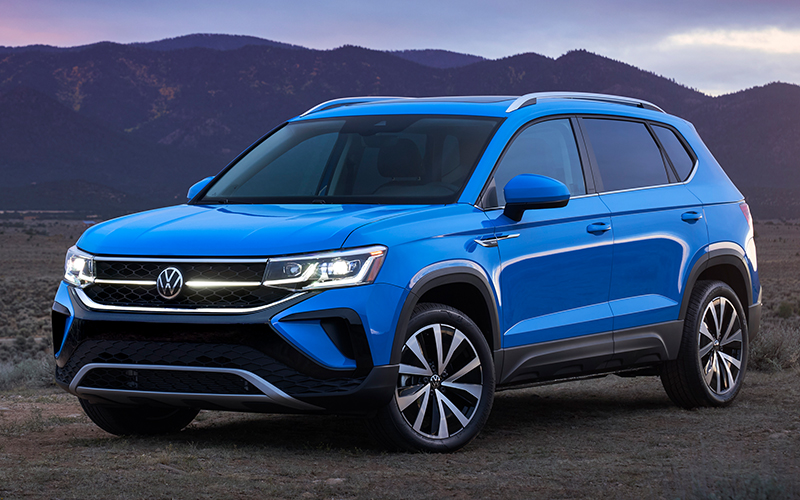
2022 VW Taos – vw.com | Shop new Volkswagen on Carsforsale.com
The new 2022 Volkswagen Taos crossover certainly has an established pedigree. It’s based on the latest version of the Volkswagen Groups MBQ platform, which is the basis for an astounding 42 vehicles across the VW Groups brands, including the sibling Audi vehicles. So you’ll be forgiven if you see more than a little resemblance to the sportier and more expensive cousin Audi Q3.
Does Size Affect Performance and Fuel Economy?
Volkswagen says the engine is a new 1.5-liter, turbocharged four-cylinder, which uses a variable-turbine geometry (VTG) turbocharger that makes 158 horsepower and 184 pound-feet of torque without sacrificing fuel economy. You might be asking what that VTG turbo actually is. It has little movable vanes which can direct exhaust flow onto the turbine blades. According to X-Engineer.org, the vane angles are adjusted via an actuator, and the angle of the vanes varies throughout the engine RPM range to optimize turbine behavior. Pretty cool stuff. That actually increases intake air boost pressure at low engine speeds, improving the turbocharger’s response time during shifts and acceleration changes. It also increases the availability of the maximum engine torque. So, less turbo boost delay issues and improved off and on throttle response. Very nice.
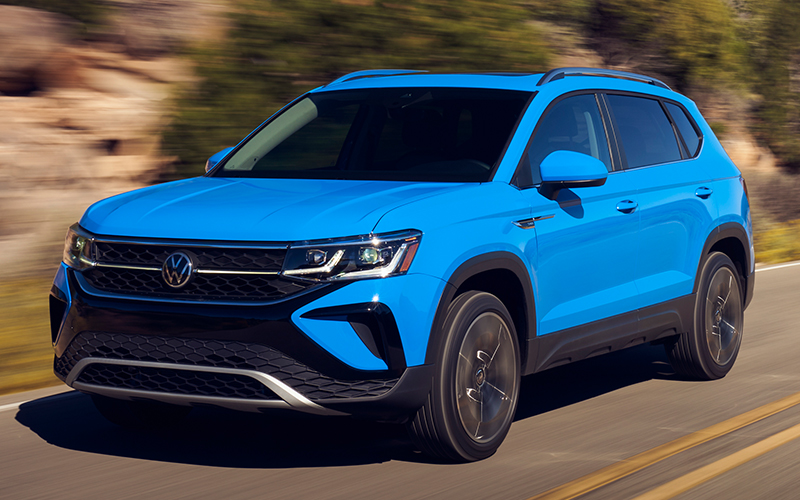
Gas Mileage is estimated to be 24/30 mpg (city/hwy) and a 0-60 time of a little less than 10 seconds. Even with the turbo, it’s still focused on fuel economy instead of high performance. Front-wheel-drive versions get an eight-speed transmission. All-wheel-drive models use a seven-speed transmission. You can have your optioned choice of 17, 18, or 19-inch wheels to scoot around on those shopping and adventure trips. It’s hard to say if the Taos will be worthy of its German heritage without driving it, but we don’t expect it to be too much different from the other VW SUVs in driveability.
How Big is Small in the Volkswagen Taos?
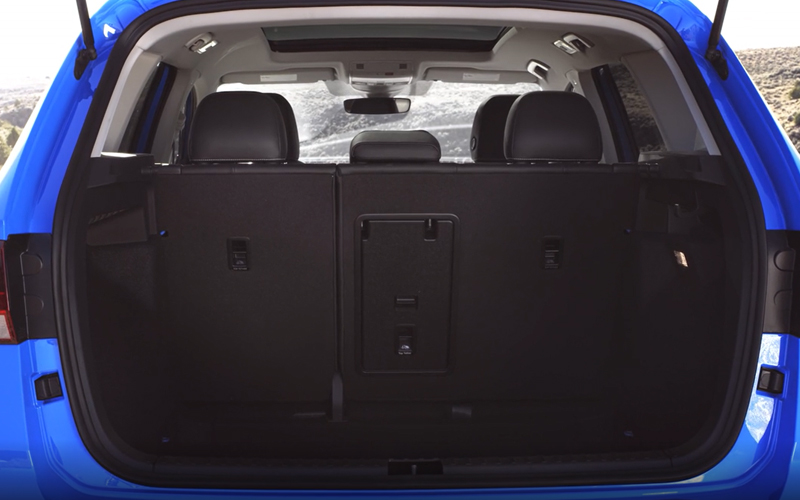
The Taos’ competitors are the Hyundai Tucson, Nissan Rogue Sport, and Jeep Compass. All are within a few inches of each other in the interior room, width and length. The Volkswagen Taos is 175.8 inches long, with a wheelbase of 105.9 inches. Its width is 72.5 inches, and it stands 64.4 inches tall. Passenger space is 99.5 cubic feet, and you can fill 28.1 cu ft with luggage behind the second-row seats. Fold the second row down, and you have a fairly spacious 66.3 cu ft to fill up.
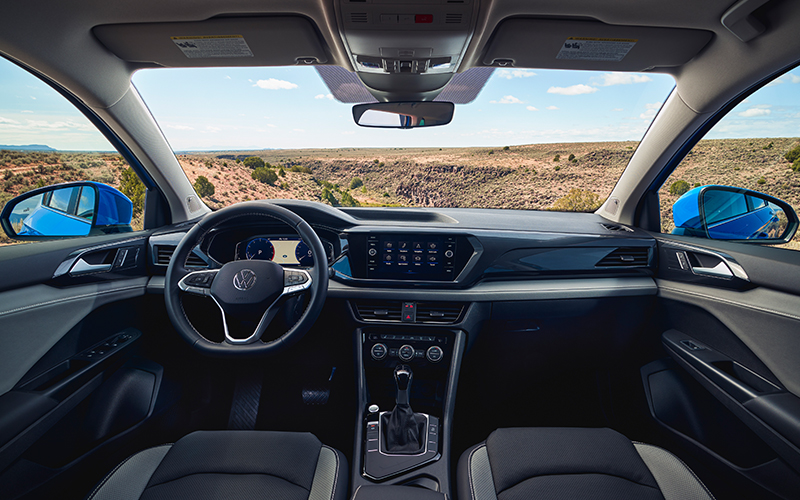

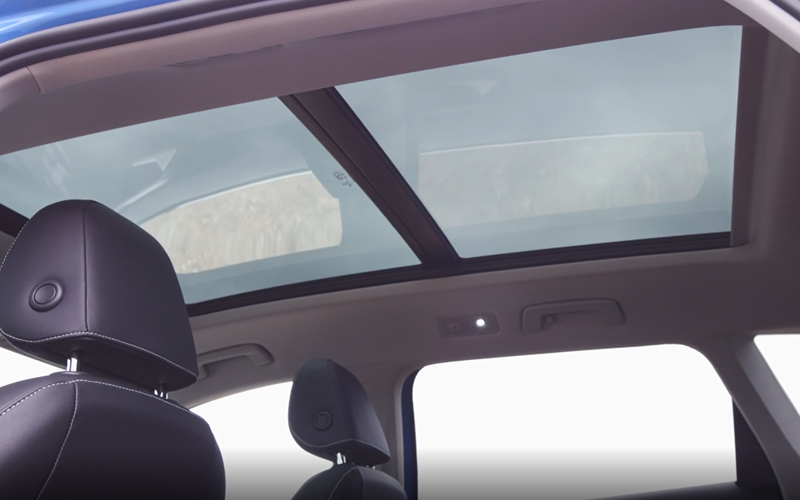
Inside the 2022 Taos, you’re welcomed by an interior that isn’t too far removed from the Audi brethren. Volkswagen’s Digital Cockpit is standard, with a screen in place of the analog speedometer and tachometer. The center console also has an 8-inch touch screen that serves as a BeatsAudio control panel, a place for Apple CarPlay, Android Auto, and various other settings. Everything is in an easy to reach logical location and has a nice premium feel.
Digital Assistance Everywhere
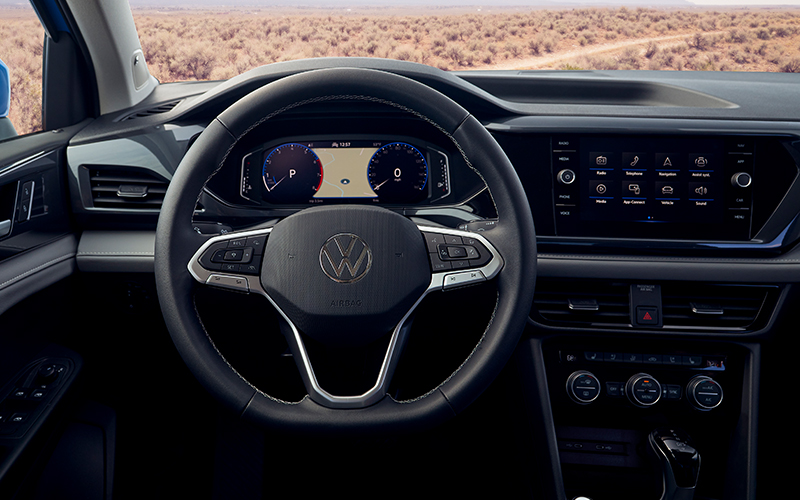
Like its competitors’ similar digitally connected models, Volkswagen places an infotainment version called Car-Net in every Taos, including WiFi capability. You’ll need to subscribe to a cellular data plan, so it’ll be up to you to determine its importance of WiFi. As an option, you can add wireless charging and wireless app connection for your phone if needed. For safety, there’s the required driver assistance suite; VW names theirs IQ.DRIVE®, which is similar to what you’ll find in the competition vehicles.
Looking From the Outside
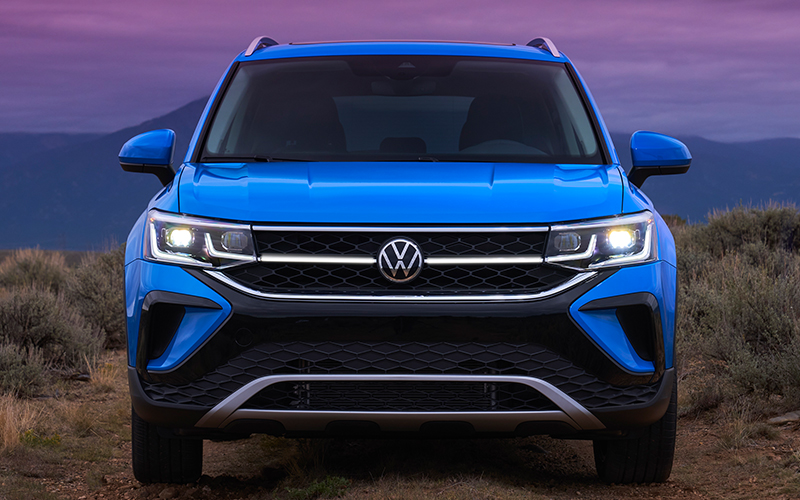
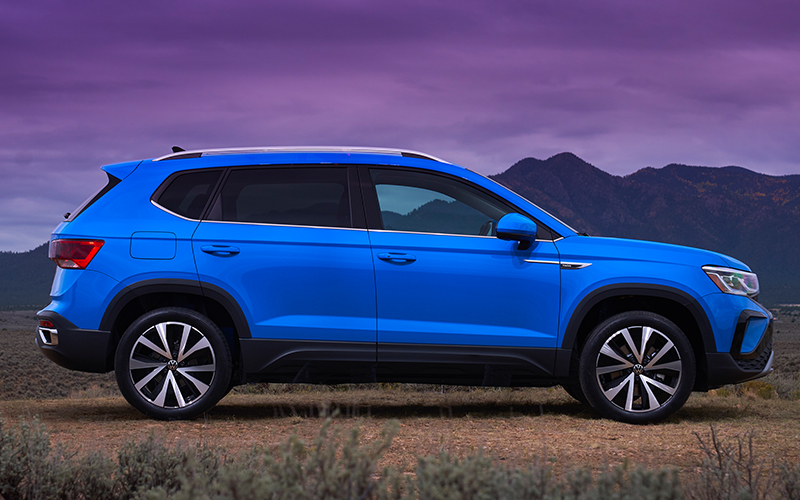
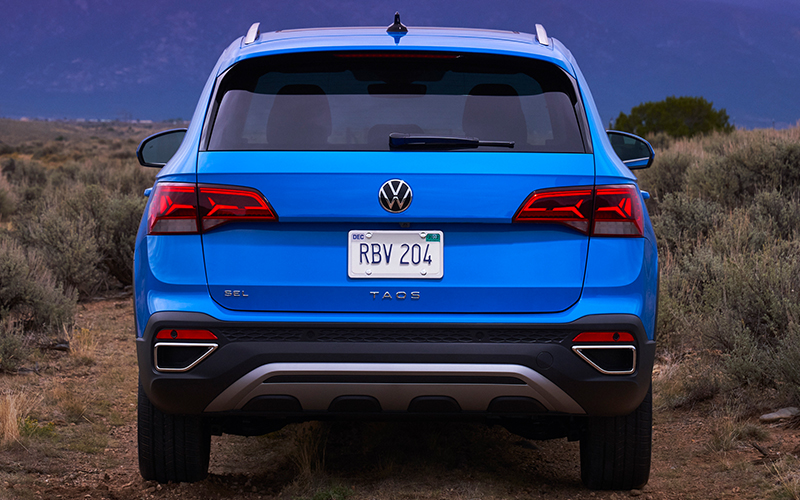
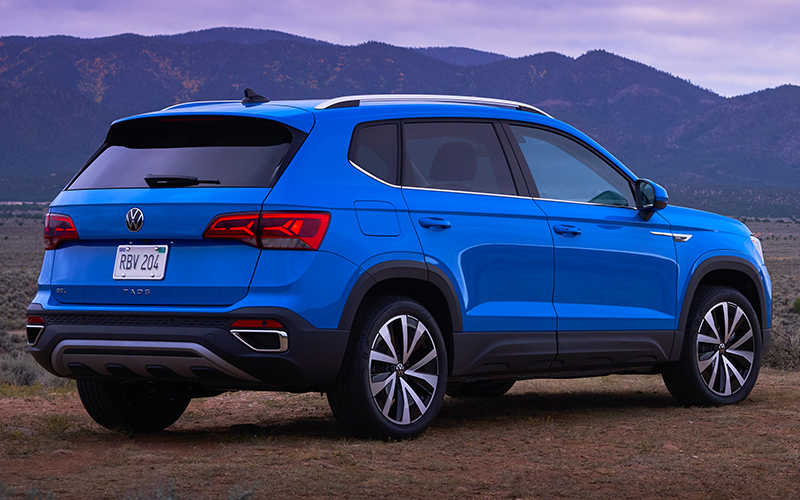
Except for some angular design on the front bumper, which seems to be on every newly designed SUV from Toyota to Mitsubishi, everything looks like a Volkswagen SUV. This means the Volkswagen Taos is a somewhat conservatively masculine design but generally blends into everyday life and doesn’t call attention to itself. VW calls it “classical.” The great thing is since it’s not a slave to the latest fashion bits, it won’t be looking out of place in five years.
What’s the Price?
Currently, it looks like the estimated base price of the Volkswagen Taos will start at $22,995, which puts it around $2000 less than the somewhat larger Tiguan. We suspect that the Taos, like its SUV siblings, will come in S, SE, and SE R-Line Black. Volkswagen’s various SUV trim versions are generally separated by a $2500 – $3000 price difference across the SUV lineup. So, although not confirmed, this pricing strategy may put the fully optioned Taos SE R-Line Black at just shy of $26,000.
A Strong Effort
Volkswagen has done a good job expanding its product line, giving everyone an option to roll-in to an SUV. Like the Atlas, the current best seller Tiguan, and Atlas Cross Sport, the Volkswagen Taos is German designed crossover with quality and engineering in its DNA. Without a doubt, it’s no surprise that VW would love to expand its 2.19% (2020) share of the automotive market when Taos arrives around the Summer of 2021. Only time and your money will determine if this new entry helps with VW’s plan to open some doors for you.