
Latest News
2026 Is a Pivotal Year for New CarsProject Cars For Sale
Whether you’re got a short list already or need inspiration for you next build, we’ve got plenty of project cars to choose from.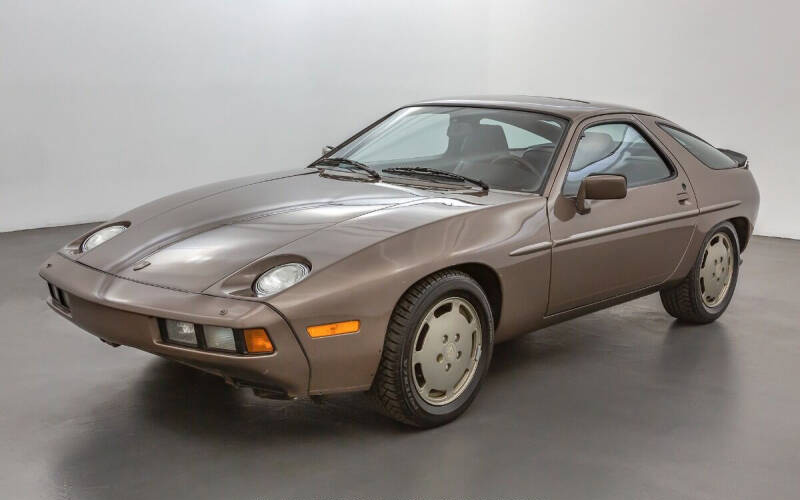
Built Not Bought
There are few more time-honored traditions in the automotive world than building a project car. The desire to modify one’s ride goes back to the earliest days of the automobile as cars have always been an expression of their owner’s personality and values, so much more so when they’ve thoroughly modified or rebuilt it themselves.
Before the advent of the internet, finding a suitable project car was a murky process of trial and error, of barn-find hunting, of knowing a guy who knows a guy, or scouring classifieds for promising listings. Today, you can scour listings on sites like Carsforsale.com and quickly fill a browser folder full of bookmarks of compelling potential project car listings. For a bit of inspiration in your search, we’ve done some digging ourselves, compiling a varied list of prospective project cars for sale on our site.
1964 Ford Mustang
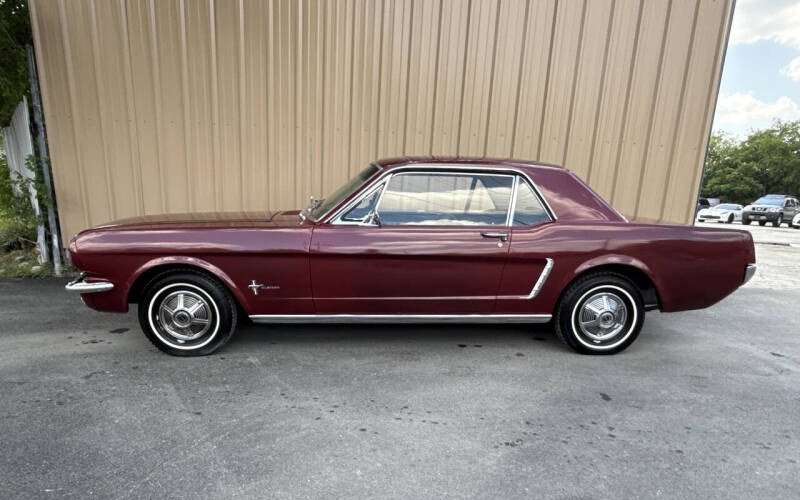
First up is a 1964 Ford Mustang. At first blush, this example might not seem like it needs a lot of work. The burgundy paint job looks great and the interior, with black vinyl seats, looks to be in excellent condition as well. However, this was one of the many early Mustangs that came from the factory with a straight-six under the hood rather than a V8. Sure, dropping in a modern crate motor would be an undertaking in itself, but for those looking for a Zen and the Art of Motorcycle Maintenance-style project car experience, we’d look to swap in a more vintage V8. The ’64 ½ Mustang’s V8 was a 289 Windsor. That small-block V8 saw duty in the Shelby GT350 and was eventually bored to a 302 in 1968, seeing working the Trans-Am racing Boss 302. Either a 289 or 302 seem like deserving motors for this gorgeous ’64 Mustang.
2004 Subaru Forester
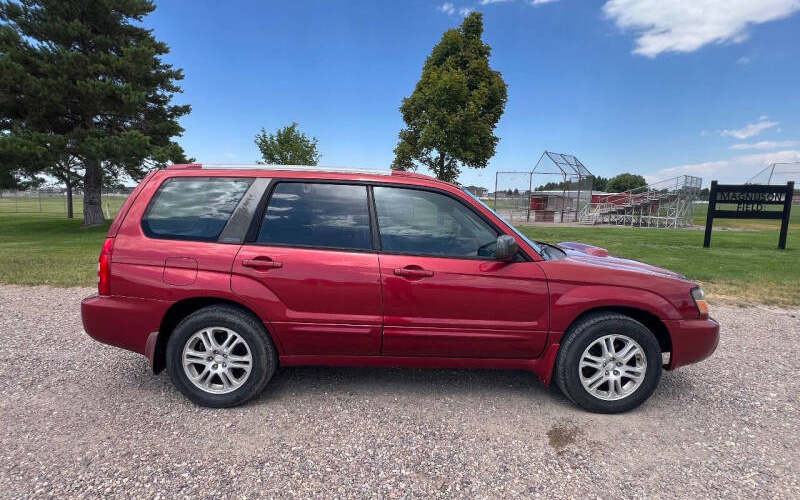
The Forester might seem an unlikely candidate for a project car, but certain versions, like this second-gen turbocharged XT, have gained a following among the Subie faithful. You can pick the turbo XT out by its nifty hood scoop. While an engine swap would be a natural first though, a 20-year-old used turbocharged Subaru motor doesn’t sound like a wise investment, does it? This Forester is listed with a rebuilt title and a price tag of $3,995 so we figure, why not strip the motor back to the essentials and rebuild it with new parts. A Forester project can go at least two ways. First, you can go full tuner and slam it (lower the ride height), get new rims and some summer tires, and upgrade the cooling, exhaust, and turbo. Or … you can go in the opposite direction and make a budget overlander out of it by raising the ride height and slapping on some all-terrains, armoring it with skid plates and loading it down with a roof rack and bull bar.
1952 Buick Super
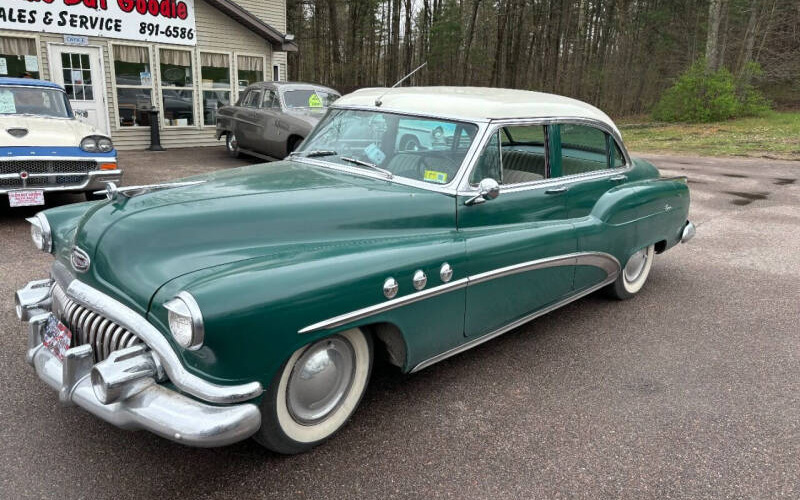
Like the Mustang above, this 1952 Buick Super, with its green paint and gleaming chrome brightwork, already looks spectacular, but under the hood is the original straight-eight. Unless you want to become an expert in a truly esoteric engine, we’d recommend finding something, anything that would be more modern and offer more easily procured parts. The interior of this Buick Super is in decent condition, given the age of the car. Though it’s probably worth considering new upholstery and carpeting so that the quality and condition of the inside matches the outside.
1968 Datsun 2000
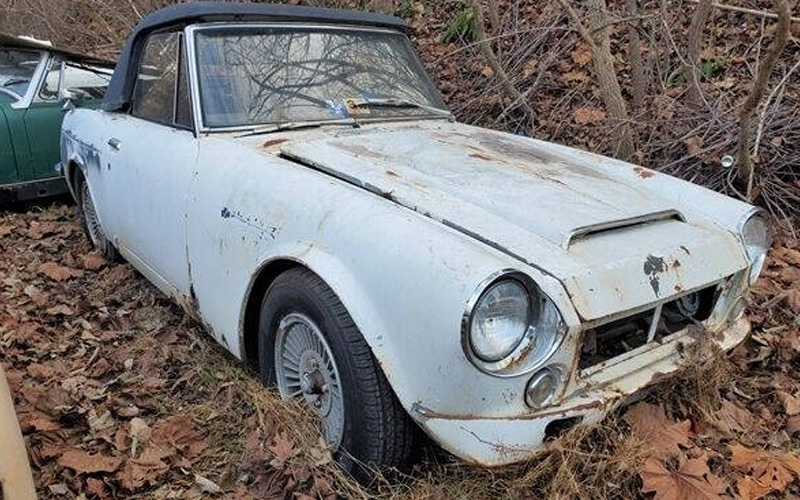
Yes, this one is a project car only for the most intrepid of builders as the condition is … less than ideal. The original Datsun 2000 was produced from 1967 through 1970 with a 2.0L four-cylinder making 135 horsepower. Not a ton of power but at 2,094 lbs. the little Datsun didn’t need a ton of power to scoot. Aside from the body itself and perhaps the shift knob, the rest of the car would need a total rebuild/fabrication. Starting with such minimal materials means the end product would only be limited by your imagination. For those looking for a project car to make into their automotive opus, this Datsun 2000 could be just the ticket.
1983 Porsche 928
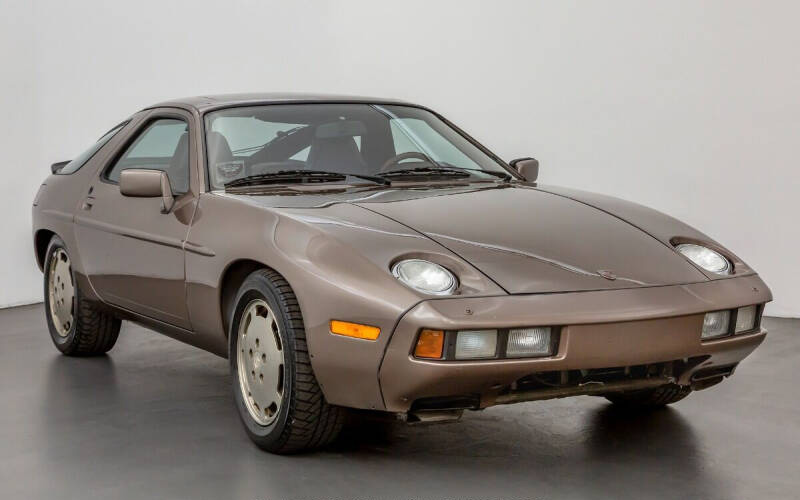
Back in the day, the Porsche 928 was supposed to replace the 911 as Porsche’s halo car. While its front-engine, water-cooled V8 proved a bridge too far for Porsche purists, the 928 did see fifteen years of production. The 1983 example we found has good bones to work from, specifically a fetching paint job and a stunning burgundy leather interior. With that noted, the car does need work. According to the seller, the 4.7L V8 is not running; plus, we can see from the photos the front end’s bottom panel is damaged and beneath those vintage wheel covers, the rims appear rusty. That means a new motor (or rebuild?!), a new front end (plus a check for frame damage), and a thorough interdiction for any and all underside rust. Hey, no one said Porsche ownership was cheap.
2011 Nissan Cube
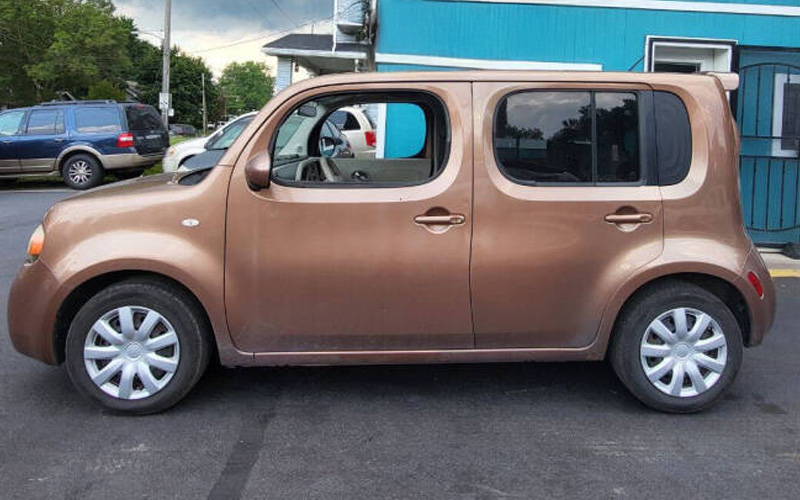
Is the Nissan Cube an odd choice for a project car? Absolutely, but that’s why it’s interesting. This example is in good condition and comes in a fetching copper. The Cube’s unusual design is what makes it worth preserving. Even among other cube cars the Nissan Cube stands out; note the beveling where the body panels meet glass or the asymmetrical rear window that eliminates your passenger-side blind spot. Our suggestion for modifications comes down to a motor swap, a Nissan Juke’s 1.6L turbo four makes 215 horsepower (compared to the Cube’s 128 horsepower) fits well, and any interior revisions you see fit. The Cube’s cabin is heavy on hard plastic surfaces so you basically can’t do worse than what’s already there.
1961 Chevrolet Impala
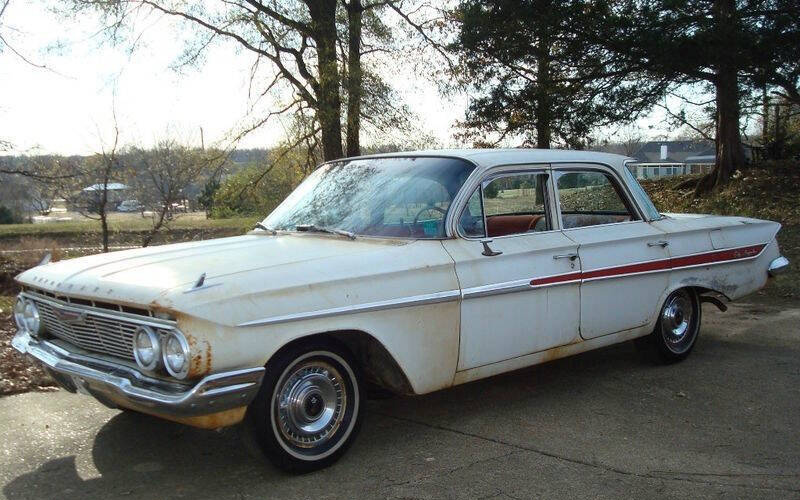
Shopping vintage Impalas suitable for a project car is tough these days. Either you’re finding cars that have already been restored or rusting hulks that the seller still wants way too much for. It took a bit of luck, but we did find a 1961 Impala that could use some TLC rather than a full-on Lazarus resurrection. The best part is probably the dash, which has been kept stock and remains in good condition. The body, engine, and upholstery all offer plenty of work for a would-be project.
1991 Toyota MR2 Turbo
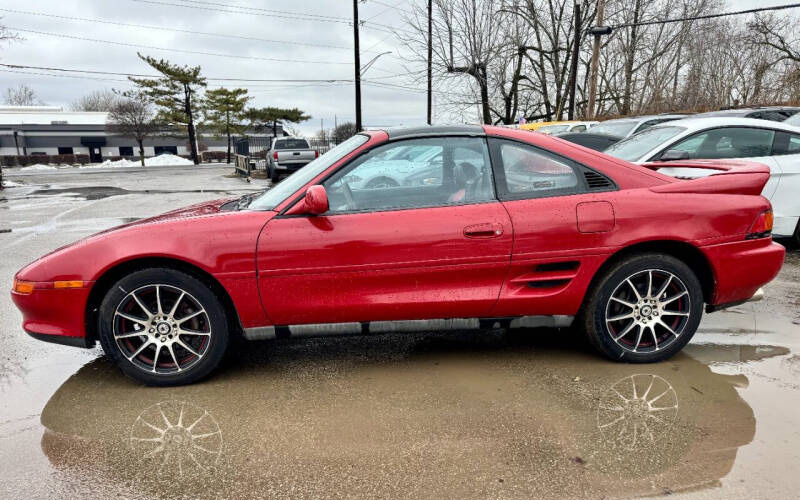
This 1991 Toyota MR2 is another that might not look like it needs so much work. Ah, but that’s the trick. Given its condition, this second-gen MR2 will serve as a great start for a project. Potential upgrades include but are far from limited to a new exhaust system, better cooling, a new turbo, new wheels, new seats, and lots more.
1959 Cadillac Series 62
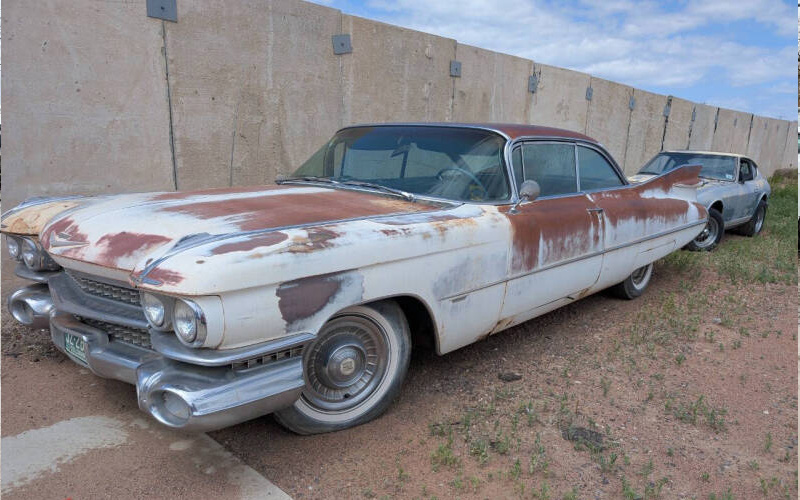
This one is only for the die-hards. The ’59 Caddy is a monument to the era of chrome and fins and restoring one to its original (or greater?) glory is a worthy mission indeed. First order of business, finding new lenses for those double-bullet taillights.
1961 BMW 700
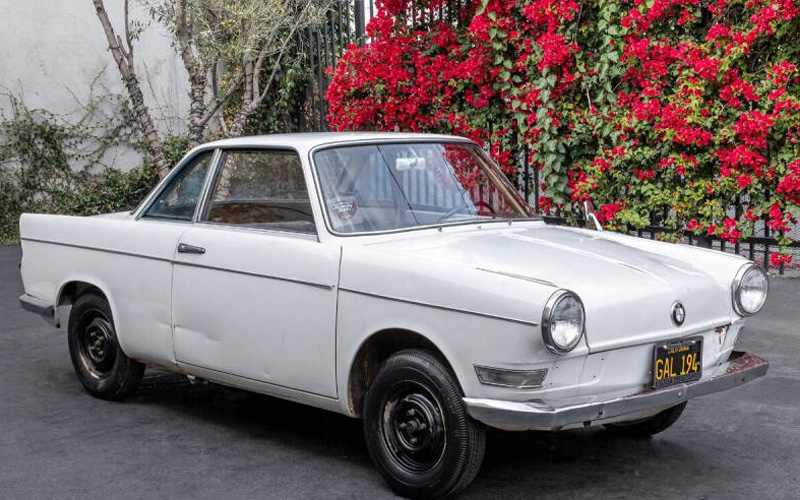
This 1961 BMW 700 is another oddball. The 700, built by BMW from 1959 through 1965, is powered by a rear-mounted 697cc flat-twin engine, located under the load floor in the truck of the car. If you thought, “hey, that sounds like a motorcycle engine!” you’d be right. Perhaps not surprising considering BMW was deep in the motorcycle business (plus Honda, another motorcycle company, did basically the same thing with some of their early road cars like the N360). Since the flat twin is located in the trunk, the possibilities are practically endless for what you might swap in, so long as you don’t mind giving up cargo space or re-engineering the drivetrain, cooling, etc. For those who need to stand out from the crowd, this BMW 700 would make an awesome project car.