Latest News
2026 Is a Pivotal Year for New CarsSafest Used SUVs You Can Buy Today
Here's a roundup of the safest late-model compact and midsize SUVs. They combine real-world handling, strong safety scores, and driver assist tech.Shopping for a safe used SUV can feel overwhelming. After all, choosing a safe used SUV isn’t just about star ratings. It’s about protection, driver-assist technology, and how a vehicle behaves in real-world conditions. That’s a lot of information to sort through. Well, we put together a list, and these late-model SUVs offer a variety of safety features to help drivers remain in control during all kinds of situations.
Kia Sportage
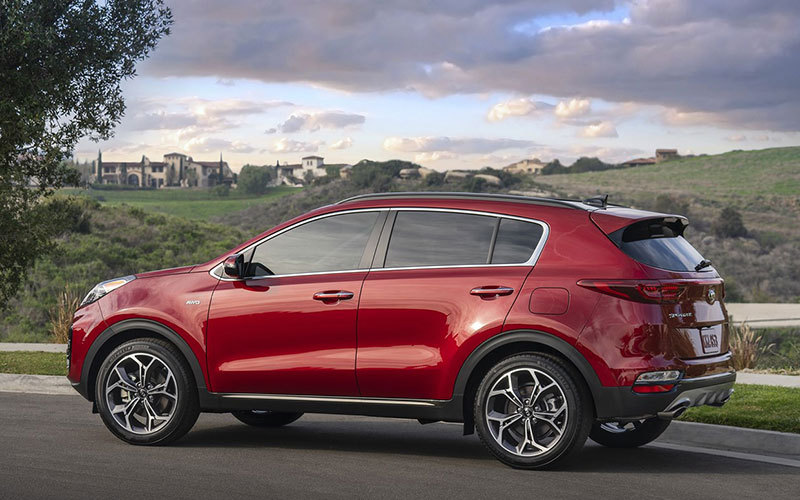
This compact SUV is built to keep you safe without costing a fortune. Standard driver-assist features on 2023–2025 models include automatic emergency braking, lane-keeping assist, lane-centering, and driver-attention monitoring. Higher trims offer blind-spot monitoring, a rear cross-traffic alert, and a 360-degree camera, too. Whether you’re on city streets, highways, or country roads, available all-wheel drive (AWD) helps drivers in rain, snow, or mud.
The 2024 model was a Top Safety Pick for the Insurance Institute for Highway Safety (IIHS), getting good results in crash tests. The National Highway Traffic Safety Administration (NHTSA) gives it 5 stars overall. Recent Kia Sportage models are a good choice for drivers who want a safe, capable SUV without a huge price tag.
Toyota RAV4
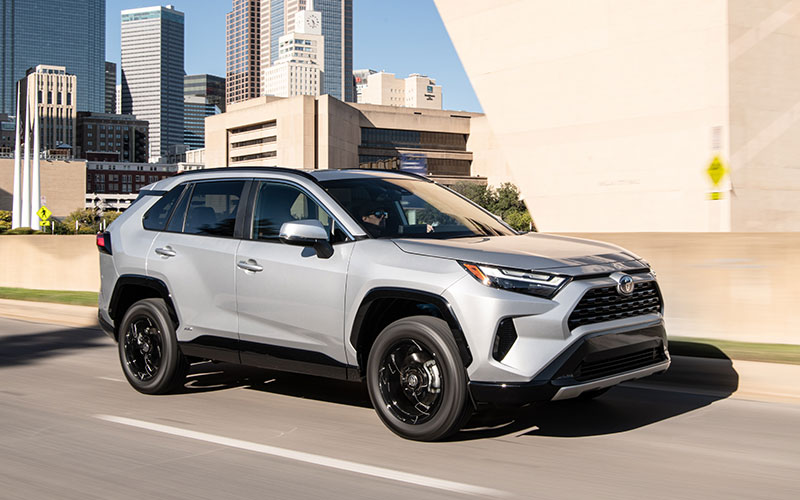
Backed by Toyota’s reputation for safety, the RAV4 is a reliable compact SUV. The Toyota Safety Sense 2.5 suite is included on every model. That gives drivers automatic emergency braking, a lane-departure alert with steering assist, adaptive cruise control, and lane-centering. Many trims also add blind-spot monitoring and a rear cross-traffic alert.
Available AWD comes with a Multi-Terrain Select system that lets drivers customize their driving settings with modes like “Deep Snow,” “Rock and Dirt,” or “Mud and Sand.” The RAV4 consistently earns strong scores on IIHS crash tests and gets 5 stars from NHTSA. It really is a simple compact SUV that drivers can depend on.
Ford Edge
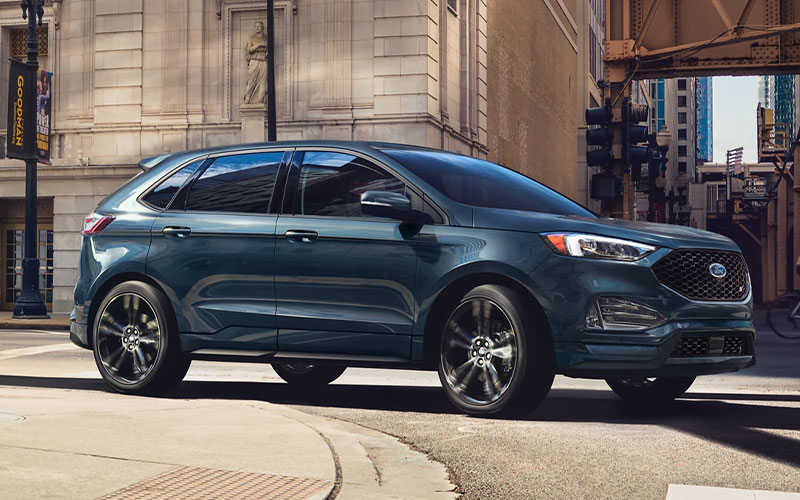
Now that the Ford Edge has ended production, used models aren’t just a good option – they’re the only option. Thankfully, the recent models were well-equipped with Ford Co-Pilot360. It provides automatic emergency braking, lane-keep assist, blind-spot monitoring, a rear cross-traffic alert, and automatic high beams. Upper trims include adaptive cruise with lane-centering and a 360° camera system.
Like many others on this list, the Edge has available AWD and selectable drive modes for snow or slippery roads. It’s balanced, it’s controlled, and it’s got solid IIHS safety scores. The only thing they noted was headlight performance, but that varies by trim. Meanwhile, the Edge received 5 out of 5 stars from the NHTSA. Overall, it’s one of the safer midsize SUVs for late-model used car buyers.
Hyundai Santa Fe
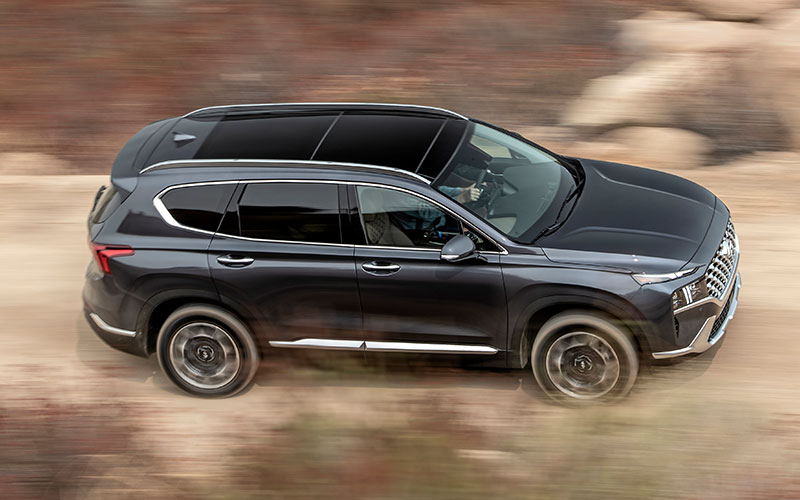
When roads get slick, or the terrain gets a little rougher, the Santa Fe is ready. 2022 – 2024 models earned an IIHS Top Safety Pick, plus 5 stars from the NHTSA. That’s partially thanks to the available Hyundai Traction – or HTRAC – AWD system. Along with the “Normal” and “Sport” driving modes, there’s one for mud, sand and snow. The HTRAC AWD continuously monitors 50 vehicle inputs to send torque to the right wheels at the right times.
Now, let’s get to the driver assistance features. Lane keep assist, a rear cross traffic alert, a pre-collision safety system, blind spot monitoring, lane departure warnings, and accident avoidance are all standard. No matter which Santa Fe you buy, it’s set up for safety.
Honda CR‑V

Naturally, we’re talking a lot about top safety picks in this article. Well, the Honda CR-V has been an IIHS Top Safety Pick for the past decade. The last time it didn’t earn that designation was on the 2014 model. Recent models come with Honda Sensing, their safety suite that brings in automatic emergency braking, adaptive cruise control, lane-keeping assist, and road-departure mitigation.
Unfortunately, higher trims are where you’ll find blind-spot monitoring, a rear cross-traffic alert, and optional surround-view cameras. But even without those added features at the base level, predictable handling and the available AWD system keep it steady on slick or rough roads. The CR-V is a compact SUV that protects you without a bunch of fuss.
Mazda CX‑5
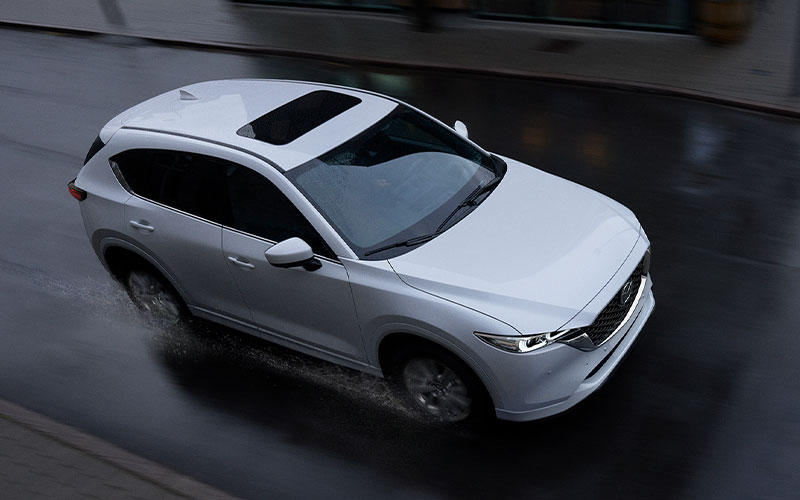
In many ways, Mazda continues to lead the compact SUV segment. It was a favorite on our Best Compact SUVs of 2023 list. When it comes to safety, it does well, too. Late-model CX‑5s come with i-Activsense. This AWD system adjusts torque to improve stability and traction, helping avoid accidents in slippery conditions. The IIHS gave 2023 models “Good” and “Superior” ratings when it came to crash tests and collision avoidance – the highest scores it can give.
Forward automatic emergency braking with pedestrian detection, lane-keep assist, blind-spot monitoring, a rear cross-traffic alert, and adaptive cruise are all standard here. The optional driver-assist features really round it out with a reverse collision warning, driver-attention monitoring, adapting pivoting headlights, and front and rear parking sensors.
Kia Sorento
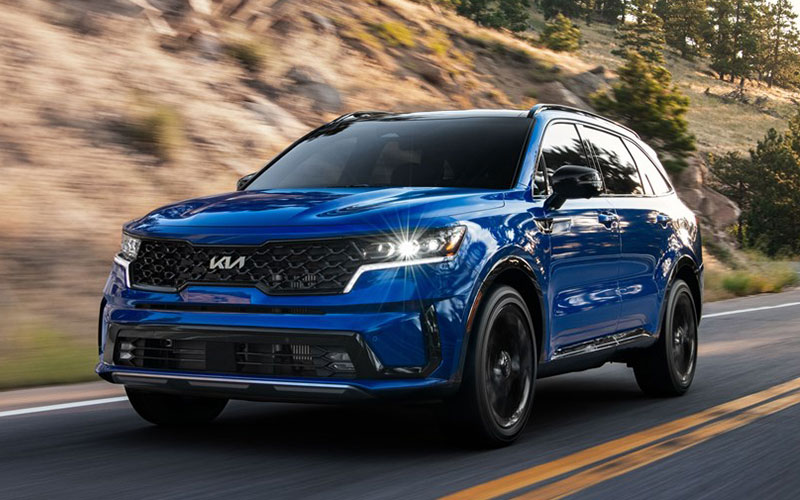
The 2022–2024 Sorentos all earned IIHS Top Safety Pick status and 5 stars from NHTSA, proving it can take a hit. The available AWD keeps it planted on wet or snowy roads, too. However, it’s really the long list of driver assists that makes the Sorento stand out. They’re not just available on higher trim levels either.
Kia gives every driver a serious dose of standard features, including lane-keep assist, a rearview camera, a rear cross-traffic alert, pedestrian detection, forward automatic emergency braking, and more. It’s actually easier to just list with features are available and not standard: cyclist detection, intersection assist, a surround-view camera, a blind-spot camera, and front and rear parking sensors.
Toyota Highlander
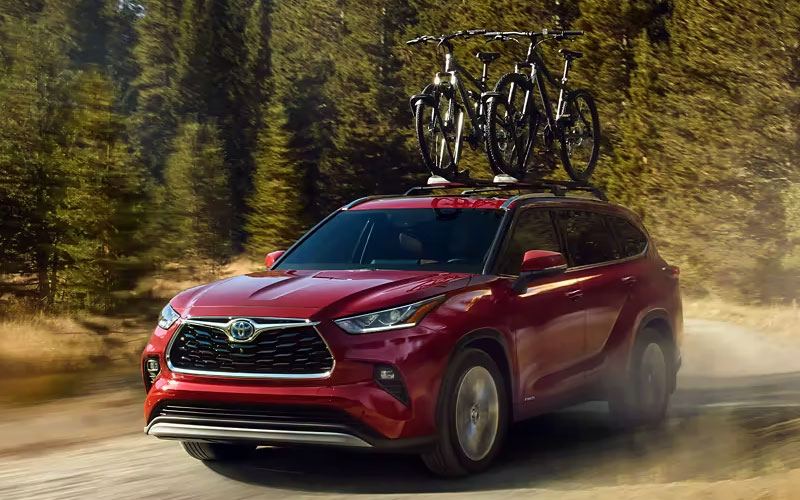
The Highlander delivers safety tech that actually works when roads get tricky. There is a FWD version, but the available torque-vectoring AWD is what will help in slick conditions. You’ll find standard Toyota Safety Sense 2.5 and 2.5+ systems, which means you get automatic emergency braking, a lane‑departure alert with steering assist, adaptive cruise, and lane-centering on every model.
At this point in the list, it shouldn’t surprise you that the 2023 model earned Top Safety Pick+ from IIHS. It did so by scoring “Good” in small‑overlap front, side impact, and roof strength tests. It’s also rated highly for child occupant protection, making it a strong choice for families who prioritize both tech and crash performance.
Hyundai Tucson
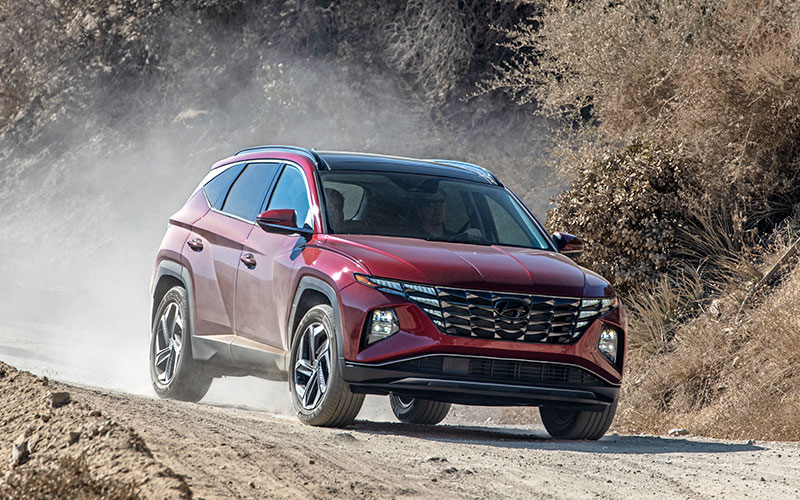
Hyundai isn’t quite as generous as other automakers when it comes to standard driver assistance features. Forward collision avoidance, lane-keeping assist, lane-centering, and driver-attention monitoring come on every model. But blind-spot cameras, a rear cross-traffic alert, and a surround view camera are saved for higher trims.
The Tucson does get strong NHTSA scores in frontal and side-impact tests, though. It tested well in rollover prevention and child occupant protection tests, too. Plus, with available AWD, the compact SUV feels composed through sudden maneuvers – whether you’re traveling on rain-soaked, snow-covered, or icy roads. Driver-assist features are a bonus, but the Tucson proves real safety is more than cameras and alerts.
Subaru Forester
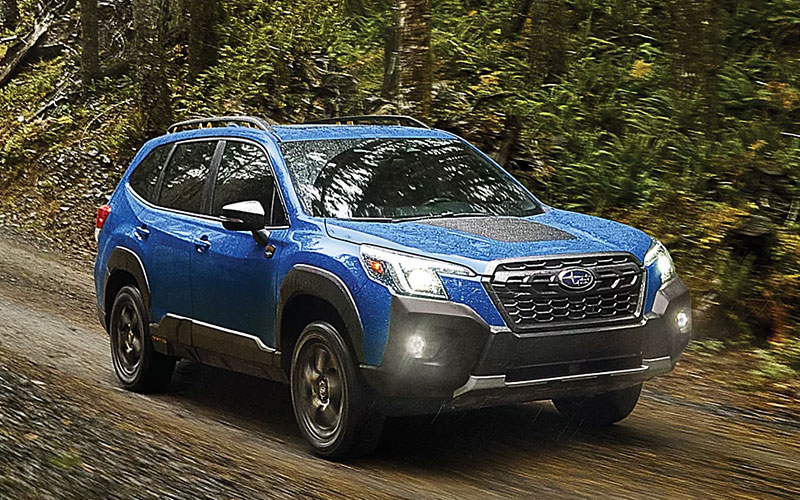
This one also continues to earn top marks for safety, combining a rigid crash structure with excellent crash-avoidance tech. All 2023–2025 models come standard with EyeSight, Subaru’s driver-assist suite. It utilizes automatic emergency braking, lane-departure warning and prevention, forward collision mitigation, and adaptive cruise control. Upper trims add blind-spot detection, a rear cross-traffic alert, and a 360° camera for extra awareness. Mostly, though, drivers say that these features rarely malfunction.
Of course, every Subaru comes with AWD. That, combined with responsive handling, keeps the Forester steady in all kinds of weather, on streets or even in some off-roading situations. The taller windows also help with visibility. On top of all of that, strong crash-test performance rounds out the compact Forester as an SUV that delivers protection and confidence. Across the board, the tech and builds of these compact and midsize SUVs prove their worth in real-world situations.
Related Articles