

Latest News
2026 Is a Pivotal Year for New CarsIdentifying the First-Gen Ford Mustang
Knowing your first-gen Mustangs at a glance requires tracking year-by-year changes, from subtle details to major shifts in styling.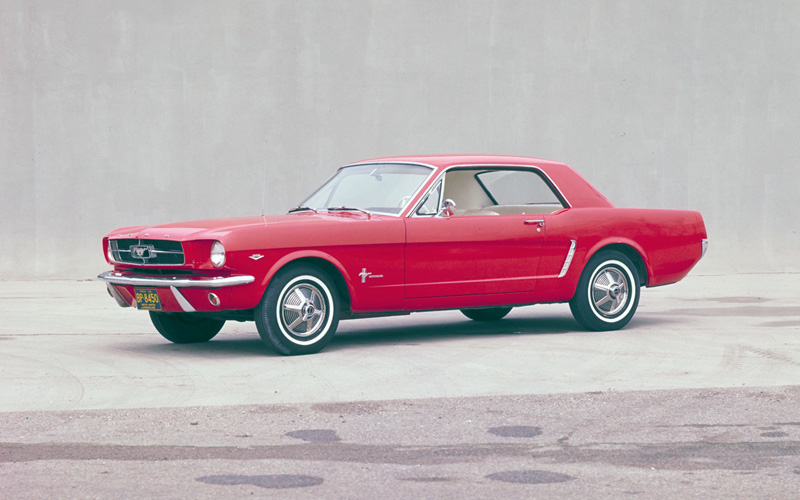
First-Gen Mustang by Sight
The Ford Mustang is among the most iconic cars of all time. Naturally, we all feel confident we could pick a first gen Mustang out of a line up with ease. And if your mind’s eye is conjuring a 1965 or ’66, I’d say that’s a safe bet. But the Mustang’s first generation was long, from 1964 through 1973 with eight (and a half) model years, and the definitive pony car saw numerous permutations along the way with sometimes radical year-over-year changes. Those vastly different guises can make distinguishing between an early, mid, or late first-generation Mustang a challenge.
Not a Mustang II
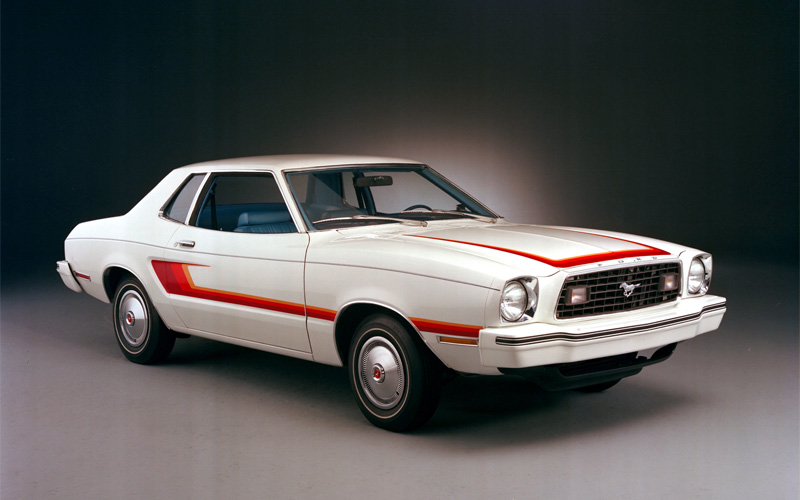
The first thing required in distinguishing a first-generation Mustang is to know what’s not a first generation. That’s pretty easy when you’re looking at latter-day Mustangs like the blocky third-generation Fox-body of the 1980s or the curvaceous fourth generation from the 1990s. The greater challenge, however, goes back to the transition from the original Mustang of the 1960s and early ‘70s to the Mustang II of the mid- ‘70s.
The Mustang II, model years 1974 through 1978, gets a bit of a bad rap as it’s the Mustang that was doomed to endure the Malaise Era. A massive drop in horsepower and a repositioning as an economy-minded sports coupe were the prices paid to ferry the Mustang name forward to better days. For its day, the Mustang II was not a bad looking car, despite its Pinto derived platform. Key distinguishing features include a body-matching chunky front bumper and individuated headlight housing and associated high fender line reminiscent of European sports cars (a possible influence of the numerous Ghia designs of the Mustang getting churned out in the early ‘70s, Ghia was at the time a recent acquisition by Ford). The grille is another giveaway, as it brought back the center rectangular design that had been dropped since the 1968 model year.
The ‘64 ½- ‘66 Mustang
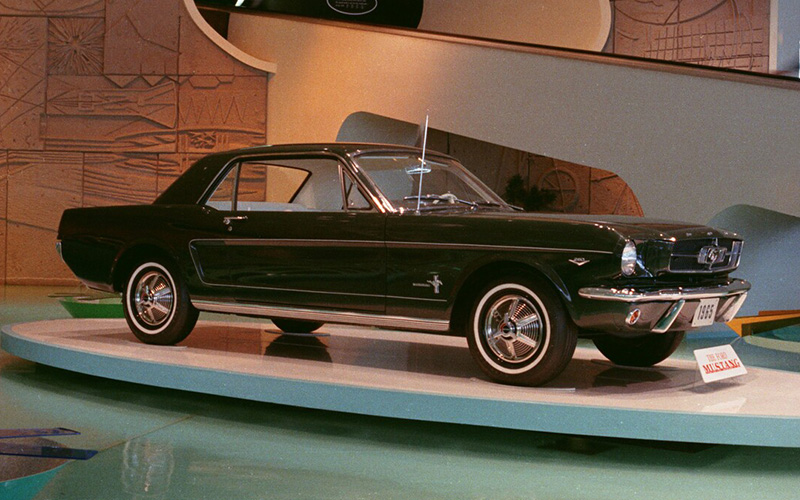
First of all, what’s with the half year designation and does it make a difference to visually identifying early Mustangs? The 64 ½ is unofficial nomenclature for those Mustangs built in early 1964, from March through July, prior to the traditional model year turnover in August. Those few 64 ½ Mustangs are nearly identical to those that immediately followed, excepting minor details, one being the windshield wipers. 64 ½ Mustangs have chrome wipers with beveling below the pivot/mounting points. For proper ’65 model year Mustangs, that beveling is moved to above the pivot. Under the hood, the horns are mounted to the frame directly behind the radiator.
The 1965 model featured the Mustang’s first major design evolution, the introduction of the fastback, a gradual slope from the rear roofline to the rear deck. The Shelby GT350 was offered exclusively with the fastback design as well as its hood scoop and Wimbledon White paint job with blue Le Mans center racing stripes. GT models added fog lamps to the grille and rocker panel striping in addition to the 289 V8 and disc brakes.
The 1966 model swapped out the Mustang’s honeycomb grille insert for one with horizontal strakes. Other minor alternations included a new gasp cap, modifications to the faux side vents, and a new five-pod gauge cluster.
1967-68 Mustang
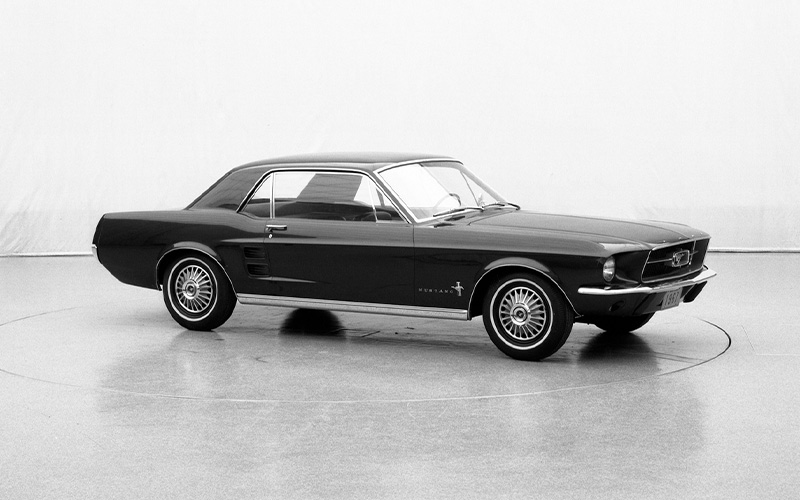
1967 saw the Mustang’s first major redesign. The car grew bigger, adding two inches to overall length (with the wheelbase remaining the same 108 inches) and 2.7 inches in width. The added size helped give the Mustang a more intimidating road presence as well as allowing for larger V8s in the expanded engine bay. A new twin-cowl dash design was implemented as were new concave taillights and more deeply set headlights. The Shelby GT500 was introduced in ’67 and both it and the GT350 featured unique styling punctuated by an aggressively scalloped front end, functional hood scoops, and dual side intakes. Driving lights are center mounted on the grille.
Federally mandated side marker lights were added for the 1968 model year. The FORD badging on the hood was deleted as was the crossbar for the grille. The ’68 model was featured memorably in Steve McQueen’s Bullitt, a Highland Green fastback Mustang with a blacked-out grille.
1969-71 Mustang
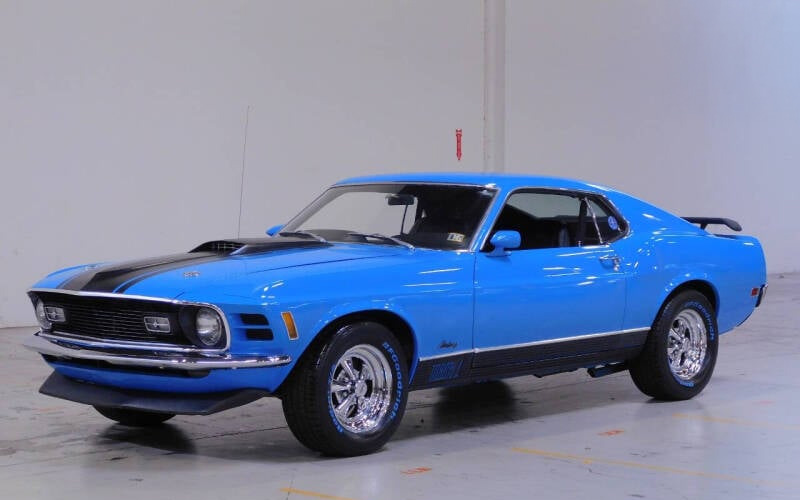
Another redesign for the 1969 model year saw the Mustang get even larger, adding four inches in length and hunkering down by one inch. Reverse side scoops and a steeply raked windshield added to the lowdown look. The front end now had full on quad headlights rather than center driving for the GT model. A new tribar and pony emblem replaced the old and was repositioned off center.
An even bigger redesign was implemented for the 1970 model. The quad headlight design was nixed, with new faux intakes replacing the outer set of lights. The Mustang’s signature side scoops were deleted and the tribar pony emblem moved back to the center of the grille. The Mach 1 trim added visual cues like NACA ducts on the hood, hockey stick racing stripes, a rear spoiler, and squared amber lamps inside the grille.
1971-73 Mustang
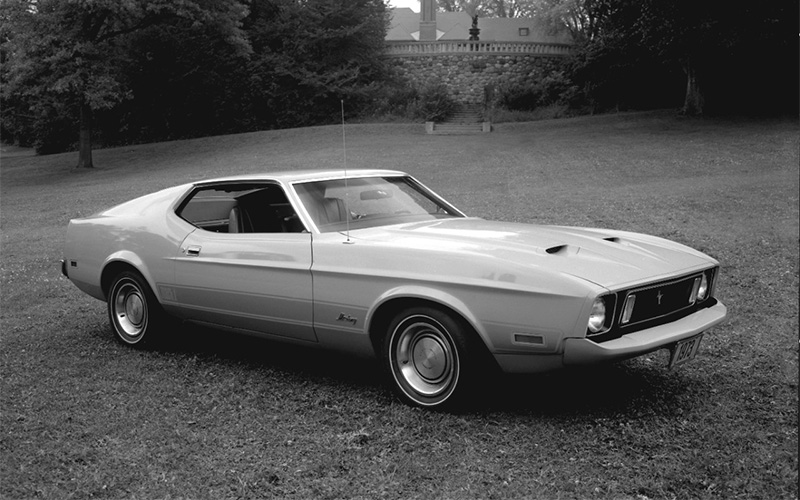
The 1971 Mustang added yet more size, blurring the line between pony and muscle car. An inch was added to the wheelbase, two inches to overall length, and three inches to overall width. The wider grille enveloped chrome-ringed headlights. Minor changes to the 1972 model changed the script on the truck lid to an emblem but otherwise left things well enough alone.
The 1973 model year was the first-generation Mustang’s last. Chrome again surrounded the headlights, a touch extended to the entire grille. A front urethane bumper became standard to meet federal regulations. The grille lights were turned 90 degrees from horizontal to vertical and now functioned as turn signals for both the regular and Mach 1 versions.
The 1973 Mustang was vastly different from the Mustang that first debuted in April of 1964. Eight and a half model years were enough for the Mustang to be visually reinvented several times over.





It’s 67-68, not to 69
Thank You J! We made that adjustment in the article.
Hi a 64 1/2 also had a 260 V8 with a generator. The 65 had a 289 and an alternator.
67-68 67 had no marker light on rear quarter 68 did.
Thanks for the reply! We do mention in the second paragraph that 68 is when the marker light was added.