
Latest News
2026 Subaru Crosstrek Review
The Bricklin SV-1 was ahead of its time with wild design elements like gullwing doors, a built-in roll cage, and funky–yet-functional bumpers.
Safety First
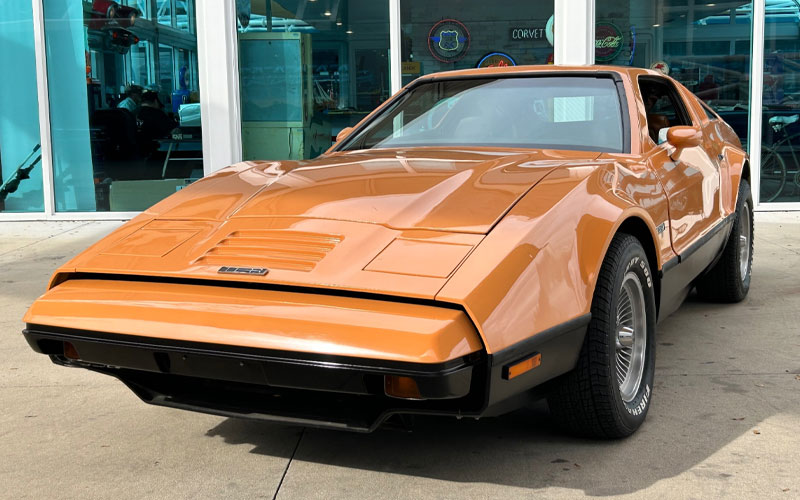
1975 Bricklin SV-1 – carsforsale.com | Shop 1975 Bricklin SV-1 on Carsforsale.com
Call it gumption, ambition, hutzpah, if you will. However you color it, the willingness to not just think differently but act on those ideas can be rare, indeed. In this regard, the career of Malcom Bricklin is undeniably exceptional. The man who brought Subaru to America, and the Yugo as well, is still best remembered for his eponymous Bricklin SV-1, a mid-‘70s sports car that balanced a hearty Ford V8 and eye-catching gullwing doors with an atypical emphasis on safety at a time when most of the industry was just getting wise to the idea of shoulder belts.
So why did the Bricklin SV-1 fail? In a nutshell, it turns out upending convention can be darned expensive, and making cars ain’t as easy as they make it look on TV. While the SV-1 didn’t make it to the black financially, it did break new ground in design, becoming a rare and unusual collectors’ car today.
From 360 to SV-1
The story of the SV-1 begins and ends with its creator, Malcom Bricklin. Bricklin was something of a business prodigy, successfully franchising his father’s Florida hardware business at the age of just 19. Bricklin eventually cashed out of the hardware business, seeking new, more profitable ventures. This led him to parlaying a deal to sell Italian scooters to the New York Police Department. This in turn had Bricklin looking to import scooters from Fuji Heavy Industries subsidiary, Subaru.
In 1968, Bricklin formed a partnership with Subaru, founding Subaru in America, importing not scooters but the company’s 360 kei car. Bricklin identified a gap in the US auto market dominated by gas-guzzling behemoths. Imports like the Volkswagen Beetle and Mini Cooper were demonstrating that at least some American car buyers were eager for something more affordable and fuel efficient.
The Subaru 360, however, was not the answer in as much as the car was not designed with US roads in mind. The 360 weighed in at just 960 lbs., exempting it from typical emissions and safety regulations. Consumer Reports delivered a scathing review, calling the car unsafe due to its small size and comical/dangerous lack of acceleration. While the 360 didn’t prove successful in the US, the venture was profitable for Bricklin who sold out his stake in Subaru of America with the hopes of founding his own car company. (Subaru, for its part didn’t quit either, next importing the Subaru FF-1 and eventually making safety central to the company’s identity.)
Building the “Safety Vehicle”
Bricklin’s eye for unmet needs in the automotive market gave him a new and somewhat ironic north star, safety. Perhaps inspired by the criticism of the 360, Bricklin saw the safety struggles that Detroit was having with cars like the Chevy Corvair and Ford Pinto as an opportunity to provide a product that put safety at the forefront. The ultimate goal was to corner a new market with that emphasis on safety, producing a whole line of practical, consumer-focused cars. But Bricklin knew this new car company would need a halo car to attract attention and investment, and that meant a sports car.
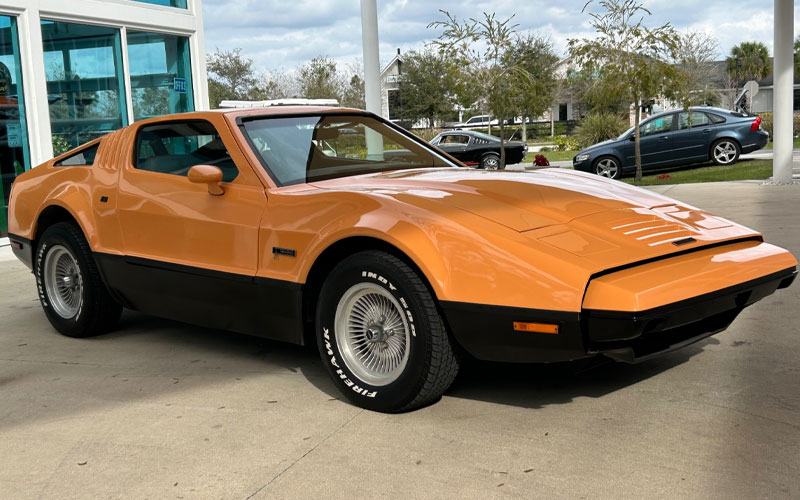
The Bricklin SV-1’s “safety-first” approach began with the name, the “Safety Vehicle One.” Initially, Bricklin had hoped to build a Lotus-like car, lightweight and agile with an efficient four-cylinder engine. That was not to be. As the SV-1 evolved, the practical necessities of making the car as safe as planned meant compromising such a design. Among the car’s key features would be 300-SL-inspired gullwing doors, the latest in safety innovations, and a fiberglass/acrylic body.
Work began on the design with Bricklin hiring Bruce Meyers. Meyers, the creator of the Meyers’ Manx dune buggy, was known for his expertise working with fiberglass bodies. Meyers and Bricklin did not have the best of working relationships and when Meyers bowed out, Bricklin hired Marshall Hobart to complete the design work and customizer Dick Dean to finish the prototype. That first prototype, dubbed the Grey Ghost, was a parts bin car borrowing a Datsun suspension, Toyota brakes, and a Chrysler slant-six under the hood.
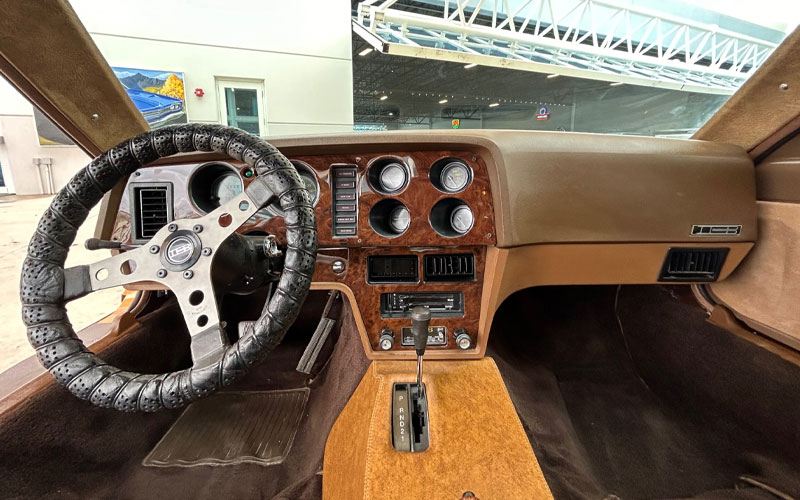
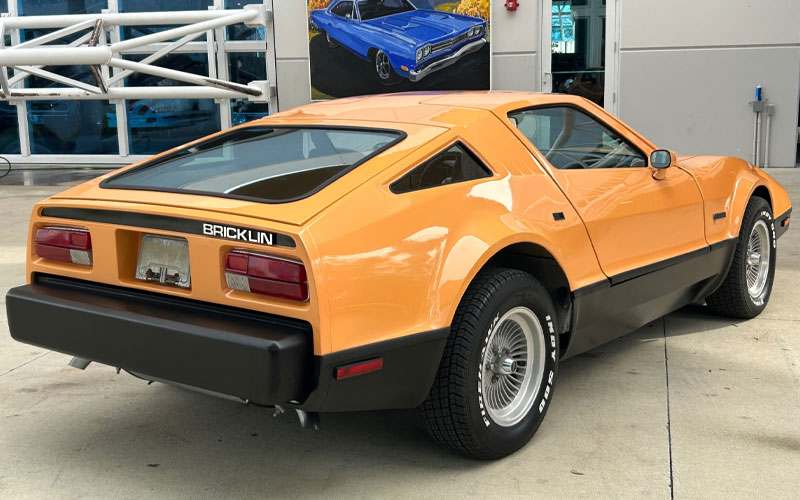
In 1972, Bricklin enlisted Herb Grasse and his AVC Engineering company to help further engineer the car. The Chrysler slant-six was replaced by an AMC 350 V8, and the car received 10-mph compacting bumpers front and rear along with an integrated roll cage and side impact guardrails. More novel than even the gullwing doors was the use of a color-impregnated acrylic bonded to fiberglass for the body panels. Because the color was part-of and not paint onto the acrylic, any scratches could be easily buffed out. Bricklin even chose not to include a cigarette lighter in the safety-conscious car to avoid driver distraction.
Of course, the costs of implementation being what they were, compromises on design were inevitable. These included sufficing with a split of front disc and rear drum brakes and leaf springs in the rear rather than the planned fully independent suspension.
Making Cars is Hard
Though headquartered in Arizona, Bricklin cast about for a suitable place to manufacture the car, one willing to provide the necessary tax subsidies to kick start production and sustain the company to profitability. He found such a place in St. John’s, New Brunswick, Canada. Though Bricklin got $4.5 million (USD equivalent) in subsidies, a good portion of that money went to further R&D on the SV-1 and paying executive salaries rather than ramping up production or hiring production staff.
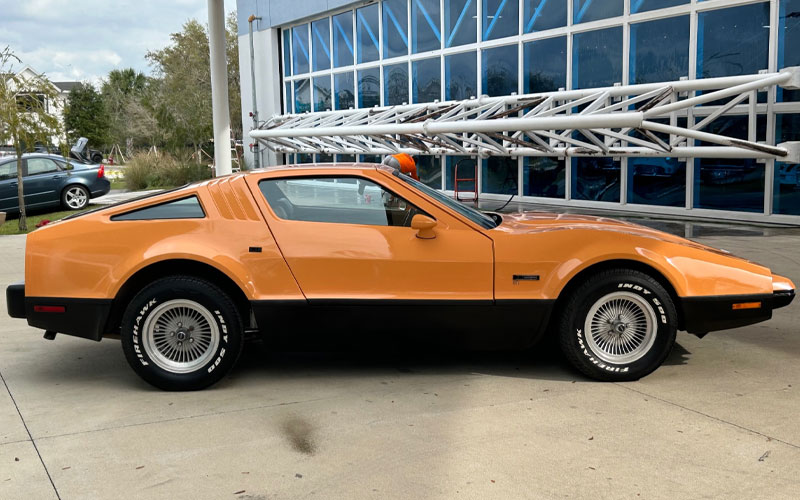
Production on the SV-1 commenced in 1974. The car was well received by the automotive press, drawing not coincidental comparisons with the C3 Chevy Corvette. The SV-1 matched up well with the Corvette, lagging just a half second behind GM’s halo car in the standing quarter mile (16.6 seconds to the Vette’s 16.1 seconds).
Innovative as it was, the SV-1 was far from a perfect car. The decision to build cars in New Brunswick meant a very green workforce new to building cars. This led to quality control issues like leaky door seals, among other chronic inconsistencies. Production might have been ham-handed, but problems with the SV-1 often came back to its rushed and compromised engineering.
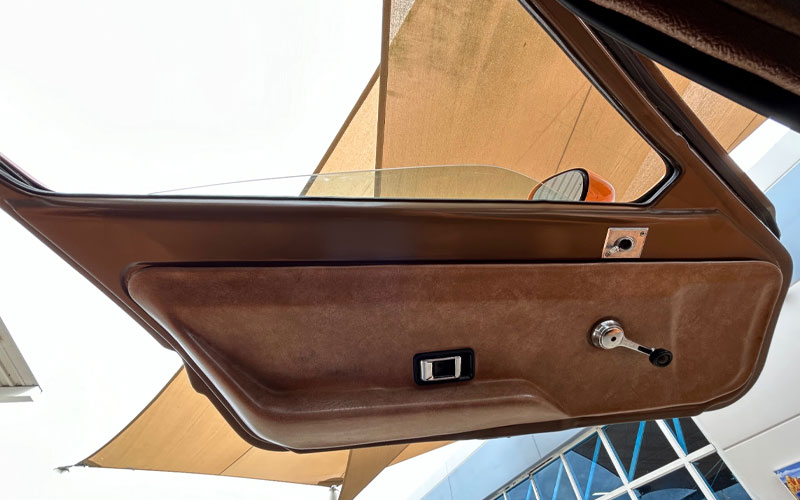
First among the car’s deficiencies lies with its doors. The choice for gullwing doors were not, as you might image purely an aesthetic choice but instead another of the car’s safety innovations. Gullwing doors didn’t open into traffic and made ingress and egress easier for passengers. But the SV-1’s doors were heavy, 90 lbs. thanks to the inclusion of things like retractable glass, side-impact bracing, and interior trim, all things Mercedes-Benz limited or eliminated to save weight on their gullwing doors. The problem with such heavy doors was the SV-1 was using traditional hydraulics often requiring more than 10 seconds to open. A later move to a pneumatic improved but did not eliminate the problem.
Another problem related to the SV-1’s 22 body panels. The fiberglass and acrylic panels were not easy to fabricate, requiring a lot of trial and error on the part of engineers, especially in getting the color-impregnation to work properly.
When Bricklin’s relationship with AMC soured. The AMC 360 V8 was thus traded out for Ford’s workhorse V8 the 350 Winsor in 1975. The new engine was not as powerful as the AMC’s, 175 horsepower for the Ford compared to 220 horsepower for the AMC, but the new engine was reliable and tunable.
Safe, Not Sorry
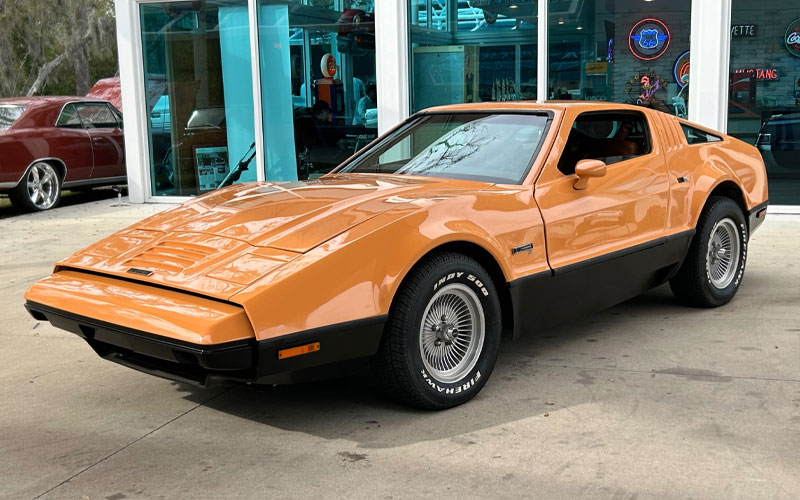
1975 Bricklin SV-1 – carsforsale.com | Shop 1975 Bricklin SV-1 on Carsforsale.com
Refining the SV-1 was a costly affair. As production costs ballooned, so did the price tag of the SV-1 which settled around $10,000. That made it over $3,000 more expensive than the competing C3 Corvette. Profitability proved elusive and Bricklin ceased production of the SV-1 in 1976. A scant 2,906 Bricklin SV-1s were built, the bulk of those in 1975. As for Bricklin himself, he was far from done with the car business, a few years later entering a new importation deal, this time with Zastava Automobiles to bring their Yugo to America.
Like Preston Tucker before him and John DeLorean soon after, Malcom Bricklin leveraged his talent for promotion and an irrepressible enthusiasm for new ideas to produce a compelling, innovative though ultimately unprofitable car. Some cars’ iconic statuses are measured by their longevity and influence. Others, like the Bricklin SV-1 transcend thanks to their originality, indelible not for their success but for their willingness to fail in pursuit of something new.


Why did it fail? 🤣 Ugly, slow, Super low build quality, parts soured from everywhere, including AMC. I had one for less than a day and took it back.
I owned a pristine 74 which was sadly lost in a fire a few years ago. I loved that car. Wish I stilled owned it…