
Latest News
2027 Chevrolet Equinox ReviewDrive this Vanishing Point Challenger
Vanishing Point made a double icon out of the 1970 Dodge Challenger, as both a pre-imminent muscle car of the era and a cult classic movie star.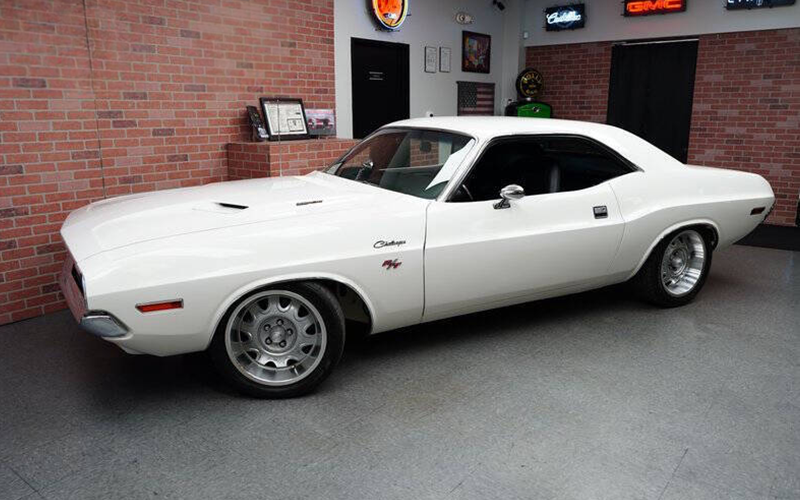
‘70s Cult Classic Vanishing Point
The idea of America has always been defined by movement; spanning oceans to arrive here, expanding westward, crisscrossing the highways and byways, forever searching. There’s an inherent restlessness at our core never to be fully satisfied. Vanishing Point personifies this restlessness in Kowalski and his 1970 Challenger, perpetually on the move.
Vanishing Point is a good example of the tonal shift at work in 1970s cinema. In place of John Wayne and tales of good guys versus bad guys were new stories of full of moral ambiguity featuring flinty-eyed anti-heroes eagerly defying convention and often suffering grave consequences as a result. Vanishing Point’s Kowalski was an existential seeker for a new age. He pointed his 1970 Dodge Challenger toward the horizon and stomped the throttle, using speed, both mechanical and pharmacological, to get himself down the road, through another day, toward what ultimate resolution or understanding he could only dimly imagine.
If you’ve ever wanted to channel your inner Kowalski, we’ve found an incredible restomod example of a 1970 Dodge Challenger in Alpine White perfect for hitting the open road. But before we examine this particle listing, here’s a bit of background on Vanishing Point and the 1970 Challenger.
Vanishing Point’s Bleak Road Trip
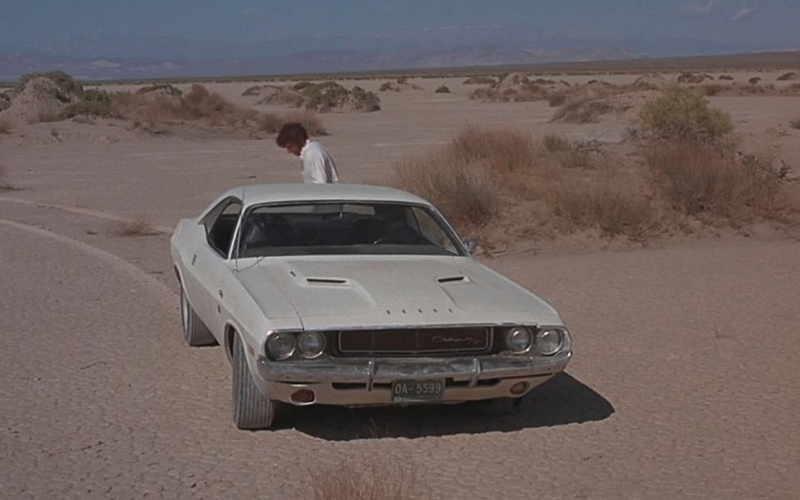
Vanishing Point’s plot is a simple one. Kowalski, played by Barry Newman, is an ex-cop, former racer, and Vietnam veteran. His tumultuous past dovetails with his current profession, cross-country car delivery, provides plenty of open road to work through or escape from his issues. Kowalski, having delivered a Chrysler Imperial to Denver, Colorado, immediately takes on a new job, getting a new Dodge Challenger to San Francisco in two days’ time. Rather than sleep, he fuels up on Benzedrine and hits the road.
So fervent is his need for speed, Kowalski refuses to pull over for two motorcycle cops, running one off the road. Thus starts a multi-state chase that includes a race with a Jaguar E-type, help from a rattlesnake wrangler, a visit to a Pentecostal commune, and not a few hippies, weirdos, and “blue meanies” (cops) along the way. Kowalski becomes something of an instant folk hero, cheered on by a blind radio jockey named Super Soul, played by Cleavon Little (of Blazing Saddles), who regales listeners with the exploits of “the Last American Hero.” Eventually, the cops home in on Kowalski, blocking the highway with a pair of bulldozers. Rather than stop or evade capture, Kowalski hammers the throttle, crashing into the earth movers at top speed and dying in a ball of fire. A very 1970s ending.
(Anti-)Hero Car – Vanishing Point Challenger
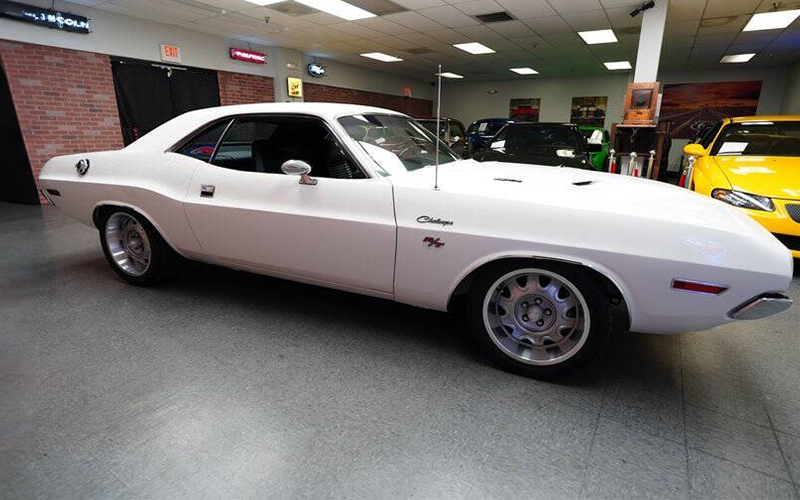
The Dodge Challenger was late in arriving to the muscle car scene. Debuting in 1969 for the 1970 model year, the Challenger was the E-body sibling to the Plymouth Barracuda. It’s Coke-bottle curves, hood scoops, and Hurst shifter paired perfectly with a slew of V8 engine options including the legendary 426 Hemi.
Here are a few interesting facts about Vanishing Point’s Dodge Challenger. The movie had a budget of $1.5 million, little of which was spent on principal cars. The Dodge Challenger got the nod as the hero vehicle thanks to Chrysler’s savvy promotional deal with Hollywood filmmakers, renting out their cars to productions at a rate of $1 per day. Director Richard Safarian chose Alpine White because it stood out best against the beige backdrop of the California and Nevada deserts. Of the five Challengers used in the movie, four carried the 440 Magnum V8 while a fifth was powered by a 383 V8. The 383 was chosen for the movie’s more difficult stunts as the standard four-speed automatic gave stunt drivers one fewer things to think about. Quintin Tarantino’s Deathproof also features an Alpine White 1970 Dodge Challenger as an homage to Vanishing Point.
The movie was not a box-office hit in America, but it began to pick up steam during its international release eventually making its way to cult classic status alongside two other low-budget automotive-themed thrillers also from 1971, Steven Spielberg’s Duel and Two-Lane Black Top starring singer James Taylor.
Buy into the Movie Magic
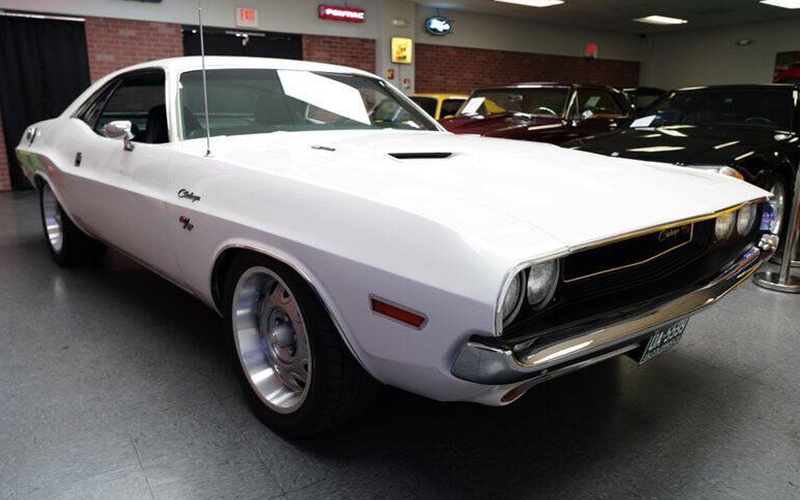
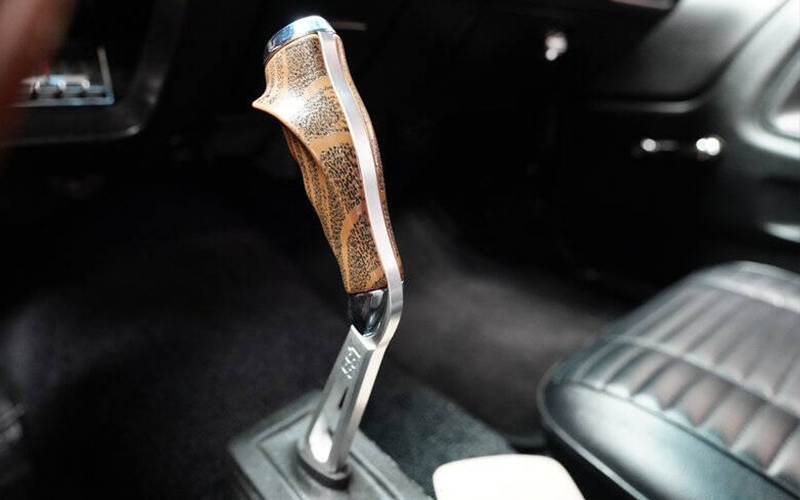
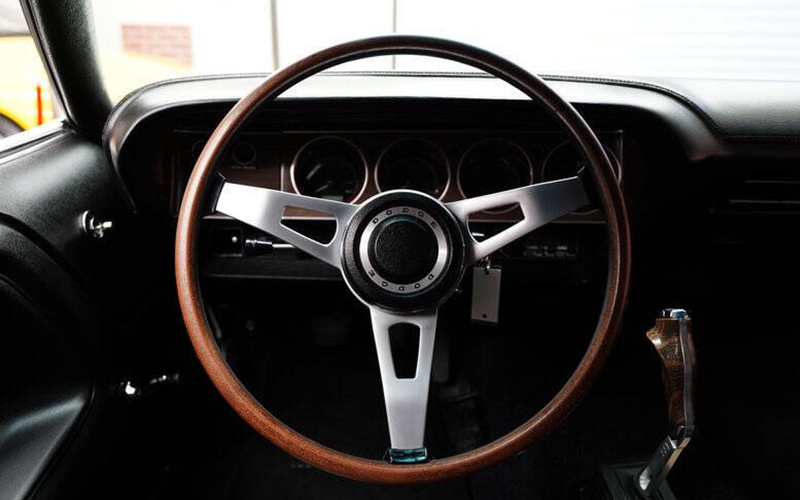
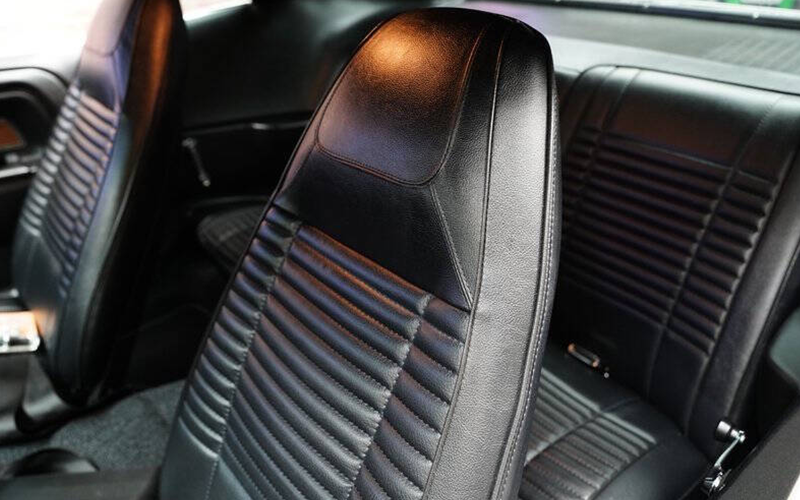
All this brings us to our featured listing an incredible 1970 Dodge Challenger R/T restomod in Alpine White. The car has been fully restored and mechanicals overhauled and improved, all to resemble the iconic Vanishing Point Challenger. The interior features a pistol grip shifter and wood-trimmed steering wheel with black vinyl bucket seats. The Alpine White paint job is pristine, and Nitto tires wrap 17-inch Rallye wheels. Under the hood is a 392 Hemi crate motor. This V8 engine puts out 485 horsepower sent to the rear wheels via a Tremec six-speed manual transmission. Braking is provided by six-piston front and four-piston rear Wilwoods. The dual exhaust comes with MagnaFlow mufflers.
This is a special car, even among movie car recreations, because the Vanishing Point Challenger embodies a particularly American devotion to cars and an American obsession with driving. If the Plymouth GTX was “the gentleman’s muscle car,” then Vanishing Point made the 1970 Dodge Challenger the rogue philosopher’s muscle car, a temple of steel dedicated to speed wherein the driver meditates on movement for movement’s sake alone.