
Latest News
2027 Chevrolet Equinox Review
Ford Delays the 15th Generation Ford F-150
After the 2024 Ford F-150 was given a refresh, were expecting the next-generation Ford F-150 to arrive in time for the 2027 model year. Those plans were just delayed, according to a report from Crain’s Detroit Business. The Detroit Free Press also received confirmation about the production delay, which impacts both gasoline and hybrid F-150s. Any possible production date has been pushed back deep into 2028.
The Importance of the F-150
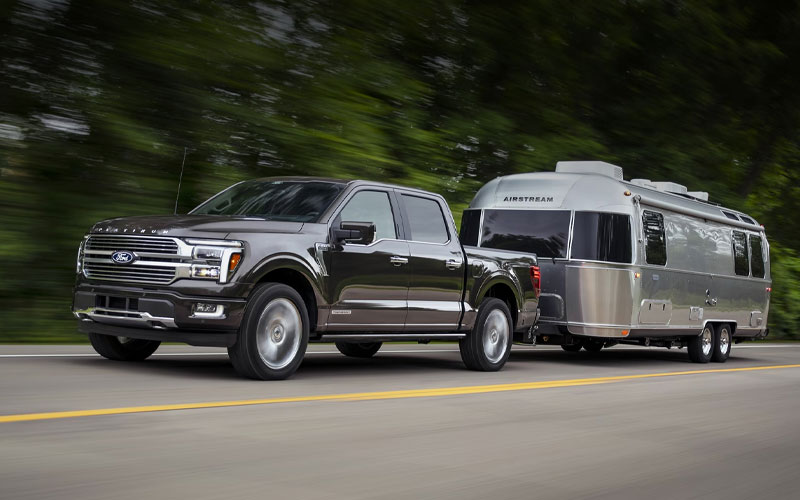
Not only has the F-Series been one of the most beloved cars of all time and one of the best-selling cars of all time, it’s also been the best-selling vehicle in America for over 40 years. First introduced in 1948, this truck offered owners utility from the start. Whether it’s hauling items on the farm, loaded up with luggage for a road trip, or being used as a daily driver, the F-150 appeals to all kinds of drivers. You can hardly make a trip to the grocery store without seeing one.
Ever since the 11th generation kicked off in 2004, Ford has consistently met consumer demand by updating the F-150 with a new generation every five years or so. The most recent generation was introduced in 2021. Being delayed to 2028 certainly isn’t the longest span between new generations, but it is the longest span in a handful of F-150 generations.
Supply Chain Isn’t the Issue
According to their reporting, sources say Ford told its suppliers that production on the 15th-generation Ford F-150, codenamed P736, won’t start until at least mid-2028. It’s apparently not due to supply chain issues, though. The Detroit Free Press reports that sources from within the F-150 supply chain will continue using the 14th-generation P702 parts they already have for another year.
The Cause of the Delay
If supply chain isn’t an issue, then what is? Experts believe price has a lot to do with it. Their analysis is that Ford is carefully watching its spending. Some of those spending concerns could specifically relate to the possibility of increased tariffs and how that would affect the cost of imported parts. Until that situation becomes clearer, the analysts believe Ford made a smart decision. But what kind of impact does that have on the F-150, the consumers, and Ford’s competitors?
Impact of the Delay
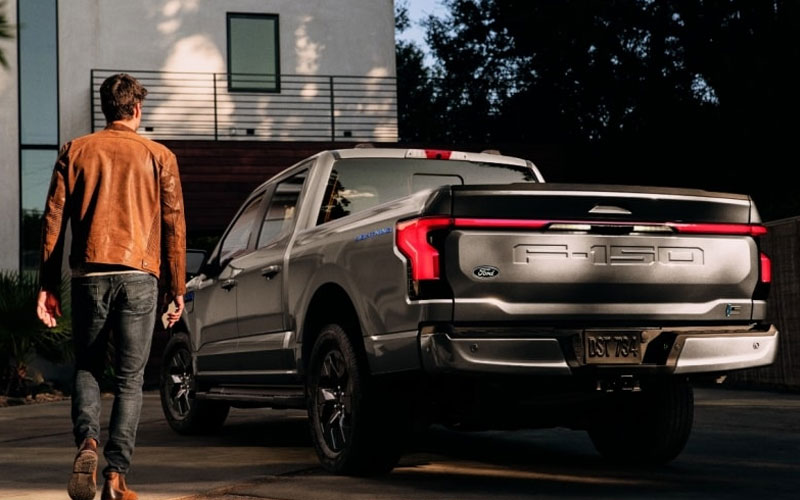
The ‘wait and see’ approach that Ford may be adopting could have a variety of consequences across the board. Some automotive industry insiders believe Ford may need to offer some extra incentives for buyers. Their thought is that the 2026 and 2027 models may need some help in appealing to shoppers looking for an updated truck.
People are also looking at Stellantis, General Motors, and even Toyota. After all, according to Jato Dynamics, sales of the F-150 dropped by around 5% in 2024, just enough to make the Toyota RAV4 the new most popular car in America. This delay could give them a chance to make their own updates and close the gap between them and Ford.
However, an advantage for Ford could end up walking away with out of this is that it’s now got some extra time to put more focus on technology upgrades on the P736, whether it’s to the chassis, the tech inside the cabin, or other amenities.
Changing Plans
One thing several people are pointing out is that none of this is definite. First, other companies may end up delaying some of their lineups, too. A Stellantis spokeswoman recently confirmed plans to temporarily pause work on the next-generation Jeep Compass at the Brampton Assembly Plant in Ontario, Canada. Other automakers are in the same boat right now, rearranging their plans for EVs, hybrids, and internal combustion engines.
Things can certainly swing in the other direction, too, though. One analyst says that after the dust settles in Washington D.C., Ford could always accelerate production of the next-gen F-150. Right now, a lot of plans are shifting, and it seems everyone is anxious to see where things end up.