
Latest News
2026 Ford Maverick Review
Tariffs Fail to Make US EVs Price Competitive
The Biden Administration’s new 100 percent tariff on Chinese-made EVs (electric vehicles) took effect at the end of September. Even with the steep tariff, Chinese automaker BYD is still able to market EVs for less than any currently sold in the US. BYD’s Seagull EV currently sells for roughly $10,000 USD, even with the 100 percent tariff, that is still thousands less than the next least expensive EV on sale in the US, the Nissan Leaf S at $28,140.
Currently, BYD does not sell EVs in the US and CEO Stella Li says they do not have plans for expanding into the US market anytime soon. Concerns mounted over the past year as BYD surpassed Tesla as the world’s largest EV maker (as of Q4 2023) and rumors swirled that the company was eyeing factory locations in Mexico. In August BYD paused plans for a possible three plants in Mexico, awaiting the outcome of the US election.
New tariffs in the US trade war with China have not been limited to finished EVs. Additional tariffs on EV battery components are also being implemented. The tariff on lithium-ion EV batteries is rising from 7.5 percent to 25 percent this year while the tariff on non-EV lithium-ion batteries will also be hiked from 7.5 to 25 percent by 2026. Other critical battery components will likewise see additional tariffs. Graphite and permanent magnets will also see their tariffs rise from zero to 25 percent by 2026. “Other critical materials” for EV batteries will jump from zero to 25 percent this year.
Global EV Sales Up
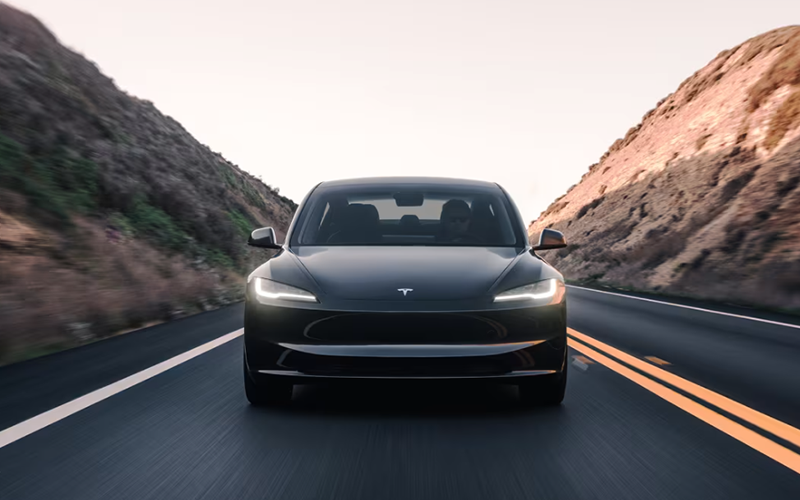
As US policymakers focus on protecting domestic EV production, Chinese EV makers continue their rise. August worldwide sales figures show the extent to which BYD has come to dominate as the company posted sales of 355,174 units representing 24.4 percent of the market. Tesla managed 152,140 units for 10.4 percent of the global EV market. Globally, EV sales have continued to climb lead in large part by China. Overall EV and PHEV (plug-in hybrid) sales were up 30.5 percent in September. EV sales in China rose 47.9 percent while US and European sales grew more modestly at 4.3 percent and 4.2 percent respectively (the UK was a notable outlier with a jump of 24 percent).
Current Tax Incentives and EV prices
The biggest reason for BYD’s incredible growth is its history in the battery business. BYD has been producing lithium-ion batteries since the late 1990s for electronics companies like Motorola and they’ve been able to scale their EV business thanks in large part to their robust and long-held involvement in the supply chain of battery components. Indeed, China’s current advantage in battery production is the direct result of government policies, including subsidies grants, and regulations, aimed at gaining market dominance in EV battery production, one they’ve largely achieved.
The IRA (Inflation Reduction Act) of 2022 was a bid by US policymakers to catch up. New federal tax credits were designed with domestic EV production in mind and to that effect limited those tax credits to vehicles with a certain percentage of US components. Specifically, $3,750 in tax credits are available vehicles meeting the “critical minerals” requirement and another $3,750 for those vehicles meeting the battery components requirement for a maximum of $7,500 in tax credits on new EVs (certain used EVs qualify for up to $4,000).
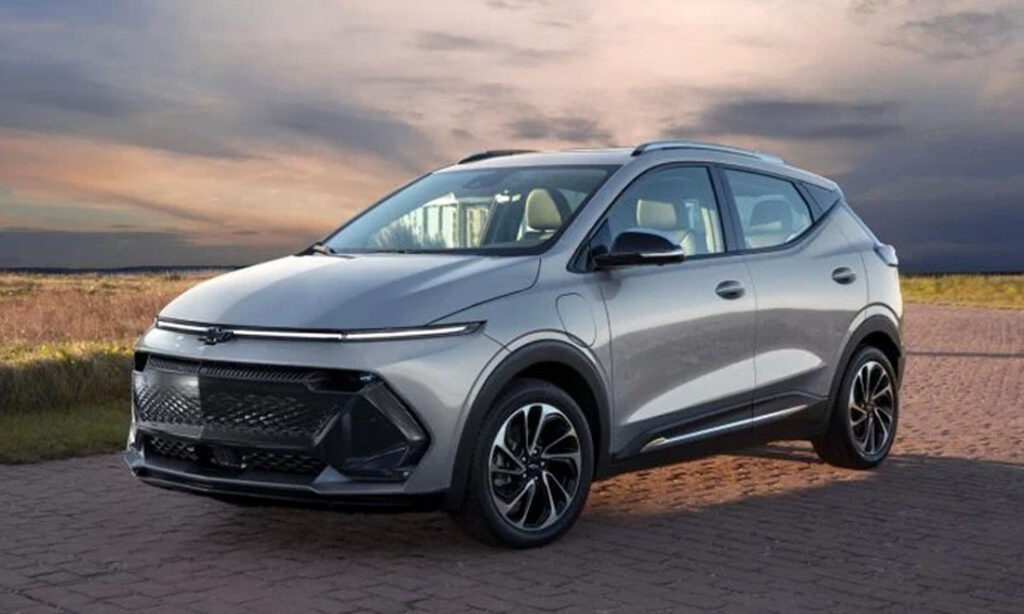
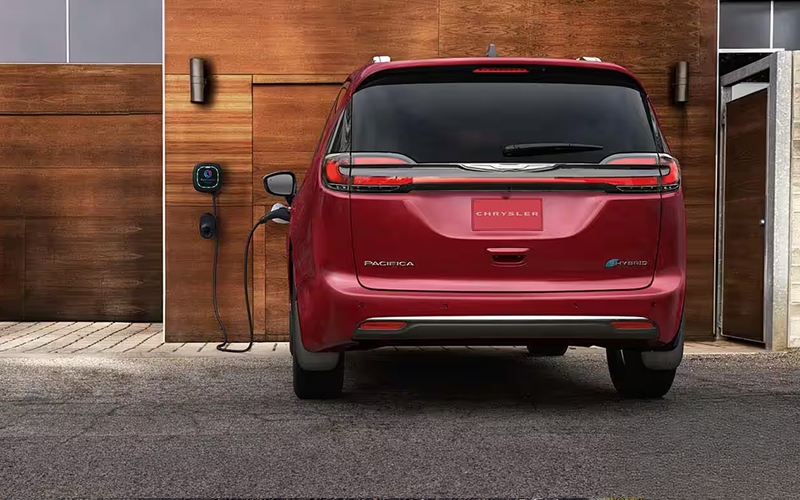
Examples of vehicles that currently qualify for the full $7,500 include the Chevrolet Bolt and Bolt EUV, the Honda Prologue, and some PHEVs like the Chrysler Pacifica PHEV. Rivian’s R1T and R1S qualify only for $3,750 in tax credits while Telsa’s Model 3 and Model Y qualify for up to $7,500. Even with a slowdown in rate of EV adoption in the US and increasing domestic price competition, prices for a new EV remain above equivalent ICE (internal combustion engine) cars with an average EV transaction price of just above $57,000 in the third quarter of 2024 versus an average of $47,000 for gas-powered cars.
Policies aimed at staving off Chinese dominance in EVs and encouraging domestic EV production here in the US may be working at cross purposes, at least in the short term. The IRA’s US-made provisions push American carmakers to onshore EV production, through grants, tax incentives, and the federal EV tax credit to consumers.
The result has been that US carmakers are passing along the costs of scaling domestic EV production to consumers by keeping the prices for those EVs relatively high (with companies like Ford and GM still taking big losses on EV production their balance sheets). At the same time, the IRA’s US-sourcing requirements have limited the number of EVs eligible for federal tax credits, reducing consumer choice. As EV demand has come in below expectations, some US carmakers have shifted at least some of their focus toward hybrid vehicles as a more palatable, and cheaper, alternative.