
Latest News
2026 Chevrolet Tahoe ReviewGM and Hyundai Announce Future Collaboration
Two major automakers, GM and Hyundai, announced their intentions to closely partner in the development of new vehicles and clean energy tech.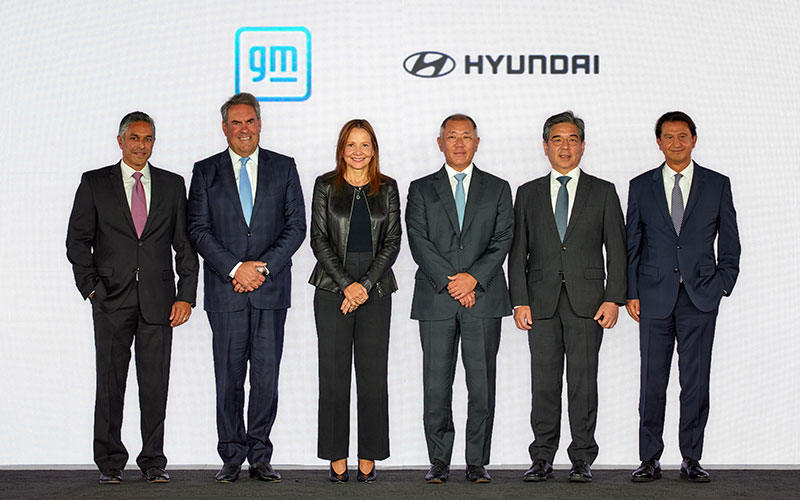
GM and Hyundai Teaming Up on R&D
Last week General Motors and Hyundai Motor Company announced a plan for future collaboration that would combine the efforts of both companies in the realms of research and development, supply chain management, and resource procurement.
The potential partnership comes at a pivotal moment of transmission for the auto industry. Increasingly stringent new emissions regulations worldwide continue to put pressure on carmakers to adopt cleaner running vehicles. Both GM and Hyundai have been more sanguine than their competitors when it comes to electrification, each working in earnest to expand their EV offerings even as demand for EV has slowed in the US and hybrids surge in popularity. Increasing competition from Chinese EV makers like BYD is likely adding fuel to the fire for GM and Hyundai to find more cost-effective ways of scaling their EV development and production.
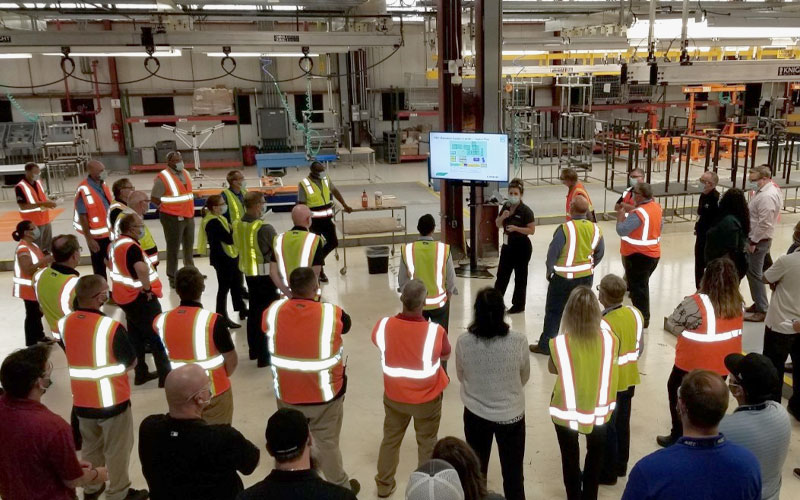
In a “Memorandum of Understanding” issued by both companies, GM and Hyundai proclaim their intentions to collaborate on future vehicles, supply chain scaling, and energy technologies. This would include “joint product development” as well as “opportunities for combined resourcing.” The current challenge of the transition to electric vehicles is marked by expensive R&D, the acquisition of expensive rare-earth battery materials, and perhaps most daunting of all, scaling as-yet-unprofitable EV efforts today for the promise of wider EV adoption rates in the future. Thus, seeing two of the current leaders in EVs partnering up to share resources and expenses makes plenty of business sense.
GM’s CEO Mary Barra said, “GM and Hyundai have complementary strengths and talented teams. Our goal is to unlock the scale and creativity of both companies to deliver even more competitive vehicles to customers faster and more efficiently.”

For Hyundai’s part, Executive Chair Euisun Chung explained, “This partnership will enable Hyundai Motor and GM to evaluate opportunities to enhance competitiveness in key markets and vehicle segments, as well as drive cost efficiencies and provide stronger customer value through our combined expertise and innovative technologies.”
The future collaboration would encompass both passenger and commercial vehicles and include internal combustion vehicles in addition to EVs and hydrogen fuel-cell vehicles. While the current memorandum refers to the partnership as “non-binding,” the companies’ press releases note that a “progression toward binding agreements will begin immediately.”