Latest News
2026 Is a Pivotal Year for New CarsAutomatic Emergency Braking Mandatory by 2029

Automatic Emergency Braking is a great safety feature, but should it be mandatory on every car? Find out about the NHTSA’s impending requirement.
What is AEB?
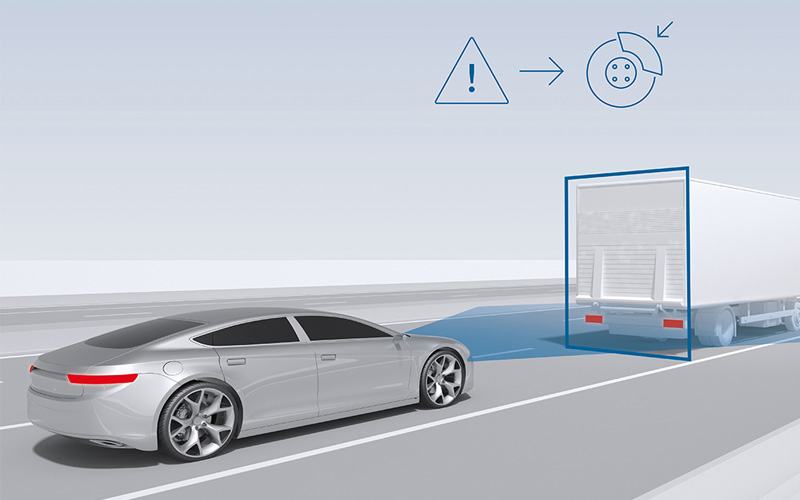
“AEB” is an acronym for Automatic Emergency Braking in the automotive space. This part of the Advanced Driver Assistance System (ADAS) found in today’s cars uses sensors at the front and rear of the vehicle to detect an impending collision and reacts by automatically applying the brakes to reduce the severity of or outright prevent a collision. Nearly every major manufacturer offers some form of AEB on their lineup of new vehicles, but some offer the feature as an add-on for higher trim levels or as part of an option package. However, the National Highway Traffic Safety Administration (NHTSA) aims to change that.
NHTSA Wants Standard AEB by 2029
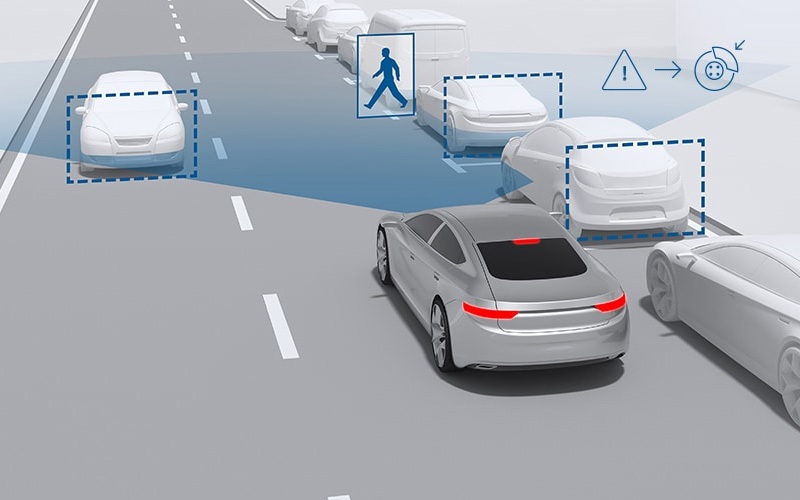
Back in April, the NHTSA announced a new ruling that would require all new passenger vehicles to carry Automatic Emergency Braking as standard equipment by September of 2029 (essentially the 2030 model year). The NHTSA mentioned in their release on April 29th that the new mandate would “save at least 360 lives a year and prevent at least 24,000 injuries annually” based on their collection of accident logs. Current AEB systems can be found on over 90% of all new cars, so it seems like we’re nearly meeting the NHTSA’s goal – right?
Wrong. The mandate isn’t just making AEB standard but increasing the safety system’s effectiveness. Vehicles will need to be able to stop themselves and prevent a collision with another vehicle in front of them up to 62 mph. The AEB systems must also apply the brakes automatically prior to an imminent collision with vehicle in front of it up to 90 mph to reduce the severity of an impact. The NHTSA also requires that the AEB systems be able to detect pedestrians in the vehicle’s path in daylight or in darkness and automatically apply the brakes up to 45 mph.
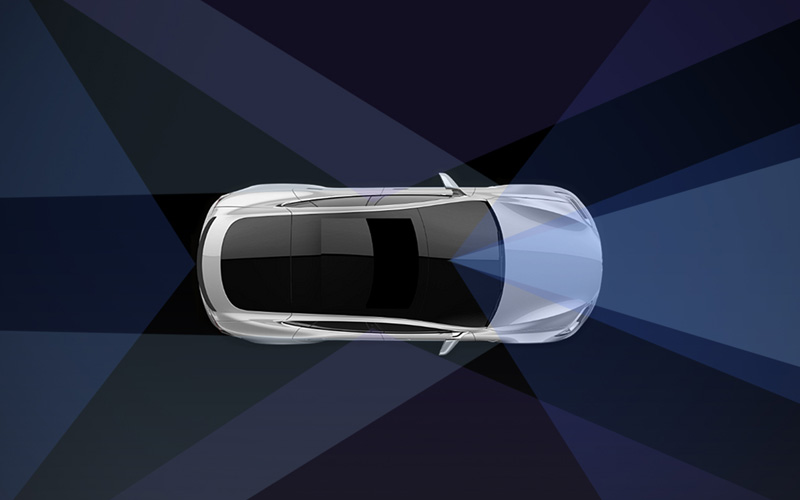
A vast majority of these systems in new cars don’t meet the new requirement set by the NHTSA mentioned above. Modern AEB systems are typically only effective at speeds below 30 mph and only under the right conditions. These systems typically rely on a front facing camera on the vehicle and/or a handful of sensors around the front bumper. They’re also plagued by being virtually non-functional when faced with heavy fog, inclement weather, or complete darkness. To meet the NHTSA’s impending requirements, manufacturers will have to add more constantly active sensors and bolster them with additional detection tech, such as LIDAR, as to create a safety net should one method of collision detection be ineffective under certain conditions.
There is also the matter of faulty systems and glitches that have been prevalent in modern AEB systems. There have been numerous reports of “ghost braking” where the AEB system will trigger unintentionally without anything in the vehicle’s path causing harm to passengers and potentially enacting a rear-end collision from following vehicles. While these issues are typically corrected through Over-the-Air updates or from a dealership visit as a result of a recall, they continue to recur from different manufacturers on different models year after year.
The Future of “Driving”
This is just the first step in roadways gradually turning towards automated driving solutions, but the technology is still far from being considered safe. Tesla has their Autopilot, but it’s been shown to be unsafe when drivers throw caution to the wind believing that it’s fully autonomous. There have been a number of reports of the autonomous feature crashing into buildings and even causing at least 13 known fatal crashes linked to the system. With major automotive brands like Ford and GM introducing their own self-driving solutions, it may be only a matter of time before the NHTSA announces new requirements mandating self-driving technology on future vehicles.