Latest News
2026 Ford Maverick ReviewThe Original Acura NSX is an Underappreciated Classic
The first generation of the Acura NSX took on Ferrari and Porsche at their own game. Honda’s take on the mid-engine supercar is a legend of the 1990s.New Parts for Old NSXs
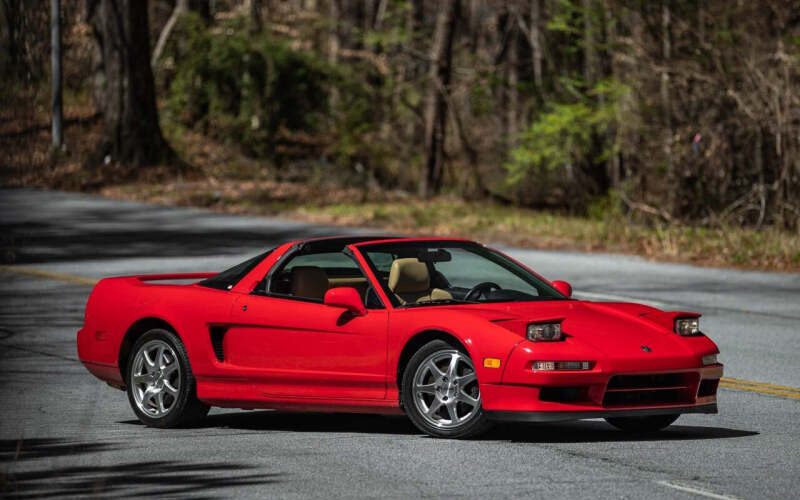
1998 Acura NSX NSX-T – Carsforsale.com | Shop Acura NSX on Carsforsale.com
Last month Honda announced a new program starting next Spring to offer new/replacement parts for “heritage models” starting with the first-generation Acura NSX. Mazda has been offering a similar program for the NA (first-gen) Miata for a few years now, ensuring those cars can be kept on the road more cheaply and for longer. Honda says it plans to eventually expand the new program to other “discontinued models,” if we had to guess, that would likely include classic Honda sports cars like the S2000 and Integra Type R.
For enthusiasts, it’s easy to understand the desire to make keeping and restoring classic cars easier and more affordable, but why did Honda choose to start with the NSX specifically? Why not the S2000? It’s closing in on classic status itself and outsold the NSX by more than five-to-one. The answer is simple: the first-generation NSX was and remains a halo car for Honda/Acura representing the company’s aspirations and engineering acumen. The NSX proved Honda could build a Ferrari better than Ferrari could (sort of).
Honda Gets eXperimental
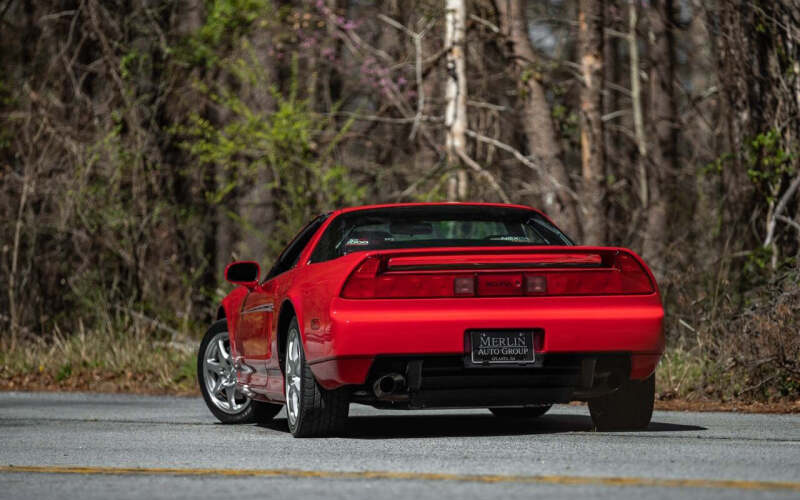
By the middle 1980s, Honda had made its name as a builder of motorcycles and small, economical cars like the Civic. A concerted bid to reenter F1 competition, starting in 1983, was the green light engineers and designers needed to get more ambitious when it came to Honda’s road cars. Not only would Honda take on European carmakers on the track, but they would outdo Ferrari on the street as well.
Initial efforts at building a European-style mid-engined sports car began in 1984 with the HP-X concept. The name derived from Honda Pininfarina eXperimental; indeed, Honda even hired the long-time Ferrari designer Pininfarina to help style their Ferrari beater. The HX-P debuted at the 1984 Turin Motor Show with a low-slung, wedge-shaped body, a mid-mounted V6, and a bubble style cockpit inspired by F-16 fighter jets.
From NS-X to NSX
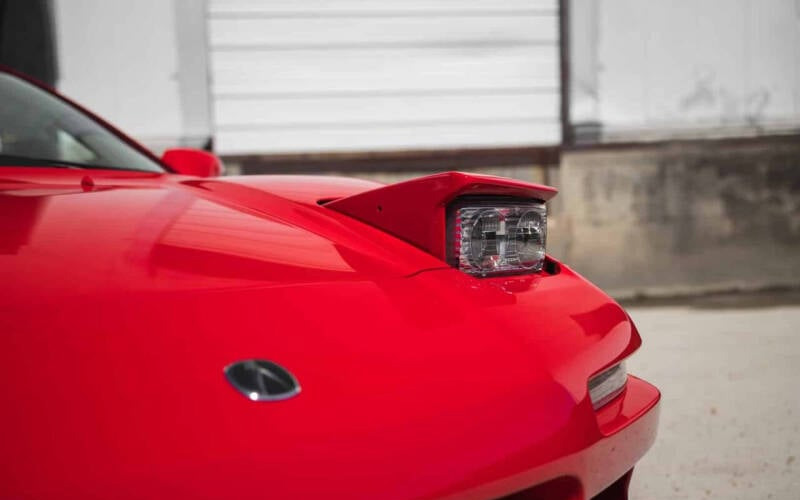
Translating the buzz generated by the HP-X concept into an actual production car would take time and not a little engineering finesse. The NS-X, the New Sportscar eXperimental, project, launched in 1985 with a budget of $140 million. An early order of business for the Honda design team was settling on an engine for their new car.
Though the mid-mounting was forgone, size, displacement, and the number of cylinders were all up for grabs. A turbo V6 was entertained and then scrapped as too laggy. A V8 was briefly considered but also rejected, this time based on weight. In the end, engineers designed a new, clean sheet naturally-aspirated 3.0L V6. The new engine didn’t have a turbo or a V8’s displacement, but it did have VTEC, Honda’s new variable valve timing technology. The NSX was the first car sold in the US to utilize the new tech. The final version of the 3.0L V6 produced 270 horsepower and 210 lb.-ft. of torque for a zero to sixty spring of 5.2 seconds and a quarter mile time of 13.8 seconds, pretty impressive for 1990.
Another first was the NSX’s unique monocoque all-aluminum chassis. Engineers were determined to save weight wherever they could, so aluminum became the metal of choice for many of the NSX’s componentry. The only problem was that no one had formulated an aluminum alloy capable of replicating steel’s rigidity at the thicknesses desired. Honda would just have to engineer a new alloy to suit their needs. When Honda enlisted Ayrton Senna for test driving the NSX, the legendary racecar driver said the chassis felt weak. Engineers responded with further tweaks that improved structural rigidity by another 50 percent.
After four years of development and testing the NSX debuted at the 1989 Chicago Auto Show. By all accounts Honda had outdone themselves. The NSX weighed in at just a smidgen over 3,000 lbs., claimed a top speed of 163 mph, and handled better than practically any sports car, Japanese, European, or otherwise.
Legacy
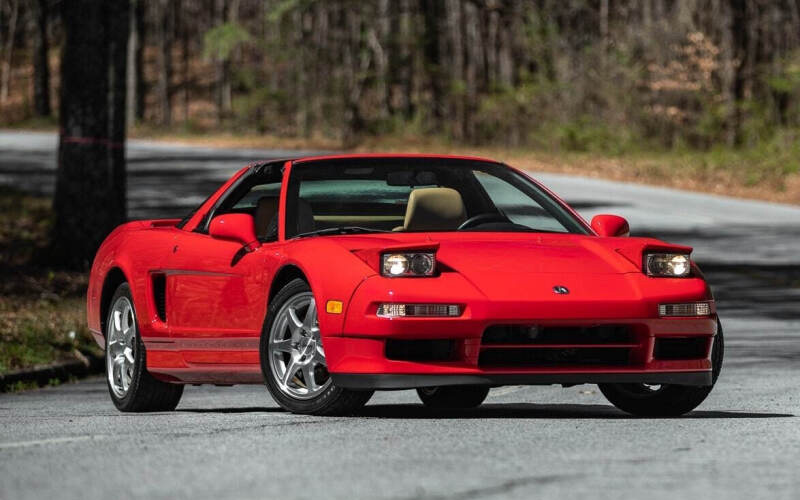
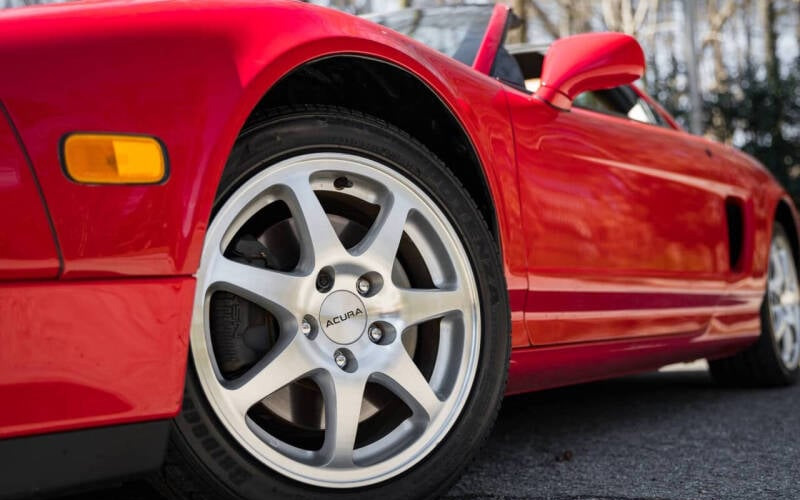
Despite positive reviews from the automotive press, buyers were not convinced. Strong initial sales petered off after the first two years of production. The introductions of a targa topped version, the NSX-T, and a larger 3.2L V6 with more torque failed to juice sales. The NSX continued on, selling in low numbers, for a full 15 years before finally ending production in 2006.
Why exactly the NSX struggled is still debated. Was it the lofty $60,000 price tag? Possibly, despite the fact that the car performed as well as or better than its benchmark Ferrari 328 for thousands less.
The NSX was exceedingly sophisticated, perhaps too much so. People had complained for decades about Italian supercars’ terrible ergonomics, poor outward visibility, and maddening unreliability. The NSX solved for all those problems and more. And yet, Honda may have also unwittingly starved the NSX of those qualities that combine to produce a car’s most essential and ineffable component: character.
But that was then. Today, the first-generation NSX is remembered for its superb handling, high revving V6, and stunning Italian supercar silhouette. A new generation of enthusiasts and those of us with prescription rose-colored glasses have a new-found love for the original NSX, an underappreciated classic just now getting its proper due.