
Latest News
2026 Chevrolet Tahoe ReviewThe 1961 Lincoln Continental Revolutionized Car Design
The 1961 Lincoln Continental, elegant and stately, was a sharp pivot from the fins and chrome era of automotive design.The Lincoln Continental Redefines Cool
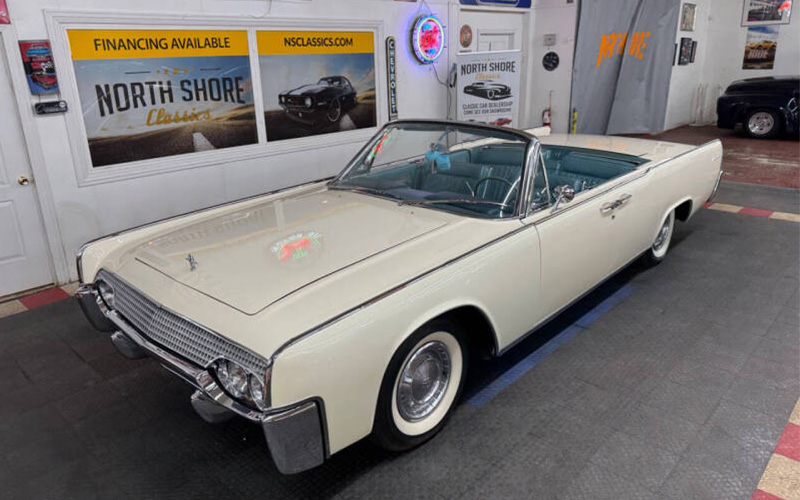
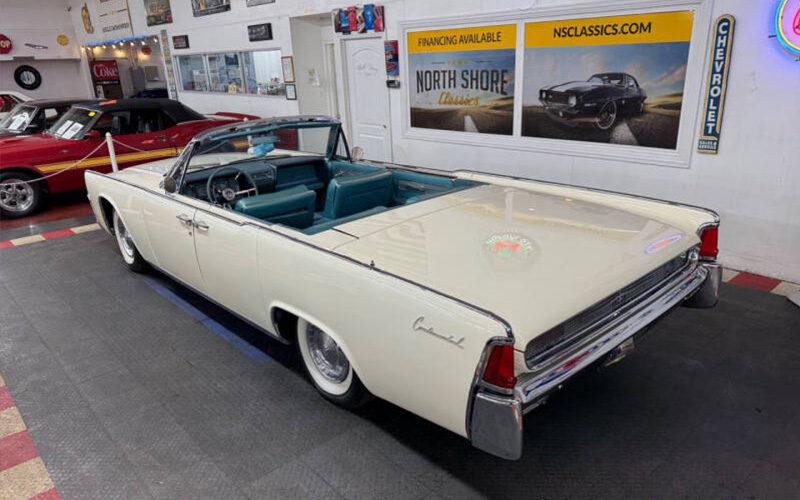
The 1960s Lincoln Continental has become an icon of automotive design. Introduced in 1961, the new fourth-generation Continental dispensed with the previous decade’s ostentation and ornamentation in favor of elegance and simplicity. Chrome was kept to a minimum. Fins were shorn. Dagmar bumpers and side spear trim were nowhere to be seen. In their place were long uninterrupted lines, smooth creaseless body panels, and an abiding restraint that exuded confidence by its contrast with the braggadocio of contemporary automotive designs. The new Lincoln Continental may not have outsold Cadillac but its unbusy ethos single-handedly ushered in a new era of automotive design.
Turning the Page on Fins & Chrome
Automotive design in the late 1950s was an aesthetic arms race as Detroit’s Big Three, Ford, GM, and Chrysler, continually one-upped each other year-on-year with bigger grilles, bigger fins, and gaudier chrome. The front-end designs like the 1958 Buick Century and 1959 Ford Galaxie 500 were a clear indication that we’d reach peak chrome while the fins of the ‘59 Impala and ’59 Eldorado took extreme fins to their logical conclusion.
And while those cars “worked,” not all designs turned out to be future classics. Chrysler’s redesign of the Imperial’s grille for 1959 toed the line of self-caricature and the prior year’s Edsel, Ford’s attempt at a new mid-level brand, was so busy design-wise that it ultimately doomed the fledgling brand.
The troubles at Ford extended beyond the failed Edsel brand. Ford’s luxury division, Lincoln, had been lagging well behind Cadillac for years and shifting the flagship Continental to its own brand produced a great car, but didn’t translate into sales.
The 1958 Continental pared back the chrome but took other chances, most notably the diagonal headlights that echoed horn rimmed glasses. The Mk III Continental was also a massive car, measuring 227 inches long and weighing roughly 5,500 lbs. But as with the Edsel, the statement-making design of the Mk III didn’t translate to broad appeal, instead, sales tanked from roughly 40,000 units per year to just 12,000.
By 1960, Ford’s Robert McNamara was ready to ax the Lincoln brand entirely. McNamara was a numbers guy who looked at cars like the Ford Falcon, a dull but practical car that sold well at scale, as the right direction for Ford whereas prestige projects like the Continental were dead weight. Designers at Lincoln were given one more chance to right the ship.
Almost a Thunderbird
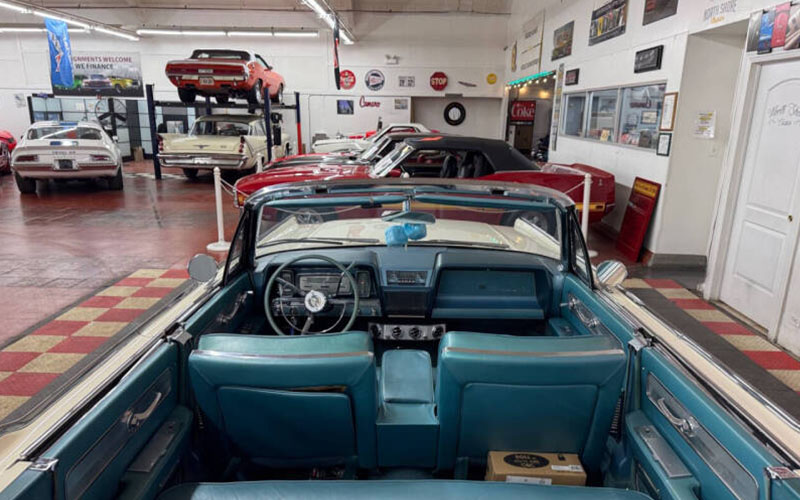
The redesign of the Continental coincided with the redesign for another critical Ford flagship car, the Thunderbird. Ford’s Elwood Engel requested for the Thunderbird a design that featured two vertical blades with the greenhouse in between. Designers including Joe Oros and John Najjar came up with a new Thunderbird did just that, a radically simple body line and largely unadorned front end that was a major departure from the prior Thunderbird.
McNamara liked the design so much he approved it as the next … Continental. This move was to the chagrin of Ford’s Gene Bordinat whose team already had a new Continental design approved for 1961. Thus, it was back to the drawing board for the next Thunderbird, which turned out fine in the end, and onward for the new Continental.
A Mid-Century Modern Classic
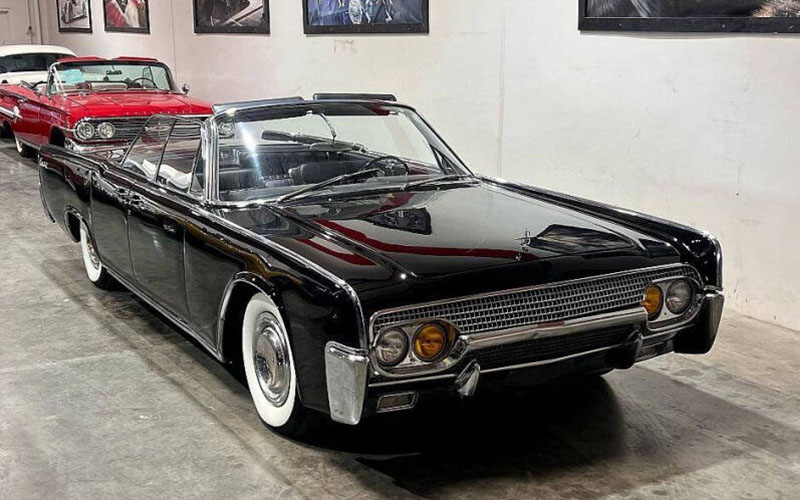
A close reading of the 1961 Lincoln Continental’s design reveals how it became so influential. Prominent are the twin fender “blades” that had been Engle’s initial design request. These blades run straight the length of the car with only a kick up near the rear door. The inner sides of the blades descend into a small trough before meeting the Continental’s greenhouse.
The front of the car was radically understated. Quad headlights are flanked by the cascading fender blades while the egg crate grille concedes to current convention, echoing that of the Cadillac.
The body paneling is starkly unadorned. The sides of the ’61 Continental are one continuous surface. No big side spear of chrome, no flashy rocker panels or skirting, and no panel creasing only a mild convexity and the most subtle of fender flaring.
The Continental’s other signature element was its couch/suicide rear hinged doors, its only real bit of pomp, latched via a vacuum pump in the B-pillar. The small hood is inset from, or “trapped” between, the troughs, which looked sharp even as the small aperture hampered working in the engine bay. The C-pillar in the sedan and hardtop was thick with a Lincoln badge at its center.
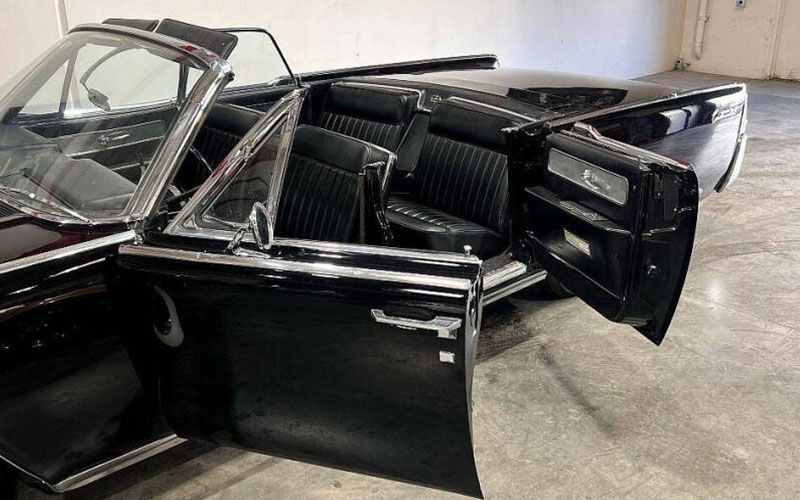
The Continental’s aesthetic of long uninterrupted lines and sparce adornment fit neatly within the broader Mid-century Modern design movement then in vogue in architecture and interior design.
The ’61 Continental’s Legacy
The 1961 Continental was awarded by the Industrial Designer’s Institute for its groundbreaking design, an honor all the more prestigious as the body rarely recognized automotive designs. The new Continental helped the Lincoln brand rebound, arguably saving the marque from extinction, while redefining luxury styling going forward. It would be a few years before Cadillac and Chrysler’s Imperial adjusted, likewise shedding fins and chrome for slab-like simplicity.