Latest News
2026 Chevrolet Suburban ReviewAuburn Speedster – America’s Forgotten Supercar
Once the ride of America’s rich and famous, the Auburn Speedster was a perfect marriage of power and style.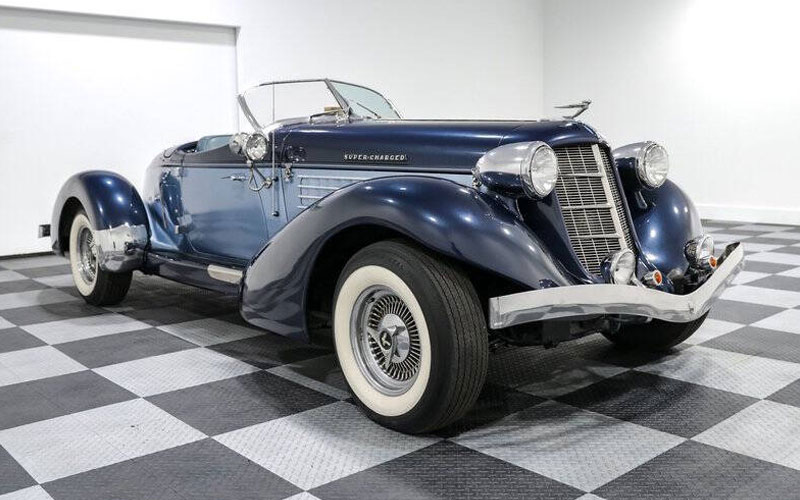
Auburn-Cord-Duesenberg
A lot has changed in the past hundred years in the automotive world. Designs and technologies, tastes and markets have evolved and changed in myriad ways. But one thing that remains as true today as it was in the 1920s and ‘30s is cars continue to function as status symbols. Like the clothes one wears or the neighborhood one lives in, cars are a manifestation of a person’s wealth, tastes, and values. For the rich and famous of a hundred years ago, some of the most prestigious of American automotive brands carried the badges of Auburn, Cord, and Duesenberg.
Though originating separately, all three companies came together under the auspices of maverick salesman and serial entrepreneur E. L. Cord in the late 1920s to form a trio America’s premier luxury car brands. The combination of technological innovation and high fashion made cars like the Duesenberg Model J and Auburn Speedster hot commodities amongst a monied clientele that included Hollywood actors, high-level athletes, and business bigwigs. Today, we have Instagram shots of celebrities in their G-Wagons and Lambos; a hundred years ago it was front page tabloid photos, and the cars were Speedster 851s and Model Js.
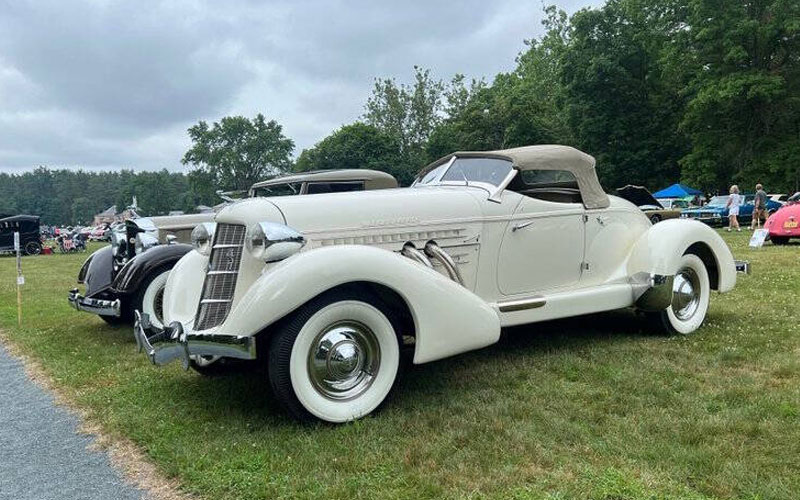
While Duesenberg, equivalent to Rolls-Royce then and now, gets a lot of the attention and prestige from high-end collectors, the more moderately priced Auburn brand produced some spectacular and notable cars itself, including the imitable Speedster 851.
The Beginnings of Auburn
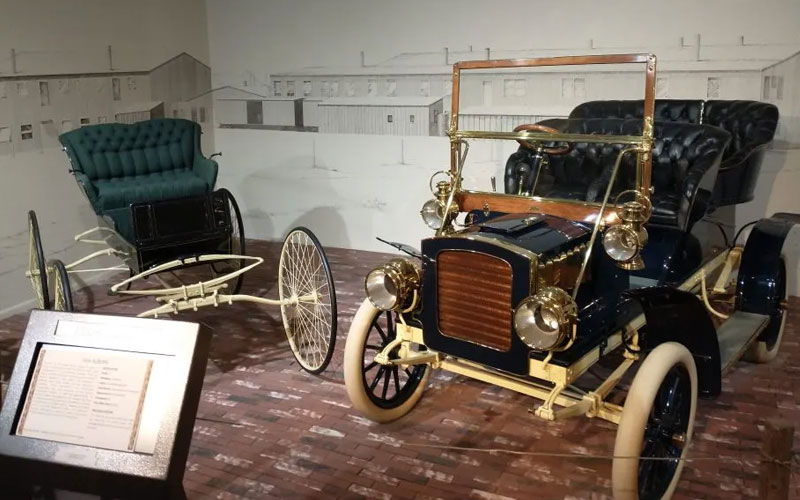
Auburn Automobile Company began not as a car company but as the Eckhart Carriage Company in founded by Charles Eckhart of Auburn, Indiana in 1874. It was Eckhart’s sons, Frank and Morris, who became interested in automobiles, building their first commercial auto in 1903. The first Auburn was an open top touring car powered by a single-cylinder gas-engine making all of 6 horsepower feeding power to a two-speed transmission. Their 1912 Model 40 was the first Auburn to feature the novel technology of a close-top roof.
While the company had been doing good business, it failed to weather the supply shortages during WWI and was forced to halt production. In 1919, the Eckhart brothers sold out of Auburn to a group of Chicago businessmen led by Ralph Austin Bard. Their Beauty Six was built from the Eckhart’s designs failed to revive the company and by the early 1920s, Bard and company were looking for someone capable of turning around the foundering operation. They identified just the person to do it in E.L. Cord.
Errett Lobban Cord had made a name for himself as Moon Automobile’s top salesman in the Upper Midwest. When Bard and company approached Cord with an offer to head up operations at Auburn, the highly ambitious Cord negotiated for the option to buy company stock as part of the deal. Cord took over operations at Auburn in 1924 and within two years had accrued enough stock to become the majority shareholder. Cord managed to sell off the company’s existing inventory by repainting 600 unsold car in vibrant, head-turning colors.
Cord’s Auburn Turnaround
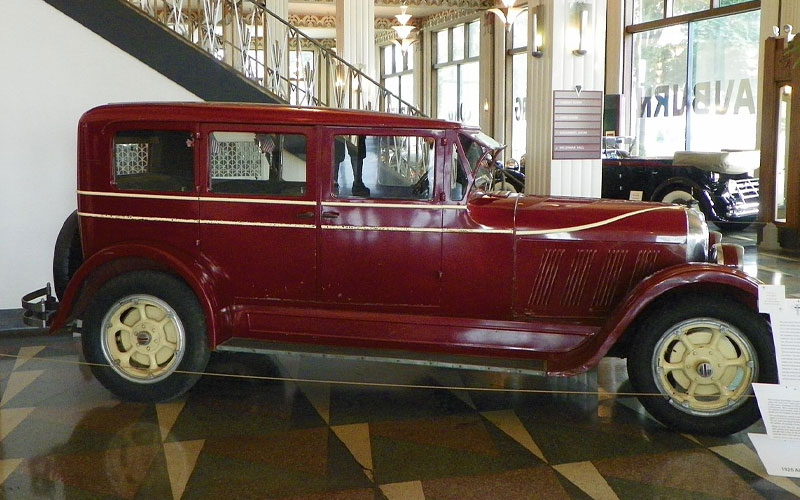
Cord’s preternatural marketing acumen proved just what Auburn had needed. His next move was to build a new car, the Auburn Eight, which debuted in 1925 sporting a 68-horsepower Lycoming straight-eight under the hood and a fetching, fashionable design by James Crawford. As Cord was getting Auburn back on track, he was also busy expanding his business holdings, acquiring Duesenberg in 1926. Now Cord had both a high-end car company and a very, very high-end car company as Auburns were typically priced around $1,400 (around $25,000 today) while Duesenbergs rivaled Roll-Royce in their expense and extravagance often topping $16,000 ($280,000 today). (Cord launched his eponymous brand with the L-29 in 1929 as a mid-point between Auburn and Duesenberg.)
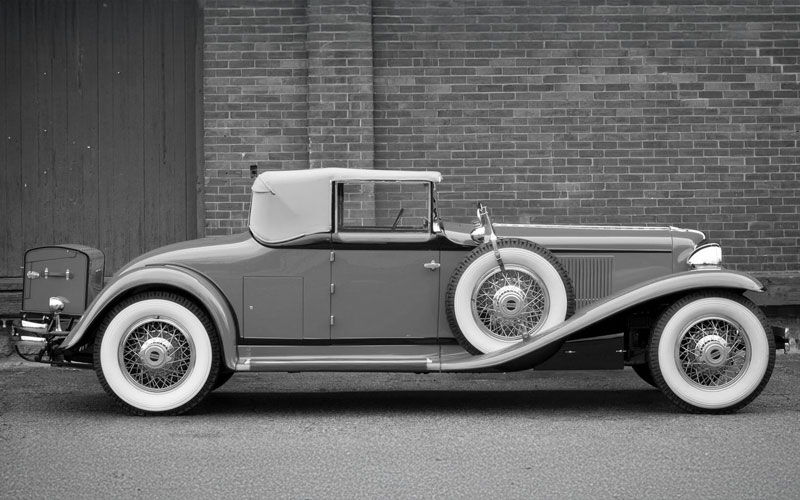
Cord pitched his cars, Auburns, Cords, and Duesenbergs, as playthings of the elite, attracting deep-pocketed, upper crust buyers from Hollywood to New York. Of course, the party did not last and as the page turned from the Roaring Twenty and into the Great Depression-era 1930s, luxury-focused companies like Cord’s struggled as disposable incomes dwindled and conspicuous consumption fell out of fashion.
The Auburn Speedster
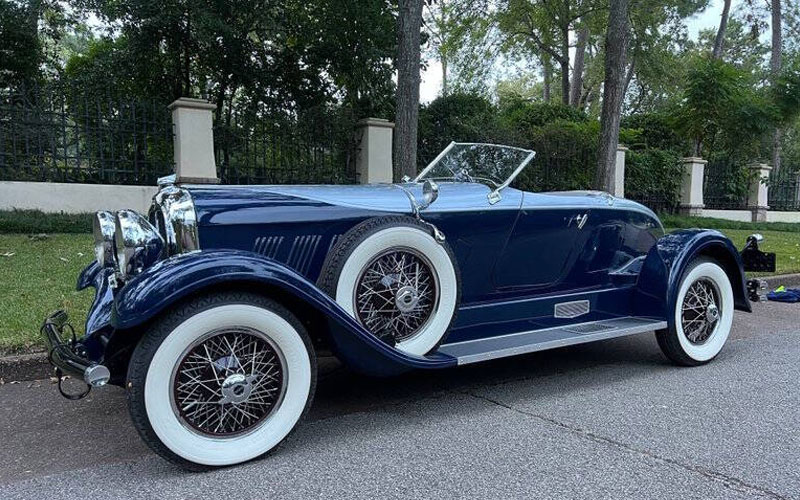
The story of the Auburn Speedster neatly illustrates the highs and lows of Cord’s impressive automotive empire. The first Auburn to carry the Speedster name debuted in 1928 as the Speedster 115, thus named for its robust 115 horsepower coaxed from the aforementioned Lycoming straight-eight (notably, Lycoming was one of several companies Cord acquired during this period). 1930 saw the introduction of a yet more powerful version, the Speedster 125, with, you guessed it, 125 horsepower.
The following year, 1931, was Auburn-Cord-Duesenberg’s most successful year as the companies combined for over 34,000 units sold. The Speedster received its most significant update thus far with a new 6.4L V12 introduced. The expensive engine, also built by Lycoming, was ultimately short-lived and a scant 25 V12 Speedsters were completed before reverting to the flat-head straight-eight.
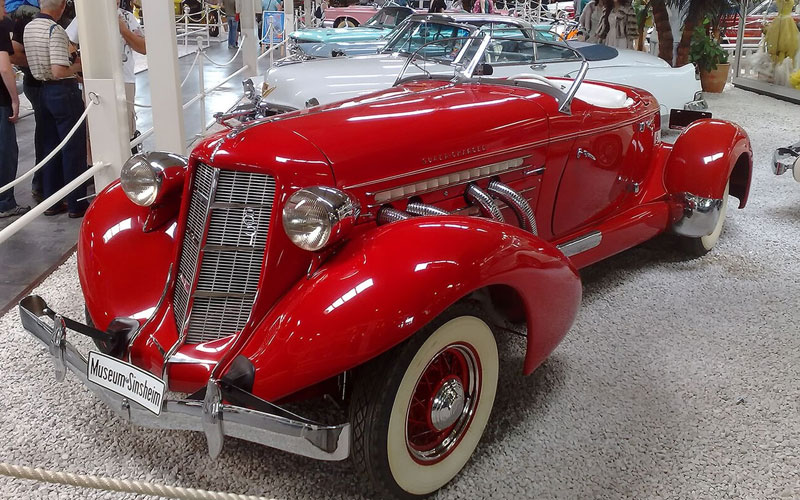
Even as the company continued to struggle through the economic headwinds of the Great Depression, Auburn was busy reimagining the Speedster. For 1935, Auburn debuted the Speedster 851 boattail with minor updates by former Duesenberg designer Gordon Buehrig. The 4.6 straight-eight carried over, but a Schweitzer-Cummins supercharger was added as an option. Thus equipped, the Speedster 851 was capable of 150 horsepower (for comparison, Ford’s flat-head V8 of the same time was making 85 horsepower). A three-speed manual transmission was supplemented with a two-speed rear end, effectively giving the car six gears.
As a promotion, racer Ab Jenkins took a stock Speedster to the Bonneville Salt Flats and made a 100-mph speed run with the car. Subsequent Speedsters were delivered with a promotional plaque on the dash to commemorate the feat.
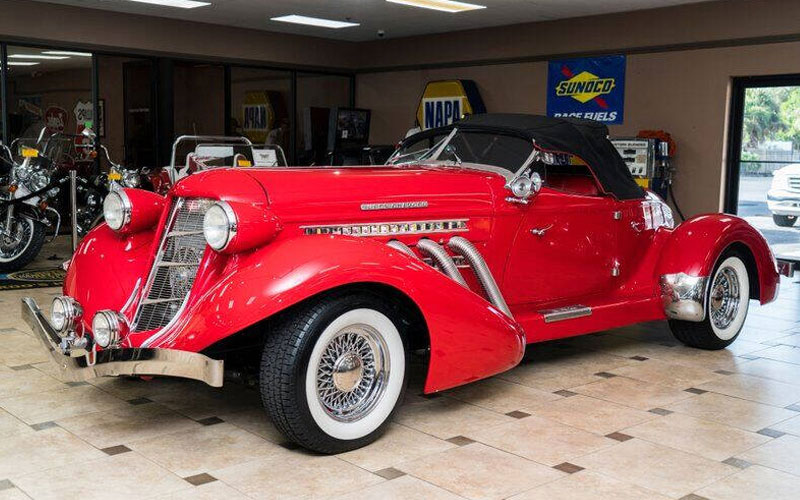
The Auburn Speedster 851 was one the early 20th century’s most spectacular cars, with its deft blend of speed and stylishness. Sadly, its production was vanishingly brief, just two production years and 143 cars, as Auburn-Cord-Duesenberg failed to survive the decade, folding operations in 1937. With cars like the Auburn Speedster, Cord 810, and Duesenberg Model J, it’s hard not to wonder where things could have gone for the American luxury marques had the Great Depression not doomed Cord’s automotive companies.