
Latest News
2026 Subaru Crosstrek Review
The final DeSoto sheds light on the forgotten brand’s storied history.
Explorers and Adventurers
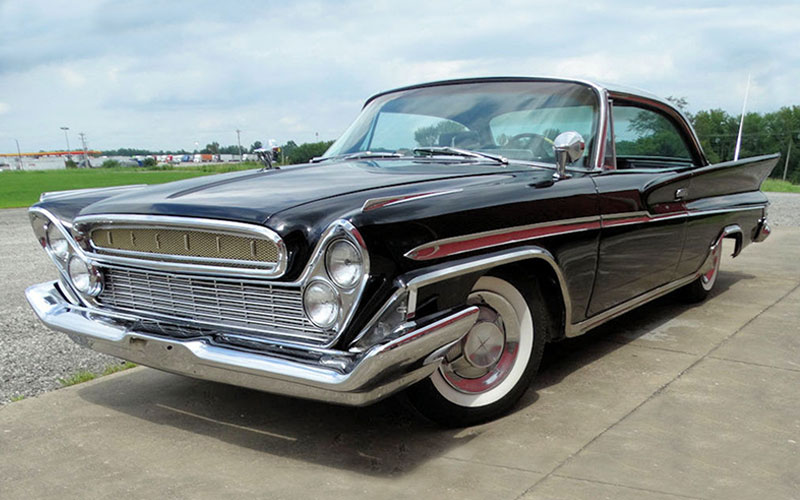
1961 DeSoto Adventurer – carsforsale.com | Shop DeSoto Adventurer on Carsforsale.com
Once a household name as one of Chrysler’s principal brands, the DeSoto name has slipped into obscurity these near sixty years since its shuttering. Launched in 1928 by Chrysler, the DeSoto line was intended to compete with upper-mid-market carmakers like Oldsmobile, Buick, and Hudson. And before you ask, yes, it is indeed named after the Spanish conquistador Hernando de Soto (a marketing choice that would not pass scrutiny today). The company had its highs and lows before eventually folding in late 1960.
Today’s Cool Car Find is a 1961 DeSoto, a limited run example from the company’s final model year. Every car has its story, and in the case of this ’61 DeSoto, the car serves as a curious coda for the forgotten brand.
Early Innovations
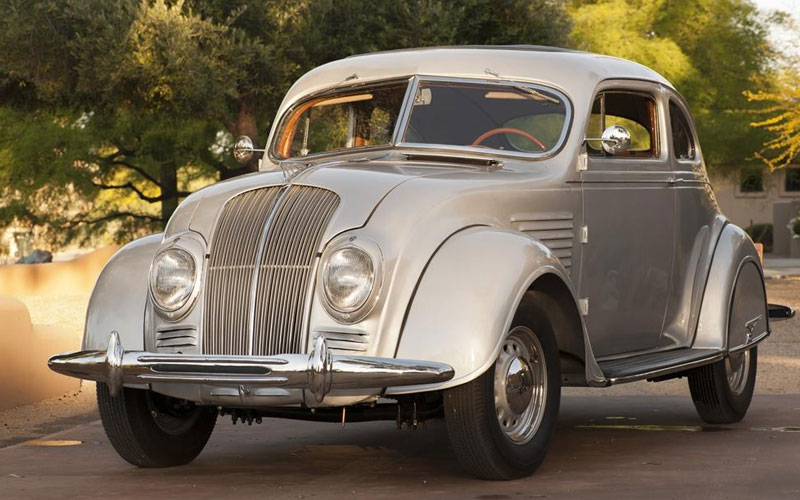
DeSoto was a successful brand for Chrysler in the pre-war years, competitively priced and yet keeping pace in terms of quality with its closest rivals. DeSoto’s most famous model of the era was not a commercial hit, despite its historical significance. The 1934 Airflow’s design focused on aerodynamics long before that became a thing in automotive design. The radical look of the Airflow was not a hit with the car-buying public, and a hasty redesign was not enough to save it from a swift cancellation by 1936.
DeSoto – A Victim of Its Own Success
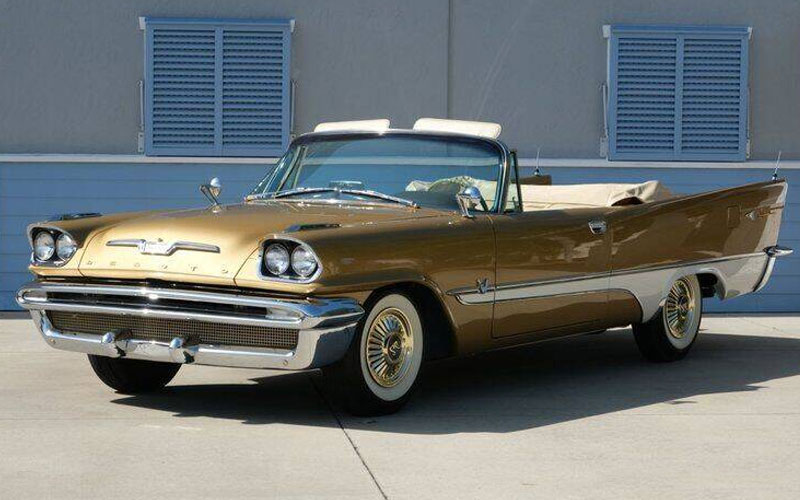
Like all major carmakers, DeSoto’s production was paused during WWII and took a few years before new designs made it to market. In 1955, hotshot designer Virgil Exner, who had made a name for himself as the youngest ever head of design at Pontiac, was hired by Chrysler. Exner set about implementing his “Forward Look” design philosophy across the carmaker’s various brands, including DeSoto.
This was the height of the fins and chrome era and Exner’s designs proved immensely popular with the public, boosting sales for DeSoto in 1956. In 1957, the DeSoto Adventurer, spawned from the DeSoto Fireflite, became the brand’s halo car with a thorough “Forward Look” redesign that included the car’s signature “rocket launcher” taillights and a 345 cu in Hemi V8 under the hood.
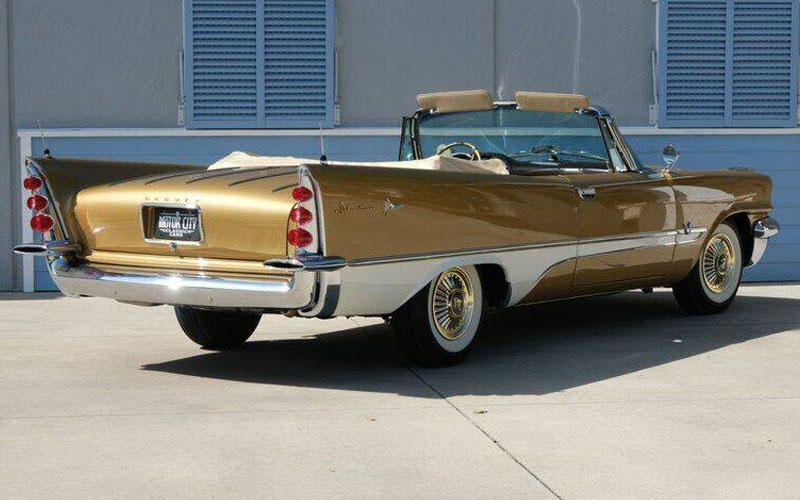
DeSoto’s sales were shooting up, with 178,594 cars ordered in 1957. It turned out that DeSoto was unprepared for the spike in production. To meet demand, the production line was sped up. This led to serious quality control issues for DeSoto. Complaints poured in about leaky hardtop roofs, flaky paint, and weak torsion bars that would break under strain. Increasing competition from other brands, including the new Edsel, put yet more pressure on DeSoto. An economic recession also hit, further cutting into sales, which plummeted the following year.
1960, the Final Year
By the close of the 1950s, it was clear to Chrysler that they did not have the resources, nor the business case, for continuing to support a full five car brands, and it was DeSoto that would be the one to go. For the 1960 model year, DeSoto’s lineup was winnowed down to just two models, the Adventurer and the Fireflite.
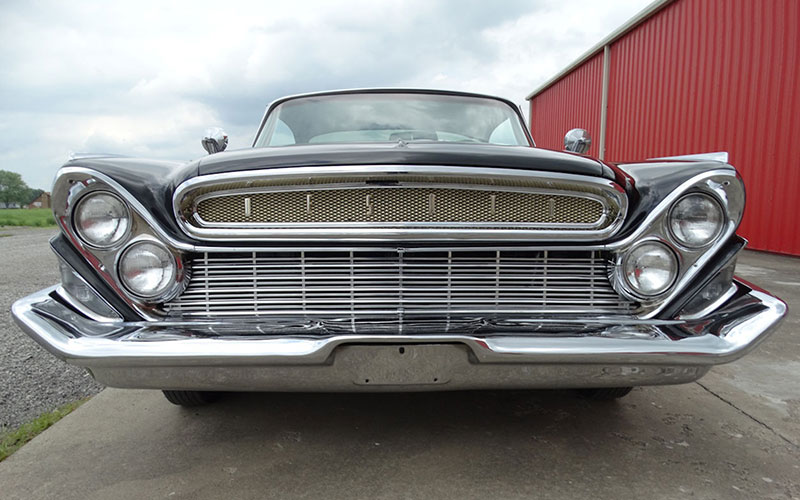
Then for the 1961 model year, DeSoto reduced output to s single car, as either a two- or four-door. A redesign gave the car a unique look, with slanted quad headlights and slanted fins. The car was cobbled together from the corporate parts bin, borrowing from both Dodge and Chrysler. The car was given the same 361 cu in “Turboflash” V8 that had graced the Fireflite a year prior. Production on the final year DeSoto ended in November 1960. In place of unfilled orders for these final cars, Chrysler Newports were delivered to buyers.
Our Cool Car Find Example
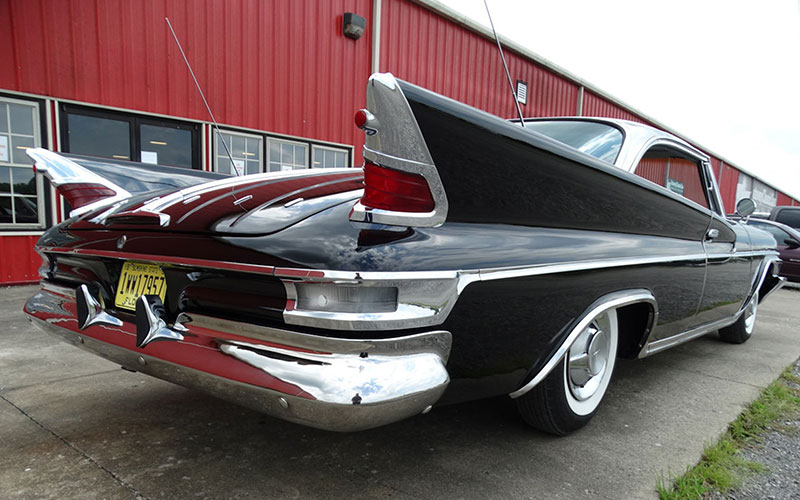
1961 DeSoto Adventurer – carsforsale.com | Shop DeSoto Adventurer on Carsforsale.com
Of the 3,034 built in that final year, just 911 were two-door hardtops. That makes our Cool Car Find example an especially rare car indeed. This excellently restored example features some additional quirks to go with its distinctive design. These include a 45-rpm record player in the dash and a factory 361 V8 paired to a Torqueflite push-button automatic transmission. In many ways the 1961 DeSoto was an appropriate swan song for the company thanks to its eye-catching design and V8 powerplant.