
Latest News
2026 Ford Maverick Review
Stunning beauty and high ambition sparked the beginning of BWM’s M cars with the debut of the mid-engine BMW M1.
BMW Motorsports Begins
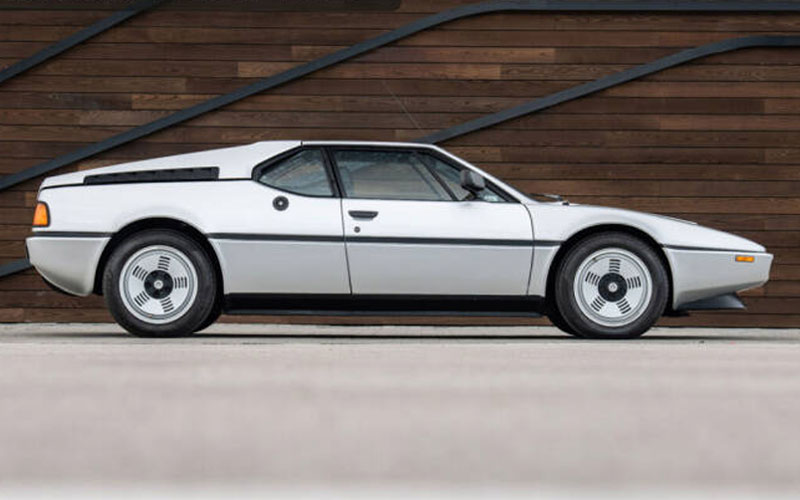
1981 BMW M1 – carsforsale.com | Shop 1981 BMW M1 on Carsforsale.com
The BMW M1 has a peculiar history. It was, broadly speaking, a failure at its intended goal of being both a winning racecar and profitable road car. Even so, the M1 also launched BMW’s M brand, which has proven to be wildly lucrative for decades, and was inarguably one of the most exquisitely proportioned and downright beautiful cars of the wedged car era, a design worthy of reverence today. In truth, the M1’s story is typical in automotive history, where refined engineering and well-honed genius produce a fantastic car that ultimately proves neither successful in sport nor the commercial market.
Today’s Cool Car Find is a 1981 BMW M1 we’re spotlighting for its rarity, iconic styling, and compelling history.
Development Ups & Down
Back in the middle 1970s, BMW was looking to develop a replacement for their successful but aging Group 5 3.0CSL. Both it and the earlier 2002 had proven BMW could make race-worthy cars. For the new venture BMW created a new subsidiary, BMW Motorsports, and assigned Jochen Neerpasch to head up the project.
The new car would be a mid-engine silhouette racer targeting FIA’s Group 4. Homologation rules stipulated a minimum of 400 road-going production cars would have to be built to qualify. Since BMW did not have any experience with mid-engine layouts the homologation requirement was daunting. And so, BWM Motorsport turned to Lamborghini for help.
Indeed, the M1 was to be a collaborative effort. Under Lamborghini’s direction, the M1’s design was done by the now legendary Giorgetto Giugiaro and his newly formed Italdesign, based on Paul Bracq’s 1972 BMW Turbo concept. The car’s double wishbone suspension was done by Giampaolo Dallara, formerly of Lamborghini, who’d gone on to work on suspensions for F1 and Indy cars. The chassis was built by Marchesi of Modena, and the final built work completed by Baur in Stuttgart, Germany.
The initial hope had been for the M1 to be ready to compete in 1977. But partnerships are only as strong as their weakest link, which in the case of the M1 that was Lamborghini. The Italian firm was in the midst of twin crises, facing down both an embezzlement scandal and being sued (rightly) for copyright infringement. The chaos at Lamborghini necessitated BMW reassert direct control of the project in April of 1978.
Because of production delays, BMW wasn’t going to meet FIA homologation requirements, so Neespasch came up with a solution: race the M1 against itself. Under the auspices of F1, the Procar series pitted F1 drivers against privateers all driving M1s. Procar ran for two seasons, 1979 and 1980 before the M1 production numbers finally qualified it for Group 4 competition. By the time the M1 finally made it to competition, it was behind the curve. The M1 fared well but not spectacularly in competition. Production ended after a short three-year run of roughly 460* cars in 1981, though it continued to be raced at Le Mans and other events through 1986.
What Makes the M1 Such a Cool Car
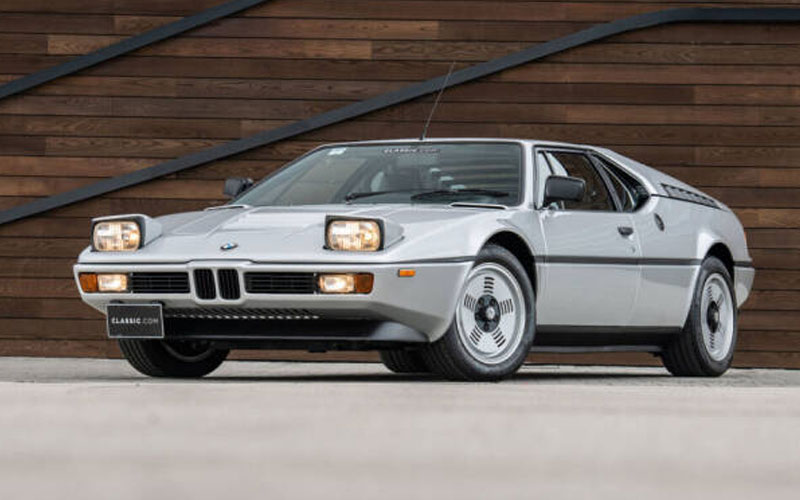
1981 BMW M1 – carsforsale.com | Shop 1981 BMW M1 on Carsforsale.com
The BMW M1’s unusual development and production history alone would make it an interesting car to highlight. That it’s an outlier from BMW’s typical designs is another reason. But this 1981 BMW M1 is a Cool Car Find because it is, in the opinion this writer at least, the best-looking car to ever carry a BMW badge.
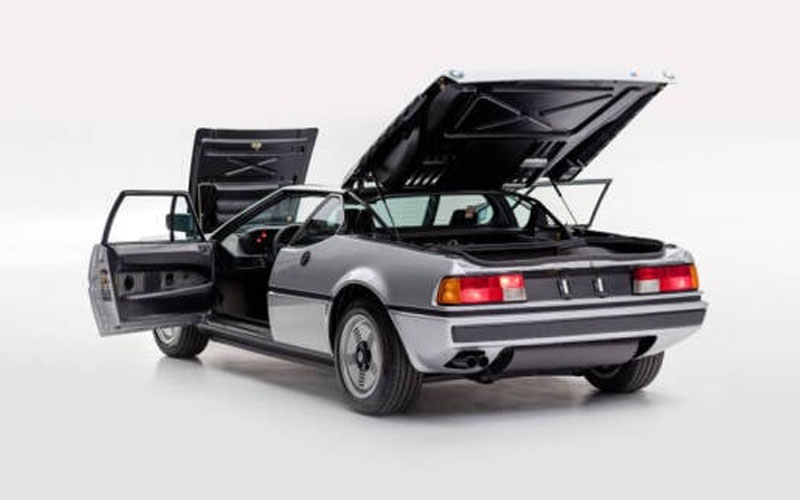
In the M1 we find Giugiaro’s wedge design language perfectly melded with traditional BMW elements like their signature kidney grille, done here as a pair of modest yet tasteful squares that pull the whole ensemble of the car’s design together, reminiscent of the bowtie on James Bond’s tuxedo. Another pair, the BMW emblems located on either side of the trunk lip, with the then new red, purple, and blue M badge positioned off to the right.
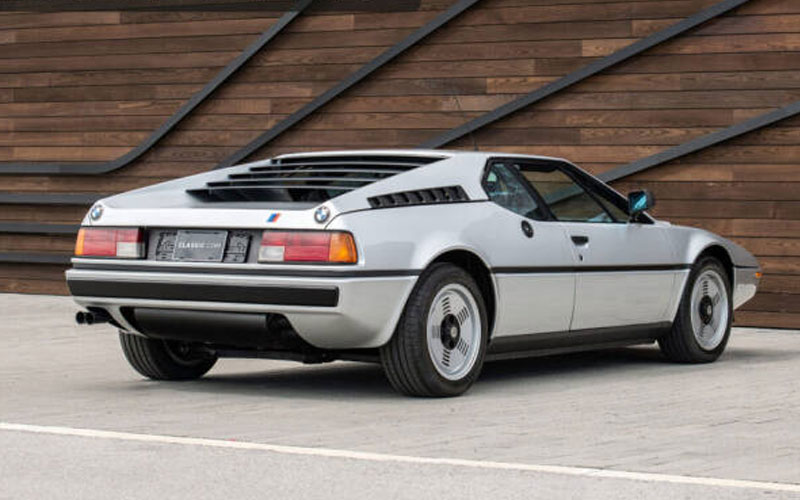
The M1 is a wonder of balanced contrasts. The car is squat and wide. Just 44 inches tall and 72 inches wide. The mid-mounted M88 3.5L straight-six was tuned to 274 horsepower and positioned vertically and longitudinally, a challenging fit. And yet, Giugiaro was more than up to the task of packaging the engine with both engineering and aesthetic considerations in harmony. The M1 provides the viewer with a myriad of radically different looks and attitudes depending on the angle. It’s simultaneously beefy and sleek, sharply angled yet sensuous.
Rarity and beauty do have a price, however, $950,000 according to the seller.
*For whatever reason, production numbers I came across in research varied from 430 to 460 cars with 35-50 of these being prototypes and racecars. BMW’s number is 460 in total.