Latest News
2026 Ford Maverick ReviewHow the ‘50s Chrysler 300C Predicted the Muscle Car Era
Before the GTO or Mustang, there was the Chrysler 300C, a NASCAR champion sporting a Hemi V8 and trendsetting styling.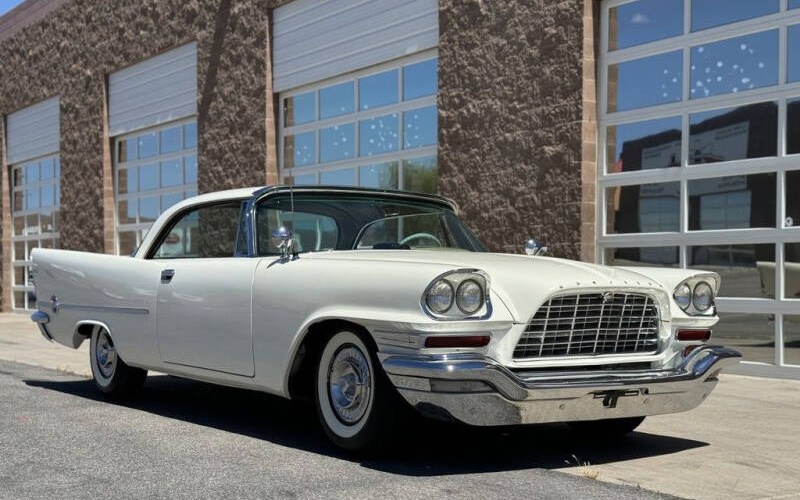
Getting From Hotrod to Muscle Car
Prior to the advent of the muscle car era, starting around 1963/64, the fastest thing you’d encounter on the road was a hotrod. For the most part, real automotive performance in the post-war era was the province of the aftermarket. There were, however, exceptions. The Pontiac GTO gets credit for kicking off the muscle car craze of the 1960s, but it, the Barracuda, and Mustang were not the first Detroit machines to offer serious performance from the factory. Many credit the 1949 Oldsmobile 88, with its Rocket V8 and early NASCAR dominance, as the proto muscle car.
The missing evolutionary link between the Olds 88 of the early 1950s and the muscle cars of the mid 1960s is the Chrysler 300C. Like the Olds 88, the Chrysler 300C was designed with NASCAR competition in mind and marketed to the public as a serious performance car you can park in your driveway. Indeed, the Chrysler 300C and Olds 88 popularized the “Win on Sunday, Sell on Monday” strategy of garnering public attention and market cachet with victories on the racetrack.
It was with this history in mind that we chose this luminous example of a 1957 Chrysler 300C for a Carsforsale.com spotlight. This Hemi-powered Chrysler marries fins-and-chrome styling with the era’s top performance numbers, making it one of the most impressive and memorable classics of the 1950s.
Building a NASCAR Legend
The Chrysler 300C began as a factory project for NASCAR competition, as stock car racing was beginning to boom in the mid-1950s. The 300C then was a homologation car, built and sold to the public in order to meet racing regulations. Unlike today’s NASCARs, these truly were “stock” cars, that is, unaltered from their factory-built counterparts.
The “C” in 300C referenced its coupe body style since the car was sold exclusively as a two-door hardtop. Its design was an amalgam of various elements borrowed from the New Yorker, Windsor, and Imperial; all part of Virgil Exner’s “100-Million Dollar Look” design language that defined Chrysler’s lineup at the time. More importantly, the “300” in 300C came from the 300-horsepower output of the 331 cu.-in. “Fire Power” V8 under the hood. The 300C was an instant success on the NASCAR circuit, and Chrysler sold 1,725 300Cs that first year.
Despite the specificity of the name that first year, Chrysler chose to modify the car’s moniker for the 1956 model, dubbing it the 300B. A new 354 Hemi was the new powerplant. Depending on the version, this engine made 340 or 355 horsepower. The latter version of the 300B has the distinction of being the first American car to achieve an equivalent displacement to horsepower ratio. The added power further solidified the 300’s NASCAR dominance as the car took a second consecutive Grand National Championship and posted a record-setting top speed of 139 mph at the Daytona Flying Mile.
This 1957 Chrysler 300C
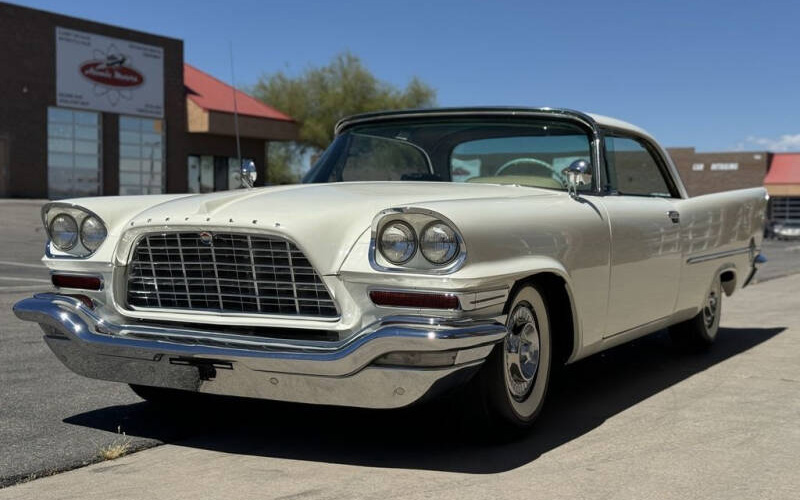
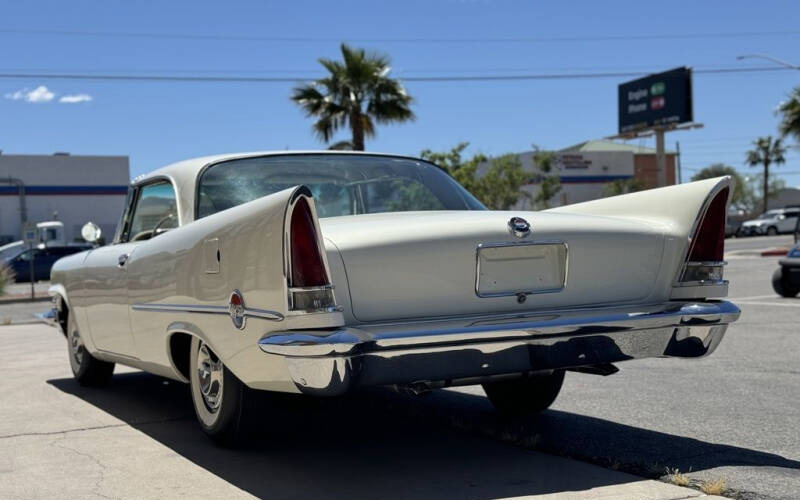
On the back of those successes, Chrysler took the 300C to new heights for the start of the car’s second generation in 1957. Rather than borrowing from existing Chryslers, the flagship 300C lead the lineup’s aesthetic transition into Exner’s new “Forward Look” design. The 300C was now lower, longer, and wider than before, sporting prominent fins, a wraparound “Vista Dome” windshield, and gaping trapezoidal grille. In addition to the coupe, the 300C was now also offered in convertible form.
Also new was the 392 cu.-in. Hemi V8. The added displacement and a 10.0:1 compression ratio saw the 300C reaching 375 horsepower. A three-speed automatic was the default transmission. A three-speed manual was exclusive to one of 18 high performance 300Cs that added a unique exhaust and a new camshaft for an industry high 390 horsepower.
The 1957 Chrysler 300C we found on Carsforsale.com pulls double duty. It isn’t merely a fabulously kept example; it’s a bridge between two distinct eras. It’s a flashy finned ‘50s classic with the heart of a muscle car. It’s Steve McQueen in Buddy Holly hornrims.
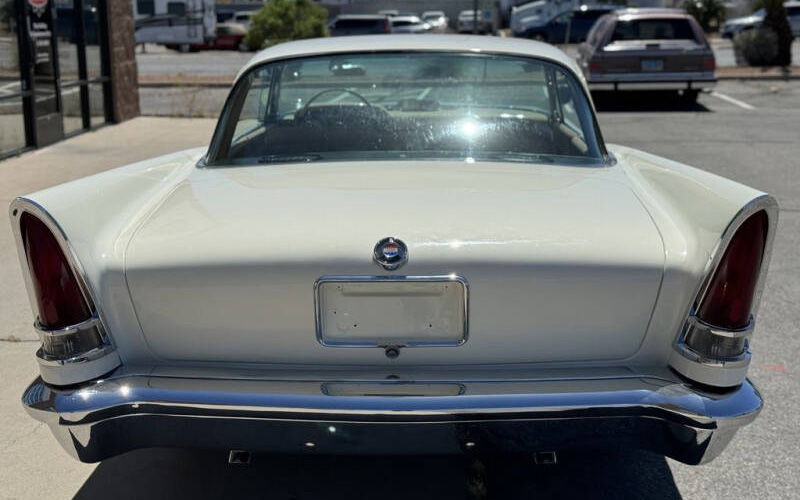
Our 1957 two-door hardtop example comes in white with a white interior. Under the hood is the 392 “Fire Power” Hemi V8 with dual four-barrel carbs making 375 horsepower and paired to a three-speed automatic. Key visual elements include the wraparound windshield and rear window, the massive fins, and the six red, white, and blue 300C badges that adorn the car.
Regardless of the era, a combination of speed and style often comes to represent the peak of automotive design. The ’57 Chrysler 300C makes a persuasive case for itself as one of the greatest cars of the 1950s.
This 1957 Chrysler 300C is listed for $129,980.