The Coolest Police Cars Patrolling the Streets
Take a look at the coolest cop cars ever built — from Ford Mustang and Dodge Charger muscle to Lamborghini speed.Police cars don’t all look like big-bodied, black-and-white sedans. Some departments go exotic and others go full muscle car. From American classics to Italian supercars, they’re all here. We’ve already given you a brief history of cop cars, so here are some of the coolest police cars ever to wear the badge.
Dodge Charger Pursuit (United States, 2006–2023)
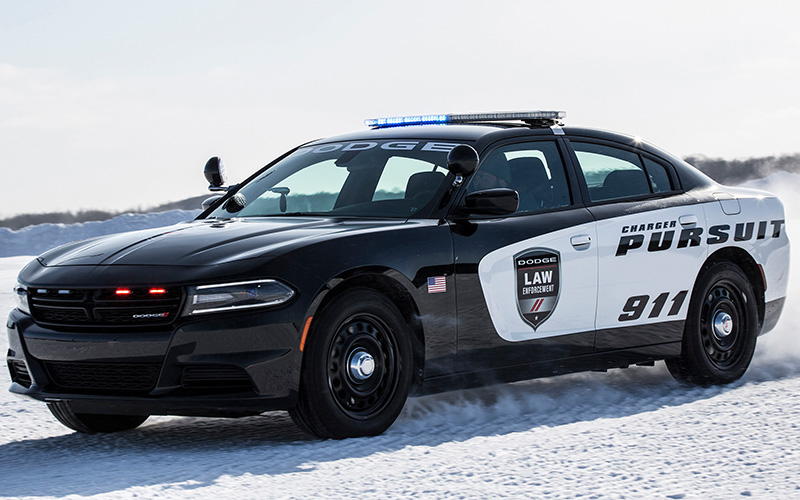
This wasn’t your average four-door. The 2006 Dodge Charger Pursuit arrived with a 5.7-liter or 6.1-liter HEMI V8 pushing 340 to 425 horsepower. It wasn’t a standard Charger, either. The Pursuit version featured higher sidewalls for jumping curbs and the ability to handle multiple 180-degree turns and go in reverse for long periods of time.
Departments picked it because it could take abuse, corner hard, and still look sharp. Black-and-white paint, a wide grille, LED lights, and that signature HEMI snarl made it the modern face of American police muscle. After a brief production pause in 2020, Dodge resumed the Pursuit until 2023, its final year. Today, Dodge continues serving law enforcement with both the Grand Wagoneer and Durango.
Ford Mustang SSP (United States, 1980s–1993)
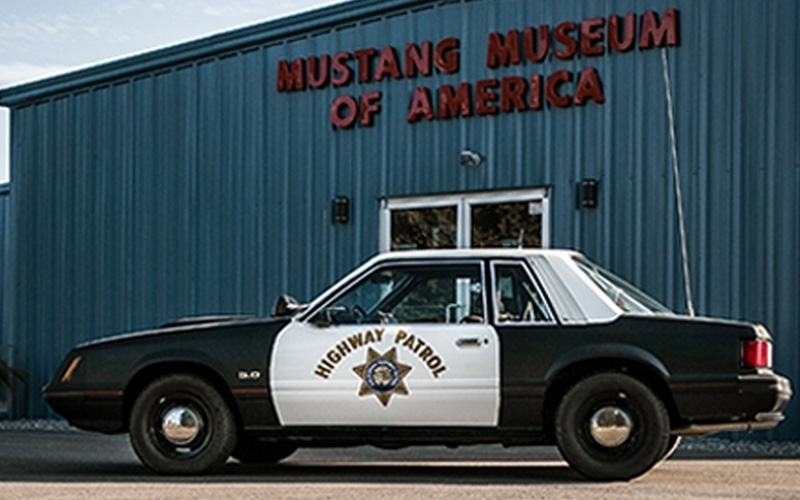
Ford already had a long history of working with police across the country, but by the 1980s, California Highway Patrol troopers wanted speed. Ford delivered the Mustang Special Service Package. The lightweight Fox-body came with upgraded suspension, bigger brakes, and a 5.0L V8 built to run hard on the highway.
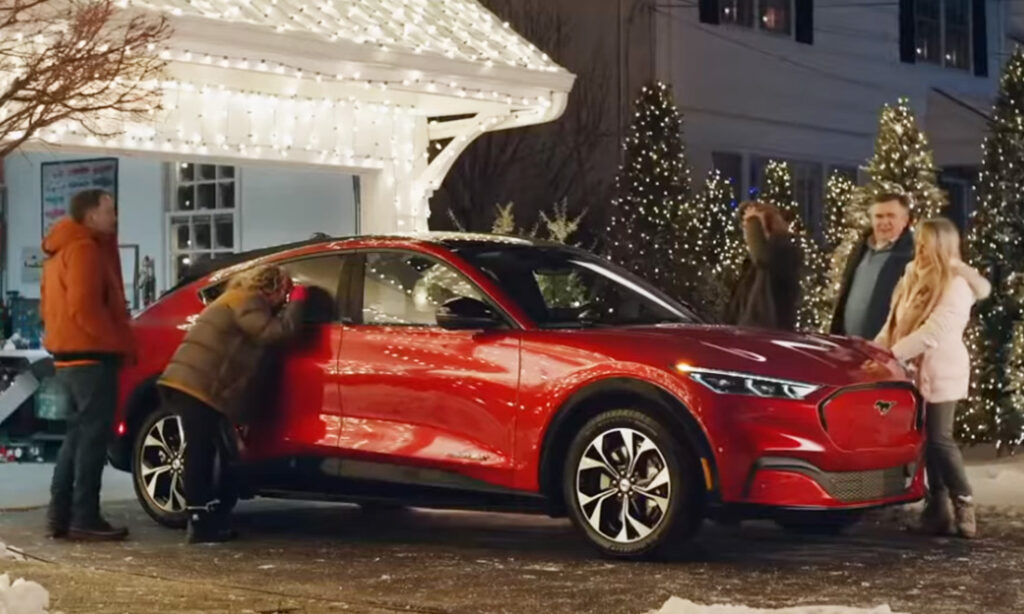
Troopers drove it for more than a decade because nothing else on the road could touch its mix of power, agility, and attitude. Ford’s still in the game today with police-ready versions of the Police Interceptor, F-150, F-150 Lightning, Expedition, and Mustang Mach-E.
Chevrolet Camaro B4C (United States, 1991–2002)
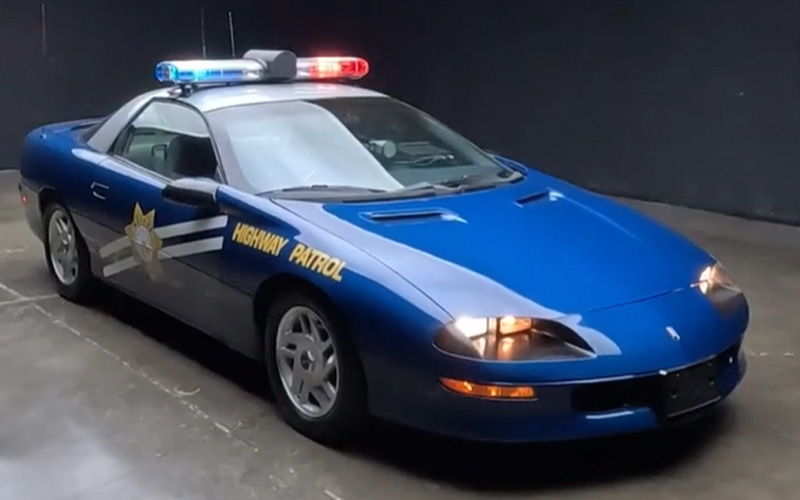
This may be the coolest-looking car on the list. The Camaro B4C looked like a sleek sports car, but it packed serious undercover muscle. It had heavy-duty cooling, performance suspension, and a 350 V8. The low-slung coupe had a clean profile and serious bite, perfect for catching unsuspecting anyone who thought they could get away.
It became a favorite for agencies from Nevada to Florida to New York. Unfortunately, the B4C was only offered through the 2002 model year, when the entire Camaro nameplate itself started winding down. While the Camaro production picked up again in 2010, the B4C did not.
Nissan Skyline GT-R (Japan, 1990s)
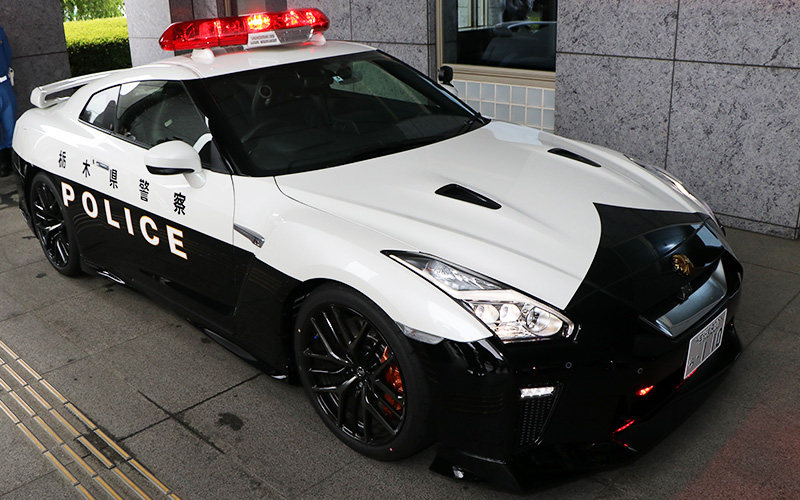
In the 90s, Japanese expressways hosted illegal street racers, so police brought in a legend: the R33 Skyline GT-R. All-wheel drive, twin-turbo power, and razor-sharp handling turned it into a highway hunter.
Painted black and white with one red light on top, it looked simple — but its badge and reputation said everything. It was a wise choice to catch speeders because the ninth-generation Skyline R33 that was exhibited in ’93 and rolled out in ’95 broke a record and beat the 8-minute mark at Nürburgring, coming in at 7:59:87 minutes.
Lamborghini Gallardo (Italy, 2004–Today)
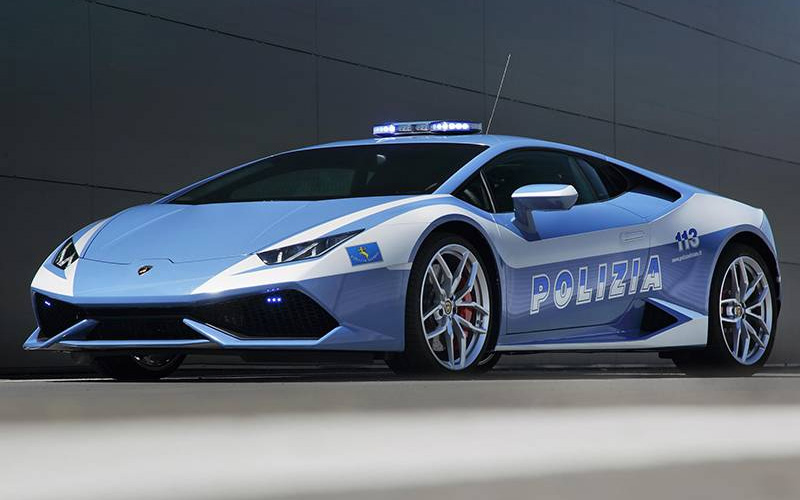
Only Italy puts a supercar in uniform. Lamborghini has been donating Gallardos to the Polizia Stradale for high-speed patrols and emergency situations for over 20 years now. In total, six vehicles joined the Italian State Police fleet since the start of their partnership. Each one has specific characteristics to support security and emergencies.
The first one, in 2004, had a refrigerated compartment for organ transports, and a defibrillator in the back if needed. Whether it’s chasing speeders or responding to other operations, it’s the perfect police vehicle. The V10 engine makes it one of the fastest police cars on the planet. Taking note from Italy’s police force, the Los Angeles Police Department got their own LAPD Lamborghini Gallardo in 2014. Lamborghini also delivered a 2014 Huracan LP 6410-4 to the Italian State Police the same year.
Holden Commodore (Australia, 1978-2024)
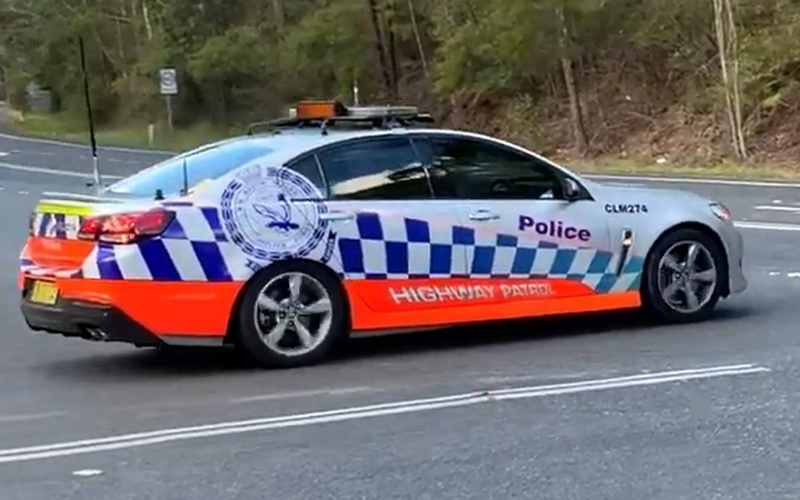
For nearly half a century, Australia’s police took to the streets in the Holden Commodore. Built locally and engineered for durability, these versatile sedans conquered long highways, gravel trails, snowy mountain passes and city chases without really flinching. As the years passed, the engines got stronger and tougher to match the rugged terrain.
The checkerboard graphics and bold neon stripes made them unmistakable compared to other police cars. They were a staple of Australian policing until Ford, Holden, Mitsubishi, and Toyota ended local production by the early 2020s.
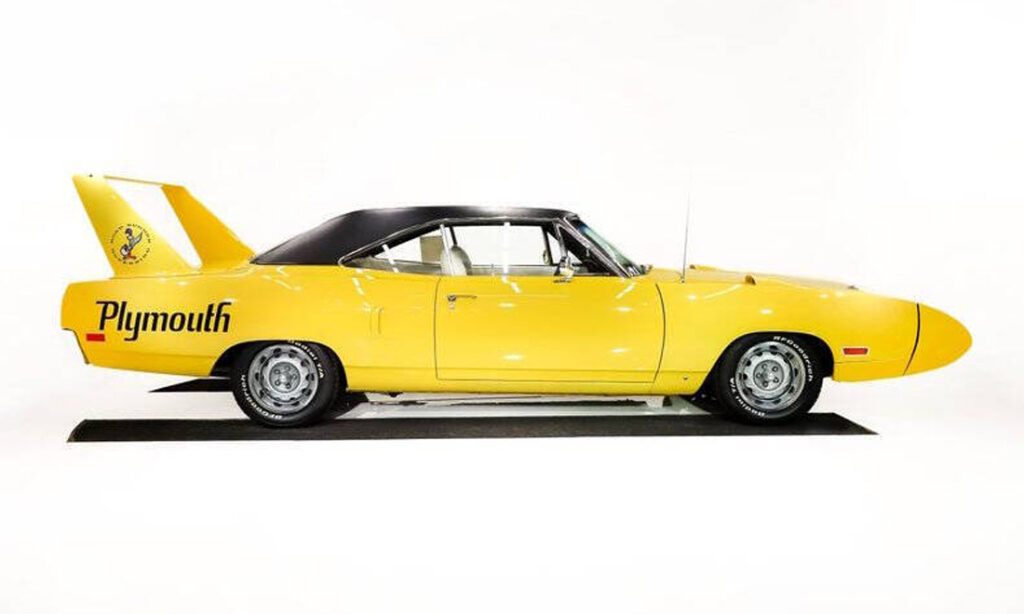
Plymouth Satellites (United States, 1970s)
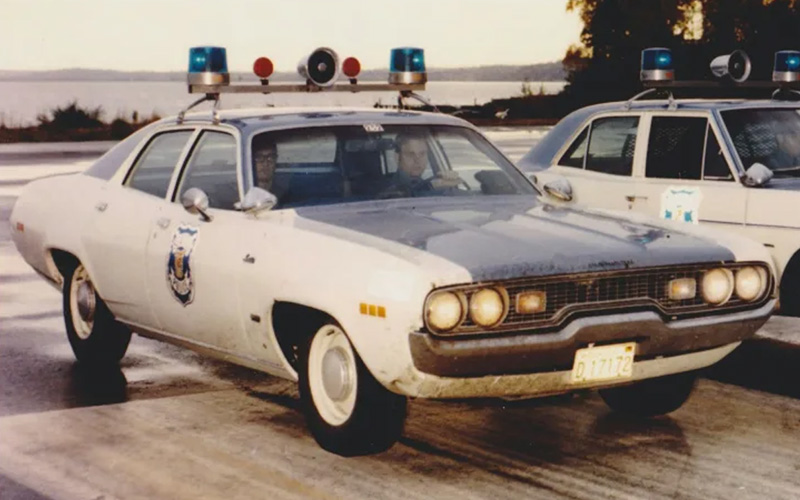
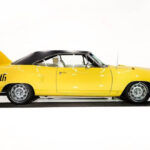
Agencies like the Seattle Police patrolled in Plymouth Satellites in the 1970s. Its 7.2-litre V8 produced around 280 hp, giving it enough power for city and some highway work. It had a room interior, but the size was still manageable in traffic and during pursuits.
Capable without being over the top, it was a practical choice for everyday policing. Other Chrysler-brand cop cars from the ’70s included the more powerful Plymouth Fury, the Dodge Coronet, and the Dodge Monaco. Speaking of the Monaco, that’s next on the list.
Dodge Monaco (United States, 1970s–1980s)
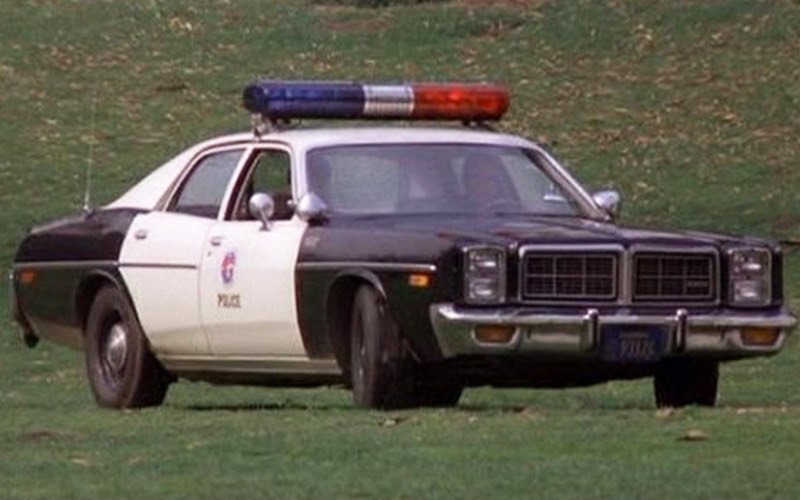
Big, boxy, and built like a tank. The Dodge Monaco became the classic American police cruiser — especially after movies like The Terminator, Thunder and Lightning, The Blues Brothers immortalized it on screen. Departments loved it for its size, durability, and V8 power.
It wasn’t sleek, but it had presence. With chrome bumpers, a massive grille, and black-and-white paint, the Dodge Monaco helped define what people visualize when they think of a police car.
Ford Falcon GT-F (Australia, 2014-Today)
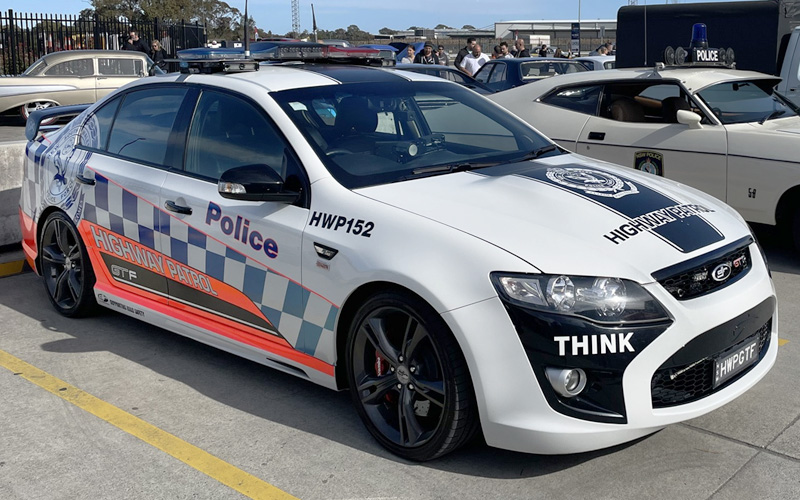
This is no ordinary Falcon GT-F. It was tuned by Dick Johnson Racing (DJR) to put out around 800 hp from its supercharged V8, making it Australia’s most powerful police car in recent history. Commissioned by the NSW Centre for Road Safety, it combined extreme performance with advanced police tech to target reckless drivers and engage the public.
The high-powered GT-F joins other special models like the HSV GTS and an earlier Falcon GT. It’s still got Australia’s trademark bright colors and checkered flag. When it’s not on the road, police occasionally showcase it to avid car enthusiasts at public events.
Ford Crown Victoria Police Interceptor (United States, 1992–2011)
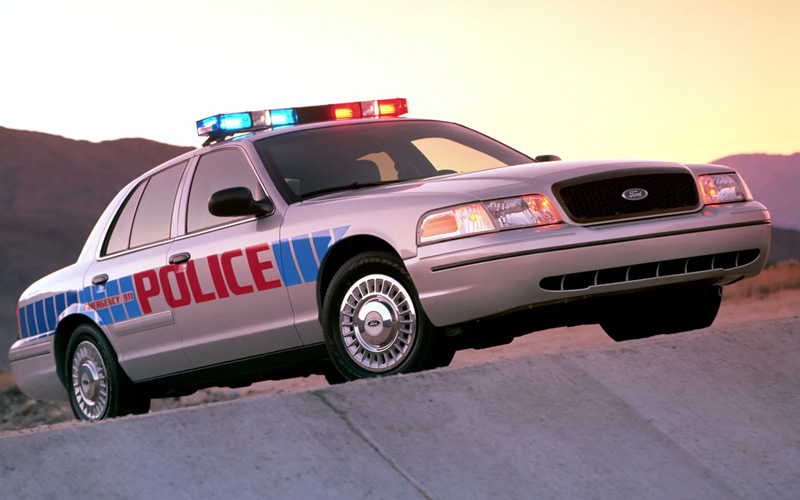
The Ford CVPI was not exotic and not particularly fast, but it is iconic. It defined the look of the American police car. It’s the cop car from most of the TV shows and movies from the 90s and early 2000s. When you see one, you know exactly what it is.
From 1997 to 2013, the CVPI dominated U.S. law enforcement fleets, and it also served in Canada and Mexico. Body-on-frame toughness, rear-wheel drive, and a lazy-but-reliable V8 made it nearly indestructible. Even retired, it’s still a legend.
Related Articles