Latest News
2026 Chevrolet Suburban ReviewThe History of the Pickup Truck Bed
Pickup trucks have something that no other body style does, a utility bed. Find out the history behind pickup truck beds and how they’ve changed.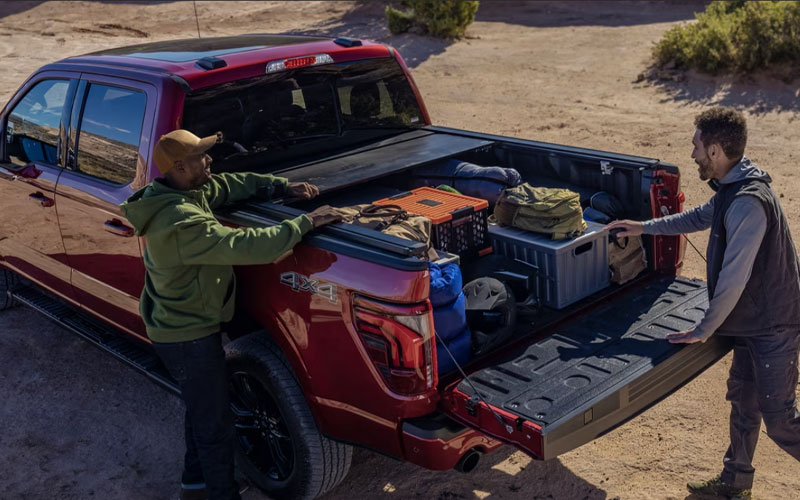
Truck Beds: The Ultimate Automotive Utility
A pickup truck is the ideal choice whether you’re out on the farm, hauling work equipment, or moving furniture. What makes it so useful is that open cargo area we call the bed. It’s just an open, uncovered square of space that can help in hauling whatever can fit in it. The traditional pickup truck bed has changed a lot since being introduced, so we looked at all the different beds and bed features that have ever come about. Here’s some history on pickup truck beds.
First Factory-Installed Pickup Truck Bed
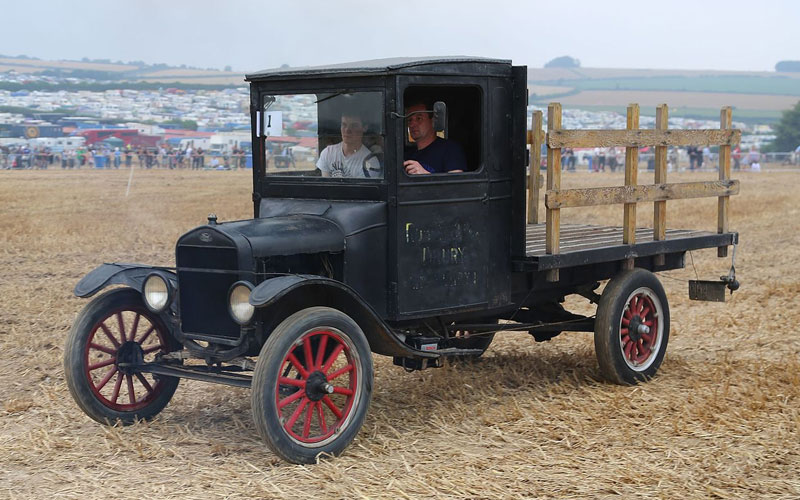
The early days of automotive history primarily focused on passenger vehicles, but there were a few upfitters that would add utility beds to Ford’s Model TT frames. These early trucks took the Model TT’s longer frame and tacked on a rudimentary bed for use on farms or for commercial work. Even Henry Ford himself was known to have an aftermarket wooden cargo box added to his vehicle on the farm.
Ford saw that they were missing out on profits from the audiences that were relying on aftermarket coachbuilders to modify their vehicles into pickup trucks. It wasn’t until 1925 that they’d produce the first pickup truck featuring a production integrated cargo bed. The Ford Model T Runabout featured a simple, small truck bed with a tailgate. The Model T and the Model TT were on their way out by the time Ford added their own pickup truck beds to the models, but the unique body style has remained an automotive fixture ever since.
Stepside Pickup Truck
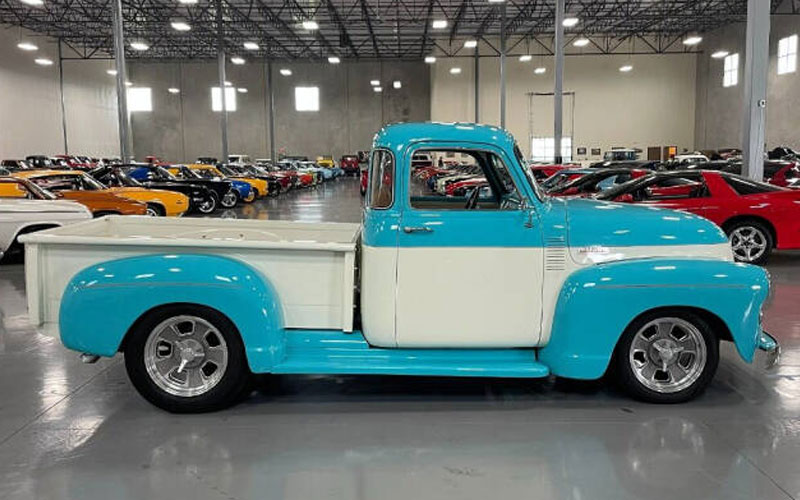
Subsequent truck boxes followed a similar design to that of Ford’s original production pickup truck. A thin, metal box flanked by rear fenders and running boards. This design created a “step side” that made climbing up and grabbing cargo out of the bed easier, but it limited the available space in the back.
The step side box remained an option on various trucks in the post-war era, but the full-length running boards were removed. Now the step side designs integrated the step into the bed design. Chevy was known for coming up with Stepside nomenclature that they used to describe models like their 3100 and C/K series pickup trucks.
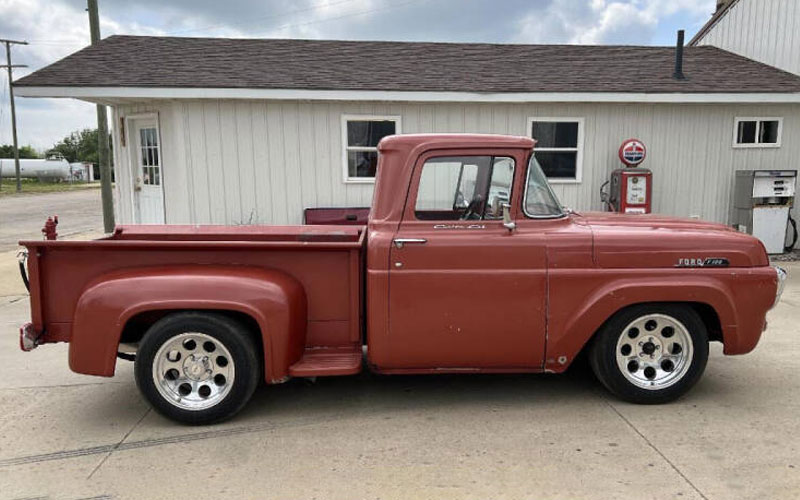
While stepside has become the widespread adopted term for this box design, other manufacturers came up with their own names for it back in the day. Ford went with Flareside when it came to referencing the design on models like the F100, Dodge called it the Utiline on D100 models, and Jeep called it Thriftside on the original SJ-series Gladiator.
Stepside beds have become a thing of the past, but the style lasted well into the early 2000s when models like the Chevrolet Silverado and Ford F-150 still carried it as an option.
Fleetside Pickup Truck
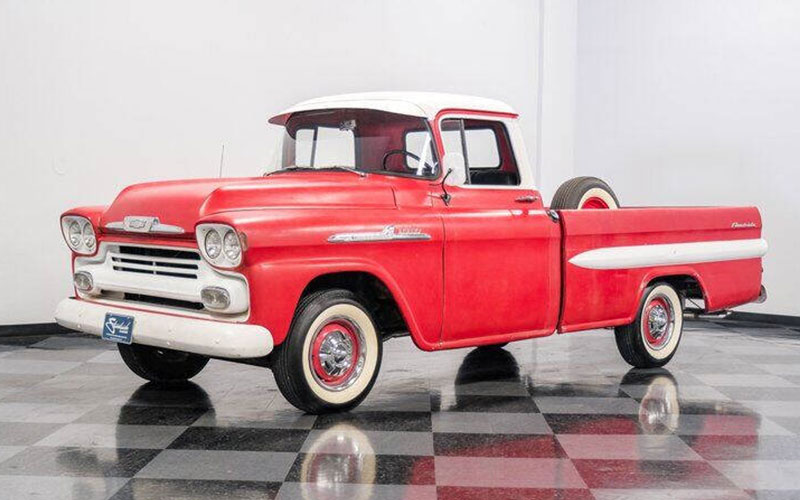
Replacing the stepside design was the fleetside box. This box design removes the steps and drops the fenders from the bedsides giving the exterior a flat panel look that contours nicer with the cab design. This not only updated the exterior look but provided more cargo space in the bed. The fleetside beds were wider than their stepside predecessors since the bedsides extended over the wheels and integrated the wheel wells into its design.
Fleetside boxes technically start back in the mid-1950s on the 1955 Chevrolet Cameo pickup truck. The Cameo introduced an upmarket style by adding fiberglass bedsides based off the cab’s curves. The first instance of “fleetside” didn’t officially come about though until its use on the 1958 Chevrolet Apache marketing. These updated models replaced the fiberglass bedsides from the Cameo with actual steel construction for the entire bed.
Similar to stepside, fleetside is the widely used term for the box design, but other manufacturers called it by different names. Dodge called it Sweptline, Ford called it Styleside, Jeep called it Townside, and GMC called it Wideside. All of these different names still meant that the box featured slabbed, fenderless bedsides that meshed nicely with the cab style. Fleetside is now the standard bed style across all trucks in the modern day.
Fold Downs and Rampsides
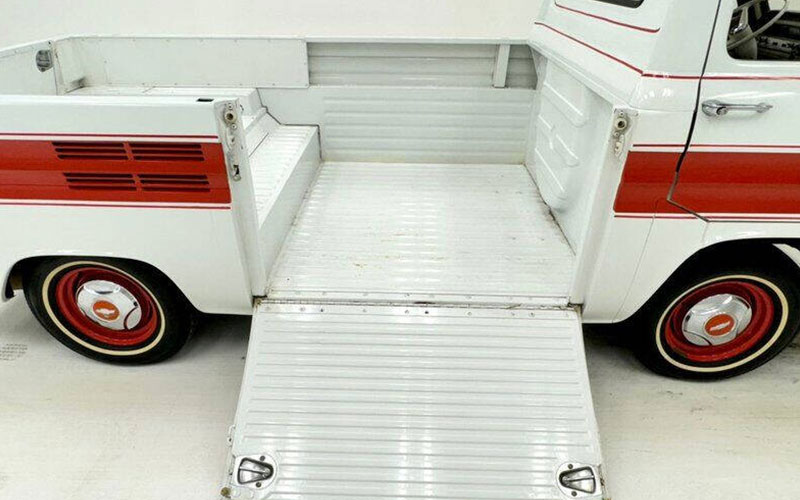
There were also the unique forward control trucks of the 60s that introduced alternative ideas when it came to bed design. The Chevrolet Corvair Rampside for instance added a gate to the passenger side of the vehicle in addition to a tailgate. That side gate opened into a ramp (hence the name) that made loading and unloading into the bed easier.
There was also the Volkswagen Type 2 pickup truck that showed up in the United States in the 1960s. This pickup truck version took the Type 2 bus and chopped it to add a bed space. What made its bed so unique though was its fold down design. Not only could the tailgate be opened like a regular bed, but the bedsides could fold down for ease of access or for making a flat bed space.
Unibody Trucks
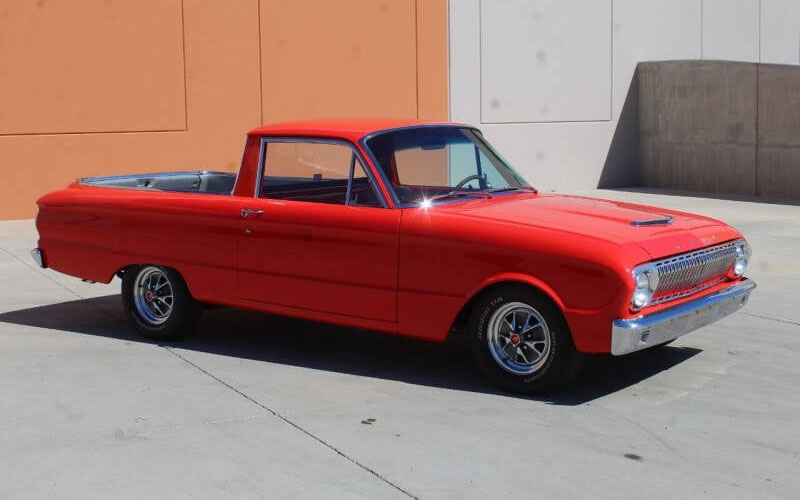
Typical pickup truck designs feature a separated cab and a bed sitting on the same frame, but there are a few trucks that merged two body pieces together. Early unibody truck designs were predominantly based on car chassis utes like the Ford Ranchero or Chevrolet El Camino or on forward control pickup trucks like Ford Econoline or Dodge A100. However, Ford did offer unibody trucks between 1961 and 1963.
These short-lived F-Series Styleside pickup trucks utilized unibody construction that merged the cab and bed into one piece of sheet metal. Unfortunately, these early uninbody trucks couldn’t handle the rough and tumble nature that pickup trucks are made for and would twist in unnatural ways when actually utilizing the bed.
While that turned out to be a failure for Ford, the unibody truck segment has returned to the modern automotive market as a preferred option for rural truck shoppers. Models like the Chevrolet Avalanche, Ford Maverick, and Honda Ridgeline feature unibody construction while not buckling as easily under the pressures of doing actual truck work.
‘80s Sport Bars in Beds
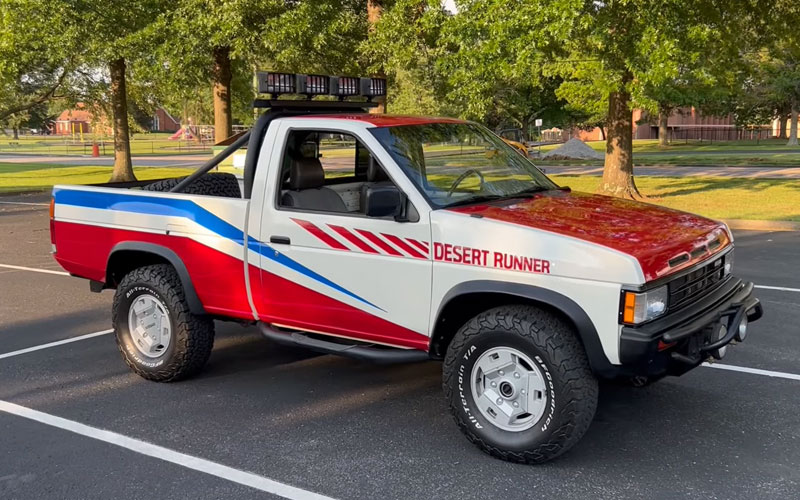
Truck bed designs remained relatively stagnant in the automotive market after the 1960s, but the focus on making trucks cool became prevalent in the ‘80s and ‘90s. Enter the Sport Truck Era where designers took inspiration from trophy trucks. Aside from the brighter paint jobs and bigger wheels, the most notable bed additions from this time were the integrated sport bars.
These are stylized bars of metal that’s attached to the bed and bent to run along the shape of the cab. They’re mostly for looks but could aid in adding some rigidity, act as extra protection in the event of a rollover, or just to attach extra lighting. Some of the production trucks that added sport bars were the Nissan Desert Runner, Chevrolet S-10 Baja, and the infamous Ford F-150 Bigfoot Cruiser.
A Better Truck Bed Experience
The ‘90s and 2000s introduced more features to truck beds that were previously only available as aftermarket options. Protective bed liners were slowly becoming standard equipment, additional bed lighting was being added, cargo management became more than just a couple anchor points, and tailgates started to do more than fold down.
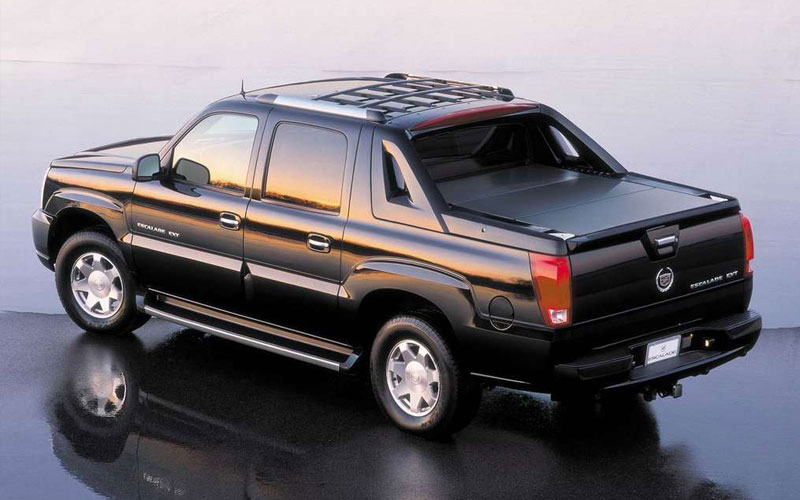
2001 saw the introduction of the Chevrolet Avalanche, a unibody truck that had a unique quirk to its bed. GM’s “Convert-a-Cab” system added a midgate between the bed space and the rear of the cab. The rear seats and rear glass could be stowed away to allow the midgate to fold down and increase the bed length. The Convert-a-Cab midgate system was also available on the Cadillac Escalade EXT and the Hummer H2 SUT.
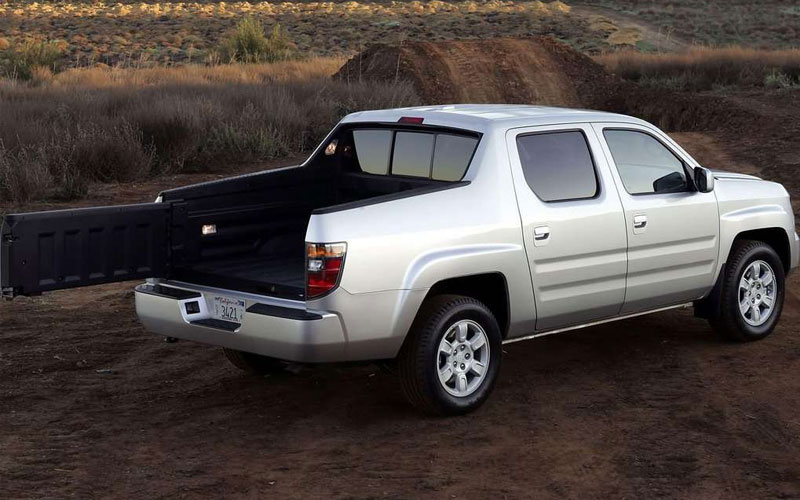
Honda introduced their unibodied truck for the 2006 model year and further shook up the truck world. The Honda Ridgeline carried a bed that featured a tailgate that could open either traditionally or out to the side. Not only that, but the bed also had a locking trunk space integrated in the bed floor for extra cargo and the spare tire. It may not seem like much, but this acted as a turning point that truly ramped up the innovative truck beds of today.
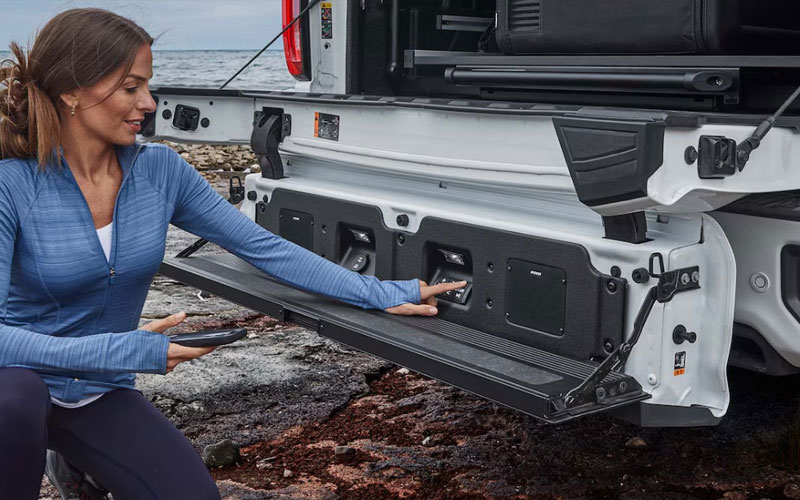
Now we have Ford F-150s with tailgates that have an integrated, fold out step and a grab bar for ease of access into the bed. Chevrolet and GMC trucks feature the Multiflex tailgate system that can contort itself into steps or for managing long cargo. Then you’ve got RAM with the available RamBox that turns the bedsides into additional cargo holds and they’ve also got the multifunction tailgate that can split down the middle like a pair of barn doors.
Technology has also entered truck beds for both added utility and entertainment. Integrated power outlets are the norm inside today’s truck beds that are helpful for powering equipment at job sites. Bed integrated sound systems are an available feature on numerous trucks around the market making tailgate parties even easier.
The Weirdest Truck Bed Features of All Time
Pickup truck beds have come a long way from the basic hauling boxes back on those old Fords. Although not every advancement was well received or necessary over these nearly 100 years. Here are couple of weird pickup truck bed features from over the years.
Powell Sport Wagon
Powell was a small automotive shop in Southern California that produced the Sport Wagon, a small truck that rode on a Plymouth drivetrain. The unique bed feature they carried was a sliding, stowaway cargo tray built into the bedsides. While that sounded innovative for a truck in the ‘50s, the tube design made it only viable for small tools or fishing poles.
Subaru Brat
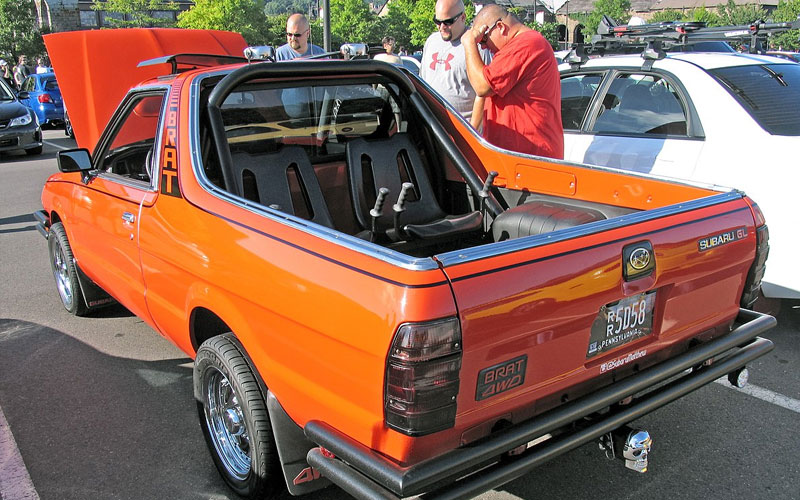
The Subaru Brat was a small ute that featured jump seats in its bed. While these oddly positioned seats were spun to be a unique marketing gimmick, they were added to circumvent taxes. The Chicken tax that was instituted in 1964 imposed a 25% tariff on light trucks. By welding seats and adding carpeting into the bed, Subaru could classify the Brat as a passenger vehicle instead.
Lincoln Blackwood
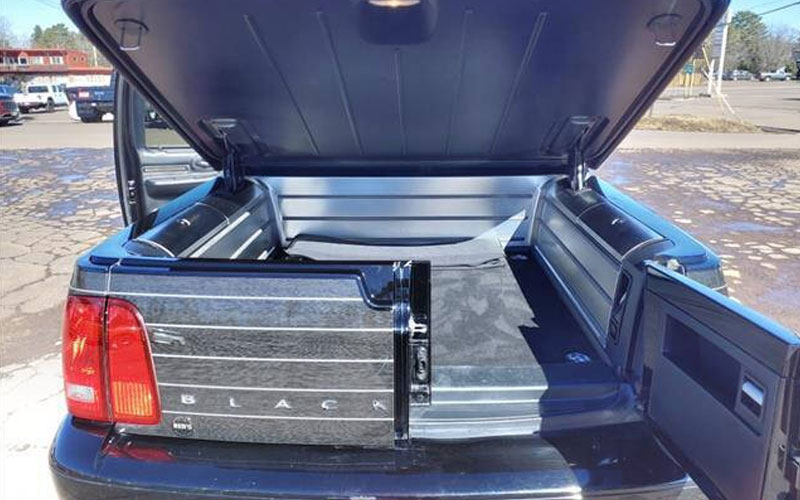
Luxury classed pickup trucks are the norm now as almost every top trim level features wood trim and leather upholstery. The idea behind luxury pickup trucks started showing up in the early 2000s, with the worst attempt by the Lincoln Blackwood. This was a luxury-appointed version of the Ford F-150, but the bed had odd features to make it high-end at the expense of utility.
The Blackwood featured a power-operated, hard-shell tonneau cover that opened to about 30-degree angle before stopping. It couldn’t be removed so it limited hauling larger items. The bed itself also had odd gimmicks that included full carpeting, polished aluminum bed walls, and LED lighting. The tailgate at least split down the middle, so it was a little easier to throw your groceries back there (since that was about all you’d haul with this kind of truck).
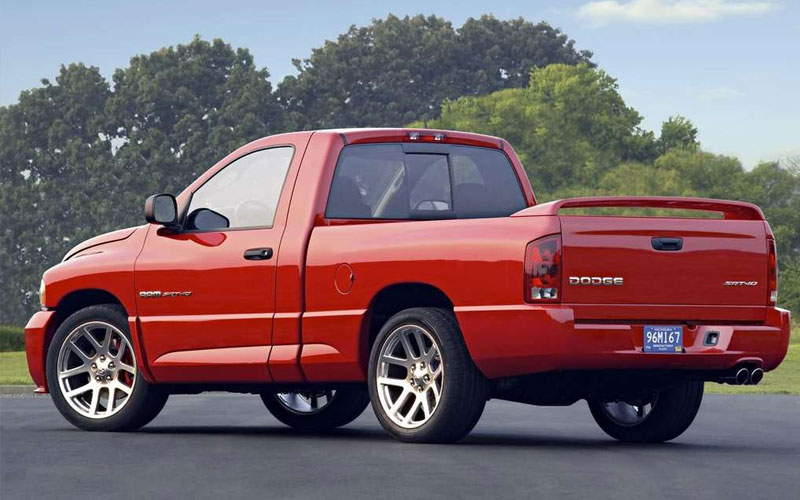
Truck Bed Spoilers
Back in 1991, Ford commissioned the American Sunroof Company to take a few Ranger pickup trucks and give upfit them as specialized convertibles like the Dodge Dakota Sport Convertible form 1989. They not only added the convertible top, but also messed with the aerodynamics of the bed. Only 17 of these Ford Skyrangers were produced that featured the convertible top, a fiberglass sport bar, and a bed mounted rear spoiler.
Bed mounted spoilers technically only make sense on trucks if you throw on a tonneau cover, otherwise it’s all for show. That fact didn’t stop Ford and Dodge though. Ford returned to the idea with the limited run 2002 Ford Ranger Thunderbolt featuring SLP performance parts. Dodge has added spoilers to the Ram 1500 twice. First on the fire-breathing Dodge Ram SRT-10 that featured a Viper engine under the hood and then again on the NASCAR-inspired Dodge Ram Daytona with its Superbird-like wing a year later.