Latest News
Famous Cars: Patton’s Willys JeepThe Off-Road Legend: Vic Hickey
He’s an off-road innovator that was behind the K5 Blazer, HUMVEE, and the Apollo Lunar Rover. Learn more about Vic Hickey.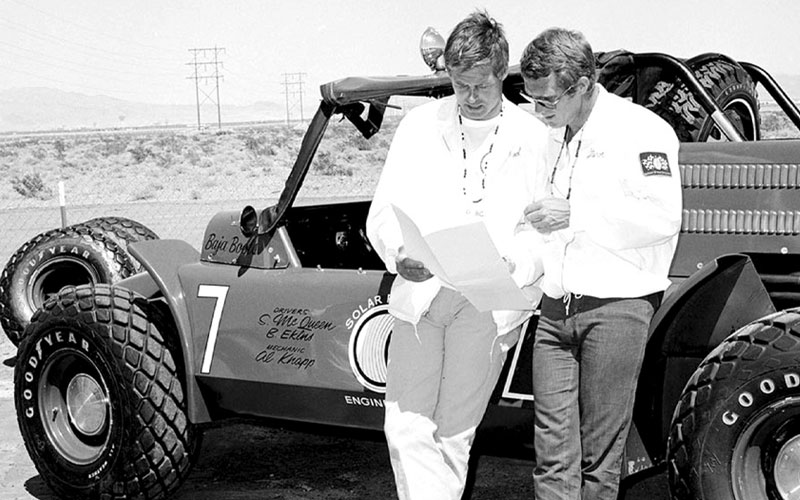
A Lasting Impression on the Off-Road World
The Ford Bronco dominated the Baja 1000 back in the day, but Chevy was hot on its tail with their K5 Blazer. While this off-roading SUV didn’t see the Baja podium during its heyday, it did leave a lasting impression on the automotive world. Off-roaders still swear by the K5 Blazer’s design as these old beasts continue to rock crawl across Moab and blast through the Glamis Sand Dunes.
One of the men behind this lauded early SUV was Vic Hickey, an automotive inventor and designer who helped improve upon off-road vehicle dynamics still seen to this day. Hickey wasn’t just known for his work on the K5 Blazer however, he’s also credited with designing the military HUMVEE, being behind NASA’s Apollo LRV, and helping famous actor Steve McQueen take on Baja. Vic Hickey was an off-roading innovator worthy of recognition, so let’s dive in.
Vic Hickey’s Early Days
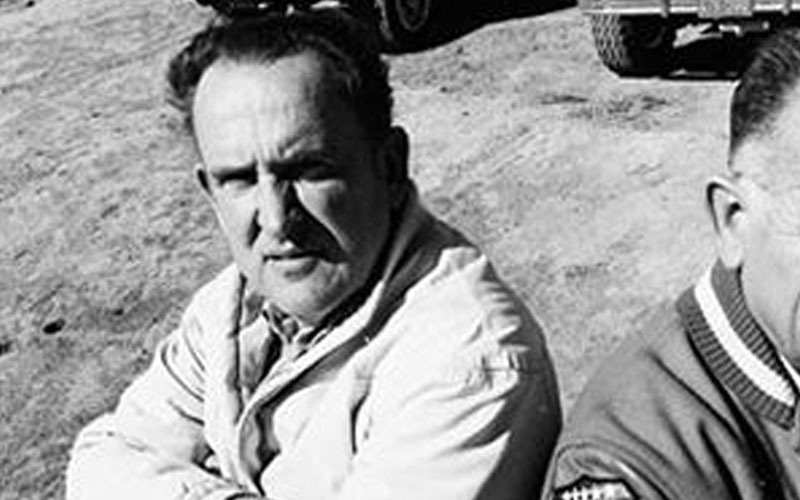
Hickey’s fascination with vehicles started at a young age in Southern California. He quickly picked up an interest in airplanes and hot rods. He purchased his first car, a Ford Model T, at 12 years old and manned his first solo flight at 16. His early years were comprised of learning the mechanics of racecars and would make his way out to the dry lake beds surrounding California to race himself.
Hickey earned his pilot’s license at 19, attended a Navy pre-flight school in 1943 some years later, and went on to serve in the Navy during World War II. While deployed, he put together he found a way to convert air-to-ground missiles into ship-to-ship ones and designed a missile grapple to retrieve warhead debris from the ocean. He returned to Southern California following the war and went into the business of working on racecars at his auto shop rather than participating himself. According to the Off-Road Motorsports Hall of Fame, Hickey figured “Anybody can drive a car, not everyone can build one.”
It’s that drive to make better vehicles that led to Hickey’s greatest off-road purposed inventions. He produced floatation and repair kits for military Jeeps during the Korean War, dual wheel adapters for better rear-wheel traction, and the Hickey Sidewinder Winch that was famously strong enough to hoist a vehicle into the air. Perhaps Hickey’s greatest off-road innovation was the creation of the Trail Blazer though, as it got his foot in the door with General Motors.
Hickey Trail Blazer & General Motors
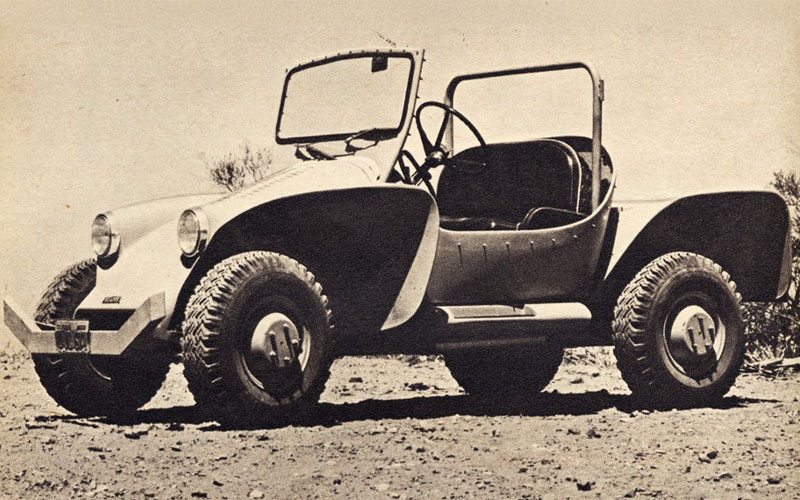
Vic Hickey introduced his own off-road vehicle in 1957 that was truly an off roader ahead of its time. The Trail Blazer was a fiber glassed bodied two-seater vehicle that featured exaggerated flared fenders and a completely independent suspension at all four corners using Chrysler components. It was powered by a Chevrolet Corvair engine at the front that sent power through a three-speed manual transmission with low range and on to the four-wheel drive.
Its proportions were odd to say the least, but the design was intentional. The flared fenders helped reduce mud caking around the wheels, the wheel positioning gave it terrific approach and departure angles, and the dramatic hood angle allowed the driver to see the front wheels and capably steer them over obstacles. The Trail Blazer could also adjust its ground clearance between seven and 13 inches, featured disc brakes a, and could capably ford water.
News got around about the off-roading Trail Blazer and caught the attention of Ed Cole, then General Manager of GM. Cole travelled out to California to experience this Corvair engined off-roader for himself and was truly impressed even after pushing the vehicle so hard that it broke a tie-rod. Cole made an offer to buy the rights to the vehicle, the Trail Blazer name, and invited Vic Hickey to join General Motors as an engineer in their research and development department.
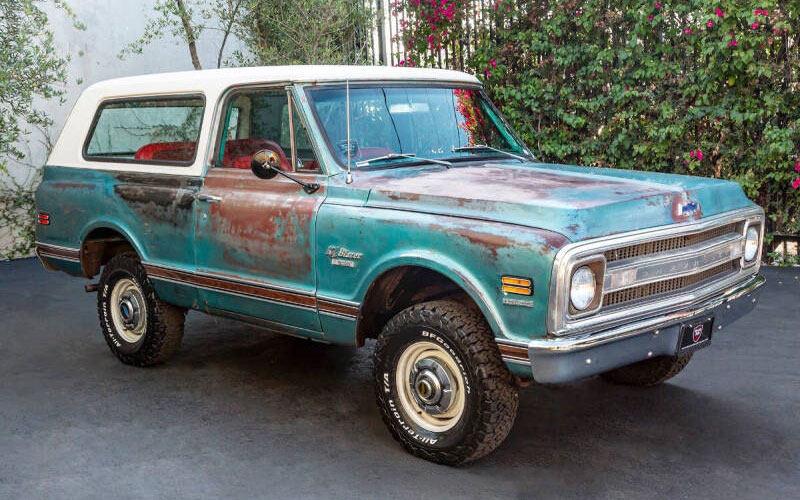
While onboard with GM, Hickey specialized in the development of off-road vehicles like the K5 Blazer. His prior experience led the company to also task him with developing military vehicles and producing the first factory-backed Chevrolet C10 off-road race truck. While Hickey left GM in official capacity by 1968 to focus on his own innovative off-roaders, he crossed paths with the company as a design contractor in the following years. Here are some of Hickey’s substantial innovations and achievements during his professional design career.
The Hickey Enterprises Special Edition Vehicles
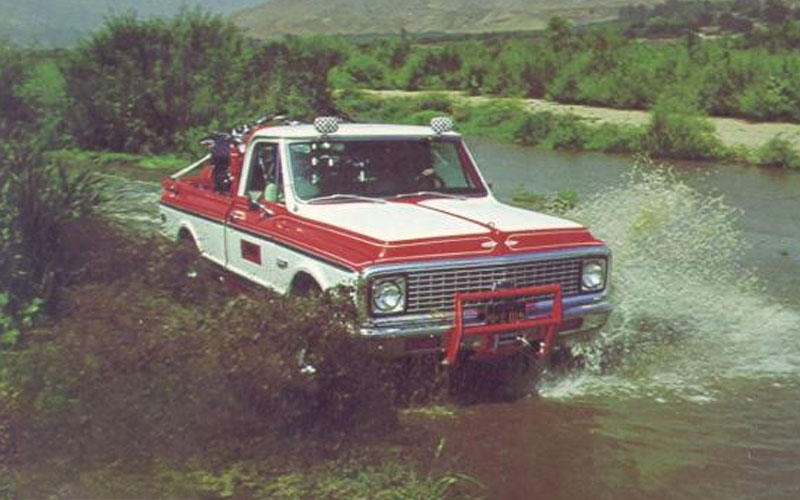
Hickey produced a number of upfitted, special edition models out of his shop that were fully endorsed by the auto manufacturer. There was of course the Vic Hickey Edition Blazer that was outfitted with roof lights, a front bullbar with additional lighting, the Sidewinder winch, auxiliary fuel tanks, heavy-duty front and rear differential covers, a spare tire and GI can carrier, low profile hood, and tons of other Hickey aftermarket parts.
He even updated GMC vehicles with his off-road parts to create the special Desert Fox edition models. The Desert Fox edition was available on the K1500 Sierra Grande pickup truck and the GMC Jimmy. Not only were these heavily outfitted off-road ready vehicles, but they were given a special earth-tone paint options paired with matching exterior stripe visuals.
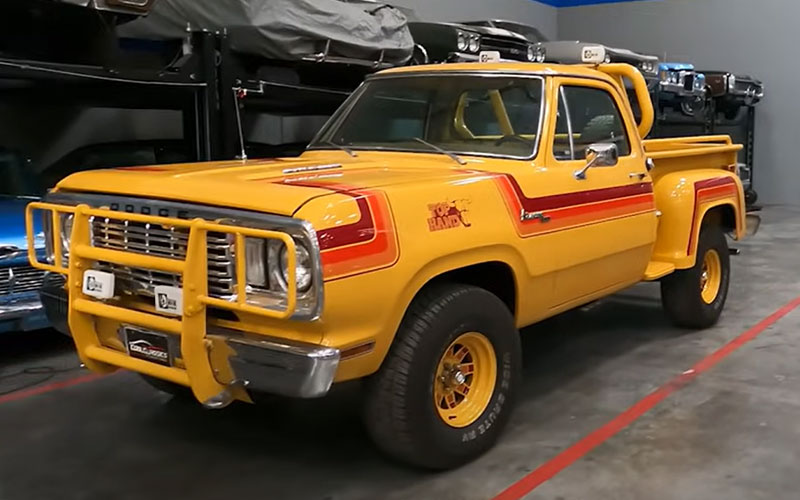
Hickey also helped Chrysler in promoting their Plymouth Trail Duster and Dodge Power Wagon. The Top Hand editions were bright yellow painted models featuring red exterior stripe graphics and the manly ‘Top Hand’ logo along the sides and even on the wheels. Like the GM products above, Hickey installed his aftermarket equipment onto these vehicles to further their off-road capability and style.
The MOLAB Lunar Concept
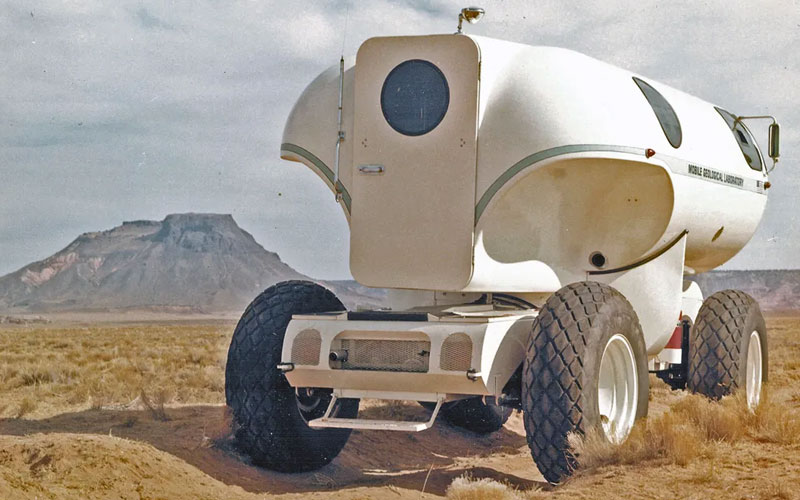
Following the success of the Apollo 11 mission, where man first walked on the moon, NASA decided to broaden their plans for the lunar surface. GM was given a contract by NASA in 1963 for an Apollo Logistics Support System. This was a plan to design and produce a mobile laboratory that could carry and sustain across the lunar surface away from a planned lunar base. With the help of Vic Hickey, GM presented the Mobile Geological Laboratory (MOLAB).
This futuristic cylinder on wheels was made to capably traverse the lunar surface with ease thanks to Hickey’s involvement in designing and building this unique space machine. The air-tight MOLAB allowed two astronauts to drive and live within the confines of the vehicle for up to two weeks to perform “on-the-go” research. The lunar vehicle was powered by a Corvair engine and was claimed to achieve up to 400 kilometers of range before needing to return to the proposed lunar base.
While a living driving prototype MOLAB was built that the Apollo mission teams even trained with, the moon bases were never put in development and NASA pivoted towards lighter Lunar Roving Vehicles for future missions. The MOLAB prototype didn’t make its way to the moon but was instead utilized by the United States Geological Survey to explore Earth’s surface and helped in making ground-breaking geological findings around the American southwest.
Military Machines: CUCV & HUMVEE
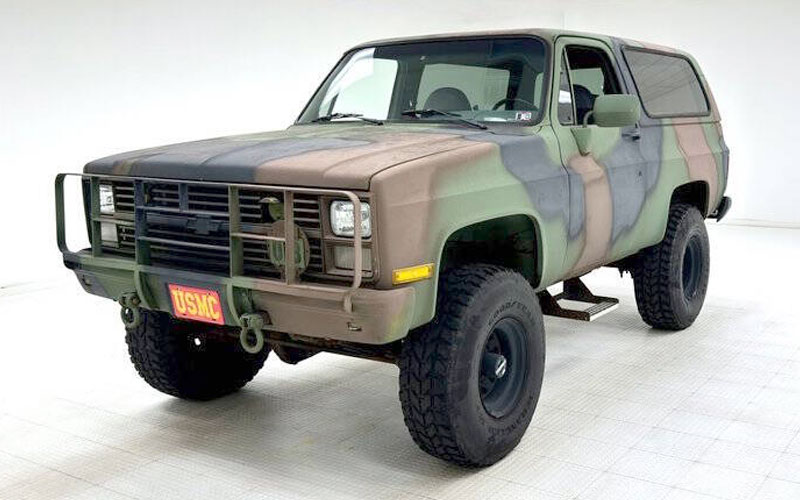
Vic Hickey made some updates to GM’s military contract vehicles including some of their amphibious vehicles, but his most significant military advancements came after he left the company. Hickey put together a militarized prototype of the K5 Blazer in the mid-1970s as a Commercial Utility Cargo Vehicle (CUCV) option. This prototype would later be adopted in 1983 as the M1009 CUCV. The camo painted K5 Blazers featured 6.2L diesel V8s, a split electrical system, and blackout headlights. They were primarily used for personnel transport, cargo hauling, or mobile command centers carrying massive RT-246 receiver-transmitter units.
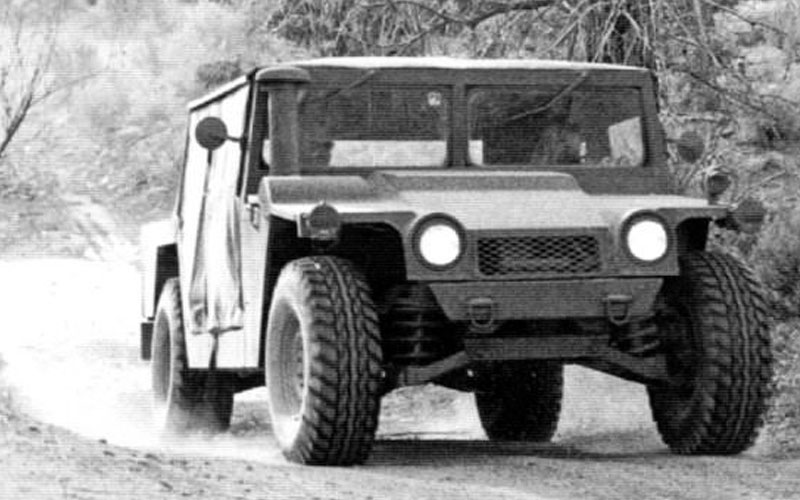
His other major contribution came in 1979 while contracted under the Food Machinery Corporation. Hickey was tasked with putting together a High Mobility Multipurpose Wheeled Vehicle (HMMWV) that could demonstrate extreme capability and that could completely replace their fleet of different models currently in use. What came out of this was the XR-311, a vehicle that was highly optionable, protected occupants from shrapnel and light ballistic penetration, and provided excellent off-road performance among other standards set forth by the US military.
The XR-311 rights were picked up by AM General who tweaked the design to improve upon its initial short fallings. The AM General improved design was picked up for the military’s HMMWV, better known later as the HUMVEE. While the HUMVEE isn’t exactly what Hickey put forth, it is the direct predecessor that built upon his initial design making him the father of the HUMVEE.
Baja Boot & Steve McQueen
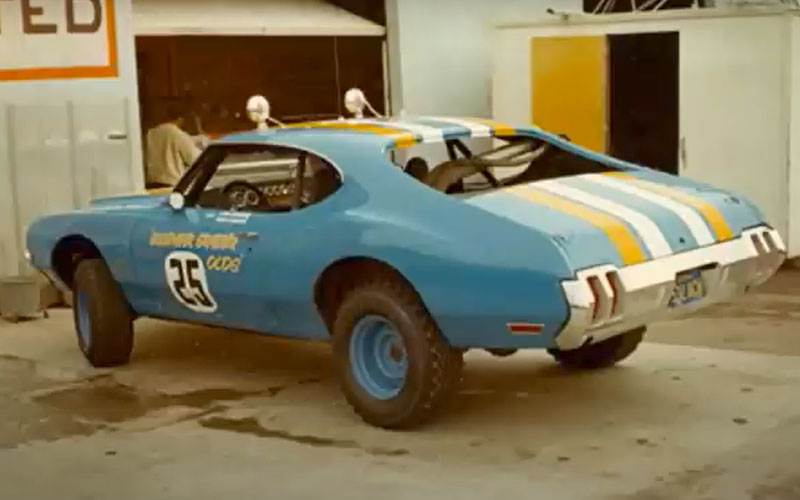
While not working on military or lunar vehicles, Hickey was in his shop building and designing some of the best off-road race vehicles the Baja had ever seen. He of course modified the K5 Blazers for racers to face off against the likes of Bill Stroppe and his podium finishing Ford Broncos. Hickey also made some connections with Hollywood stars. He built a lifted Oldsmobile 442 known as the Goodyear Grabber in 1969 for actor James Garner and his 1969 Chevy C10 he built for General Motors was later owned and raced by actor Steve McQueen. However, that wasn’t the only Hickey build McQueen experienced, he also sat behind the wheel of the Baja Boot.
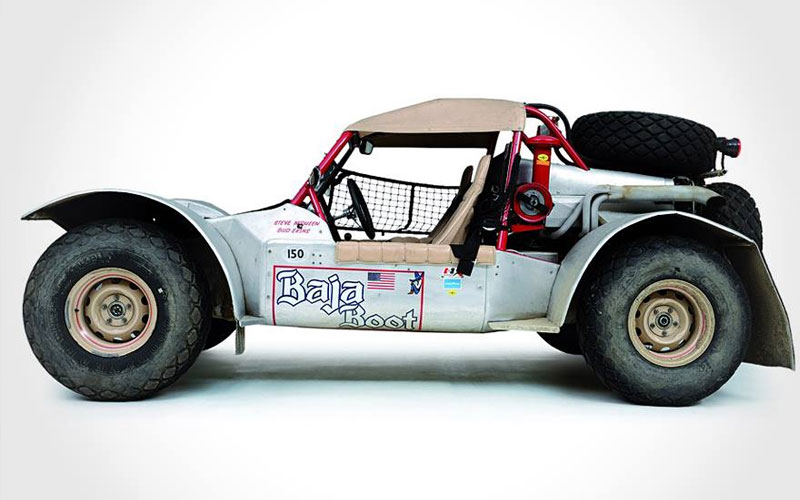
The Baja Boot was a performance enhanced, race-ready version of Hickey’s Trail Blazer that was built in 1967. It used a similar body style but added larger tires, better lighting, a better suspension, Hurst aftermarket parts, and dropped in a Camaro sourced V8 at the rear mated to a Turbo400 automatic transmission. It was the perfect design for off-road racing, but it failed to finish in its first running.
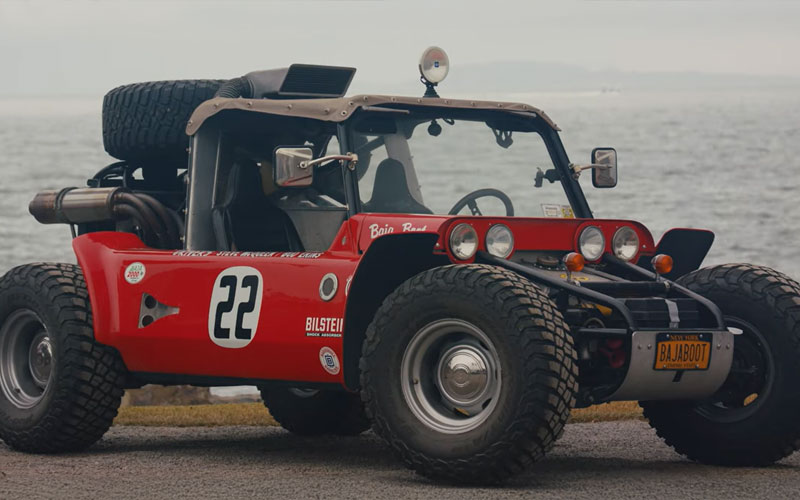
Steve McQueen and Bud Ekins saw potential in the machine and convinced Vic Hickey to sell him his Baja Boots. After some modifications and a repaint, the pair planned to run the Baja 1000, among other off-road events, the following year. McQueen failed to finish in the unique purpose-built racer, but it gave the Baja Boot some further notoriety by being paired with a famous actor like McQueen.
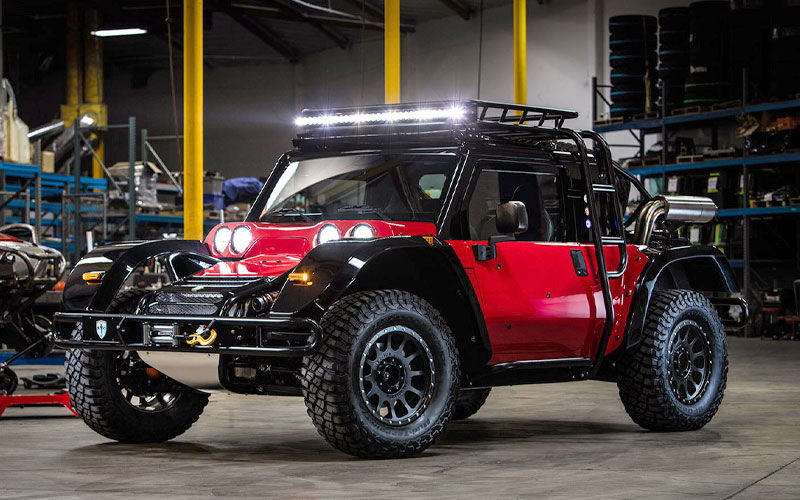
Years later, James Glickenhaus picked up the famous Baja Boot design to show that Hickey was well before his time. He introduced the Glickenhaus Boot in 2008 under supercar manufacturer Scuderia Cameron Glickenhaus. The modern take on Hickey’s Boot was modernized and given a supercharged 6.2L Chevy V8. Since its rebirth, the Boot has been a star in the off-road racing scene and has bested Ford’s Bronco R on numerous occasions. A feat that Hickey would have been sure to enjoy and rubbed in Bill Stroppe’s face.
Vic Hickey unfortunately passed away in 2003 at the age of 84 and didn’t get to witness the Boot’s newfound success. He left behind a legacy that’s full of unique and innovative advancements that have made a substantial impact on automotive history and off-road motorsports.