The Evolution of Convertible Cars
From the first roofed car and early cabriolets to innovations like the Targa and T-tops, we traced the many evolutions of the convertible car.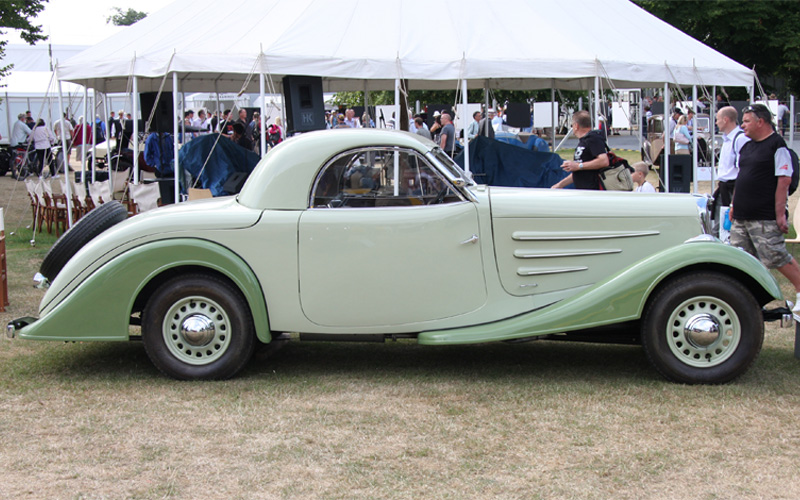
Drop Tops, Then and Now
Convertibles are today associated with driving leisure, top down, wind in your hair, your best pair of shades adding at least 10 percent to your personal coolness factor. There was, however, a time when open air driving was the norm and having a roof over one’s head was a luxury. Eventually, the convertible top allowed for drivers to take their pick of open top or closed depending on the weather or if they were willing to hazard their new pompadour to a stiff breeze.
The history of the convertible traces along with that of the automobile more generally as new technologies and shifting tastes exerted their influences, changing the shape and style of cars over time. Convertibles remain a small fraction of overall car sales, but a look back at their history shows an outsized influence on motoring culture.
Early Days of Convertibles
The term cabriolet dates to the 18th century, first applied to one-horse, two-wheeled carriages with a foldable canopy top. The term cab, for taxis, is derived from cabriolet. Owing to their origins as horse-drawn carriages, the first automobiles were universally roofless affairs.
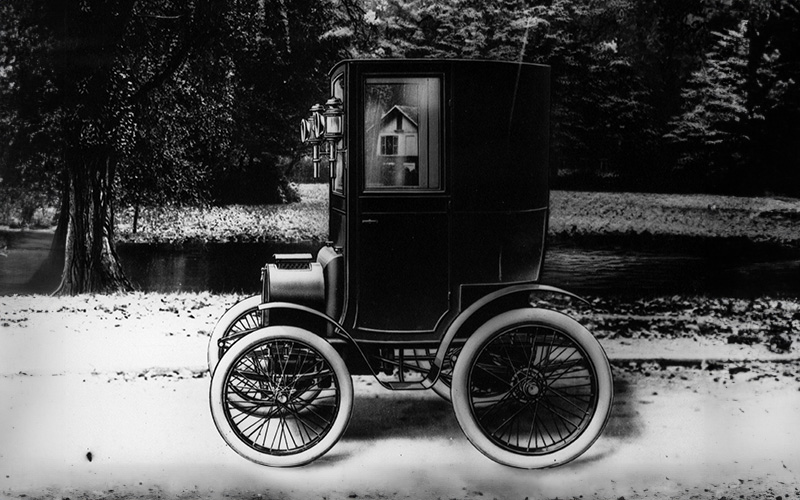
The first mass-produced enclosed car was Louis Renault’s Voiturette Type B of 1899, a car which looked for all the world like a phone booth on wheels. Cadillac was the first American carmaker to put a roof on their cars, starting in 1905. It didn’t take long for consumers and manufacturers to recognize the virtues of an enclosed cabin and by 1925 roofed cars had eclipsed roofless ones.
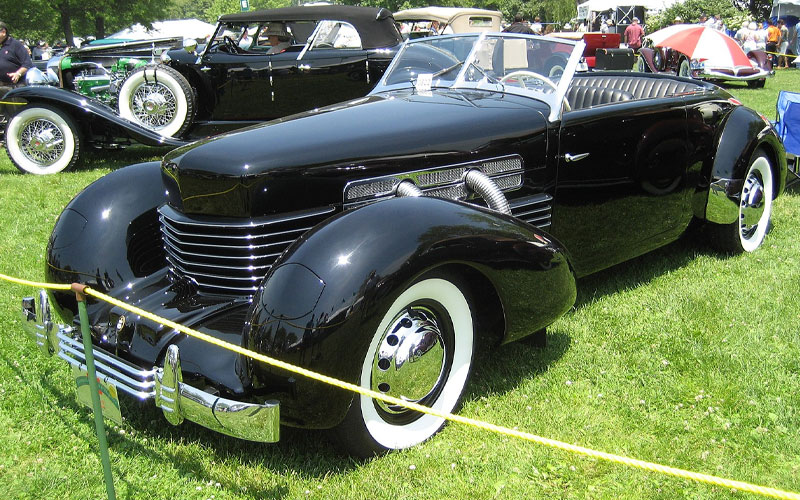
The first convertible was produced by Peugeot in 1934. The 601 Eclipse featured a retractable hardtop designed by George Paulin. Convertible tops became all the rage among luxury car buyers with the likes of Auburn, Packard, Duesenberg, and Cord all adopting them. By 1936, convertibles accounted for roughly 1 percent of overall car sales. That same year, Plymouth debuted the first power-retractable convertible top.
1950s and ‘60s Heyday of the Convertible
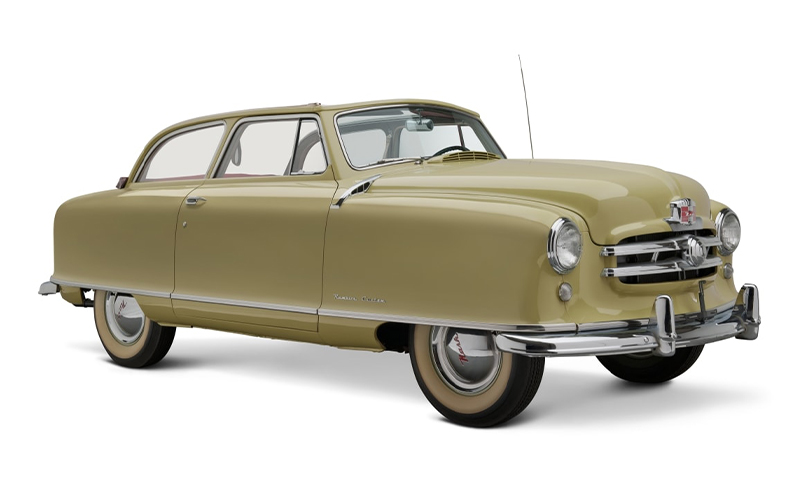
The post-war years saw a boom not just in the economy or fertility rates, but also in the number of convertibles as well. US servicemen had been charmed by drop-top European roadsters like the MG Miget, driving the body style’s popularity. By 1950, every US carmaker offered a convertible car.
The decade was filled with automotive innovations, including those relating to the convertible top. Nash offered a unique take, their 1950 Rambler convertible retained fully framed doors, including a B- and C-pillar, with a rollback cloth top. Ford’s Fairlane 500 Skyliner was one of the most ostentatious convertibles of the era with its automatic retractable hardtop.
By the middle 1960s, convertibles reached their zenith, accounting for six percent of overall car sales and represented by some of the body style’s most popular and iconic models like the Ford Mustang, VW Beetle, and Chevy Impala.
Targas, T-tops, and the Malaise Era
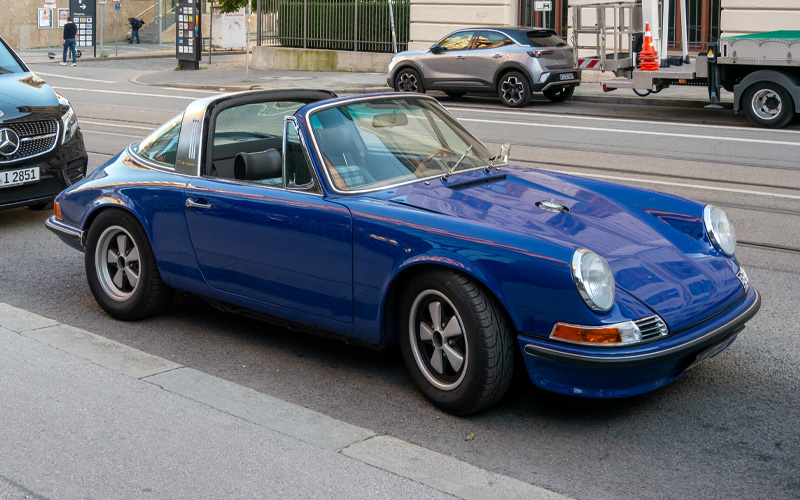
The 1960s also saw the popularization of new convertible variants. A push for greater safety, sparked in part by Ralph Nader’s Unsafe at Any Speed in 1965, had carmakers worried US regulators might ban convertible cars outright. Porsche was determined to not let open top driving die with the convertible and adopted the “Targa” top for their 1967 model 911. The Targa top, named after the Italian Targa Florio race, featured a removable roof panel, fixed rollbar, and a plastic rear window (later replaced with glass). Though the US never did ban convertibles, the targa style roof proved quite popular with Porsche’s buyers and was soon adopted by other manufacturers. Today, you can find targa style roofs on everything from Lamborghinis to Mazda Miatas.
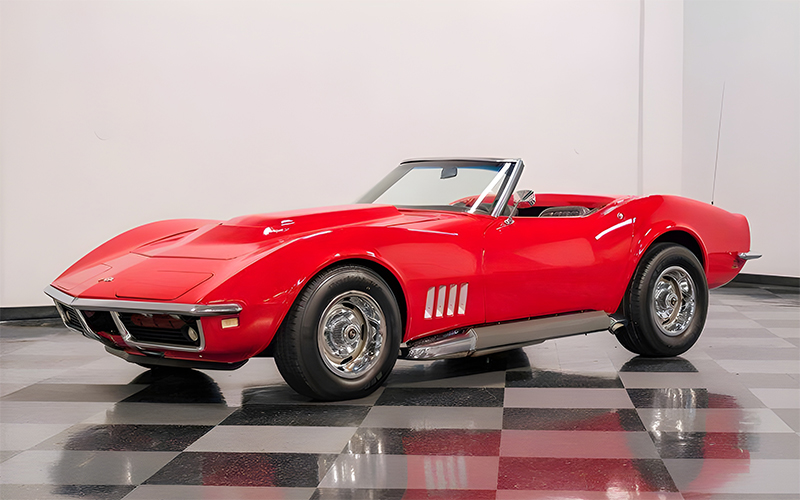
Another 1960s innovation was the T-top. This design dated back to 1948 when Gordon Buehrig designed one for the TASCO concept car for American Sportscar Company. Another concept car, a 1956 Packard also featured retractable T-tops. The T-top’s first production application was in the 1968 Chevrolet Corvette. Buehrig sued GM for patent infringement for their use of the T-top in the C3, a suit he eventually won.
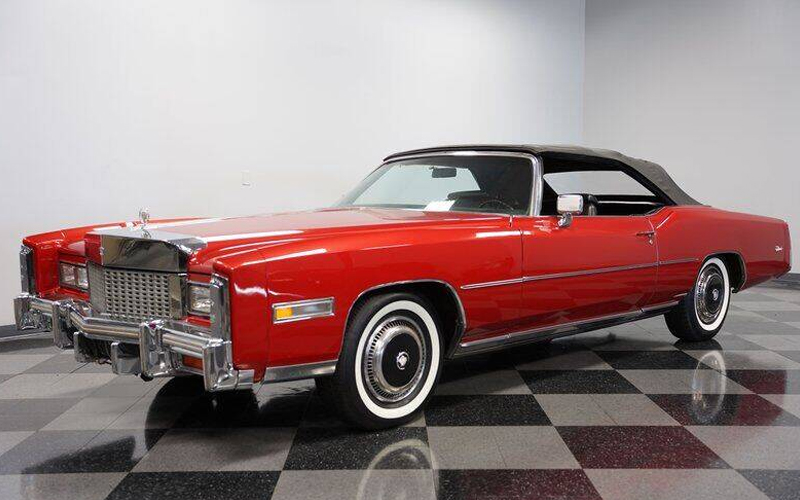
The increased emphasis on safety, the newfound ubiquity of air conditioning, and faster highway speeds all contributed to dropping convertible sales. The 1978 Cadillac Eldorado Biarritz was the decade’s final hold out before American manufacturers wholly abandoned the convertible to European carmakers.
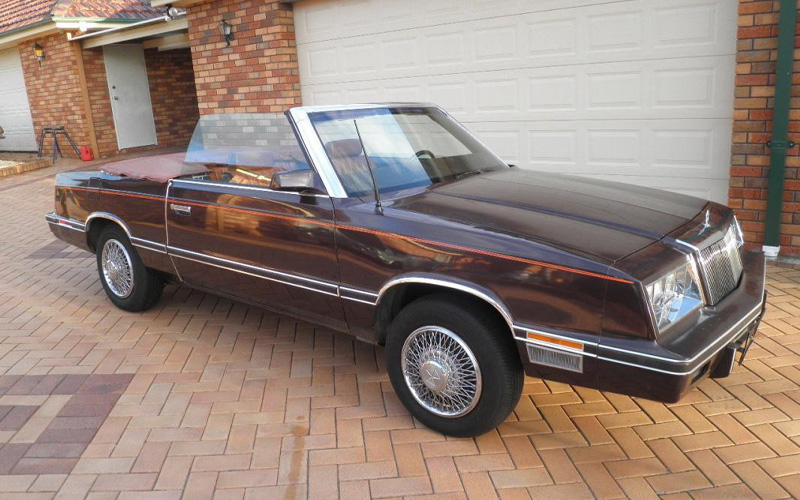

’82 Chrysler LeBaron Revives the Convertible
The Chrysler LeBaron convertible, best remembered today for the “striking” look of its faux wood paneling, debuted in 1982. The LeBaron marked the return of the convertible body style, and while this Chrysler was an improbable trend setter, it didn’t take long for the convertible to make a comeback, especially within sportscars. Hollywood also helped renew the sense of romanticism surrounding the drop top with convertibles featured in co-starring roles in Ferris Bueler’s Day Off, Rain Man, and Thelma & Louise.
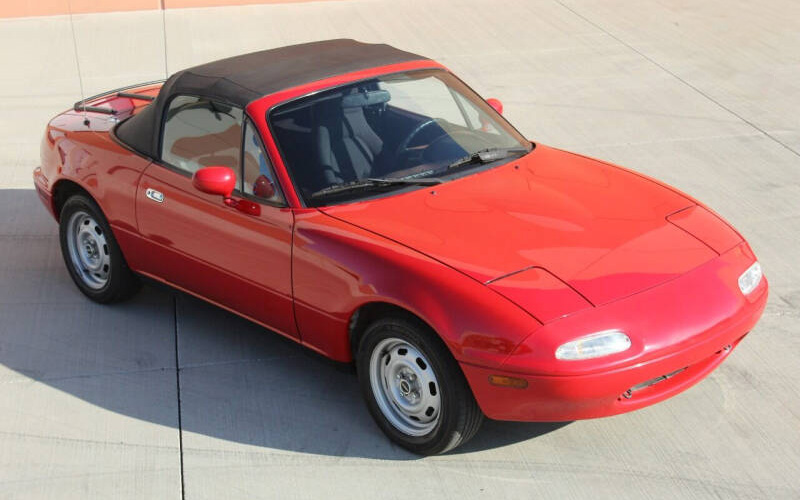
Indeed, modern cars like the Mazda Miata, Porsche Boxster, and Rolls-Royce Dawn are defined by their convertible body style. And while open-air driving will never again me the norm, there will always be a certain subset of car buyers high on style and adventure for whom there’s really no automotive experience comparable to riding the California coast’s 101, top down, tunes up, the evening sun setting the gemstone waters of the Pacific ablaze, it’s why they build convertibles.