Through the Years: Ford Ranger Generations
The Ford Ranger started out as Ford’s light pickup truck option. After five generations, the Ranger has grown into a mid-sized pickup. We look back at the evolution here.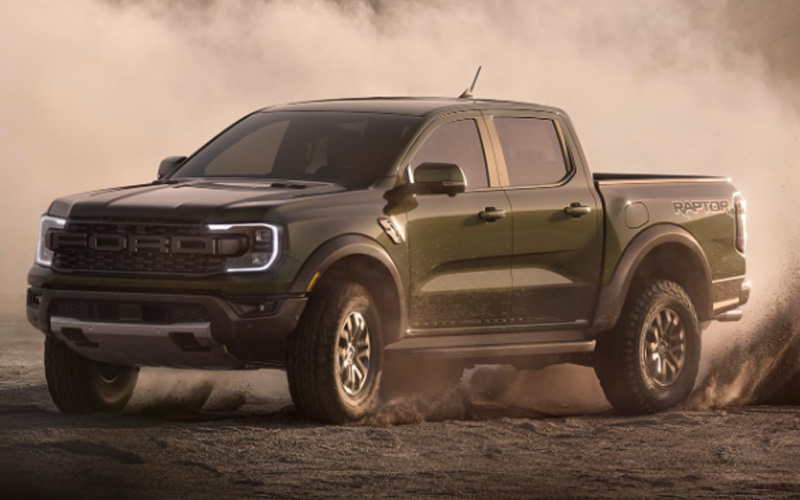
The Original Light Pickup Truck
The Ford Ranger is an automotive icon, even with its 8-year hiatus from the American market in the 2010s. Originally a compact pickup truck with a nameplate that pulls from a classic 1950s Ford, the Ranger would ultimately come to dominate the sales charts over its first three generations of production.
After bringing the Ranger back to U.S. consumers in 2019 as a warmed-over rest-of-world truck, Ford finally pulled the trigger on a comprehensive redesign of the modern mid-size Ranger for the 2024 model year. Now competing in a packed field, the Ford Ranger is more relevant than ever.
First Generation Ford Ranger: 1982-1992
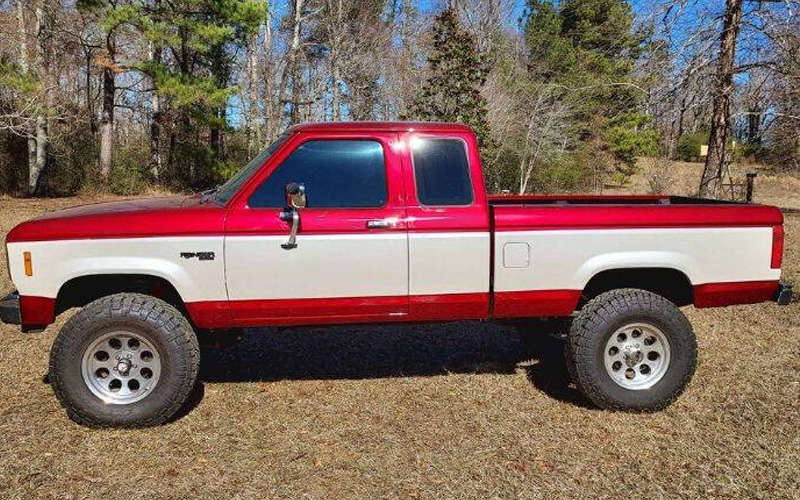
The first-generation Ford Ranger arrived in the wake of the OPEC oil crisis as the Detroit automaker saw the potential upside of a small, relatively fuel-efficient truck as an asset. Though not the first to market in this segment, the Ranger soon became a popular pickup and dominated domestic sales for some 20 years.
- Like the larger F-Series, the Ranger had a Twin I-Beam front suspension and leaf-sprung rear.
- Engine options ranged from the base 2.0L inline-4 with just 73 horsepower to an 80-horse 2.3L four-cylinder, a 2.8L V6, and a Mazda-sourced four-cylinder diesel.
- By the time production wrapped up, the Ranger would offer a more potent 3.0L Vulcan V6 with 140 hp, a SuperCab body cab, and a 5-speed manual or 4-speed automatic transmission.
Second Generation Ford Ranger: 1993-1997
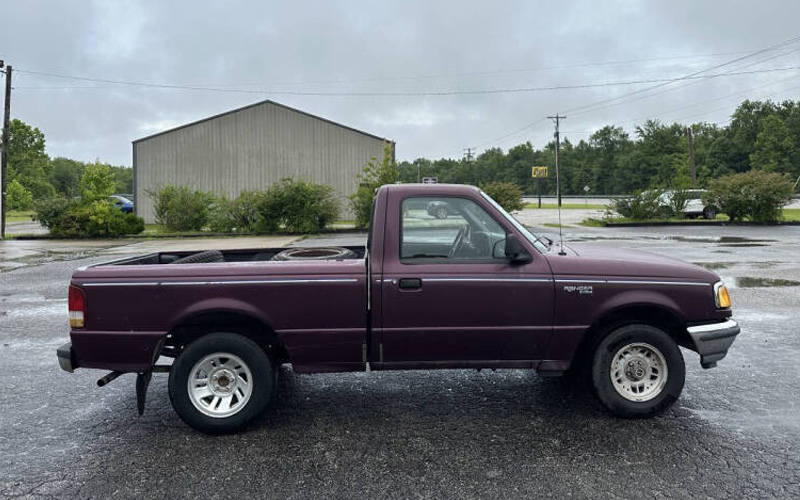
For generation two, the Ford Ranger rode on a largely carryover chassis but sported all new bodywork that was notably more aerodynamic.
- The cab was widened by about 3 inches to increase the space inside, which gained new seats and door panels.
- The 2.3L inline-4 remained and was making 112 hp by 1995. 3.0L and 4.0L V6 engines remained optional, the latter putting out 160 hp and 225 lb-ft of torque.
- In 1994, Mazda rolled out its B-Series badge-engineered pickup based on the Ranger and side impact guard beams became standard.
- The Ranger became the first compact pickup to offer dual front airbags in 1996 and the following year, the 5-speed automatic that replaced the 4-speed unit was the first of its kind from an American manufacturer.
- A notable 4×4 Performance package option featured the largest available engine, a special 3.73:1 rear axle, 31” tires, skid plates, and heavy-duty shocks.
- The Ranger Splash sub-model debuted in 1993 and offered a Flareside pickup bed with an integrated side step, lower suspension, and special exterior colors and decals and chrome or aluminum wheels.
Third Generation Ford Ranger: 1998-2012
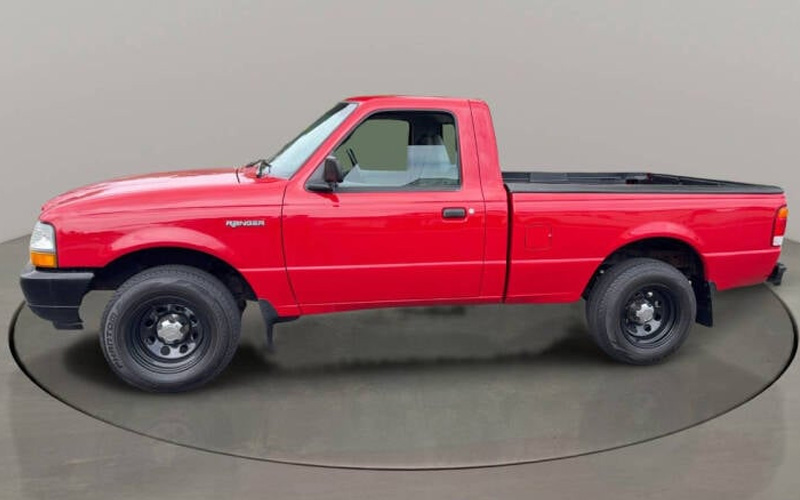
When Ford rolled out the third-generation Ranger, it featured similar bodywork, but the underpinnings were dramatically overhauled.
- The previously full-length C-channel frame now featured a fully boxed design ahead of the firewall.
- The wheelbase was stretched about 4 inches – which added more cabin space – the long-running Twin I-Beam front suspension was swapped for a short/long arm configuration like the F-150.
- Rack-and-pinion steering replaced the old recirculating ball design.
- Other notable updates included the first use of rear-hinged back doors in the compact segment for extended cab Rangers and a 2.5L inline-4 replacing the 2.3L mill.
- This generation Ranger also led to the Ranger EV, Ford’s first fully electric vehicle that offered 65 miles of range and carbon fiber front leaf springs (for the first year of production only).
- After ceasing production in 2012, the Ranger nameplate was mothballed in the U.S. until 2019.
Fourth Generation Ford Ranger: 2019-2023
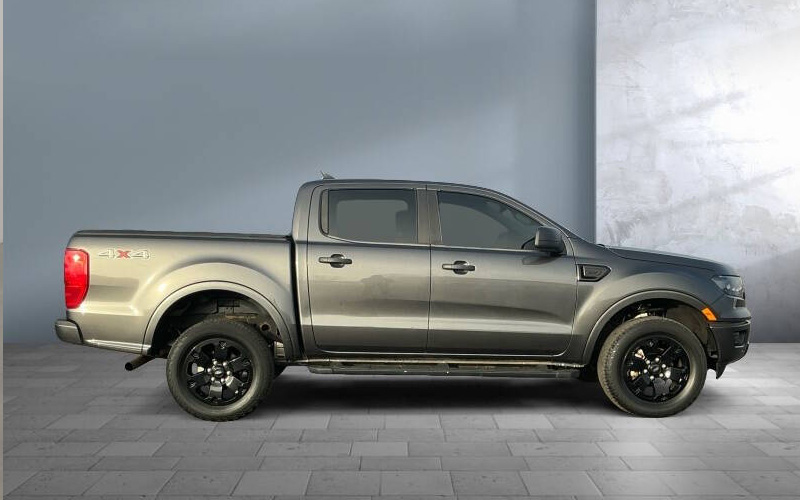
The Ford Ranger returned to American shores in 2019 to start fourth-generation production. Newly mid-sized, this new-to-America Ranger was based on the Ranger T6 that had been built in Australia since 2011.
- It hit the segment running with a best-in-class tow rating of 7,500 pounds and a potent 2.3L turbocharged, or EcoBoost, inline-4 making 270 hp and 310 lb-ft of torque.
- Paired with a 10-speed automatic, it continued to follow the same layout as the Ranger had always offered – rear-wheel drive with the option for four-wheel drive.
- Ford discontinued the V6 engine, manual transmission, and regular cab body style for this Ranger, but added a crew cab to go along with the extended cab.
- Now on par size-wise with smaller variants of the F-150, Ford introduced the Maverick in 2021 to fill the compact pickup slot once occupied by the Ranger. Three trim lines were offered throughout fourth-gen Ranger production.
- Base XL models came with steel wheels, cloth upholstery, a backup camera, and forward collision mitigation. The mid-tier XLT featured alloy wheels, an upgraded front grille, cruise control, a Wi-Fi hotspot, a lane-keeping system, blind-spot monitoring with rear cross-traffic alert, and automatic high beams.
- In top-spec Lariat guise, the new Ranger was nicely equipped with 18” wheels, LED headlights, heated front seats, leather upholstery, and an 8” central touchscreen with smartphone mirroring.
- For 2021, Ford introduced a Tremor package that dialed up the Ranger’s off-road abilities via a higher ground clearance, heavy-duty suspension components with Fox shocks, 32” all-terrain tires, and a bevy of skid plates.
- The retro Splash package, offered on 2022 Rangers, pulled on 90s nostalgia with a bright orange finish, black graphics, and a special interior design.
Fifth Generation Ford Ranger: 2024-Present
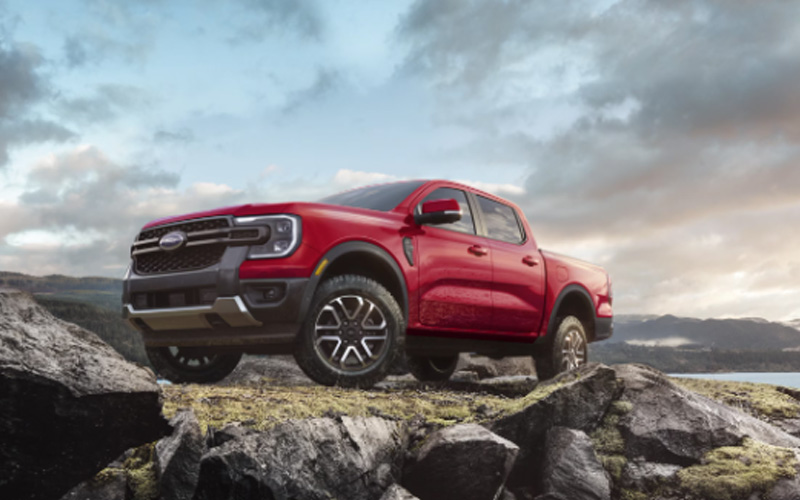
With a reinvigorated mid-size pickup truck segment in full swing, Ford rolled out the fifth-generation Ranger in 2024.
- The current Ranger has about 2 extra inches of wheelbase and overall length versus its predecessor, a more distinct mini-F-150 vibe than ever, and is only sold as a crew cab.
- The 2.3L EcoBoost powertrain carried over and a new 2.7L twin-turbo V6 making 315 hp and 400 lb-ft of torque joined the lineup as an option, but the biggest update was the introduction of a Raptor variant.
- Like its F-150 stablemate, the Ranger Raptor is designed for hardcore off-road running. It has an exclusive 3.0L twin-turbo V6 rated for 405 hp and 430 torques, 10.7” of ground clearance, a Baja drive mode, reinforced suspension mounting points, 2.5” Fox Live Valve shocks, heavy-duty steel skid plates, 33” all-terrain tires, a 3.5” wider track, and more.
- XL trucks came with 17” alloy wheels, LED headlights, a 10” central touchscreen, wireless Apple CarPlay and Android Auto, and a 6-speaker stereo. XLT models featured a sliding rear window, an in-bed power supply, wireless phone charging, and a digital rearview mirror.
- Lariats, which stickered around $45,000, boasted rain-sensing wipers, dual-zone automatic climate control, a heated steering wheel and front seats, matching 12” displays for the gauge cluster and center stack, a 10-speaker audio system, self-parking, and a surround-view monitor.
- The FX4 package continued with fifth-gen production and featured off-road tires, an electronically-locking rear differential, steel bash plates, special dampers, and a Terrain Management System.
- Updates for the 2025 Ranger are limited to new colors and a Black Appearance package, but given stiff competition like the Chevy Colorado, Toyota Tacoma, and Nissan Frontier, we expect the Ford Ranger will see regular meaningful updates as production of the current generation rolls on.