Latest News
2027 GMC Terrain ReviewThe All-American AMC Hurst SC/Rambler
The dragstrip-ready AMC Hurst SC/Rambler sported a 390 V8 and one of the most patriotic paint jobs in automotive history.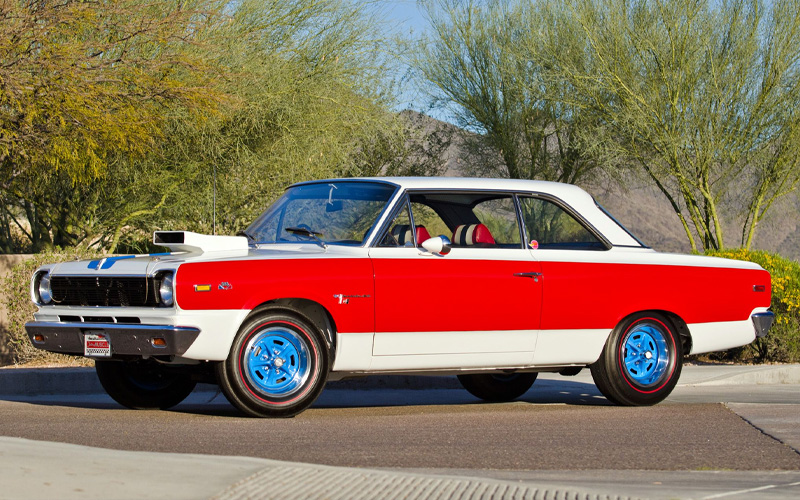
SC/Ramble On
One of the benefits of American Motors Corporation (AMC) being a distant fourth to Detroit’s Big Three US automakers was the opportunity to experiment as the brand fought to distinguish itself in a crowded and competitive market. This flexibility led AMC to produce some novel designs including the AMC Matador’s protruding front end, the Pacer’s fishbowl rear glass, and more than few classic muscle cars. While the Rambler had always kept one company foot firmly planted in the realm of affordable, mass-market cars, AMC also used the Rambler as the basis for their forays into the booming muscle car market of the late 1960s like the Javelin and AMX.
The Rambler predated the merger that created AMC (a 1954 marriage of Hudson and Nash-Kelvinator) and was, by the late 1960s, on its way out. For the Rambler’s final 1969 model year AMC decided to create 500 drag race cars in collaboration with Hurst, who’d recently partnered with AMC on the AMX Super Stock. The result, the 1969 AMC Hurst SC/Rambler, was a fast and flamboyant drag machine capable of embarrassing some of the best Detroit had to offer.
The Hurst SC/Rambler Hauls
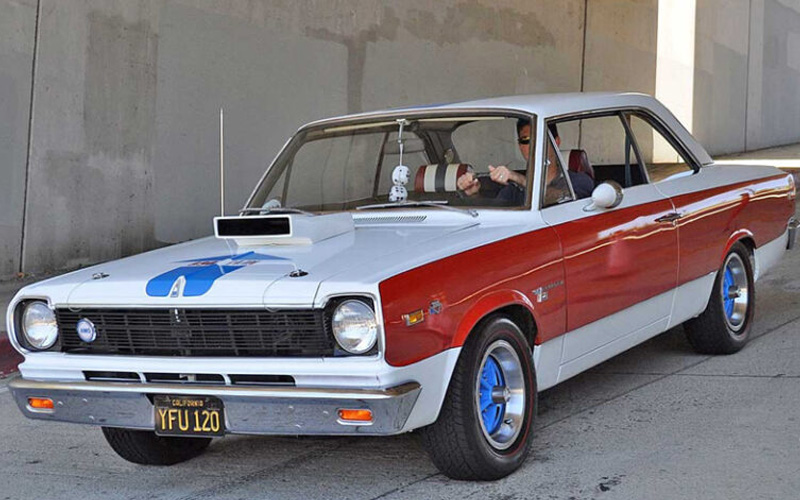
The idea behind the AMC Hurst SC/Rambler was a factory-built drag car for the NHRA’s F/stock class. The SC/Rambler was based on the Rambler two-door hardtop, though it was anything but basic. Indeed, the SC in SC/Rambler stood for “Super Car,” and AMC pull out the stops in upgrading the car for competition.
First came the engine, the AMC 390 cu.-in. V8 borrowed from the AMX. In stock form, the 390 made a stout 315 horsepower and 425 lb.-ft. of torque and featured a 10.2:1 compression ratio. A functional hood scoop atop was colloquially dubbed the “mailbox” after its resemblance to a mail slot. Other body modifications were minimal, consisting of larger wheel arches to accommodate bigger tires.
Other performance upgrades consisted of a limited-slip differential, dual exhaust, more robust sway bars, front disc brakes, and staggered rear shocks rather than more traditional leaf springs that would be more prone to axle hop under hard throttle application. Dealer options like a Mallory distributor, four-barrel carburetor, and performance headers could boost output by another 100 horsepower.
The SC/Rambler’s interior didn’t depart all that far from the regular Rambler, adding red, white, and blue headrests (AMC’s company color scheme), reclining seats when that was a rarity, and an 8,000-rpm steering column-mounted Sun tachometer.
A-Series and B-Series SC/Ramblers
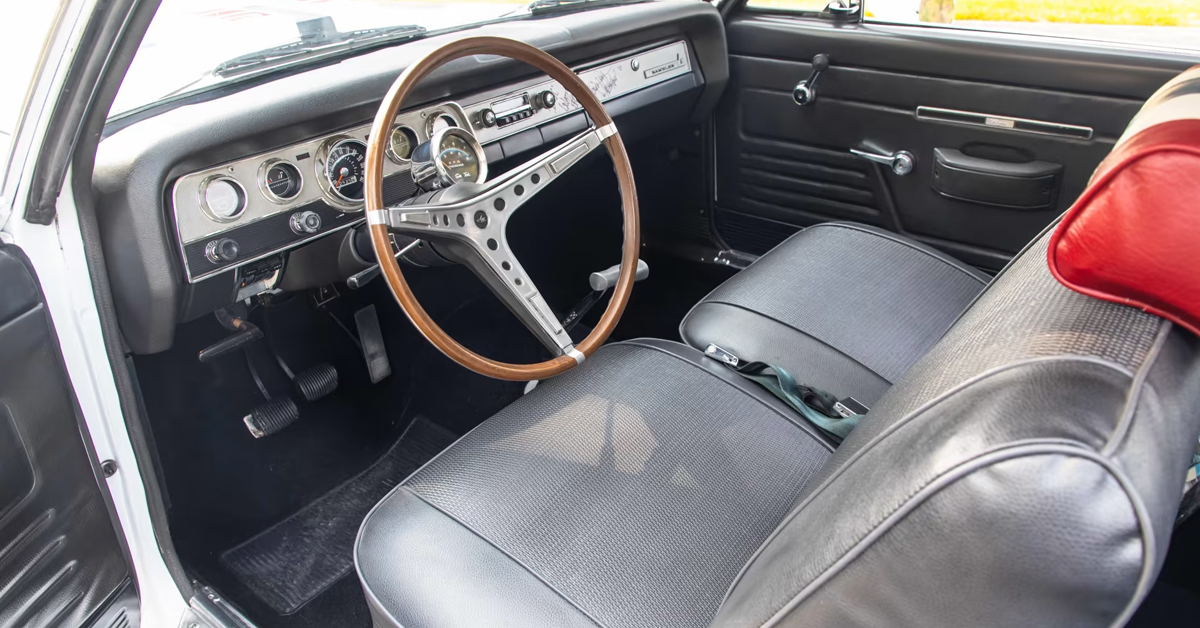
The SC/Rambler’s 390 V8 and performance upgrades allowed it to make an advertised quarter-mile run of 14.3 seconds, more than quick enough to keep pace with competing GTOs and Camaros. Even as the SC/Rambler was making its name on drag strips, the car’s audacious styling provided additional curb appeal.
The SC/Rambler had originally been planned for a 500-unit production run, but the car proved so popular AMC extended it to just over 1,500 cars. Of those, 1,215 units comprised the A-Series, accompanied by 297 B-Series cars. The A-Series, a.k.a. the “Yankee Doodle,” sported AMC’s red, white, and blue color scheme with a base white paint and a prominent red racing stripe along the length of the car with a blue line down the center. On the hood, a blue arrow pointed the way toward the “mailbox” hood scoop, bisected by “390 CU-IN” in red. The rarer B-Series was toned down. The large blue center stripe and thick red side stripe were replaced with a much more subtle pair of red and blue stripes along the rocker panel.
The Rambler Rebels
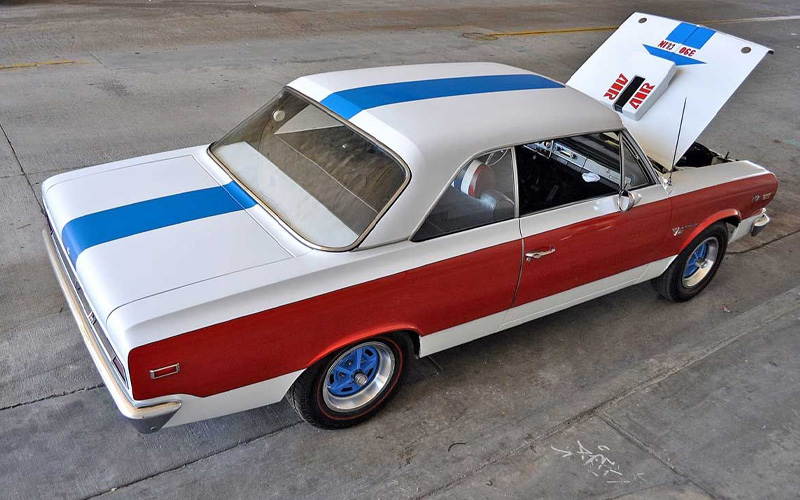
The Rambler name was officially retired after the 1969 model year, but the car was not quite finished. For 1970, AMC collaborated once again with Hurst for the Rebel Machine, a performance continuation of the Rambler Rebel. The Rebel Machine was largely based off the SC/Rambler and featured the same 390 V8, albeit with upgraded cams and crankshaft along with forged connecting rods and a 10.0:1 compression that increased power to 340 horsepower. A new, less prominent hood scoop featured an integrated tachometer. AMC patriotic red, white, and blue color scheme remained in full effect.
The 1969 AMC Hurst SC/Rambler proved a more than worthy send off for the Rambler name, long a commuter car special and briefly a muscle car legend.