Latest News
2026 Cadillac LYRIQ ReviewToyota Land Cruiser Generations: Through the Years
For over 70 years, the Toyota Land Cruiser has lived up to its name on a global scale. We look back at the history of the Land Cruiser.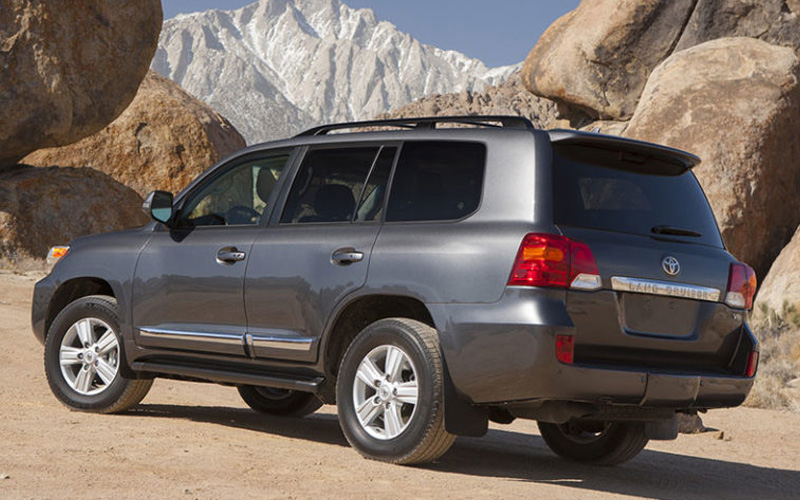
Toyota’s Long-Time Overlander
The Toyota Land Cruiser is a global off-road icon lauded for its reliability. On sale for almost 75 years, the Land Cruiser is Toyota’s longest-running nameplate and one that has sold more than 10 million units worldwide since arrival. From humble beginnings in the early 1940s as a basic military vehicle, the Land Cruiser has continually morphed over the years, but it has always been a 4×4 first and foremost. We will focus on North American variants as there are far too many worldwide configurations to cover here.
BJ and FJ Series (1951-1954)
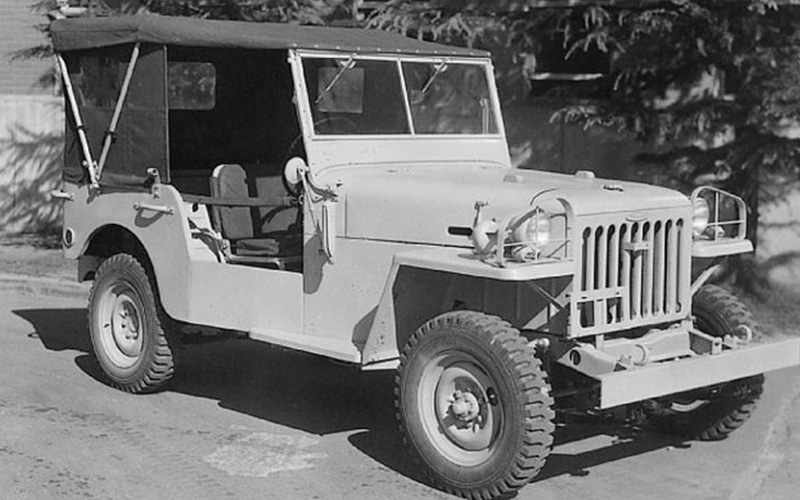
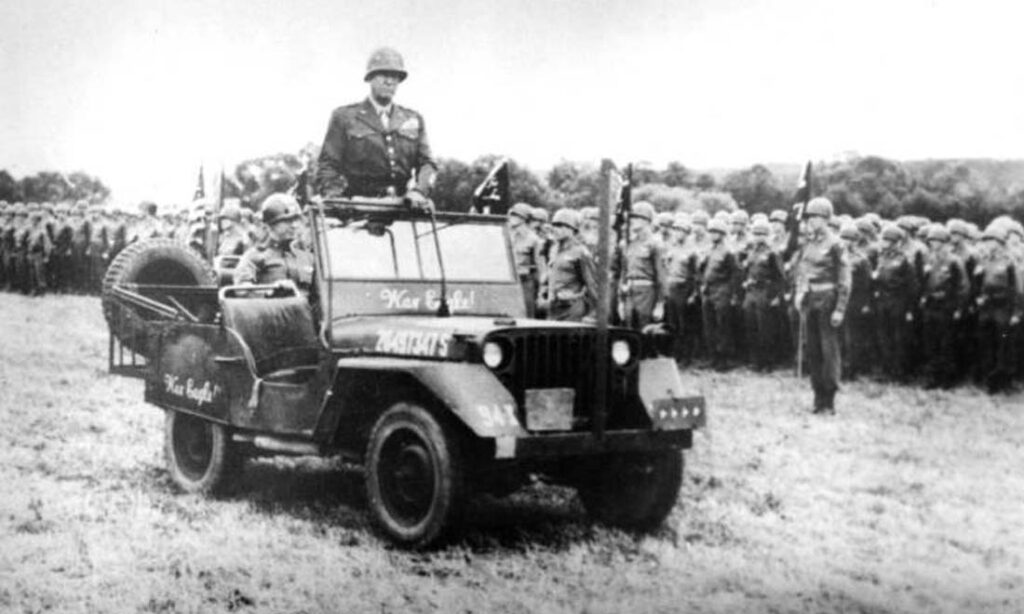
During the Korean War, the U.S. government ordered 100 vehicles with the same specs as its Willys Jeeps, but manufactured by Toyota and the BJ Series was born.
- These original models came with a 3.4L inline-6 making 84 horsepower and featured part-time 4WD.
- After a test drive took the BJ Series higher than any vehicle had ever gone on Mount Fuji, it became the official patrol vehicle of Japan’s National Police Agency.
- By 1953, regular production was in place, followed in 1954 by the first use of the Land Cruiser name as a riff on England’s Land Rover brand.
20 and 30 Series Toyota Land Cruiser (1955-1959)
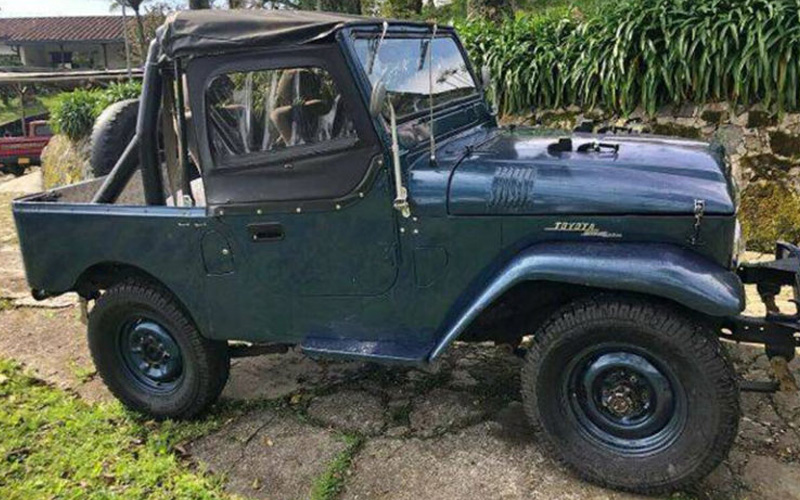
Designed to be more civilian-friendly, the second-generation came with longer 4-plate leaf springs for a better ride and the engine was moved nearly 5” forward to increase cabin space.
- The 3.9L inline-6 engine, with 133 hp, became standard and the 3-speed manual transmission carried over.
- 1958 marked the first year for the Land Cruiser in the U.S. market, and just 288 are sold.
- Australia received its first Land Cruiser in 1959, as a cab chassis body.
40 and 55 Series Toyota Land Cruiser (1960-1983)
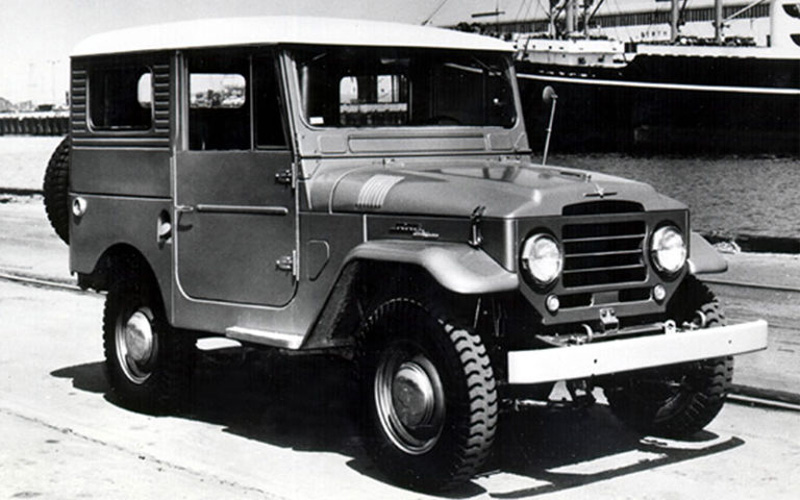
A future icon, the FJ40 gained low-range 4WD gearing and higher-quality steel components.
- By 1965, the Land Cruiser was the best-selling Toyota in America and global sales passed 50,000 units.
- The 55 Series wagon arrived in 1967 with a 16” wider wheelbase and added cabin space.
- This long-running generation would push worldwide production beyond 300,000 units, gain a 4-speed manual, and a more powerful 4.2L six-cylinder engine.
60 Series Toyota Land Cruiser (1980-1990)
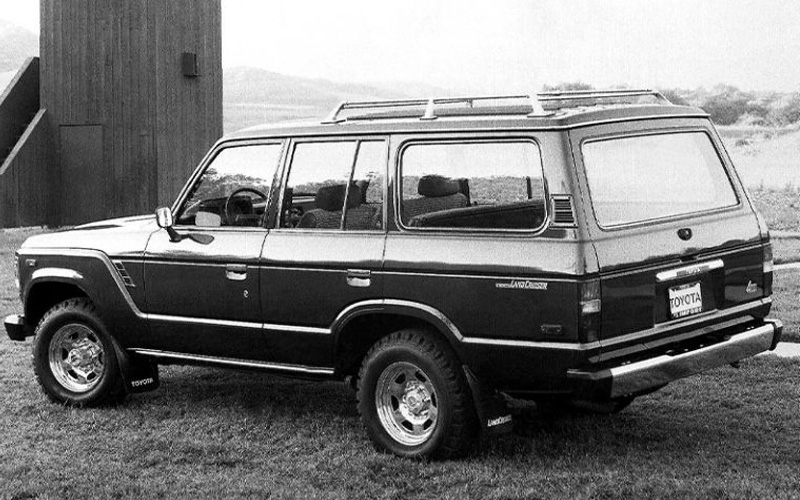
The 60 Series came as a four-door wagon with its sights set on the emerging SUV market. Still plenty capable off-road, these models had nicer cabin materials and amenities like a rear heater.
- Land Cruiser sales surpassed 1 million, worldwide, in 1981 and the following year, a 5-speed manual was added.
- The U.S. market version received a 4.0L inline-6 making 155 hp and 220 lb-ft of torque in 1985.
- By the end of 60 Series production, the Land Cruiser had coil front springs, in place of leaf springs, to improve ride comfort.
80 Series Toyota Land Cruiser (1990-1997)
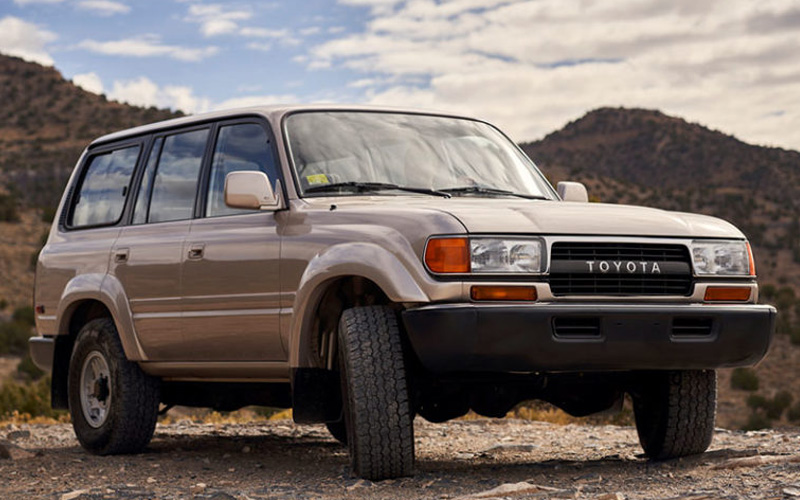
Gaining 5” in length and width, the 80 Series was bigger and more luxurious than ever. Styling was more rounded and Americans saw the first Land Cruiser-based Lexus with the LX 450.
- For 1993, a new 4.5L inline-6 making 212 hp and 275 torques arrived along with larger brakes.
- Safety improvements for 1995 included available front airbags and anti-lock brakes.
- Toyota rolled out a 40th Anniversary Edition in 1997 with special badges, serialized plaques in the cabin, two-tone leather, and exclusive finishes like Emerald Green.
100 Series Toyota Land Cruiser (1998-2007)
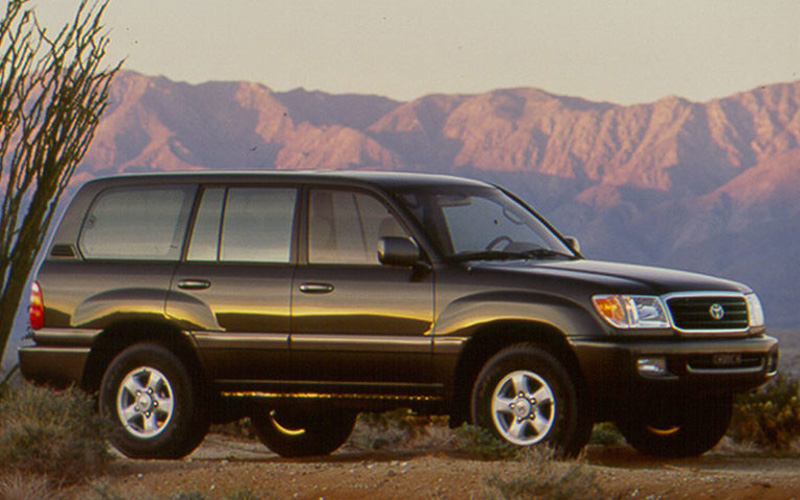
Pushing into the premium segment, the 100 Series Land Cruiser had a host of firsts, including an independent front suspension, V8 engine, and rear seat entertainment system.
- The 2000 Land Cruiser featured the first use of automotive night vision in a series production vehicle.
- For 2003, Toyota swapped the 4-speed automatic for a 5-speed unit and made side curtain airbags available.
- By the end of 100 Series production, the Land Cruiser was making 265 hp and 310 lb-ft of torque.
200 Series Toyota Land Cruiser (2008-2021)
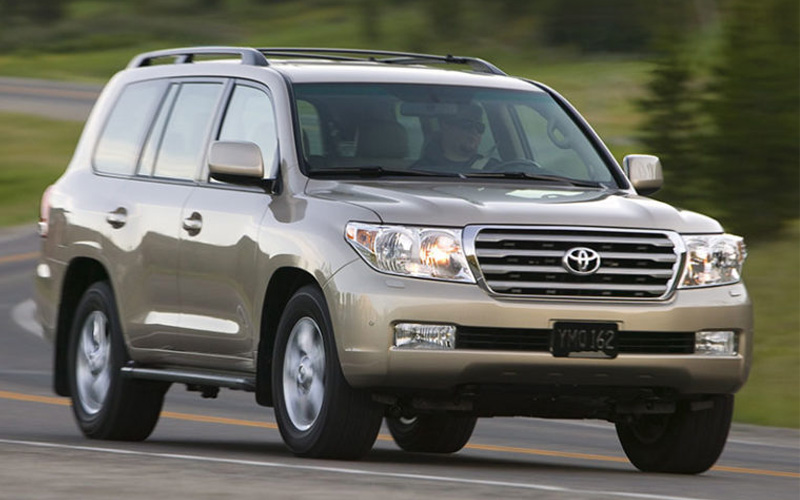
The 200 Series debuted in 2008 with a stiffer frame, updated suspension for better on-road dynamics, more luxuries, and a $60,000 base price.
- High-end touches on these Land Cruisers included quad-zone automatic climate control, leather upholstery, and a 14-speaker audio system.
- A new 5.7L V8 engine was rated for 381 hp and 401 torques, good for an 8,200-pound tow rating.
- When this generation wrapped up in 2021, it had an 8-speed transmission, a 5,800-pound curb weight, and an $87,000 price tag.
250 Series Toyota Land Cruiser (2024-Present)
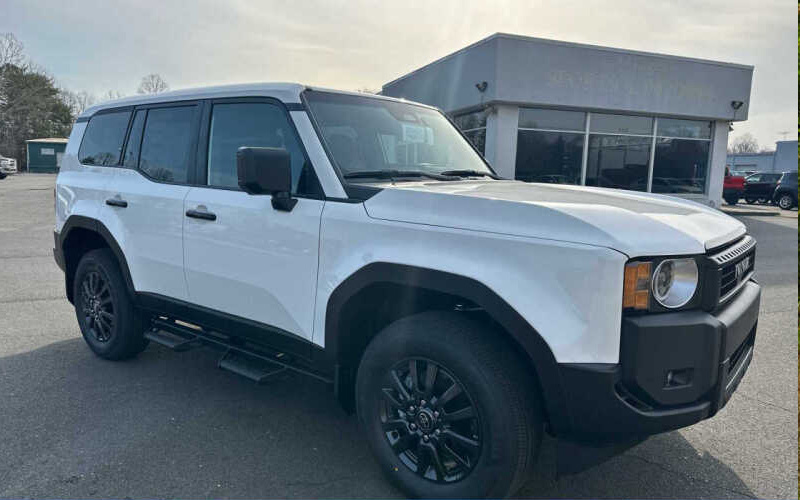
After a 3-year hiatus, Toyota revived the Land Cruiser for North America using the 250 Series platform as opposed to the 300 Series underpinning the Lexus LX. Instead, this latest Land Cruiser shares much with the smaller Lexus GX, including a lower weight and smaller footprint that is considered a return to form after years of increasing size and luxury.
- The 2.4L turbocharged inline-4 hybrid powertrain in the current Land Cruiser makes 326 hp, 465 lb-ft of torque, pairs with an 8-speed automatic, and delivers 23 mpg combined, which is a 64% improvement over the 200 Series model.
- 4WD remains standard along with a Torsen center locking differential, CRAWL Control, and Hill Descent Control.
- Standard 2025 Land Cruiser content includes 18” wheels, skid plates, heated front seats, a host of advanced driver aids, and an 8” central touchscreen interface with wireless smartphone mirroring.