Latest News
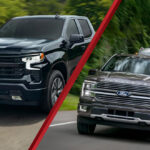
2026 Ford F-150 vs 2026 Chevrolet Silverado 15002026 Ford F-150 vs 2026 Chevrolet Silverado 1500
The Chevrolet Silverado and Ford F-150 are two of the longest running competitors in the market. We take a deep look at both vehicles to find out which one is the best value.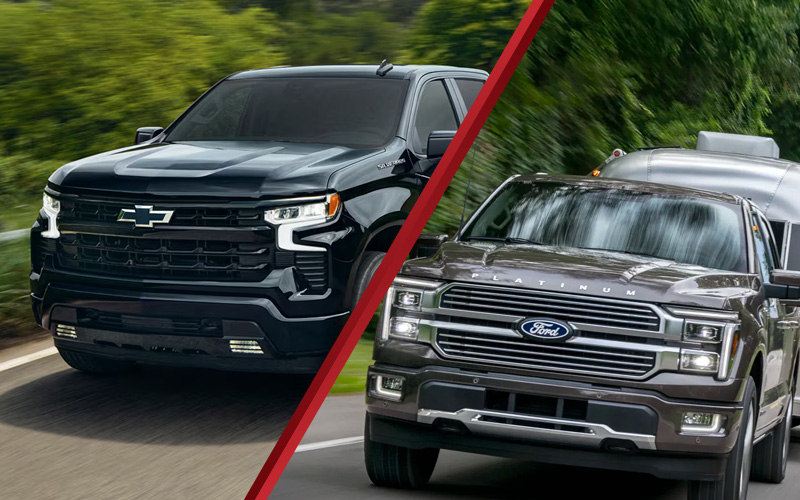
Best Selling Trucks Go Head-to-Head
Any comparison with the Ford F-150 can seem lopsided. After all, the Blue Oval’s rig has occupied the best-selling pickup truck slot for more than 40 years. And really, the F-150 doesn’t have much competition at this point. That said, one of its prime competitors – the Chevy Silverado – is no slouch, offering a compelling counterpoint to Ford’s truck.
Both occupy the full-size light-duty pickup segment, have identical cab and cargo bed options, and their own dedicated fan base. Choosing one over the other is tricky given the incredible breadth of models on tap. So, to help narrow the field, we’ve aimed for a roughly $50,000 price point to show you what the current average new vehicle pricing gets you in two of the most popular pickup trucks on the market.
Driving and Performance
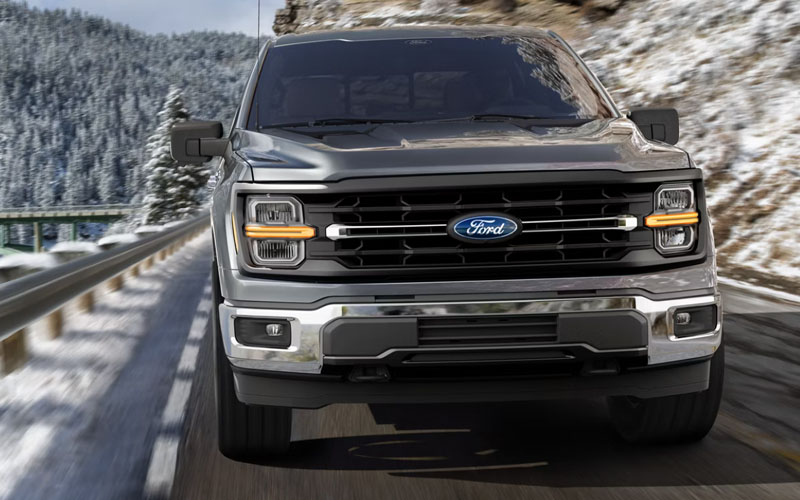
For 2026, the base Ford F-150 comes with a 2.7L twin-turbo V6 making 325 horsepower. The optional 5.0L V8 and 3.5L twin-turbo V6 both make 400 hp, but the V6 offers 500 lb-ft of torque vs 410 in the naturally aspirated V8. Ford calls its hybrid option the PowerBoost. It’s based on the 3.5L V6, and delivers 430 hp and 570 torques.
All engines pair with a 10-speed automatic, and there are even more potent mills, but they are reserved for the Raptors, which are a whole different class of truck. Like the Silverado, RWD is standard and 4WD is optional across the board. As for F-150 fuel economy, figure on 19-21 mpg combined for all powertrains but the hybrid, which earns 24 mpg combined.
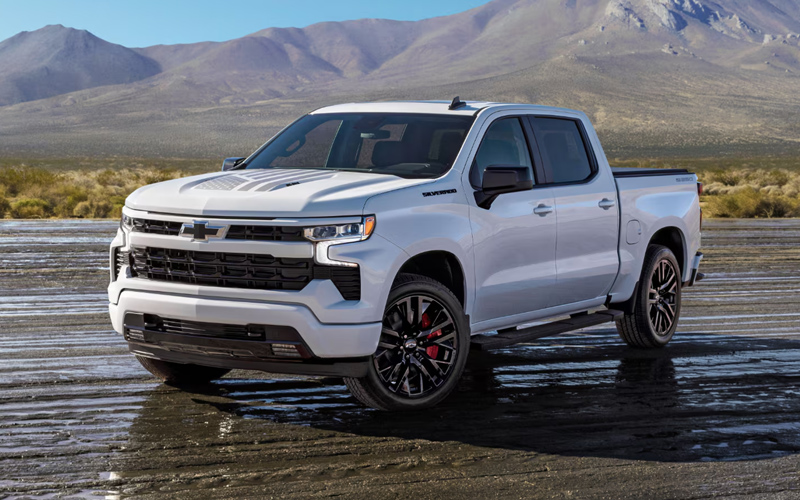
Over at Chevy, the 2026 Silverado starts with a turbocharged 2.7L inline-4 making 310 hp. A pair of naturally aspirated V8s – 5.3L and 6.2L – offer 355 and 420 hp, respectively. Or you can go with the Duramax, a turbodiesel good for 305 hp and 495 torques. The four-cylinder pairs with an 8-speed, while a 10-speed automatic is featured across the rest of the Silverado’s engine lineup.
As you might expect, the Duramax is one of the most fuel-efficient pickup trucks on the market at 25 mpg combined, followed by the 2.7L four at 20 mpg combined. Both V8s earn 17 mpg in the combined cycle.
Comfort and Interior
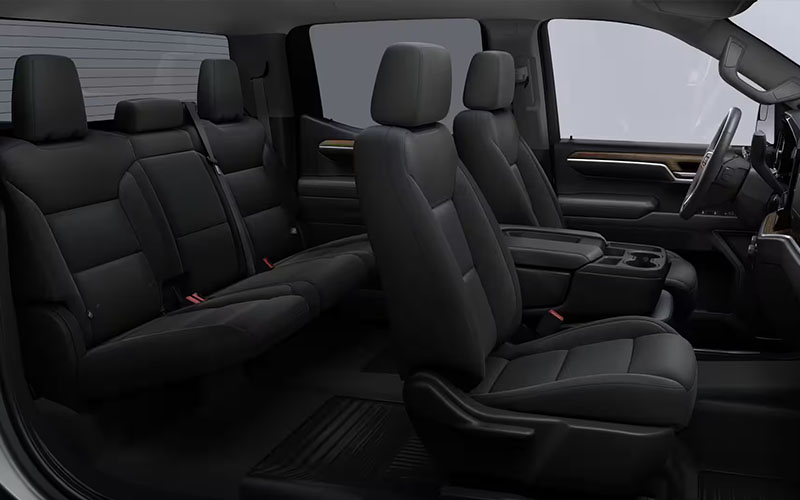
The Chevy Silverado and Ford F-150 offer the same cabin configuration options. A 2-door regular cab with a bench seat, an almost 4-door extended cab with rear seats best suited for short trips, and a full 4-door crew cab with room for up to 6. Both trucks feature cloth seats and vinyl flooring on the base model – WT for the Silverado and XL for the F-150 – but high-end leather is included at the top of the respective ranges – Silverado High Country and F-150 Platinum.

The Ford boasts 44” of rear legroom on crew cabs, while the Chevrolet comes in 1” less. The similarities continue into the cargo bed, where you’ll have a choice of 5.5-, 6.5-, or 8-foot lengths. Both trucks can be fitted with niceties like climate-controlled seats, a panoramic moonroof, and automatic climate control, but Ford steps ahead on the tech front. Every 2026 F-150 comes with a 12” central touchscreen, whereas you’ll need at least a Silverado LT to access the available 13” screen. Lesser models get a 7” display.
Wireless smartphone mirroring and a Wi-Fi hotspot are lineup standard on both pickups, but only the F-150 can be fitted with features like massaging front seats and a generator integrated into the bed. As for driver aids, the F-150 and Silverado both feature the usual modern systems like forward collision mitigation and lane-keeping, along with the option for true hands-free driving in Ford’s BlueCruise and Chevrolet’s SuperCruise.
Recommended Trim Level
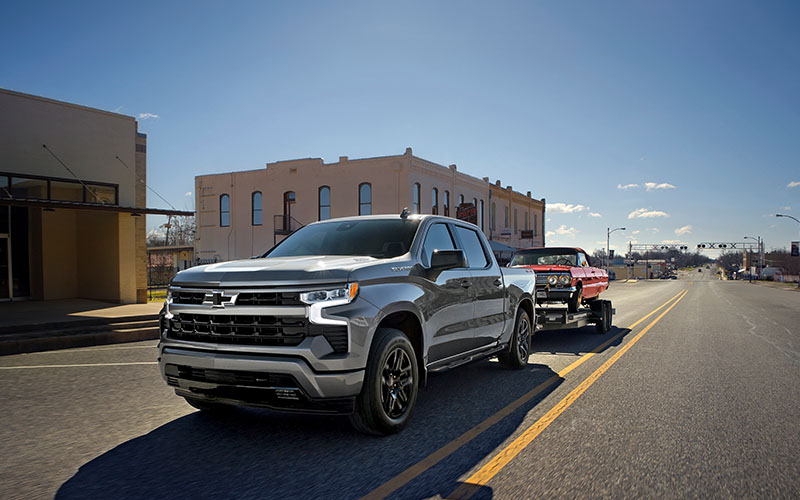
Ford markets the base F-150 XL as costing just $37,290 to start, but there are nearly $3,500 in destination and acquisition charges, so that figure is closer to $41,000. The same is true with Chevy, where the $2,795 in charges equate to a base price of $39,695 for the WT model. The real value-oriented trucks, however, are the F-150 XLT at $48,000 to start and the Silverado LT with a $50,695 entry point. Both come with their respective base engines, 17” alloy wheels, body-color trim, and a fully digital gauge cluster.
You can also access the more powerful engines from these trim levels, which is where the pricing can get out of hand. With the F-150 XLT in crew cab form with 4WD and the PowerBoost powertrain, plus a couple of Ford’s high-priced packages, the price tag can spike to nearly $75,000. In the Chevy, opting for the same chassis setup, selecting the turbodiesel mill and a few choice options, and you can push the sticker up to some $63,000.
The point is, pay close attention to the truck you want as sticker prices advertised online can quickly balloon to exorbitant figures. Ford clearly makes it easier to do so, as it offers a deeper roster of expensive add-ons like the B&O Unleashed audio system, twin-panel moonroof, and Pro Power Onboard generator.
The Verdict

On paper, the 2026 Ford F-150 and Chevrolet Silverado are a perfect matchup. Truck buyers have a huge range of choices on the powertrain, cab, and bed configuration fronts with either pickup. Max towing capacity is close – 13,500 for the Ford and 13,300 for the Chevy – and a high level of content is included at the $50,000 price range. Key differentiators include the F-150’s hybrid setup and the Chevy’s Duramax turbodiesel option. A 3-year/36,000-mile basic and 5-year/60,000-mile powertrain warranty are common to both trucks, but Chevy does include a single oil change on the house, whereas Ford includes zero complimentary maintenance.
If you’re on the fence, Chevy is the better place to start. But only because its inherently less complicated configuration options translate to likely spending less money on the truck you need. Ford, on the other hand, makes it easy to spec out the pickup you want, which can lead to a pounding on your wallet. Ultimately, both these 2026 trucks are winners, so you might want to vote with your budget.
Related Articles