Latest News
2027 Chevrolet Equinox ReviewRetro Review: AMC Javelin
The AMC Javelin won racing championships and made a lasting impression on the muscle car market. So, what happened to AMC and their Javelin?Everyone Loves an Underdog Story
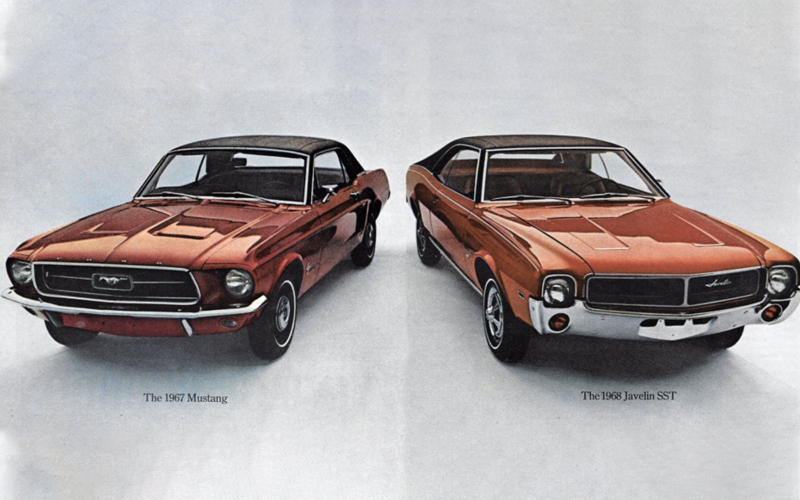
The story of AMC starts with two car brands, Nash-Kelvin Corporation and Hudson Motor Car Company, merging in 1954 as a new entity built to compete against the three biggest car manufacturers: Ford, GM, and Chrysler. American Motors went on to sell vehicles under both the Nash and Hudson brands, but its future would depend on finding smarter, scrappier ways to stand out.
In 1958, the separate Nash and Hudson brands were dropped in favor of the top-selling and well-recognized Rambler brand, with a lineup that included the Rambler American, Rambler Six, Rambler Rebel V8, and Rambler Ambassador. One year later, AMC hired Dick Teague, a veteran designer from GM, Chrysler, and Packard, to lead a new era of design for the company. One that included new efforts beyond the well-known Rambler.
The First-Generation Javelin
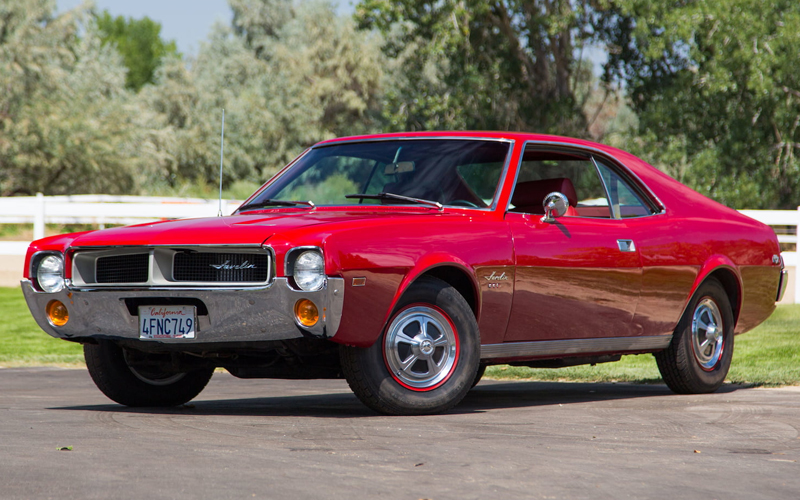
Dick Teague was tasked with designing a pony car that could compete with the Ford Mustang and Chevrolet Camaro on a much smaller budget. Using the AMX-II concept as a starting point, his team turned an ambitious show-car idea into the first-generation AMC Javelin.
The first AMC Javelins went on sale in August of 1967 with an MSRP of $2,714 with the goal of undercutting the MSRP of the ultra-popular Ford Mustang.
To keep the Javelin affordable, Teague toned down the AMX-II concept’s costlier design ideas, replacing hidden headlights, elaborate taillights, and more dramatic front-end details with simpler production-friendly styling.
AMC still preserved the car’s sporty appeal through a slanted windshield, hood scoops, a roomy interior, and optional SST upgrades that gave buyers style and comfort without the expense of a more complex design. Instead of offering both fastback and notchback of the Javelin, Teague further cut costs by merging the two designs into a semi-fastback style that differentiated itself from competitors.
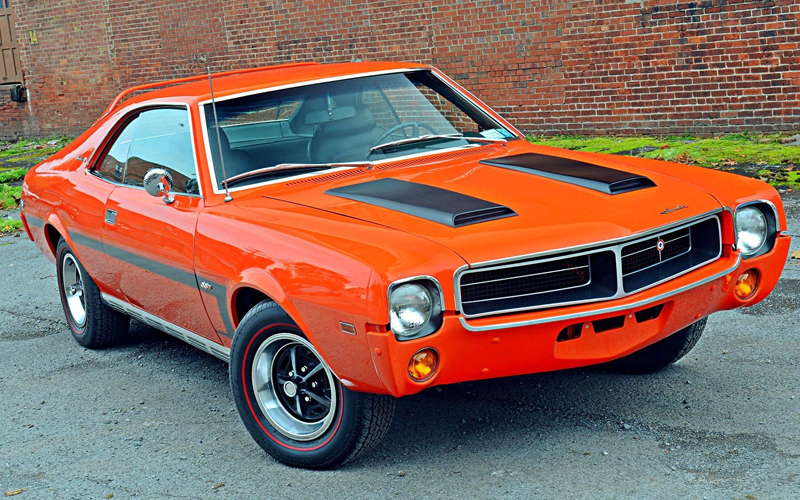
The AMC Javelin would offer only the base and SST trim levels while featuring 13 basic color options and 3 brightly colored “Big Bad” options. AMC’s Go Package opened plenty of extra performance options from race stripes and spoilers to larger engine options and performance disc brakes, allowing customers to build their Javelin how they wanted.
The AMC Javelin also had a range of factory approved performance upgrades called Group-19. At a starting price of $2,700, the options were made more appealing to its younger audience with its low price point. AMC expected to only make 40,000 Javelins in its first year but were pleasantly surprised with its market appeal and produced 55,125 to meet demand.
AMC also pushed the Javelin into drag racing and Trans-Am competition to build credibility beyond the showroom. Early podium finishes proved the car could challenge better-funded Big Three teams, setting the stage for its later championship breakthrough.
The Groovy Second-Generation Javelin
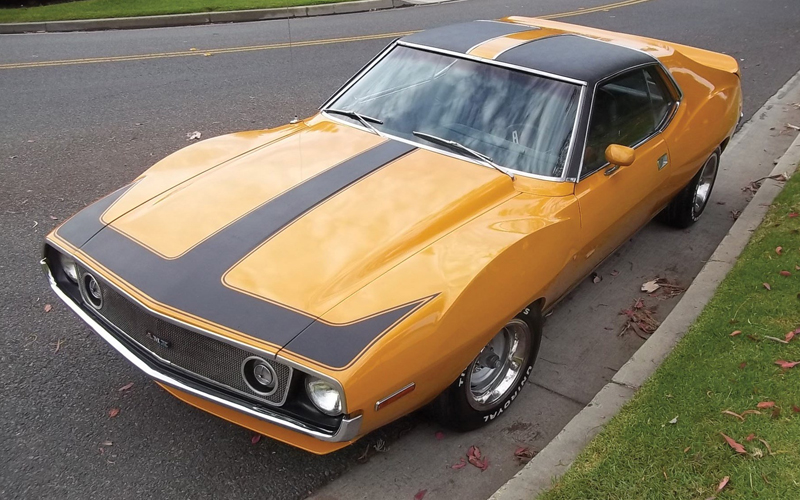
By the 1970s, AMC needed the Javelin to stand apart even more clearly from its bigger rivals. Teague and his team doubled down on distinctiveness, using bold design as a way to compete without matching the Big Three’s scale.
The second-generation Javelin was made longer while the wheelbase only extended one inch farther than the previous generation, forcing the nose of the car out well past the front wheels.
The twin venturi front grille was replaced by a chrome accented injection molded grille that encompassed the headlights and the indicator lights. It incorporated large sculpted fender bulges that rose above the line of the car. These bulbous fenders helped accommodate the wheels with the Javelin’s now lowered stature.
Inside, the gauges wrapped around the steering wheel and surrounded the driver, making the driver’s seat feel like a racing cockpit. The dashboard took a hard angle away from the passenger, creating an asymmetrical interior look unlike AMC’s previous designs.
The Javelin Gets an AMX Upgrade
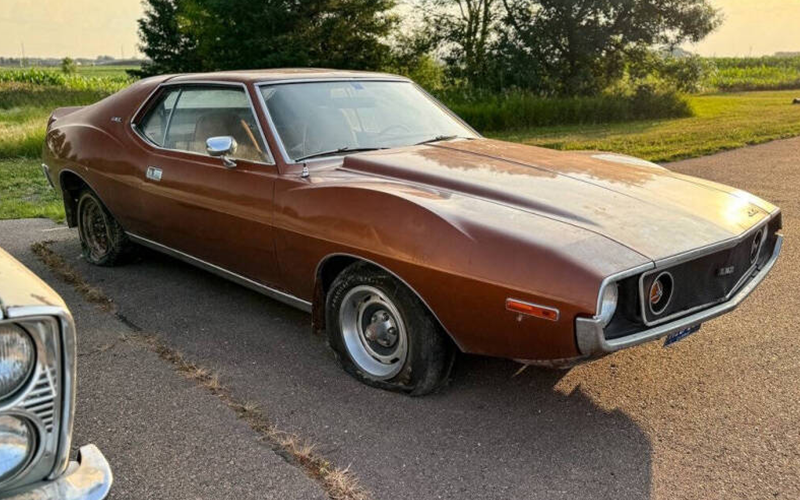
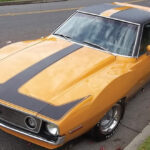
The AMC AMX ended in 1970, but the name carried over to the Javelin AMX. This trim level gave the Javelin racing inspired upgrades advertised as “the closest you can come to owning the Trans-Am Champion.” The Javelin AMX added a fiberglass full-width cowl induction hood, stainless steel mesh screen over the grille’s opening, and a rear spoiler adding 100lbs. of downforce.
The AMC Javelin AMX was unlike anything else on the road. This wasn’t just a design overhaul; it was a performance one. The AMC Javelin AMX introduced a 401 6.6L V8 with a 4-barrel carburetor with a forged steel crankshaft and robust connecting rods. With this engine, the Javelin ran in the mid-14 seconds in the quarter mile.
AMC continued improving their available engines and hosted multiple performance options. The Go Package featured Rally-Pac instruments, improved handling, Twin-Grip limited-slip differential, performance cooling, and power-assisted disc brakes as well as its iconic T-stripe decal along the hood.
Penske Racing and Mark Donahue worked with AMC to turn the Javelin into a winning Trans-Am race car. Their late-1960s podium experience helped shape the second-generation design and AMX trim, and AMC Racing Javelins went on to win Trans-Am championships in 1971, 1972, and 1976.
Not All Underdogs Win in the End
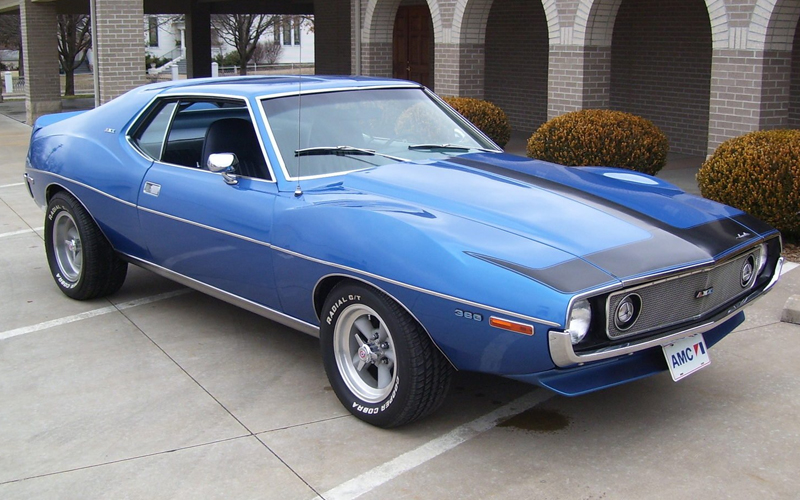
The racing wins, redesigns, AMX upgrades, and special editions still weren’t enough to keep the Javelin competitive. Nearing the 1974 model year, AMC’s pony car struggled against the Ford Mustang II, Chevrolet Camaro, and Pontiac Firebird.
AMC discontinued the Javelin after 1974, ending the run of its racing model and one of the era’s most distinctive pony cars. The company shifted toward economy-driven models like the AMC Matador and newly developed compact AMC Pacer.
AMC never won the pony-car war, but the Javelin proved the company could build something memorable on its own terms. Today, AMC Javelins, AMXs, Pacers, and Rebels can still be found at lower prices compared with similar-vintage Mustangs and Camaros. Pulling up in an AMC still brings attention because the Javelin stands apart from the Big Three’s classic muscle cars, just as AMC intended.
Editor’s Note: This article was originally published September 18, 2020 and as been rewritten for tone and clarity.