Latest News
2027 Chrysler Pacifica ReviewBehind the Wheel with the Subaru Solterra
After a week behind the wheel, the 2026 Subaru Solterra stands out with better range, Tesla Supercharger access, smart tech, and confident AWD capability.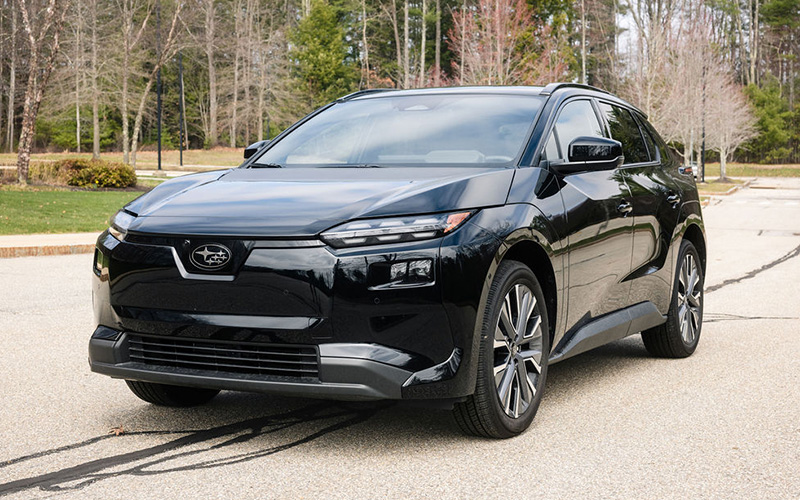
The New Solterra has More Range, Polish, and Appeal
Just a few years after arriving, the Subaru Solterra gets a heavy overhaul for 2026 and leads the automaker’s charge into a rapidly expanding EV portfolio. Mechanical twin to the Toyota bZ, the 2026 Solterra pulls off some impressive tech tricks alongside a freshened face and embiggened infotainment interface. The battery pack capacity increases marginally, by about 3%, but maximum driving range jumps nearly 27% to a maximum of 288 miles.
That’s a usable figure and one that comes from a wide range of invisible changes like smaller motor cases, new wheel bearings, and an improved battery pre-conditioning system. Subaru notes a faster max charging rate, stiffer chassis, and more focus on sound insulation as well, all in an effort to build a better EV.
Considering the Solterra comes standard with 8.3” of ground clearance, AWD, and Dual-Function X-Mode, it’s also a somewhat unusual EV for its off-road capability. I had the opportunity to spend a week driving the 2026 Subaru Solterra Limited, and was left largely impressed.
Sharper Looks, Smarter Charging
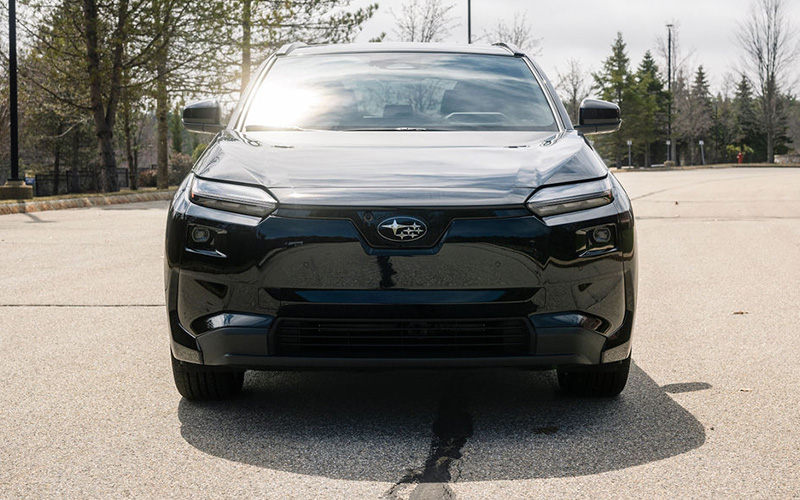
At a glance, you might mistake the Subaru Solterra for a Lexus. At least in Limited trim, with an Astro Black Mica finish, as it makes the black front and rear fender treatment disappear. Slim headlights look elegant and the dual rear roofline spoilers add a splash of style.
Limited models and above come with 20” rims that fill out the wheel wells nicely, but felt a bit harsh over potholes. The base Solterra Premium does come with 18” wheels, and 10 miles more range as a result.
A big change to the 2026 Solterra is the use of a NACS charging port, which means you can get a Level 3 fill-up using Tesla Supercharger stations. Thanks to the increase in max DC charging, Subaru says charging the Solterra from 10 to 80% will now take about 30 minutes.
Comfort First, With a Few Compromises
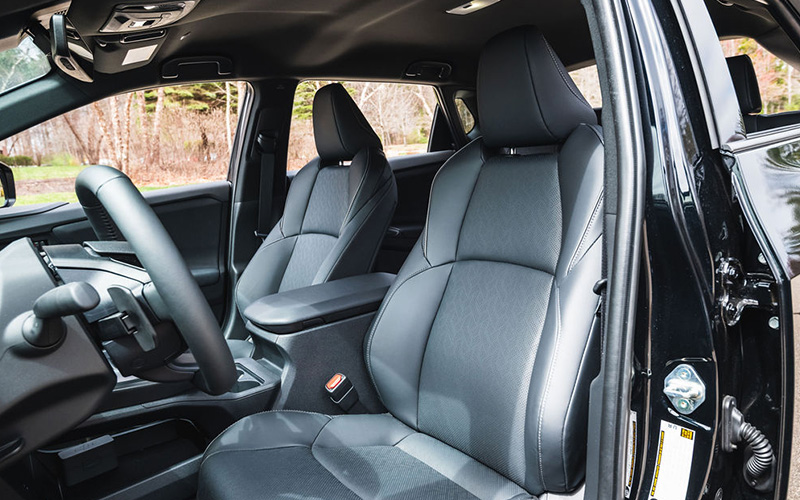
With heated front and rear outboard seats and a heated steering wheel, the Solterra in Limited trim is cold-weather ready. And the water-repellent SoftTex upholstery is remarkably soft and comfy.
You might consider moving up to an XT variant if only to secure the two-tone cabin and panoramic moonroof, as it is a bit dark inside otherwise. Rear legroom measures 35” – the Solterra is a compact – but my tweenaged kids sat back there for rides around town without complaint.
There is no frunk on this EV; it’s filled with powertrain gear. However, the rear cargo bay is flexible. An adjustable floor panel allows for two heights and the back seats fold flat to open up a large space that measures 64 cubic feet.
One feature notably absent is a glove box. Subaru has reserved this space for radiant warming panels on higher trim lines as a way to improve overall efficiency. But on the Limited version, there are no heated panels and no glove box, which I found myself missing.
The Solterra’s Best Tech Upgrade
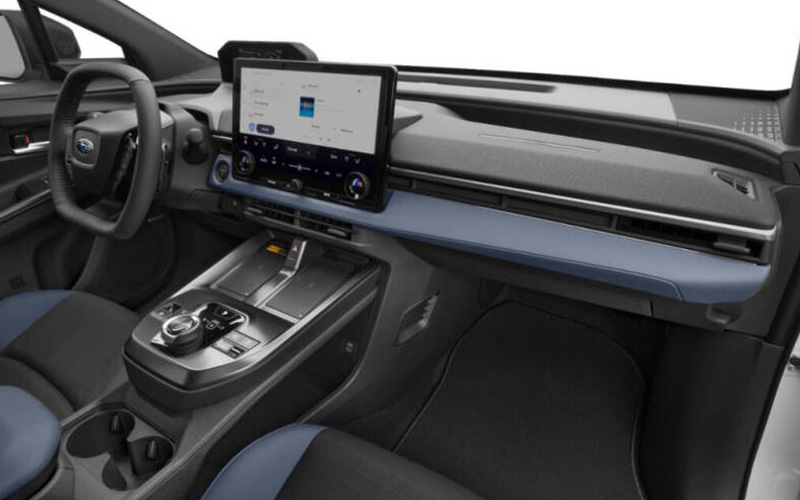
Another highlight of the latest Solterra is a newly standard 14” central touchscreen. Previous options included an 8” or 12.3” display. Wireless smartphone integration is on hand and connects quickly.
I appreciated the use of physical controls for volume and basic HVAC functions, along with how easy it is to turn the screen completely off. The all-digital gauge cluster is set back, close to the windshield, making it easy to read at a glance while driving.
Dual wireless phone charging pads take up considerable console real estate, but there’s no denying how handy this setup is, and four USB-C plugs – two front and two rear – maximize device charging capacity.
Subaru includes self-parking capability on Limited models and above. In testing, I had mixed results. Most of the time, the Solterra capably parked itself between the lines, but in one instance, it claimed to be done even though we were nowhere near a parking space. Either way, the process requires quite a bit of button pressing, so is best reserved for situations with ample time to maneuver.
A Quick, Confident, and Genuinely Fun Drive
Driving this Solterra is the first time I’ve spent more than a few minutes with an EV and boy, if you have yet to experience what all the fuss is about, go check one out. The response to accelerator inputs is addictive, and I was driving the least powerful model with 233 horsepower.
XT variants come in at 338 hp and are surely even more fun behind the wheel. Range is estimated at 278 miles, and DC fast-charging rates top out at 150 kW, enabling a 10 to 80% charge in 30 minutes.
The entire Solterra lineup is AWD and comes with Snow/Dirt and Deep Snow/Mud drive modes. Factor in the 8.3” of ground clearance, and these Subies offer more off-roading ability than your average EV crossover. The Hyundai Ioniq 5 has 6.3” of clearance as an example.
Perhaps my favorite driving feature was the regenerative braking. Controlled by what appear to be transmission paddle shifters, they work much like downshifting a three-pedal manual. Coming off the highway, as you bump the regen rate up, the Solterra will slow down with increasing force, all without using the service brakes. It’s not quite one-pedal driving, but I could slow down to 2 mph, so pretty close.
The New Subaru Solterra is Ready for the Road
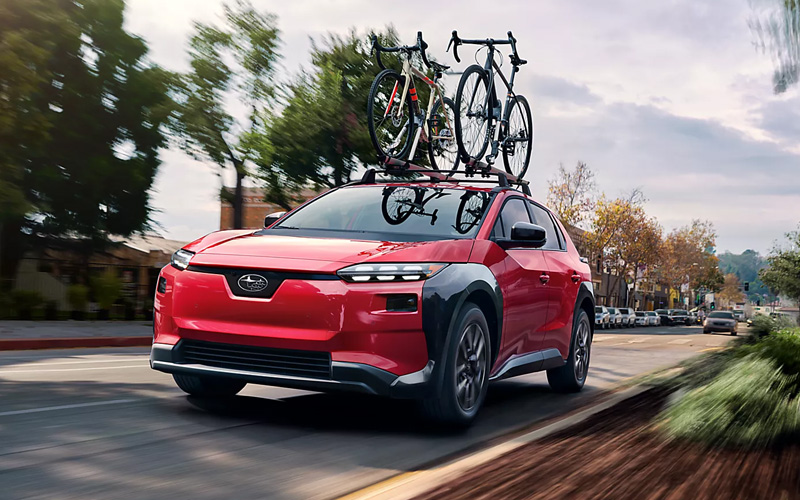
Electric vehicle adoption in the U.S. could fairly be described as chaotic, but looking over Subaru’s EV lineup, the automaker appears poised to take advantage of any shifts in favor of battery-powered cars.
Based on how all-around excellent the 2026 Solterra is, there’s a strong case to be made for taking a close look at a Subaru should an EV be in your future. It’s not perfect – I wish it had a rear windshield wiper for that broad expanse of glass and the driver compartment was on the snug side for my frame – but it’s a good-looking car and one that is genuinely fun to drive.
It felt like a video game in real life with that on-demand acceleration. The 278-mile driving range would be sufficient for day-to-day family usage – like driving all over town and the surrounding region for school, grocery shopping, and activities – while making an excellent work companion.
You’d likely want home access to Level 2 charging versus sitting at a Tesla Supercharger for 30 minutes on the regular, but with that in place, I’d be thrilled to own a new Subaru Solterra.
Related Articles