
Latest News
2026 Hyundai Santa CruzThe End of the Muscle Car Era
The early 1970s saw the muscle car fall from the pinnacle of performance, felled by a combination of circumstance and shifting expectations.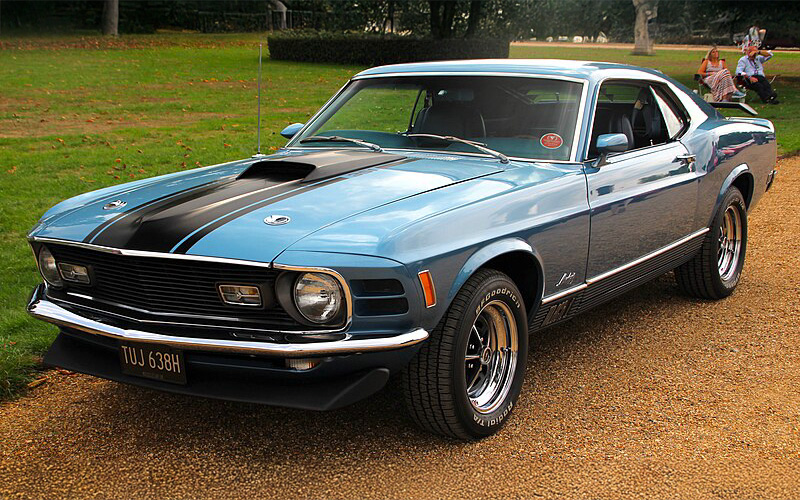
What Killed the Muscle Car?
If you were a muscle car paleontologist, looking at the fossil records of engines and outputs from the early 1970s you’d encounter the automotive equivalent of the KT boundary, * an unmistakable break between what had been and what came after. While the displacements of the massive V8 that existed at the time remained largely the same, compression ratios ticked up and horsepower ratings dropped precipitously. It was clear that the heyday of the muscle car was coming to a rapid close. By the mid-1970s, what would subsequently be known as the Malaise Era was taking root with cars like the Mustang II emblematic of the massive shift that had taken place in just a few short years.
Like those paleontologists and their dino bones, we car folks look back at the early 1970s for clues as to our version of the Chicxulub crater and find plenty of obvious culprits that conspired to kill the muscle car: new emissions regulations, an Oil Crisis, and skyrocketing insurance rates.
The 1970 Clean Air Act
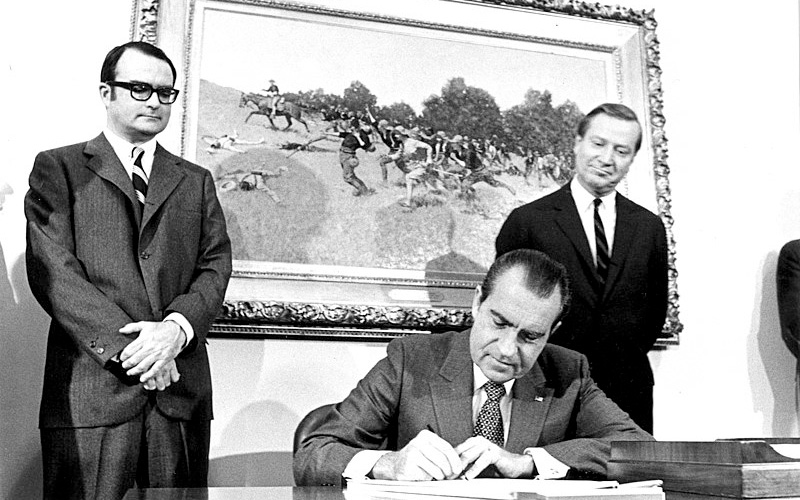
If you’ve ever seen pictures of Los Angeles in the 1960s you’ll notice how much the horizon is obscured by a dim haze that hung over the city even on cloudless days. LA was hardly alone in this as air quality was bad to terrible in many heavily populated areas. An upswell in environmentalism in the 1960s dovetailed with a responsive push (!) by legislators to address the issue. Leading the charge were Senators Ed Muskie (D) and Howard Baker (R) as principal sponsors for a new Clean Air Act for 1970. The new law empowered the newly created EPA to reign in pollutants like lead, carbon monoxide, and sulfur dioxide.
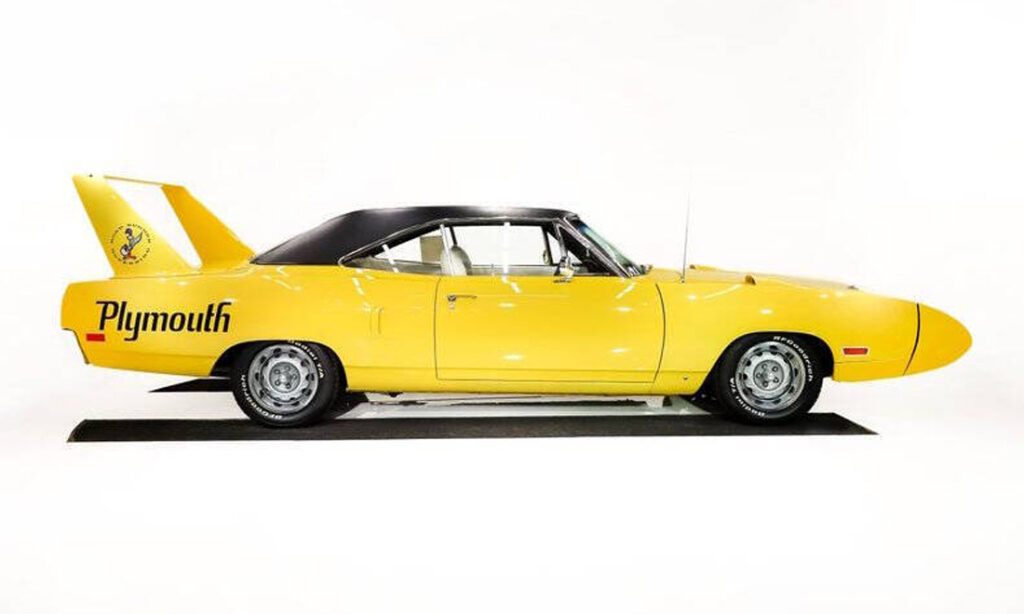
This effort to reduce pollution naturally had seismic implications for automobile production including muscle cars. It so happened that in 1970 muscle cars were reaching what would, in retrospect, prove to be their zenith. Displacements were gargantuan, horsepower stratospheric, and zero to sixty times for factory cars shaving down under five seconds. But the new emissions regulations, including the move to unleaded fuel which forced changes to compression ratios, drastically reduced horsepower. And then came the Oil Crisis….
The 1973 Oil Crisis
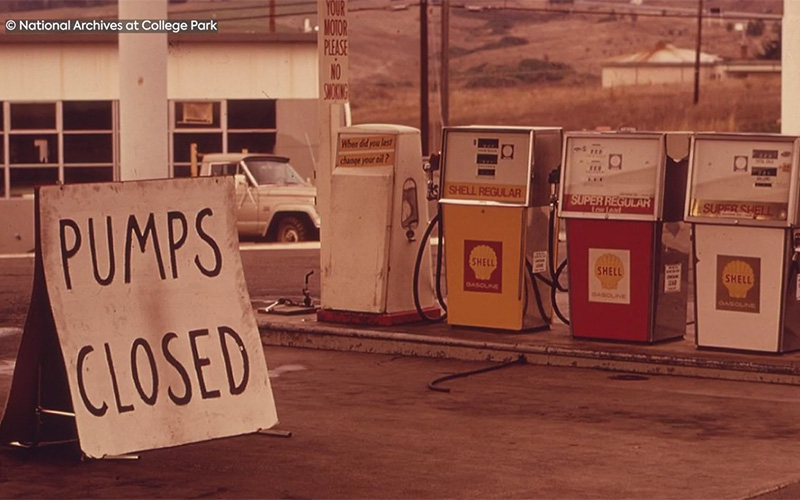
Gas was once cheap. So cheap in fact that as US oil production rose the efficiency of Detroit’s engines actually decreased. Consumers simply weren’t all that concerned that their Cadillac’s gigantic V8 got less than 10 mpg. That is, until the 1973 Oil Crisis.
The efficiency wake-up call came as the result of an oil embargo instituted by OPEC (Organization of Petroleum Exporting Countries). The ’73 Yom Kippur war between Israel and neighboring Egypt and Syria prompted OPEC to embargo oil exports to countries allied with Israel, including the US and Canada. The squeeze was felt almost immediately as low supply led to long lines for gas and a spike in prices across the country.
The shock was bad enough that in early 1974, the Nixon Administration instituted a new national highway speed limit of 55 mph (while it did little to preserve gas, the new limit did reduce traffic deaths). The result was a newfound desire among car buyers for greater efficiency. The days of gas-guzzling V8 were numbered.
Insurance Rates

While new emission regulations and the ’73 Oil Crisis loomed largest and pushed hardest on manufacturers, there was an additional factor that precipitated the downfall of the muscle car: rising insurance rates. Who would have guessed that getting a bunch of fast cars in the hands of young people, the muscle car’s target demo, would result in increased accident rates? The response from automotive insurers was, naturally, to raise rates.
By the early 1970s, rates climbed to $1,000 to $1,500 a year for muscle cars that themselves cost between $3,000 and $4,000. For your average teenager, meeting both monthly car payments and insurance payments became prohibitive. The resulting trifecta of insurance rates, emissions regulations, and demands for greater efficiency combined to finally break the muscle car fever.
The End of the Classic Muscle Car by the Numbers
Of the three potential killers of the original muscle car era, we can identify the Clean Air Act as our asteroid-level event. The shift to unleaded gas was great for reducing lead exposure (clearly a good thing) but also meant giant V8s wouldn’t be as powerful as they’d once were. Returning to our fossil record of engines and horsepower tells the tale.
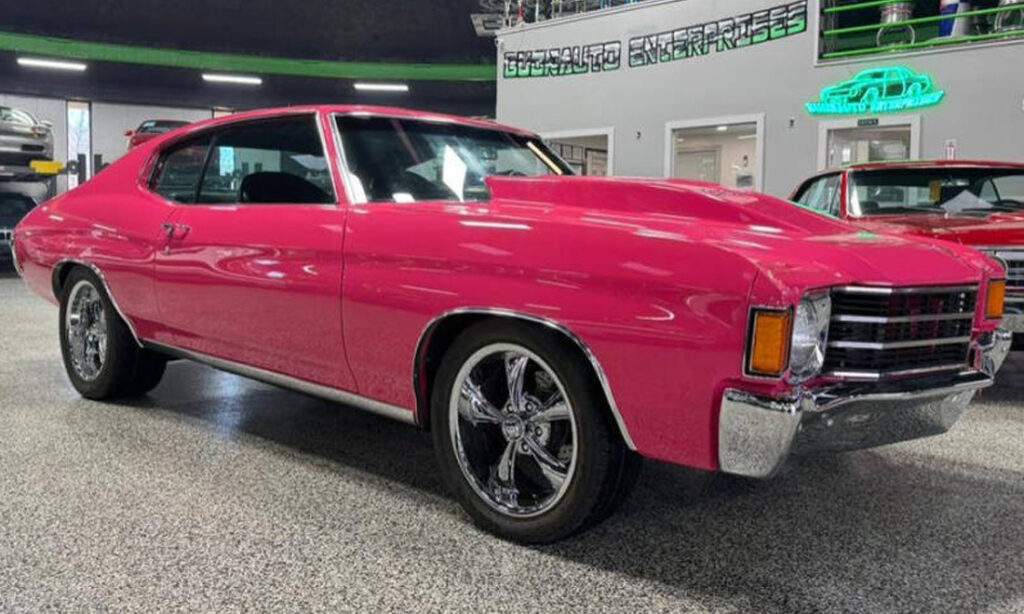
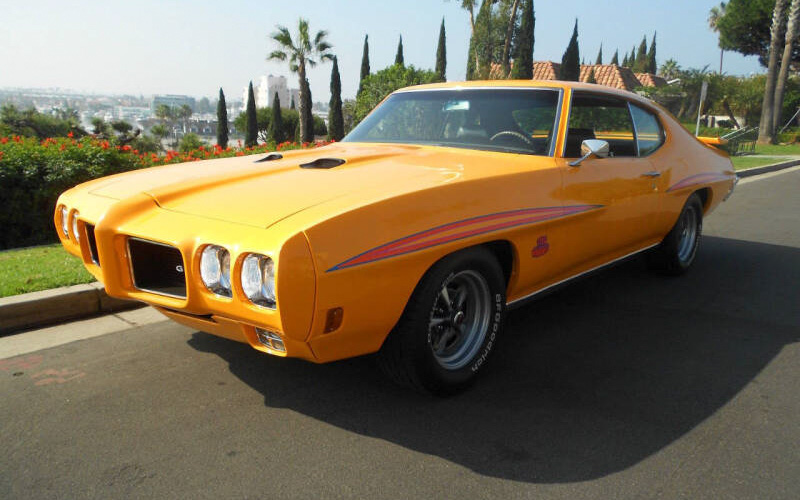
The diminution of horsepower began arriving in 1970 for 1971 model year cars and proceed from there. GM was an early adopter. They began instituting new compression ratios for the Pontiac GTO for the 1971 model year. The 455 HO (High Output) V8 went from making 360 horsepower in 1970 to 355 horsepower in 1971. The slide continued with the HO version of the 455 V8 being cut by the 1973 model year while the regular 455 was reduced to a measly 250 horsepower. Over at Chevy, the newly unveiled second-gen Camaro saw output drop for the Z/28’s LT1 350 V8 from 360 horsepower in 1970 to 330 hp the next year and falling again for 1972, this time down to 255 horse.
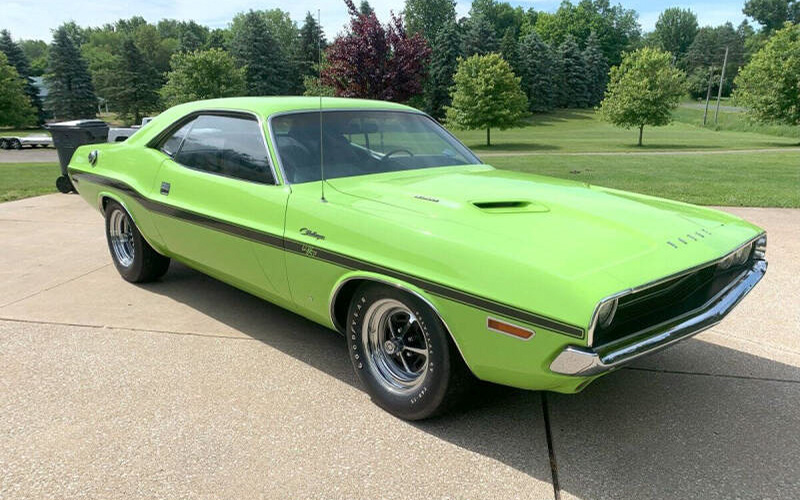
Other muscle cars were quick to follow. The Dodge Challenger is emblematic of a broader trajectory among Chrysler’s muscle cars. The 1970 Challenger R/T sported some of the era’s most impressive engines with the 440 Magnum making 375 horsepower, the 440 Six Pack boasting 390, and the legendary 426 Hemi offering 425 horsepower. By the time the 1972 model rolled out the new Challenger Rallye (in place of the R/T) could only muster 230 horsepower from its 318 V8 and 240 horsepower from its 340 V8.
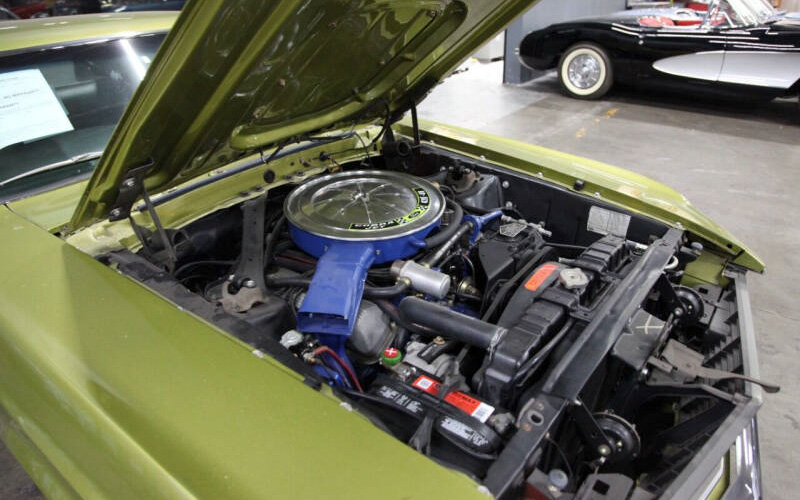
Over at Ford it was the same story. In 1970, the Mustang’s 390 V8 (320 hp), 428 Cobra Jet (375 hp), and Boss 429 (375 hp) helped the Ford stake its claim as one of era’s defining cars. But a short two-year interval saw the Mustang drop the 428 and 429 displacement engines; the remaining 351 Cleveland V8 was down to 275 horsepower. The Mustang’s Icarus-like fall was complete by 1974 when the Mustang II adopted the Pinto’s 140 cu.-in. four-cylinder as its base engine (in case you’d hoped the ’75 car’s reintroduced V8 might right this wrong you were mistaken as the two-barrel 302 V8 netted just 140 horsepower).
Resurrected and Redeemed
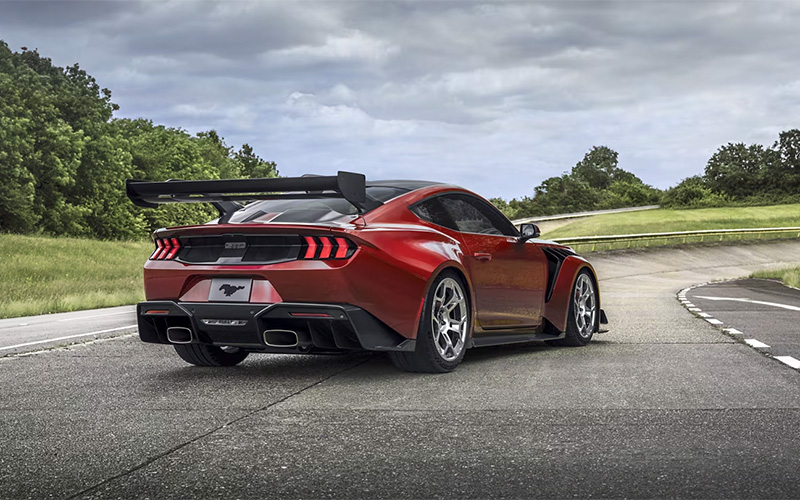
Of course, the muscle car saw a major resurgence in the 21st century, at least in terms of technical prowess if not popular appeal (and that only in comparison to the smash success of the first-generation Mustang). Today’s last call Dodges and next-gen Mustangs offer more horsepower and torque than the cars of the golden era could have dreamed. Part of the enduring allure of muscle cars from the 1960s and ‘70s is their brief but impactful time at the top cut short by a combination of circumstance and necessity.
*The KT boundary (Cretaceous-Tertiary or Cretaceous-Paleogene boundary) being the layer in the geological record that marks the asteroid impact that killed the dinosaurs.