
Latest News
2026 Ford Maverick Review
This “shoebox” Chevy 210 comes with loads of classic ‘50s style, and a few new surprises under the hood as well.
Tri-Fives Chevys
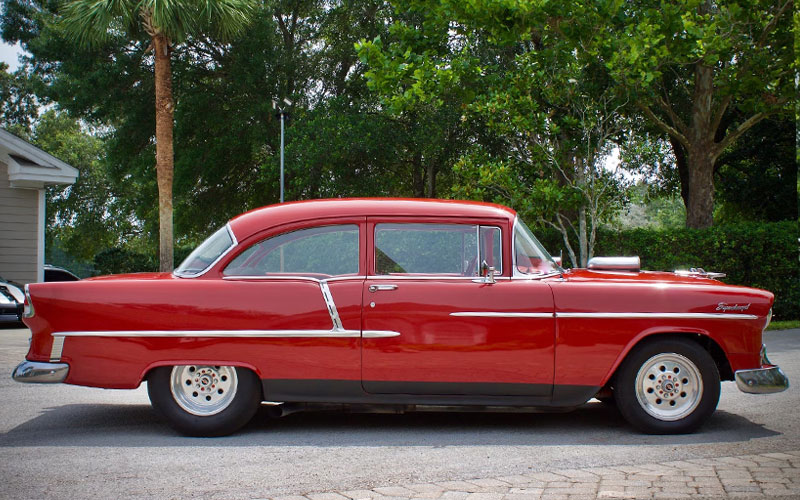
1955 Chevrolet 210 – carsforsale.com | Shop 1955 Chevrolet 210 on Carsforsale.com
Of the many classic ‘50s body styles some of the most identifiable of the decade are the Tri-Five Chevys. The Tri-Fives comprised the gamut of Chevy cars running from the fleet model 150 to the mid-level 210 to the higher-end Nomad and Bel Air. Though they had their share of chrome and fins, the second-generation Tri-Fives weren’t overly ornate, eschewing gaudiness for a simpler, cleaner look that remains as compelling now as it was in 1955.
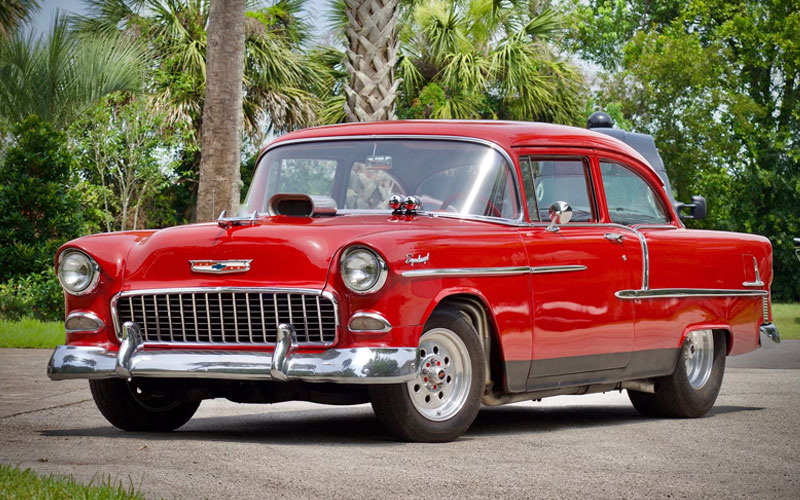
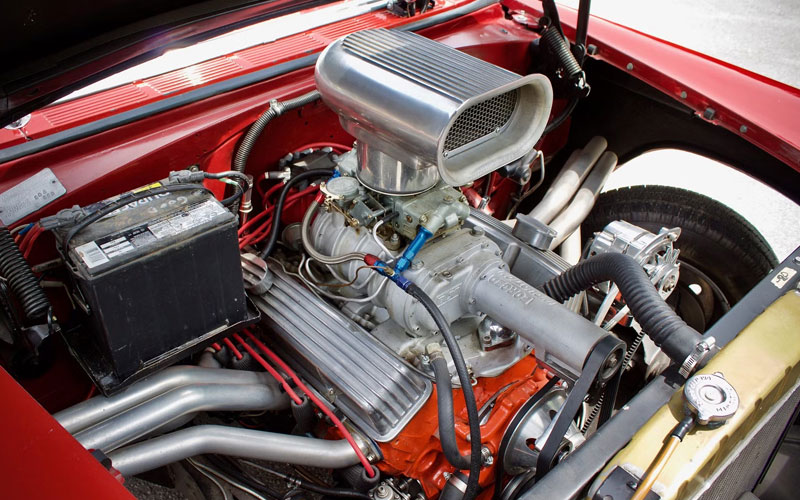
Today’s Cool Car Find is a 1955 Chevrolet 210 with a show-stopping red paint job and a bit of a surprise poking out from the hood (hint: it’s a supercharger).
“Shoebox” Bodies and 210 Background
The Chevrolet 210 debuted in 1953 as the successor to Chevy’s Styleline Deluxe. The car was heavy on chrome, with a massive grille works but also retained not a few Art Deco touches carried over from the designs of the 1940s. This first generation was powered by either Chevy’s “Blue-Flame” or “Thrift King” I-6s. Body styles included 2-door sedan, coupe, or convertible options as well as either a four-door sedan or four-door wagon.
Chevy’s cars, including the 210 and Bel Air, received major updates for 1955 with the debut of the new “showbox” design. Body lines were simplified and squared off, which lent the car’s their unofficial moniker of “shoebox.” The grille, while still bedecked in chrome, wasn’t as large or elaborate as before.
Major new additions included two new body styles, a two-door wagon and a four-door hardtop. Also new was the introduction of the “Turbo-Fire” V8 (also new in the Corvette that same year). With 265 cu.-in. displacement, the Turbo-Fire made between 162 and 180 horsepower, depending on the carburetor set up. The Blue-Flame I-6 continued to be available in either 235 or 265 cu.-in. versions.
In 1956, the 210 got an updated version of the 265 cu.-in. Turbo-Fire V8 making between 170 and 225 horsepower. The next year, and the 210’s final year of production, it got the larger 283 small-block “Super Turbo-Fire” V8, again along with the Corvette and Bel Air. Horsepower ranged from 185 all the way to 270 when equipped with the two four-barrel carbs. If you’re a Vette fan, you’ll remember this engine was also available with a Rochester Ram-Jet fuel injection system that allowed it to net 283 horsepower, making it one of the first production engines to achieve equivalent horsepower to displacement.
This Cool Car Find
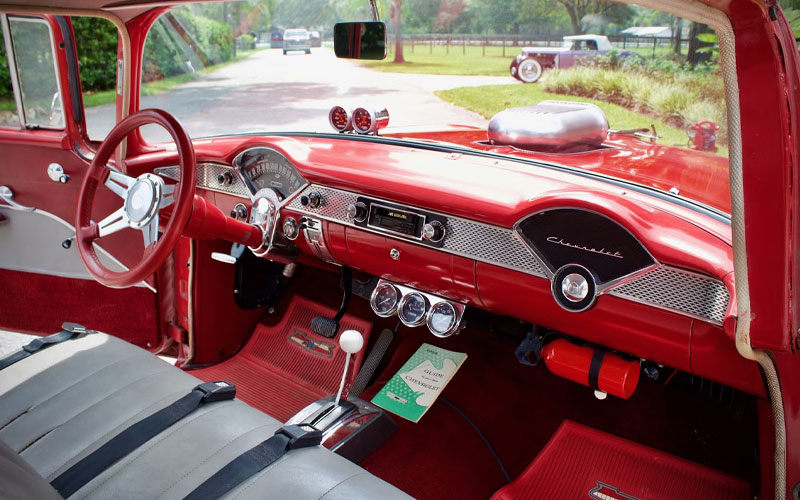
1955 Chevrolet 210 – carsforsale.com | Shop 1955 Chevrolet 210 on Carsforsale.com
And as cool as the 283 Super Turbo-Jet V8 is, our Cool Car Find, a 1955 Chevrolet 210, swaps in something even more powerful, a stroked 383-V8 complete with a B&M supercharger. This red-on-red 210 is restomodding done right as the aesthetic portions of the vehicle are impeccably restored while the underpinnings have been upgraded for modern safety (as in the case of the front disc brakes) and performance. In addition to the supercharged 383, other upgrades include Holley four-BBL carbs, polished finned valve covers, Hooker Super Competition Gasser Long-Tube headers, Flowmaster mufflers with dual side exhaust, and a TH350 transmission with a B&M ratchet shifter.
Of course, the interior of this car is just as meticulously finished and in sterling condition. At $49,950, this Chevy “shoebox” 210 offers a great deal on a combination of modern speed and vintage style.