
Latest News
2026 Subaru Crosstrek Review
This American supercar is a powerful as it is rare. The S7 isn’t even the first thing you think when you hear the name Saleen, but it should be.
America’s Forgotten Supercar
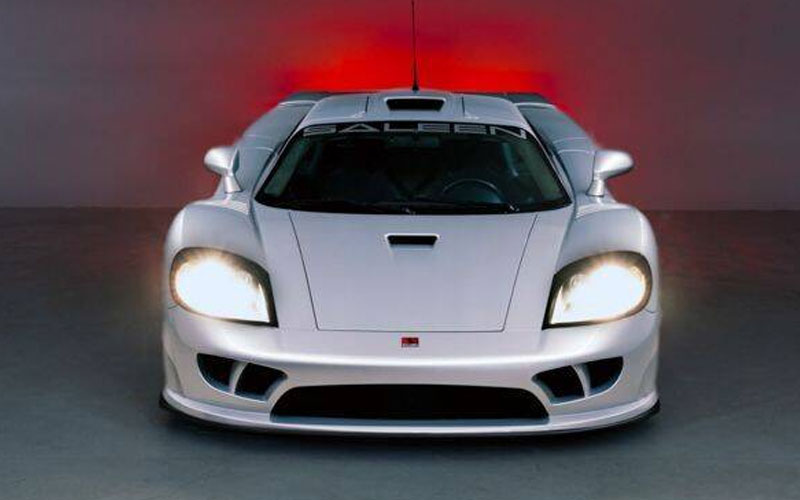
2003 Saleen S7 – carsforsale.com | Shop 2003 Saleen S7 on Carsforsale.com
Supercars are by their nature boutique products. They are meticulously engineered, hand-crafted machines built from rare and expensive materials, and sold at nose-bleed prices. Therefore, you can’t be blamed for not always recognizing supercar makes. Most will surely know Lamborghini, Ferrari, and Aston Martin and have passing familiarity with Bugatti, McLaren, and maybe even Koenigsegg. But what about SSC North America, Pagani, Hennessey, or Rimac? In the rarefied realm of the supercar, obscurity becomes part of the allure.
In the case of the Saleen S7, today’s Cool Car Find, you have a car which was rare and expensive when it was in production. Today, fifteen years after production ceased, it’s faded from the minds of most enthusiasts. That is until you mention the Saleen Mustang.
What’s a Saleen?
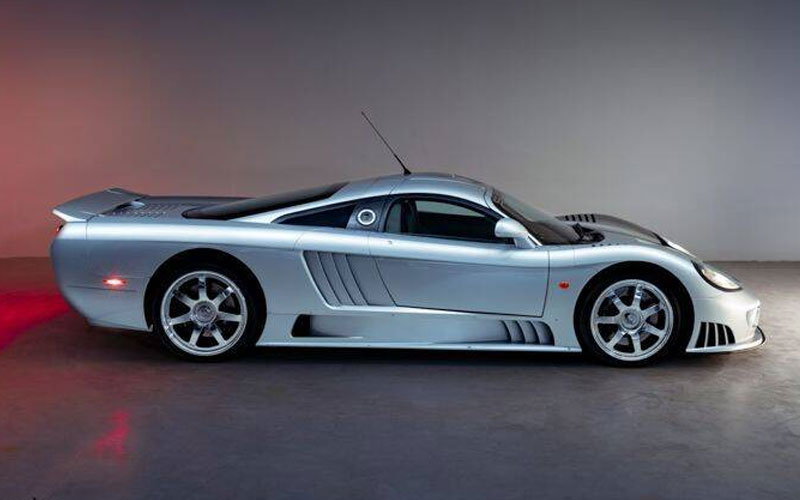
The Saleen S7 supercar is not what enthusiasts most strongly associated with the name. That’s because Steve Saleen’s eponymous company first made its reputation modifying and tuning Ford Mustangs for the track. Steve Saleen, a former racecar driver, founded his tuning company back in 1983 and started souping up Foxbody Mustangs for racing. The first major SCAA win for a Saleen Mustang came in 1986 at the 24 Horus of Mosport. Saleen continued to work on racing Mustangs into the next generation, notably with their S351 Mustang built in 1994. Saleen even teamed up with comedian and motorhead Tim Allen on a race team in 1995.
Having done so much to make Mustangs faster, in 2000 Saleen decided to have a go at making their own extremely fast car, the S7. The S7 supercar, however, had more in common with the McLaren F1 than it did a Mustang with its rear engine, rear-wheel drive design, its sleek, low-slung body, and its butterfly doors. The list of supercar components is long and includes the S7’s tubular spaceframe and carbon fiber body, the quad exhaust, forged pistons, and aluminum heads, the dry sump lubrication system with dual oil coolers, and the dual radiators.
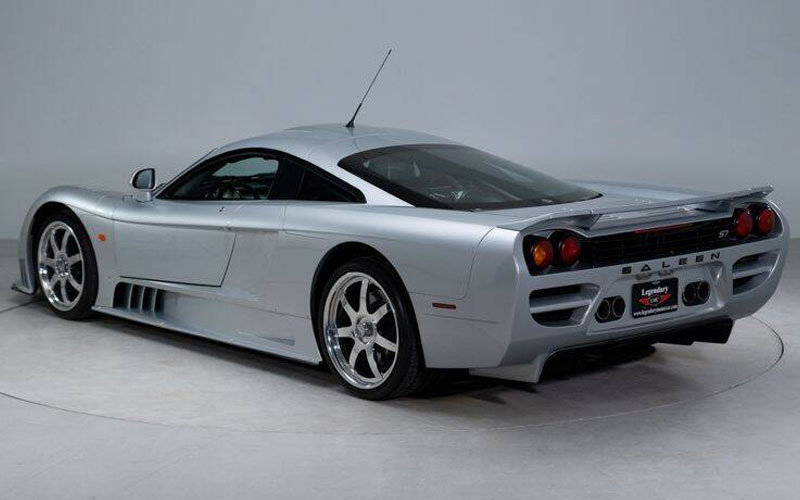
Like the Ferrari F40, the S7 had a transparent rear hatch to best display the beating heart of the car, a 7.0L Ford Winsor V8 making 550 horsepower and allowing the S7 to reach approximately 220 mph and a zero to sixty time of around 3 seconds. A competition version, the Saleen S7R competed in FIA GT and Grand Am, with impressive finishes at some of the more competitive and prestigious races in the world, including the 24 Hours of Le Mans.
In 2005, Saleen added a pair of turbochargers which jacked up the horsepower to 750 and 700 lbs. of torque and a new top speed of 248 mph. A Competition package the following year tuned the S7 to an even 1,000 horsepower. Production concluded in 2009, and while Saleen has been circumspect on exact numbers, it’s estimated that fewer than 100 S7s were built.
This Cool Car
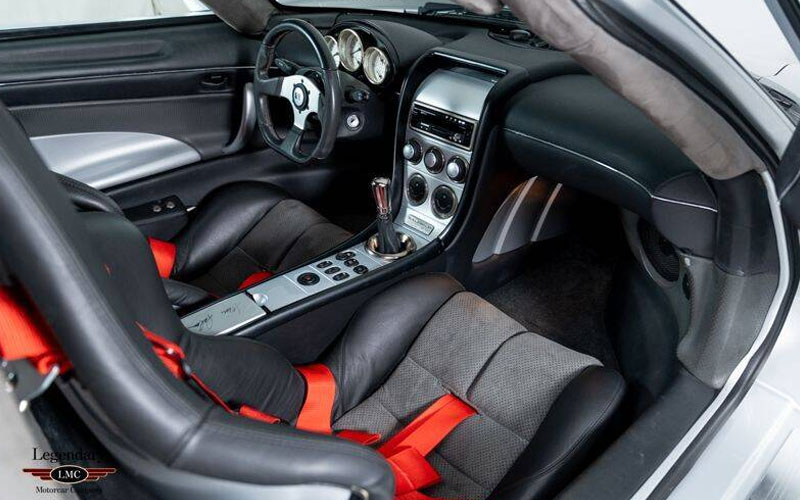
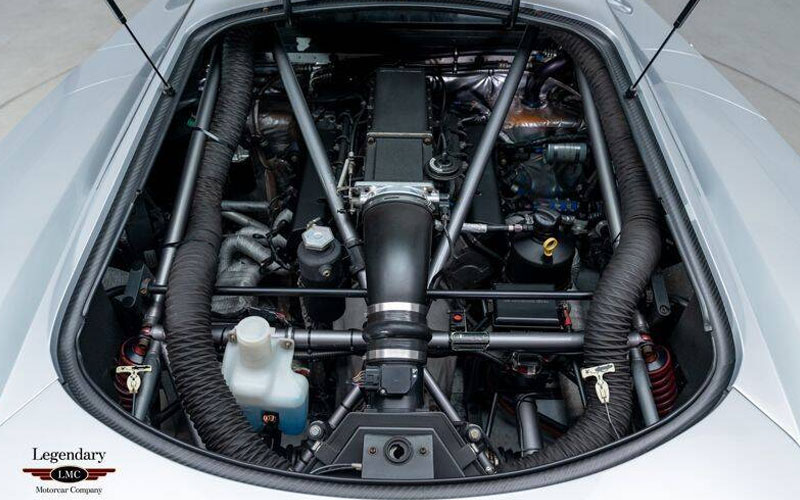
This Cool Car is a 2003 Saleen S7 done in Bright Silver with a black leather/grey Alcantara interior. It carries the naturally-aspirated version of the 7.0L Winsor V8. Normally, this would mean it tops out at 550 horsepower, but that’s not the case with this example. That’s because this car has a Competition package that tunes the engine to 625 horsepower, and according to the seller this also includes “an uprated camshaft, upgraded intake manifold and exhaust and reprogrammed ECU.” All this added $75,000 to the original price of the car, which ran about $400,000. The car also comes with a set of custom seats (the originals are included in the sale). Other options included were the chrome wheels and the upgraded infotainment system.
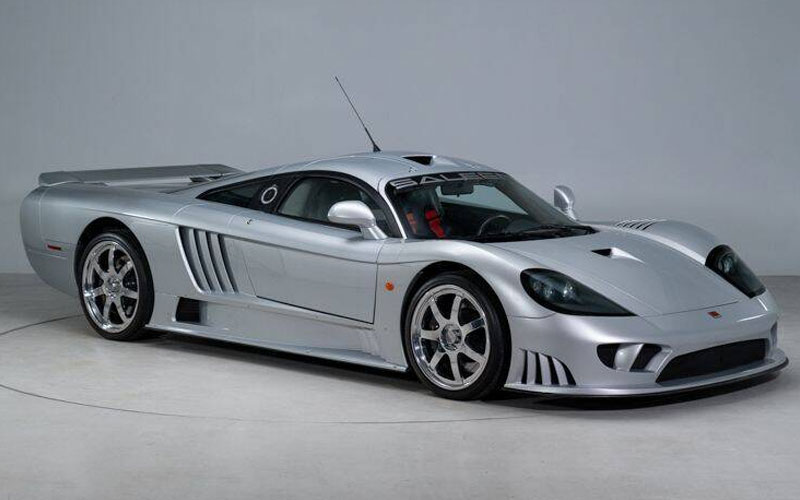
2003 Saleen S7 – carsforsale.com | Shop 2003 Saleen S7 on Carsforsale.com
This 2003 Saleen S7 gives you all the style and power you’re seeking in a supercar while also being a rare collector’s item to boot.