
Latest News
2026 Ford Maverick ReviewDeTomaso Mangusta, the (Shelby) Cobra Killer
This jaw-dropping 1970 DeTomaso Mangusta is the perfect blend of beauty and brawn, named after the one animal happy to take on a cobra.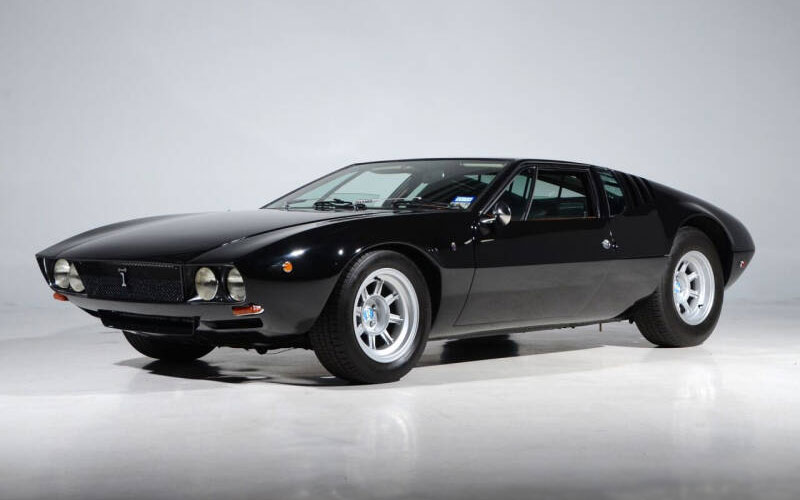
DeTomaso Mangusta, the (Shelby) Cobra Killer
For as long as there have been cars, automakers have been weighing the balance between style and substance. For some cars, their specific use case informs their aesthetics. Think how a set of bull bars and some knobby off-road tires improve the looks of you average Jeep Wrangler. At the opposite end of the spectrum are cars defined foremost by their visual qualities, say, the Rolls-Royce Cullinan.
Special are those rare cars that manage to synthesize both beauty and capability on the road. Take today’s Lexus LC 500 and Ferrari 296 GTB, both are stunning to look at and a heck of a drive, or more practically, the new Toyota Prius which manages to be both highly efficient and visually arresting.
The wedge cars of the late 1960s and early 1970s were the birth of a new genre of automobile, the supercar, one that offered style, substance, and the exclusivity of an exorbitantly high price tag. Italian sports cars like the DeTomaso Mangusta radically reshaped sports cars forever after. With its steeply raked windshield, low belt line, and mid-engine proportion, wedge-shaped cars like the Mangusta literally sliced through the air and looked fast standing still.
Take this 1970 DeTomaso Mangusta listed on Carforsale.com as the most prime of examples, the perfect blend of speed and sophistication.
The Legend of the Cobra Killer
The Mangusta debuted in 1966 at the Turin Motor Show as the first production car built by Italian carmaker DeTomaso. The origin of the car and its name are as compelling as its chic styling. The DeTomaso car company was founded by Alejandro de Tomaso, an Argentinian racecar driver, in 1959 in Modena, Italy. Alejandro was the son of a successful family of Italian emigres who’d made their money in cattle ranching, and he was married to American heiress Isabelle Haskell, all that is to say he could afford doing frivolous things like starting a car company. DeTomaso first started building one-seat racecars before aiming for a proper road car, the first of which was the Vallelunga, of which four prototypes were built.
With his sights on Can-Am racing, De Tomaso solicited the expertise of Carroll Shelby in helping design his new car. (Shelby was well-heeled in European racing circles, having won the 24 Hours of Le Mans in 1959.) Shelby’s work on the P-70 project, as it was dubbed, included sending Pete Brock over to Italy to work with DeTomaso directly. Disagreements over the design lead to project delays that eventually foreclose the car from completion in time for the 1965 Can-Am season. Shelby called it quits, shortly thereafter signing his deal to head Ford’s GT40 project. De Tomaso continued on with the car, which he named the Mangusta, or mongoose in Italian, referring to the animal best known for killing cobras in a dig against Shelby over their failed partnership.
Italian Body with an American (V8) Heart
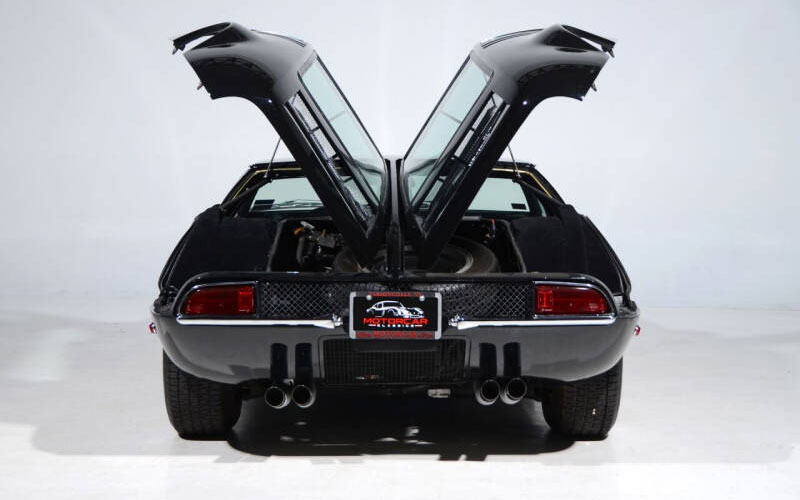
The Mangusta’s design was penned by Giorgetto Giugiaro of the Italian design house Ghia (which De Tomaso bought in 1967). Giugiaro became renowned for his wedge-shaped designs like those of the Maserati Ghibli and Bora, the AMC AMX/3, the BMW M1, and the DeLorean DMC-12. The most notable feature of the Mangusta was its pair of gullwing-style engine hoods covering the mid-ship engine bay.
The Mangusta’s name might crack back at Shelby, but the car couldn’t help but be influenced by him, nonetheless. Under those gullwing hoods of the Mangusta was a Ford 289 V8 making 306 horsepower, just like the one found in early Shelby/AC Cobras. Later cars, those destined for the US market, swapped the 289 for another Ford engine, this time a 302 V8 was employed, paired with a ZF five-speed transaxle, basically the same powertrain Shelby used in the Ford GT40. The car’s mid-engine design was based on DeTomaso’s backbone chassis and subframe, first designed for the Vallelunga.
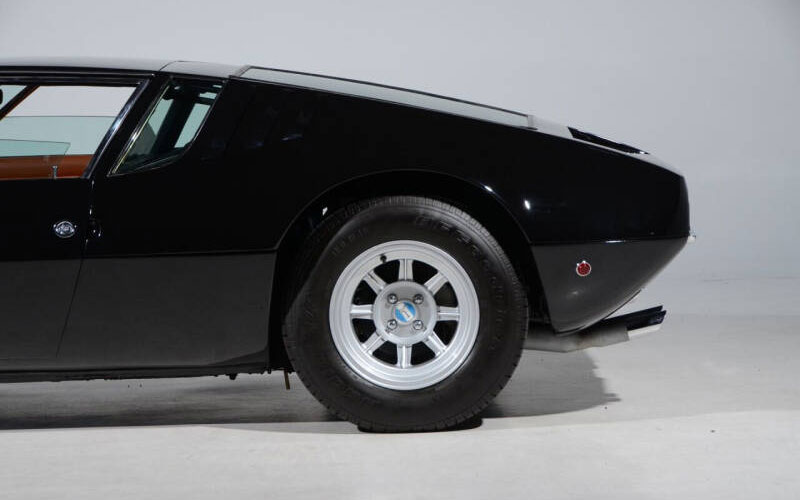
The Mangusta was rounded out with a fully independent suspension, four-wheel disc brakes, and cast magnesium wheels. Inside, the car featured rich leather upholstery and trim, a gated shifter, and a wood and leather trimmed steering wheel. Top speed for the Mangusta was 155 mph and it leapt from zero to sixty in 5.9 seconds. Though quick for its time, like many Italian supercars of the period, the Mangusta was challenging at the limit, its rearward weight bias making for unruly cornering.
DeTomaso produced the Mangusta from 1967 through 1971 when it was succeeded by a new Italian/American amalgam, the Pantera. In all, 401 Mangustas were built, roughly 150 for the European market and the other 250 for the US market. Notable variations include the single factory-modified Targa-roofed example and the 50 cars built with pop-up single headlights rather than the typical quad headlight design.
This Cool Car Find
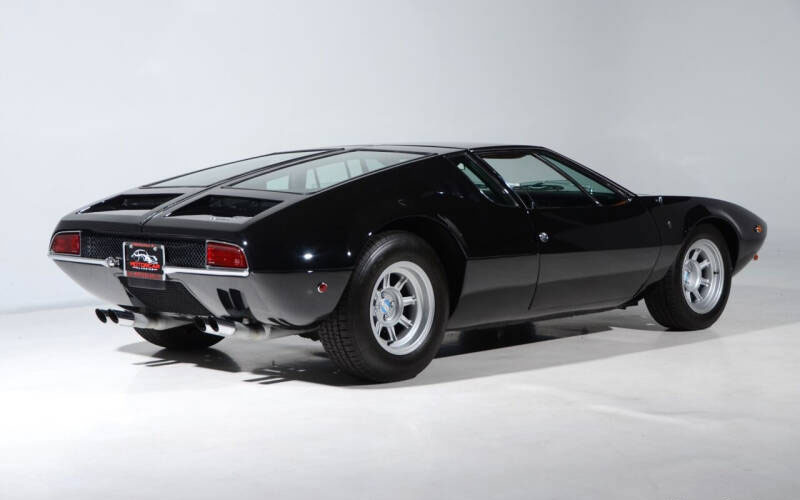
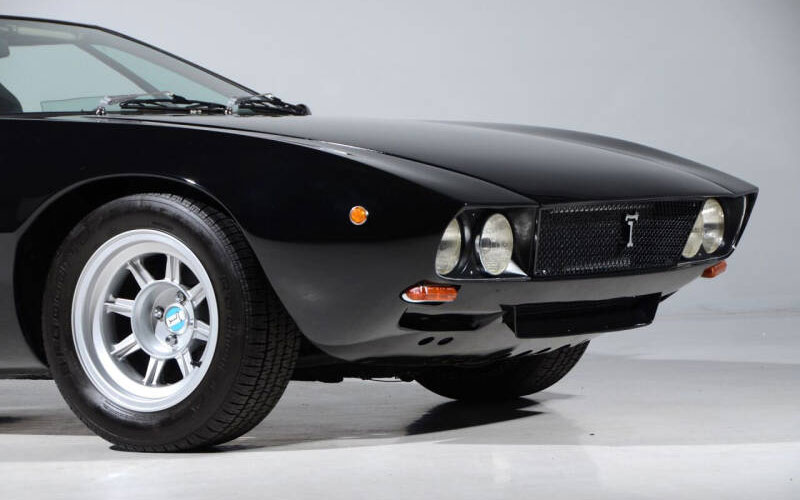
This 1970 DeTomaso Mangusta is a time capsule of a car, its immaculate restoration returning the car to its original luster. Note Giugiaro’s design elements: the flared fenders, the gullwing engine hoods, the sleek, ultra-low profile. The cabin is finished in a luscious brown leather with black leather trim. The car is equipped with the 302 Ford V8 and the ZF five-speed transaxle as well as a limited-slip differential and dual exhaust.
Rarely has beauty and brawn been so perfectly harmonized as in this 1970 DeTomaso Mangusta.