Latest News
2026 Ford Maverick Review
A movie and a muscle car. It was a winning combination in 1977. Find out how big an impact Smokey and the Bandit had on the Pontiac Firebird Trans Am!
The Perfect Movie Pairing
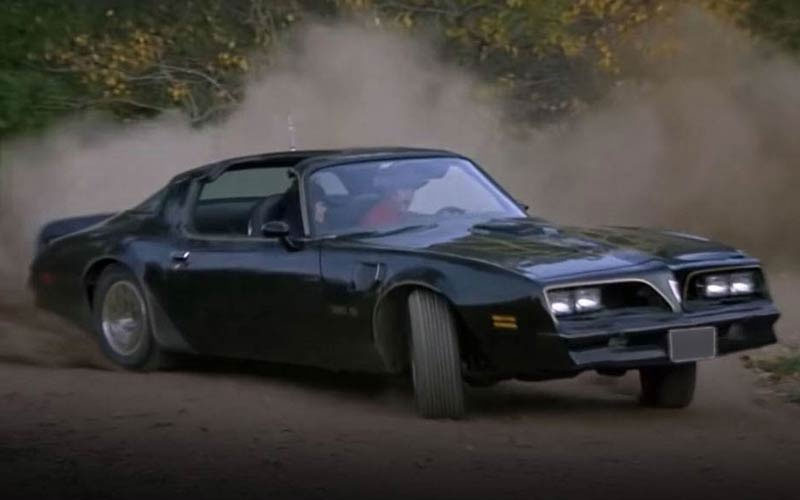
There’s no doubt that the Firebird Trans Am is a movie legend. It made our list of the Top 10 Famous Movie Cars, it received a nod in Cannonball Run, and it’s so connected to the Smokey and the Bandit movie that it became known as the Smokey and the Bandit car. Despite the fact that the original movie is close to 50 years old now, people are still talking about Smokey and the Bandit and the famous second-generation, late 1970s Pontiac Firebird Trans Am models.
How exactly did the Trans Am end up being chosen as the Bandit’s car of choice? Also, just how much impact did the movie really have on the Trans Am’s sales? If you weren’t around to experience it, or if you maybe need a refresher, continue on because this is your crash course on a famous movie and a famous car that became a winning combination.
A Brief History of the Trans Am
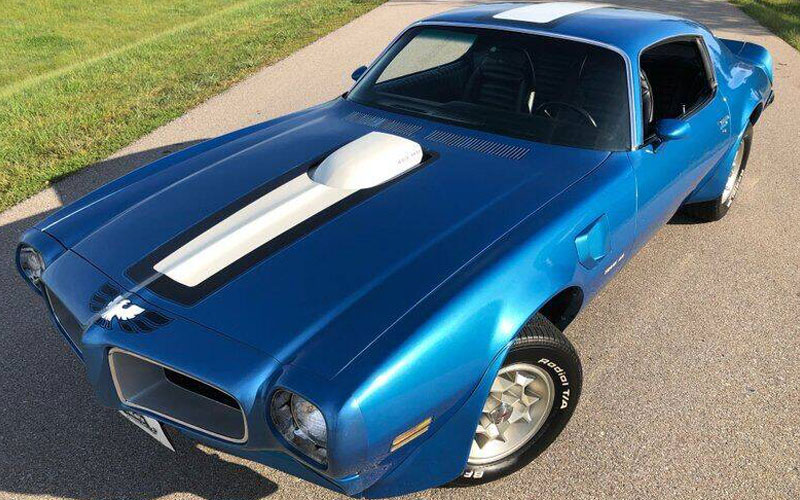
We already published a full, in-depth look at all the Pontiac Trans Am generations through the years, but there’s one period I want to pinpoint specifically: the 1970s. The Trans Am was introduced as a performance and appearance package on the 1969 Firebird, but engineering problems delayed the arrival of 1970 models. Paint defects, transmission flaws, and issues with the cooling system were all reported.
Then, a 1972 GM plant strike limited production to less than 1,300 units. Pontiac almost canceled the Trans Am at that point. The 174-day strike was resolved and, as the years rolled on, the Trans Am was given new colors and bigger engines. Sales were increasing little by little, but the second-generation Trans Am was off to a rocky start. Then, came a road trip movie about a racer nicknamed “Bandit.”
Becoming a Movie Car
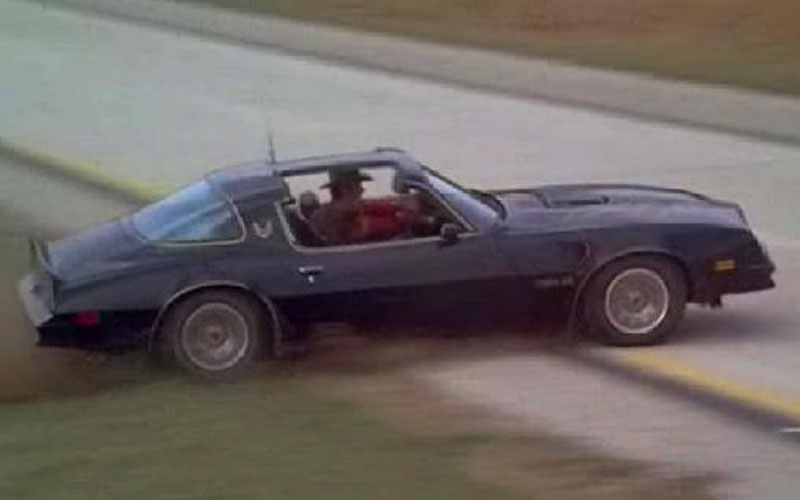
Smokey and the Bandit director Hal Needham didn’t specifically request the Trans Am for filming, but the Trans Am fit all his needs. Burt Reynolds was already cast in the title role, but they still needed a car. It very well could have been the Chevy Corvette or Dodge Charger, but a photo of a Pontiac Trans Am LE convinced Needham and Reynolds that this was Bandit’s car. The director and actor contacted GM about using the Trans Am in their movie.
GM initially gave Needham five 1976 models. One was for promotional purposes and the rest were to be used in the movie. There were a few problems with this. First, filming of the movie started in August 1976 and GM was about to release updated ‘77 models. There were noticeable differences between the two model years, including rectangular quad headlights instead of rounded headlights, a V-shaped nose, and the center-mounted hood scoop. Engineers updated the front clips to use in the movie, though.
Another problem: Universal Studios introduced substantial budget cuts during filming. A single stunt ruined the car, and as anyone who has seen Smokey knows there were a lot of them in the movie. GM wasn’t providing more models to use and there wasn’t as much money in the budget to make repairs. Those Trans Am models that GM provided had to be used sparingly. The stunts were so hard on the cars that the only surviving stunt car from the movie had to be pushed on set to film the final scene because it wouldn’t start on its own.
The Smokey and the Bandit Effect
All the work (and stunts) were done. It was finally time to release the movie! Though the totals may not be as impressive when compared to modern movies from the Marvel Cinematic Universe or the Fast and the Furious franchise, Smokey and the Bandit was a hit in 1977. It grossed $126,737 in North America. The worldwide total was around the $300 million mark. To put that into perspective, the only movie that earned more than Smokey and the Bandit was the original Star Wars.
Hal Needham, the director of Smokey and the Bandit, is quoted as saying, “Sales just soared after the film’s release.” Well, you don’t have to take his word for it. The numbers back him up. Production totals were already steadily increasing, going from 1,286 to 4,802 to 10,255 in the early 1970s. Then, a bigger jump in 1975, hitting 27,274. Another big jump for the 1976 model, finishing at 68,744 units. Even before Smokey and the Bandit, the Trans Am was a hit. However, Smokey and the Bandit shot the Trans Am into new territory!
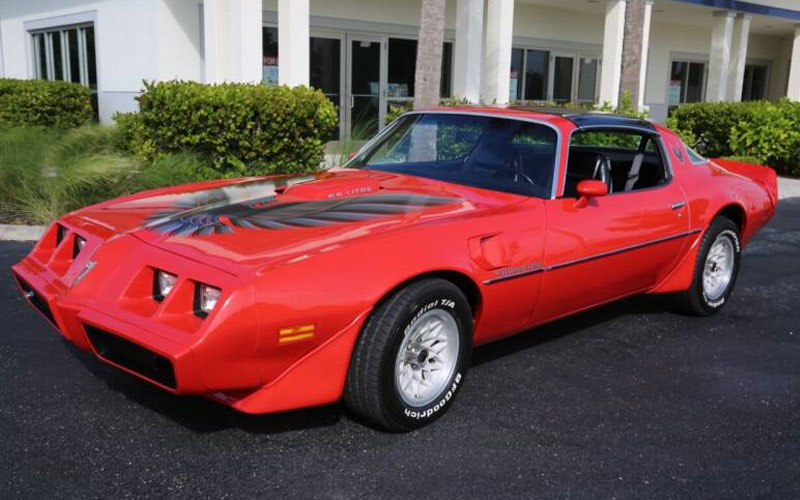
Sales hit 68,745 in 1977. Pontiac picked up 25,000 additional Trans Am sales in 1978. There were 93,351 Trans Am units sold that year. 93,944 Firebirds were also sold in 1978. Those numbers set new records for Pontiac and the Firebird. This was actually the first time that the Trans Am outsold the Chevy Camaro. 1979 was Pontiac’s best Trans Am sales year ever, hitting 117,108 units. The sales numbers were so good that Pontiac held off on launching the third-generation Trans Am. It was planned for 1980, but why fix what’s not broken?
The Next Generation of the Trans Am
The Trans Am continued on with slight changes in 1978 (a switch from a honeycomb grille pattern to a crosshatch pattern) and more significant body restyling for the 1979 model. 1980 brought emissions restrictions, so Pontiac dropped all large-displacement engines. Sales slowed a bit after the initial success of Smokey and the Bandit, but how would the delayed third-generation Trans Am sell?
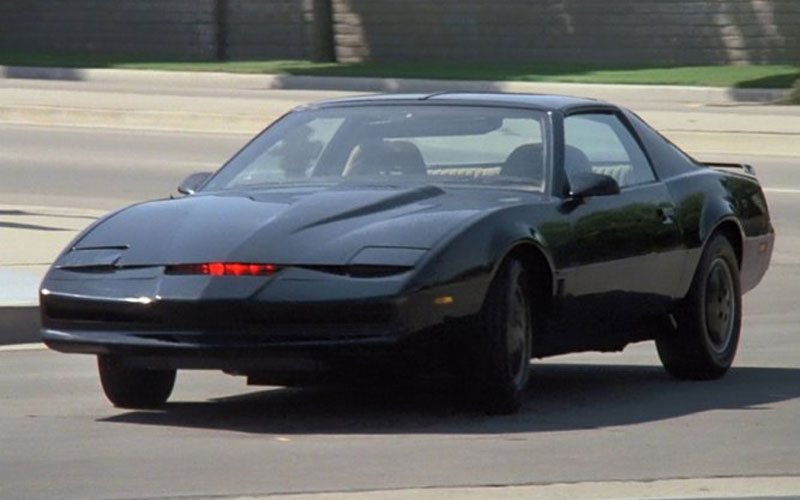
The new generation came out in 1982. The sleek body was shorter and lighter than previous versions, but it wasn’t a bad look. It was, however, the least powerful Trans Am yet. It was just a couple of years later that the Trans Am received even more spotlight in the form of a new TV series called Knight Rider. KITT, the computerized Knight Rider car, was the desire of many teenagers looking for their first car. Not only was the Trans Am movie famous, now it was TV famous. Still, riding high off the Smokey and the Bandit success in 1979 was the peak for the Trans Am.
Collector’s Items
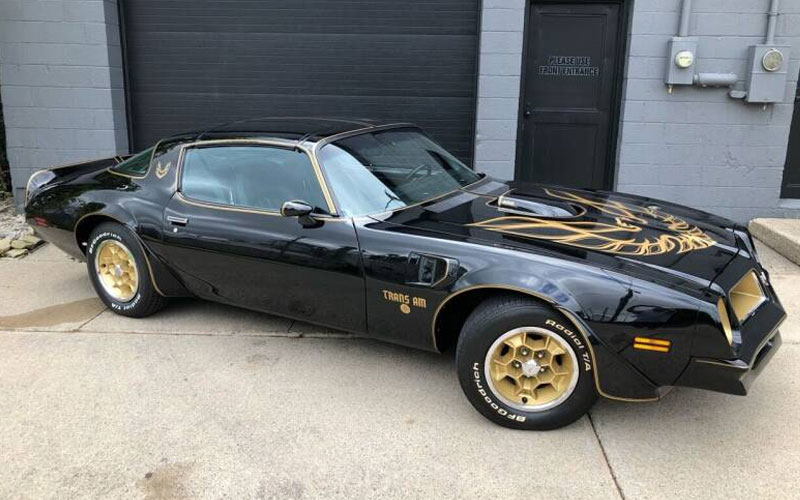
It was nearly impossible to get a ‘77 T-Top Trans Am during peak Smokey and the Bandit era, even if your name was Burt Reynolds. GM offered Reynolds a 1977 Trans Am after the movie was produced, but months went by there was no car. It turns out that the Pontiac executive who offered Reynolds a “Firebird for life” died. If Reynolds wanted the hot commodity, he would have to buy it himself.
Eventually, Reynolds was gifted a 1978 Firebird Trans Am with 220 horsepower. Reynolds then bumped that up to 600 horsepower with a 8.2-liter engine. That Trans Am was auctioned off for $275,000 in 2017. It then went for nearly $500,000 in 2022. Of course, that was for Reynolds’ 1978 model, but even regular late ‘70s Trans Ams has increased since they were first produced. A mint condition Smokey and the Bandit-era Trans Am can cost close to six figures these days.
Smokey and the Bandit not only paid off for Burt Reynolds, Sally Field (she received a Golden Globes nomination for Best Actress), and Pontiac Firebird Trans Am sales at the time, but it clearly also cemented the Trans Am’s place in car and movie history. Of course, the Trans Am isn’t the only famous vehicle from the movies. We have a full article on the Stories Behind Famous Movie Cars. Click over there to learn a little more about the VW Beetle from The Love Bug, the Ford Thunderbird from Thelma and Louise, and the Ford Mustang from Gone in 60 Seconds.