Latest News
2026 Ford Maverick ReviewRelive NASCAR Glory in this ’53 Hudson Hornet
This NASCAR tribute Hudson Hornet evokes the glory days of stock car racing for a long-forgotten brand.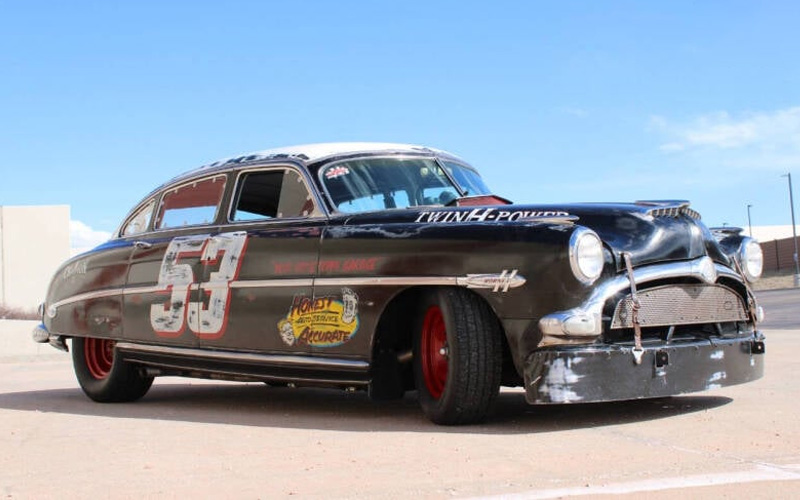
The Fabulous Hudson Hornet
Chevrolet and Ford hold the number one and two spots among manufacturers for NASCAR Cup Series wins with 43 and 17. Tied with Toyota for third with three wins is Hudson. Back in the early days of NASCAR, the Hudson Hornet was a dominant force leveraging superior handling and a powerful straight-six to post win after win throughout the early 1950s. Not bad for a car designed for families rather than racing.
The Hudson Hornet is therefore NASCAR royalty. The stock car legend was immortalized not only in the record books but on the silver screen, featured as Doc Hudson, voiced by Paul Newman, in the movie Cars. It made perfect sense, therefore, when we found a 1953 Hudson Hornet NASCAR tribute car on Carsforsale.com that we take a moment to reflect on its singular history.
Hornet, In Brief

The Hudson Hornet arrived during a moment of renewal for the industry following WWII, when domestic auto production had paused for several years. In the immediate aftermath, Ford, GM, Chrysler, and many smaller companies picked up building their pre-war models, taking several more years until new designs could be conceived, finalized, and brought to production. Hudson’s new model for 1951 was the Hornet, which might appear unremarkable to modern eyes but was in fact a highly advanced car for its day.
The most significant feature of the Hornet was its unibody construction with its “step-down” design which lowered the floor pan by several inches, making the roof, seating, and, critically, the center of gravity lower than practically any comparable car at the time. The Hornet was offered in multiple body styles that included two-door coupe, hardtop, convertible, and sedan as well as a four-door sedan.
Also new for 1951 was the Hornet’s 308 cu.-in. straight-six engine which in stock form put out 145 horsepower, this at a time when triple digit horsepower was a rarity. That number jumped to 160 horsepower for 1952 while a dual-carb version, the “Twin-H-Power” made 170 horsepower, and the factory optioned 7-X could reach 210 horsepower.
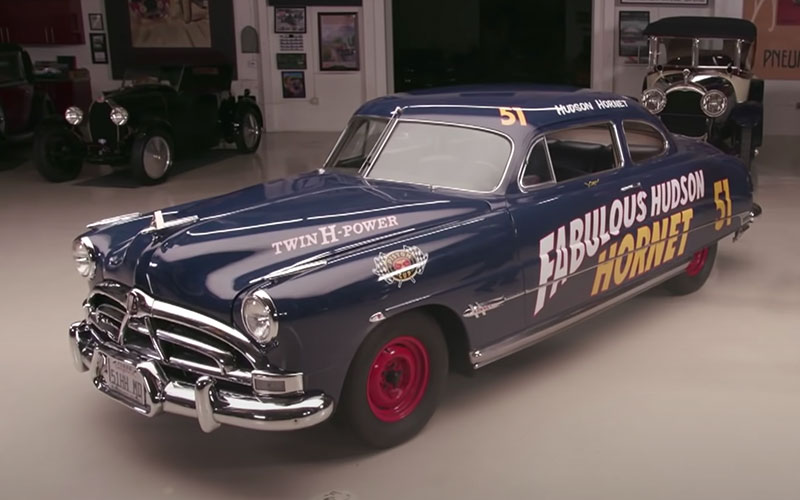
The Hornet’s low center of gravity gave it superior handling characteristics to other comparably sized American cars. This and the powerful straight-six made the Hornet a promising choice for stock car racing. And yet, Hudson had built the car to compete with Detroit’s Big Three in the showroom, not necessarily the racetrack. As early as 1951 and clearly by 1952, Hudson realized what they had: a championship-level racer.
Even with the added publicity, Hudson was struggling to compete with Detroit’s automotive titans. By the middle 1950s Hudson was in dire straits and agreed to a merger with Nash-Kelvinator to form American Motors Corporation (AMC). The Hornet name was ported over to Nash and eventually to AMC, becoming that brand’s best-selling nameplate. The transition saw the Hornet evolve away from performance and toward humdrum mass appeal.
Hudson Hornet NASCAR

Starting in 1951, the Hudson Hornet quickly became one of NASCAR’s most dominant cars, then or since. During its five-year run at the top, the Hornet racked up 81 wins from 1951 through 1955. That included winning its very first race, the 1951 Daytona Beach and Road Coarse (back when that race was held on the literal beach) driven by Marshall Teague. It was Teague who dubbed his car the “Fabulous Hudson Hornet,” which he had emblazoned on the side of his car, and one picked up by other Hornet drivers on the circuit including Herb Thomas. Thomas took the 1951 season in his number 92 car and became the first driver to repeat a championship when he took home the title again in 1953, again behind the wheel of a Hornet. Thomas also took the Hornet’s final win, in 1955, at West Palm Beach.
Other Hornet driver’s included Dick Rathmann, Frank “Rebel” Mundy, and the Flock brothers Tim, Fonty, and Bob. 1952 was the Hornet’s most successful season a total of 48 wins. Marshall Teague and his Hornet were on a particular hot streak that year, winning 12 of 13 races with help from his now legendary racing mechanic Smokey Yunick.
This Tribute Hornet
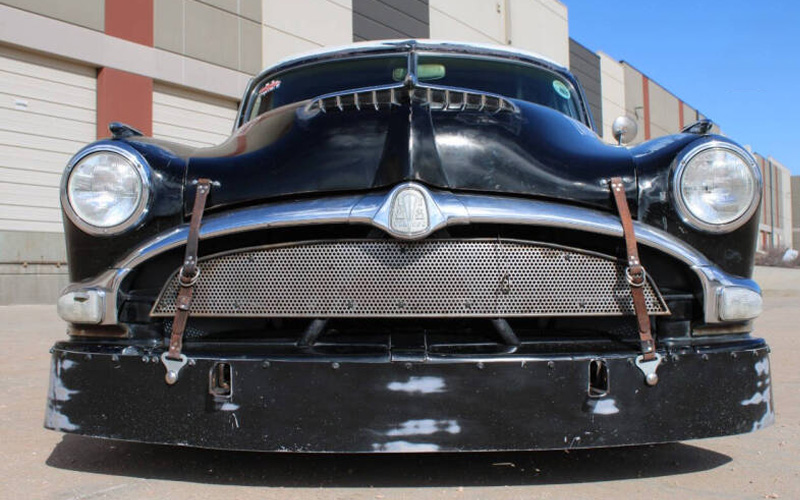
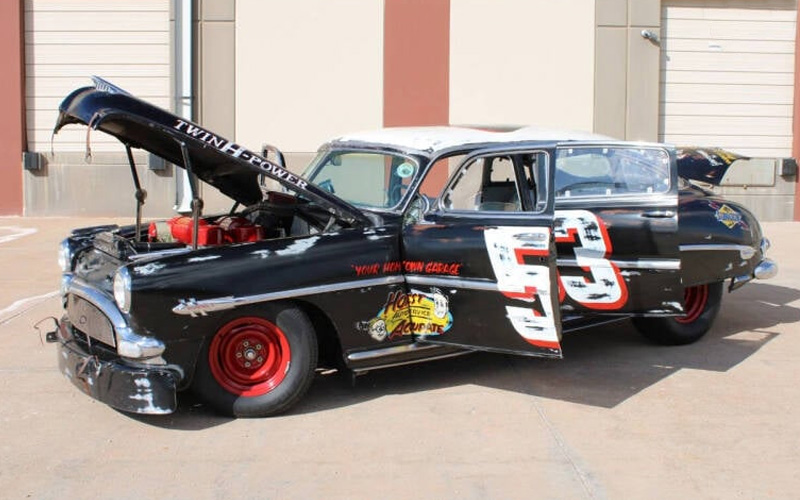
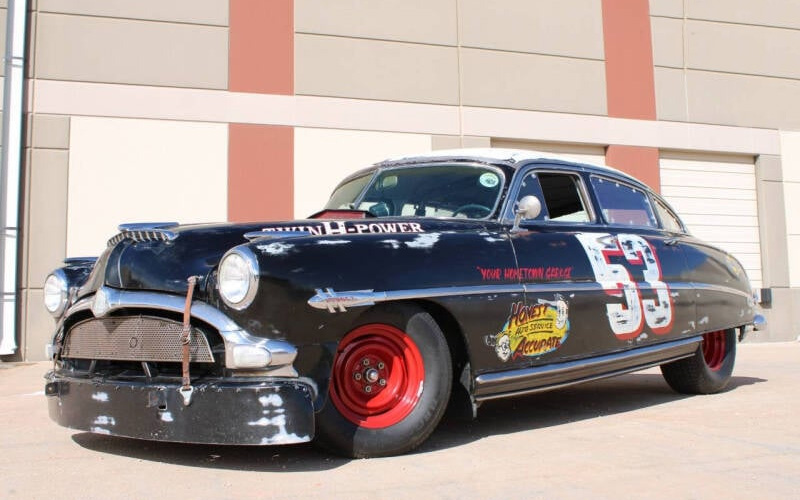
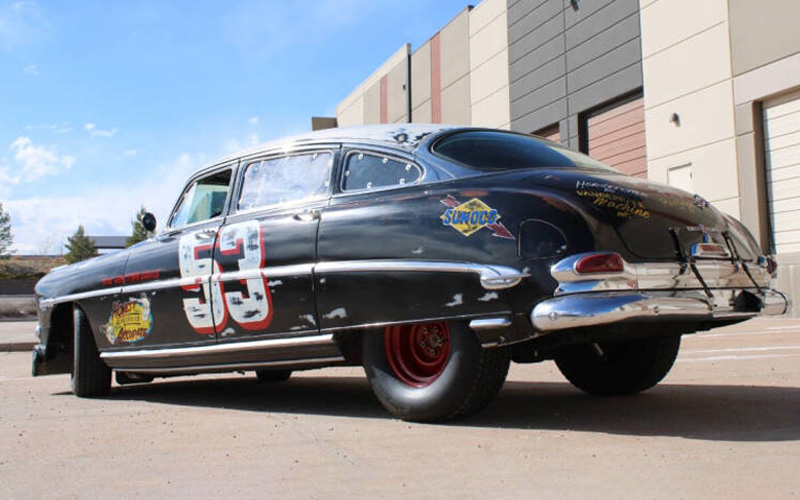
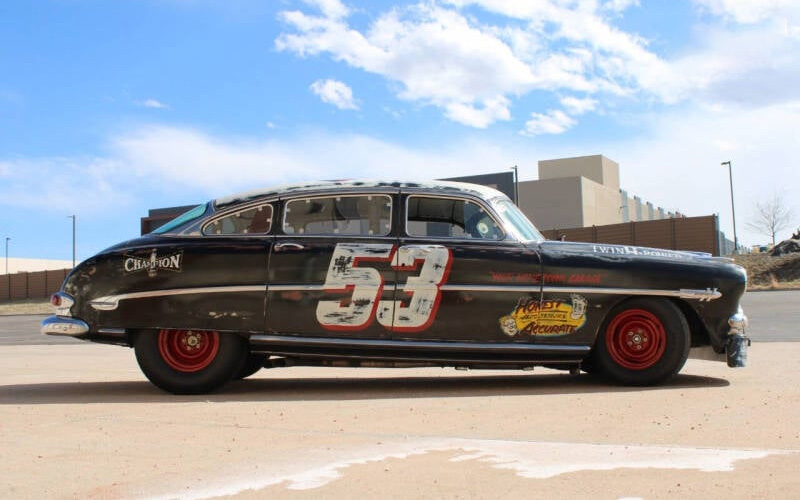
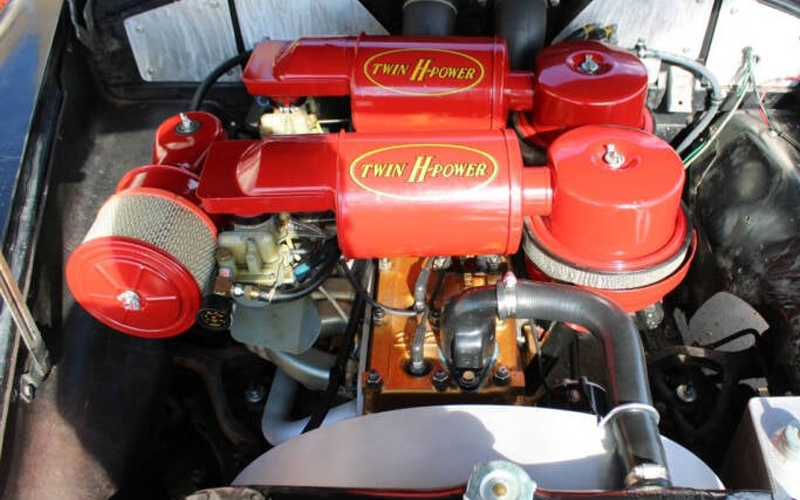
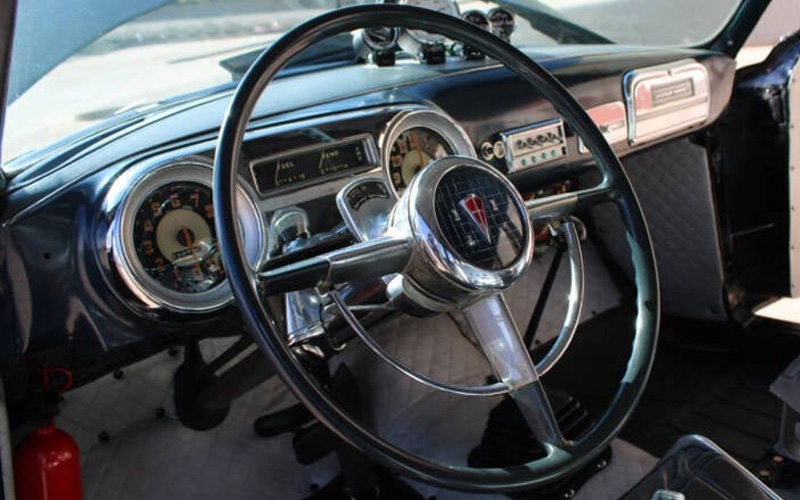
In honor of this storied history, this 1953 Hudson Hornet has been converted into a NASCAR tribute car, emulating down to the last detail those racers of old. This example is done in a black and white racing livery (number 53 to signify the car’s year). The interior is finished in stainless steel with black vinyl upholstery. Under the hood is an upgrade 364 cu.-in. straight six, perched atop are the Twin-H-Power intakes. Power is fed to the wheels via a 700R4 automatic transmission with overdrive. The car rides on new radial tires wrapping custom recreation wheels.
This thoroughly details tribute car evokes the early days of NASCAR and one of their greatest and most indelible legends. This 1953 NASCAR tribute Hudson Hornet is available for $73,000.