Latest News
2026 Ford Maverick Review
The drive-in movie theater combined two of America’s greatest passions: motorcars and movies to create indelible cinematic memories.
At the Drive-In
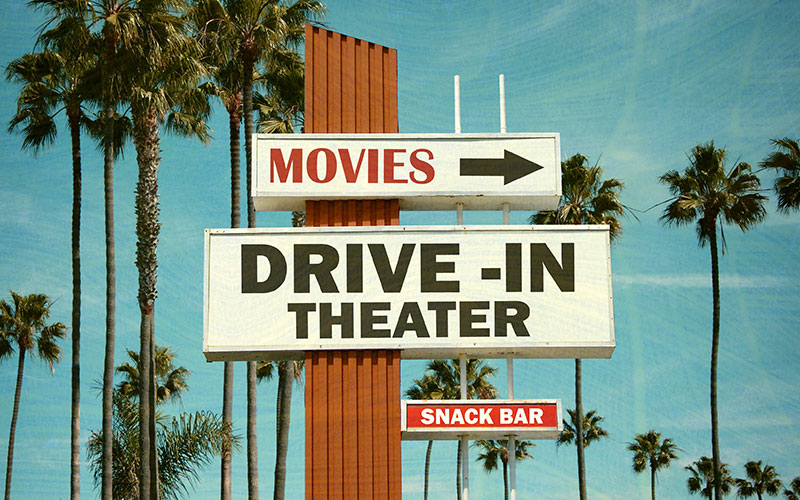
You would be hard pressed to identify two more quintessentially American pastimes than motoring and moviegoing. Americans have a particular affinity for their cars and the automobile has long been an extension and expression of the owner’s personality here in the US. Likewise, Hollywood movies are America’s myths, their stars our Olympian heroes. Film is where our collective culture is stored, on those silver screens of past and present.
The drive-in movie theater combines both of these essential American elements into something so steeped in Americana you might as well be cruising down Route 66 in your Ford Mustang sipping a Coke and eating apple pie while listening to a mix tape of Hank Williams Sr., Louie Armstrong, and Aretha Franklin.
Today, we look back at the rise and fall and modest resurgence of the drive-in movie theater.
Early Days
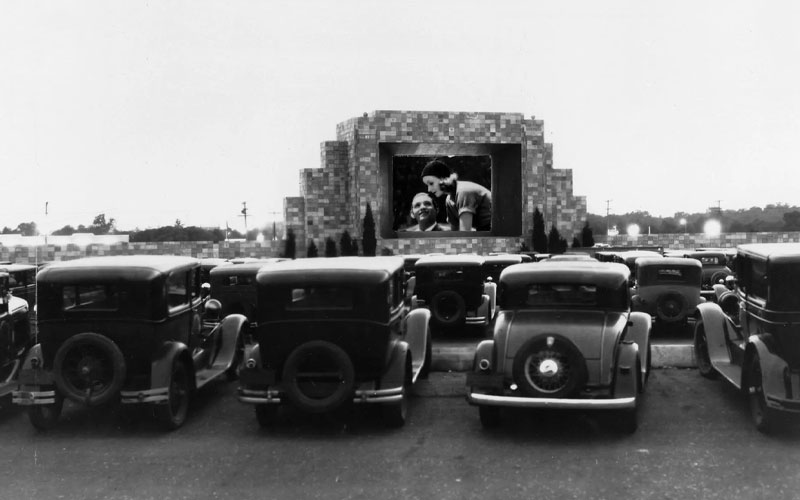
The drive-in had its beginnings in Camden, New Jersey in 1933. One Richard Hollingshead, a salesman at his father’s auto parts store, came up with the idea after his mother complained that theater seats were too small and uncomfortable for her. Hollingshead’s initial proof-of-concept involved seating his mother in the family car, mounting a Kodak projector on the top of the car, and using a screen nailed between the trees in his back yard. He even experimented with putting rearward cars up on blocks to ensure an unobstructed view of the screen, these later evolved into ramps when Hollingshead had his drive-in theater idea patented.
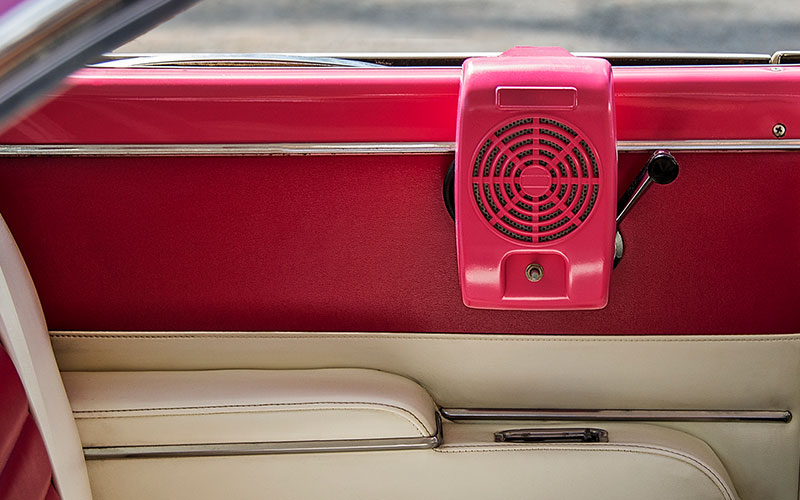
The first movie shown at Hollingshead’s new drive-in theater was a British comedy called Wives Beware. He charged 25 cents per car and an additional 25 cents per passenger. Hollingshead’s patent did not hold up over time, but the idea of a drive-in theater began to catch on, especially in the post-war years of the late 1940s. The in-car speaker, typically hung from the car’s window, was introduced in 1946.
Heydays of the Drive-In
The rise in popularity of drive-in theaters coincided with the growth in automobile ownership in the US during the 1950s and 1960s. Drive-ins were pitched as a family friendly activity. The semi-private viewing from one’s own car meant mom and dad did not necessarily need to get a sitter for the kids. In fact, Hollingshead’s original pitch had been: “The whole family is welcome, no matter how loud the children are.” Estimates vary, but by the middle 1950s there were between 4,000 and 5,000 drive-in movie theaters operating in the US.
The Decline of the Drive-In
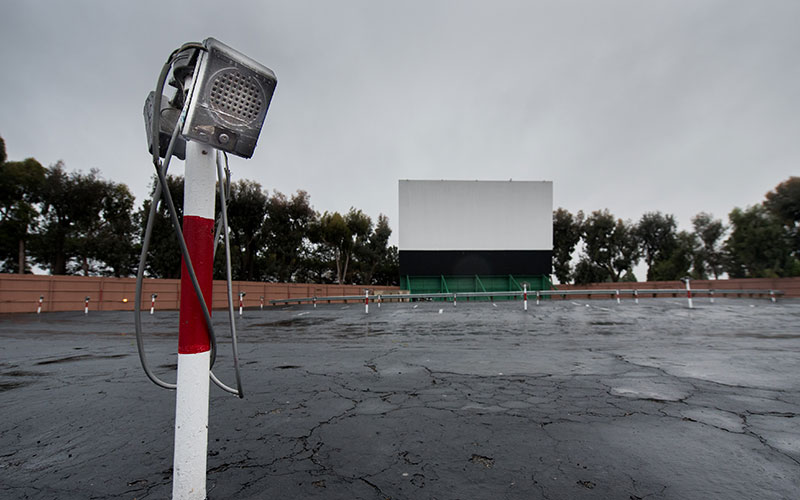
As with motoring and movies, the drive-in was bound to change. The twin forces of economics and technology each had an effect. Drive-ins were typically built on the outskirts of town due to their substantial footprint (depending on the number of screens, anywhere from 15 to 30 acres). But as the suburbs expanded in the 1960s and 1970s, the value of the land that drive-ins sat on rose and owners found the opportunity to sell out to be a lucrative one.
The introduction VHS in 1976 radically changed Americans movie-going habits. For the first time, movie fans could simply buy or rent their favorite movie and watch it at home rather than wait for the local theater to show it. As traditional movie theaters began taking a hit, drive-ins did as well.
And then there were the natural weaknesses of the drive-in model itself. Because they are shown outdoors, drive-ins are a summer activity in much of the US. This means late start times as proprietors needed to wait for the sun to set before starting their first showing of the evening. This put them at a natural disadvantage to traditional theaters that could do matinee showings in the afternoon and early evening. Drive-ins were also limited as to the number of screens a theater could operate. Many were single screen operations with rare exceptions being multiplex.
During the 1970s and 1980s, drive-ins, once the home of family-friendly blockbusters, began shifting toward B-movies, horror, and exploitation flicks. Partly this was thanks to distributors and studios taking the new premiers to traditional theaters that had more seats and could do more showings per day. By the 1990s and early 2000s, the number of drive-in theaters dwindled from thousands to hundreds nationwide.
Drive-Ins Make a Comeback
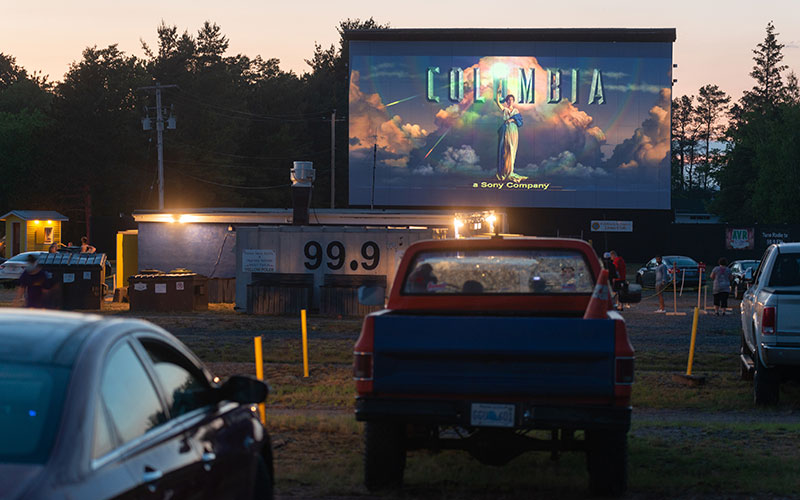
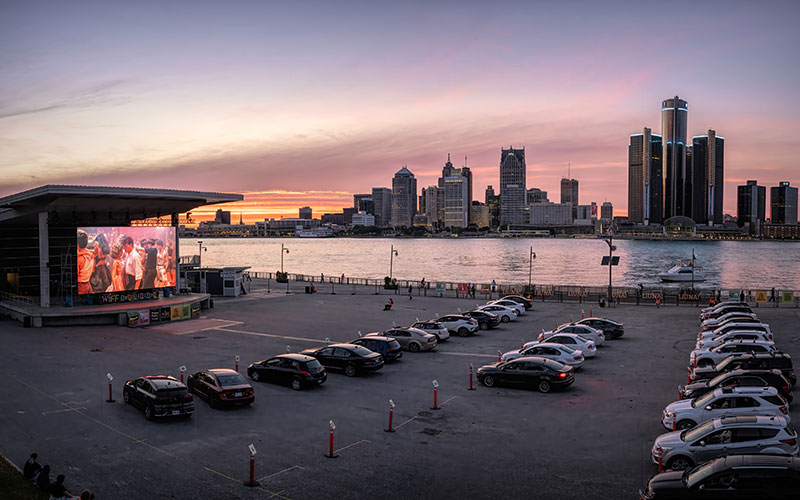
Yet Americans’ thirst for nostalgia is unquenchable. That nostalgia felt by older generations for the drive-in theater is matched by the sense of novelty felt by younger generations. The pandemic of 2020 saw a renewed interest in the naturally socially distant mode of movie going, with new pop-up style drive-in presentations cropping up all over the country. Today, there are around 400 drive-in theaters operating in the US (again exact numbers vary). While still mostly an American phenomenon, drive-ins have cropped up in Australia and the UK, in parking lots in densely populated Japan, and even in car-loving China.
The drive-in theater was a unique twist on the moviegoing experience. Drive-in theaters were family friendly and communal but also offered an exciting night out for teenagers, whether they were interested in courtship or other forms of mischief. The heart of the drive-in was in the buzz of the neon lights, the crunch of gravel under your tires, the slight stickiness of the concession stand’s counter, the waft of popcorn on a summer’s evening breeze, that dark beckoning no-mans-land between the cars, and it all dwarfed by that massive screen magnifying those larger-than-life stories, making them all the more monumental, all the more memorable.