Latest News
2026 Ford Maverick Review
GM’s Motorama of the 1950s was the company’s showcase for innovative concept cars featuring wild Space Age designs and out-of-this-world tech.
Visions of the Future
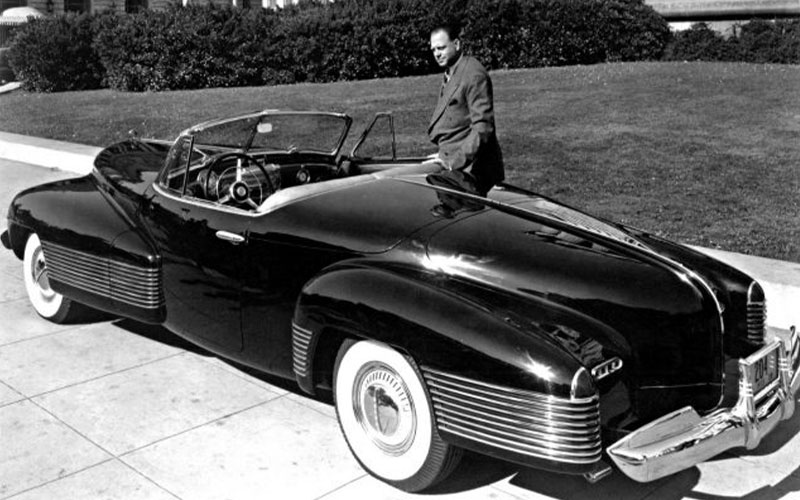
Today, automakers use car shows like those held annually in LA, Chicago, and New York to present their upcoming vehicles and showcase concept designs used to both stoke interest in the brand and debut innovative designs and technology. But for there to be car shows today, they needed to be pioneered. GM’s long-time design chief Harley Earl sparked the phenomenon of the concept car back in 1938 with the Buick Y-Job, a non-production car used to stoke publicity and field new engineering. Earl expanded on his concept car idea with a company trade show that would introduce novel vehicle designs to the public, drumming up interest in GM brands and plenty of press.
GM’s Motorama, the company’s auto show, began before it was given that name. In 1949, GM presented their Autorama at the Waldorf Astoria Hotel in New York City as an eight-day affair featuring 32 vehicles and concepts. The “Motorama” name was first introduced in 1953. This show featured some of the most significant concept cars of the Motorama heyday of the middle 1950s including the first Wildcat concept and the first Firebird concept.
Amid the Jet Age, many Motorama designs took their cues from aerospace and aeronautics with jet-like wings, bubble cockpits, and slip-stream fuselages. Though the wildest designs were never intended for production, a good many elements from Motorama concept cars did influence eventual production vehicles. Below we delve into the history of some of Motorama’s most ambitious and outlandish concept cars.
1951 Buick La Sabre
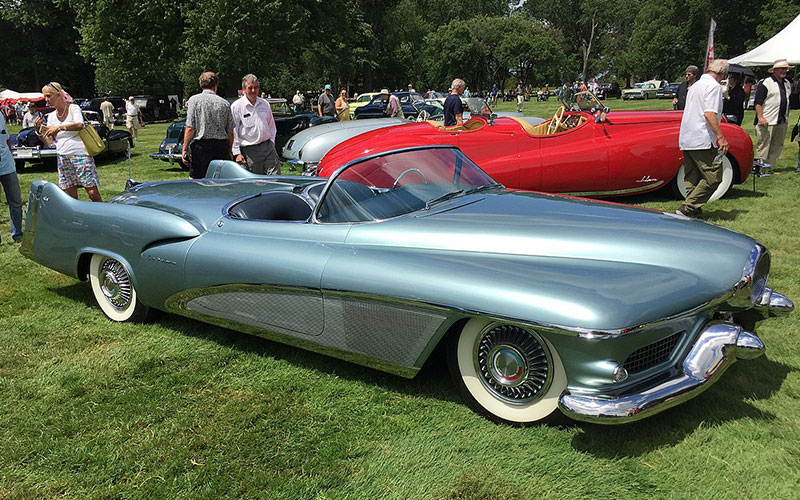
One of the early Jet Age designs that would come to predominate at Motorama was the 1951 Buick La Sabre. The La Sabre featured the first wraparound windshield design, one that saw adoption throughout GM’s lineup in the years to come. Among the aeronautical influences, the La Sabre had a faux jet intake nose that concealed a set of hidden headlamps and a pair of prominent tailfins. Technological innovations included heated seats, a rain-sensing automatic convertible top, and a 12-volt electrical system. Under the hood was a supercharged V8 engine that could run on either gas or methanol. As you probably know, the La Sabre name was picked but by Buick starting in 1959 as the next evolution of the Buick Special.
Buick Wildcat I, II, III
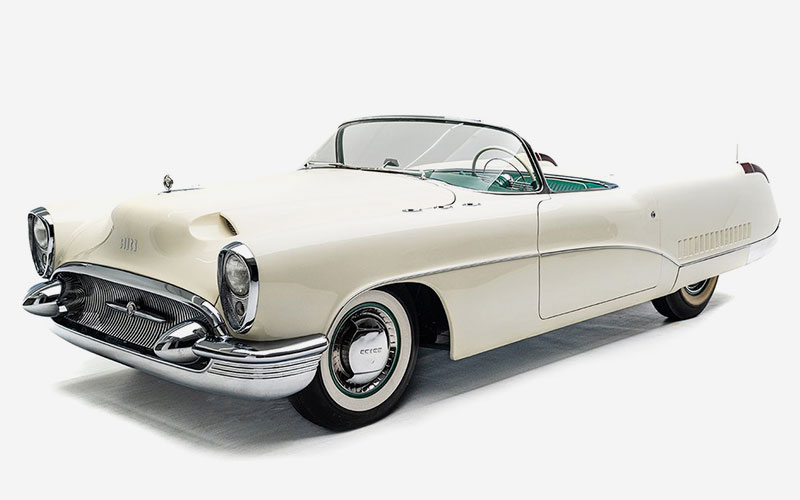
The Wildcat name is a storied one in Buick history, applied to their full-size offering in the 1960s and re-emerging recently on an all-electric concept. Buick first used the Wildcat name on a concept at the 1953 Motorama. The car featured a fiberglass body like the Corvette and a hydraulically actuated fold-away roof. Like Rolls-Royces, the Wildcat had Roto-Static emblems on its hub caps that kept them stationary as the wheel around them turned.
GM followed up with the Wildcat II in 1954, again at Motorama. This time the car had a semi-open wheel design, floating headlamps, and long arcing fenders. Only those weren’t technically fenders but instead part of the clamshell hood. The Wildcat II was built on the same chassis as the Corvette and ran a supercharged Buick V8. The next Motorama had another Wildcat concept. The Wildcat III had a more conventional design, much closer to an actual production car.
GM Firebird I, II, III
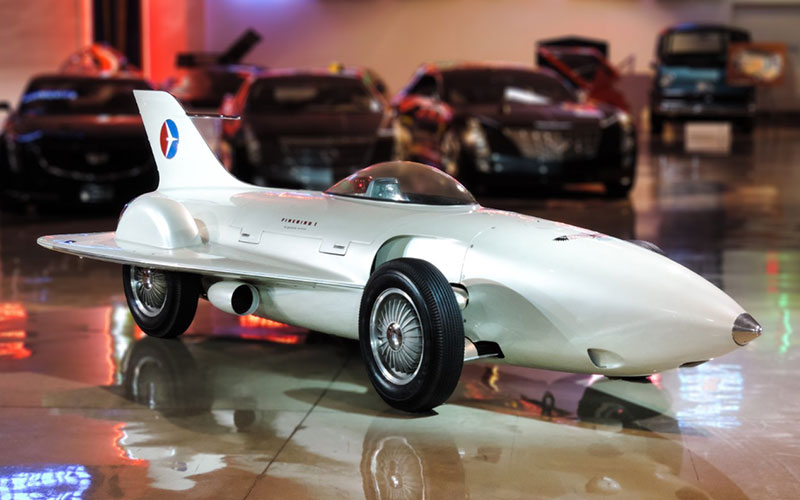
The early 1950s were the height of the Jet Age and inspired carmakers to experiment with novel alternative forms of propulsion. GM’s Firebird concept, debuting in January of 1953’s Motorama, arrived just months before the Chrysler Turbine car, making the Firebird the first gas turbine car. Not only did the Firebird have a jet-like powertrain, but it also had a jet-like fuselage, nosecone, and tailfins to match. The gas turbine engine made 370 horsepower and rev’d to 13,000 rpm (idling at 8,000 rpm). The Firebird’s body design was tested at the California Institute of Technology wind tunnel. GM had hoped to test the car to near its theoretical top speed of 200 mph, but a crash early in testing put that notion on ice.
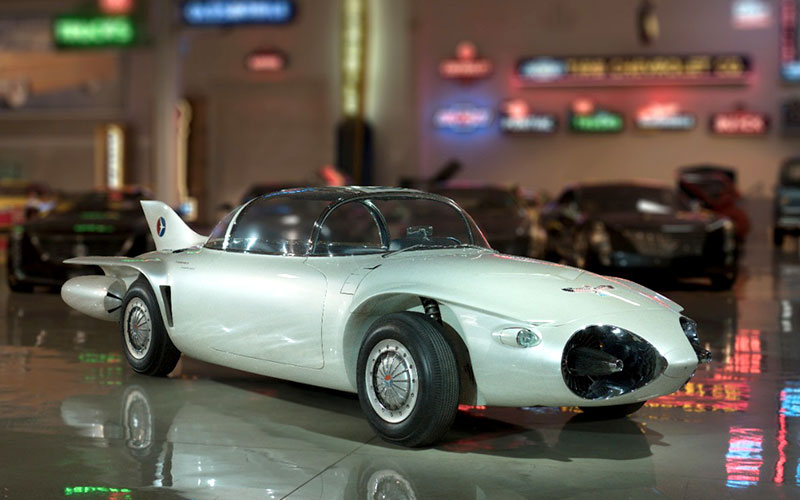
The Firebird II arrived in 1956 with a more efficient regenerative turbine engine and a new titanium body in place of the prior fiberglass reinforced plastic of the Firebird I. The Firebird II was packed with novel features that eventually made their way to the mainstream like a rear-view camera system and a four-wheel auto-leveling suspension. The Firebird even had sensors to detect wires embedded in the road that would guide the vehicle automatically on a “Highway of the Future” we’re still waiting for.
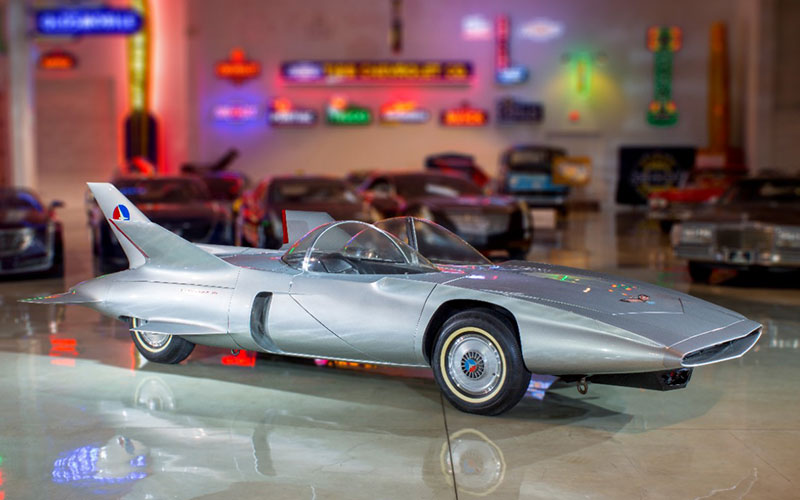
The Firebird III debuted at the 1958 Motorama with a double bubble cockpit and a new GT-305 Wheelfire turbine engine. Though equally as audaciously designed, the Firebird III did contribute to later GM designs including the ’59 and ’61 Cadillacs. Just as Chrysler found with their turbine car, GM was never able to get such an engine to run cool enough or efficient enough to be practical for a mass-produced car.
1954 Pontiac Bonneville Special
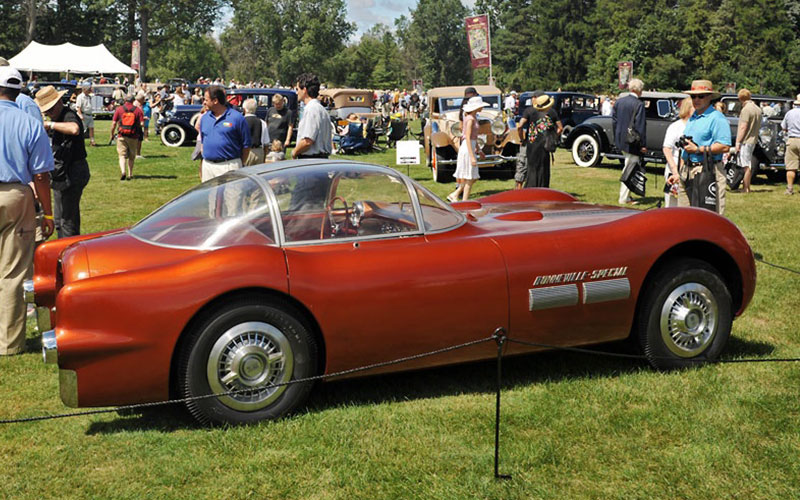
The Pontiac Bonneville Special of 1954 was thus dubbed after the Bonneville Salt Flats of Utah, a popular site for highspeed testing and land speed attempts. The Bonneville special had a Space-Age bubble canopy and a faux jet exhaust on the rear end. Such was its aeronautical influences, that designers went so far as to recycle scrap airplane instrumentation for the cabin. Under the hood was a rather old-fashioned 4.4L straight-eight engine.
1955 Buick La Salle II
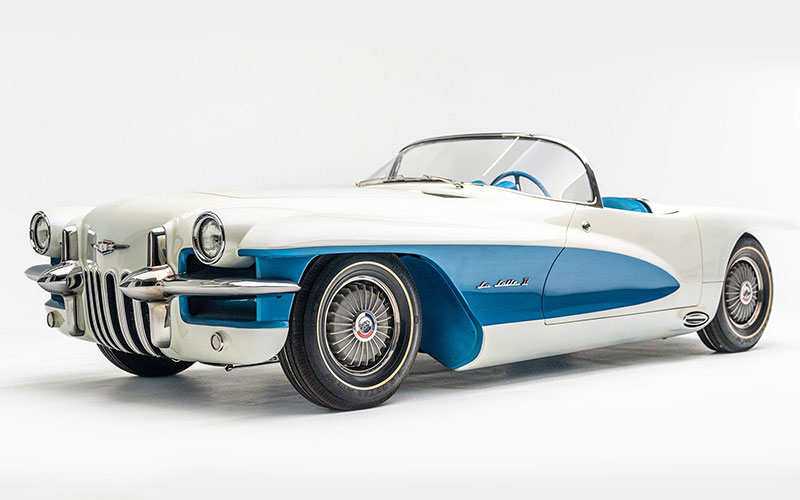
Harley Earl had a particular fondness for the Cadillac La Salle of the 1930s and wanted to reimagine the car in concept form for the 1955 Motorama. The new La Salle II roadster and La Salle II sedan pioneered the scalloped side feature that was shared with other concepts like the Biscayne of the same year and later adopted by the refreshed 1957 Corvette. The roadster version had Corvette-like dimensions as well but a vertical grille design that harkened to those of the 1940s. Following the Motorama show, both cars were designated for crushing but instead languished on a salvage lot for over 30 years before collector Joe Bortz discovered them in the 1990s. Bortz restored the roadster to its former glory, even showing it at Pebble Beach Concours in 2008, but left the sedan with its accumulated patina, a reminder of those lonely years spent at GM’s Warhoops Salvage Yard.
1956 Buick Centurion
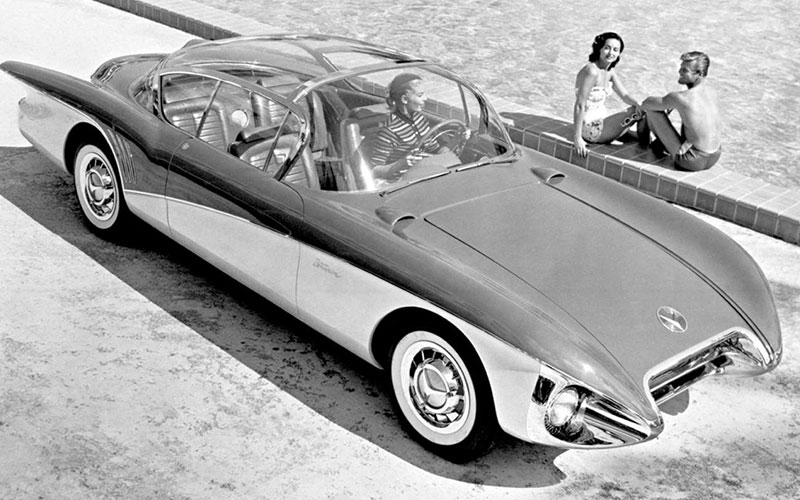
The Buick Centurion was another Jetsons-like plexiglass bubble topped concept, this time from the 1956 Motorama show. The Centurion had automatic swiveling bucket seats that shifted when the doors were opened to ease ingress/egress. It too had a rearview camera, a large front intake, and a faux jet exhaust in back. While the ideas weren’t exactly new by 1956, the Centurion did well to encapsulate and refine earlier Jet-Age Motorama concept designs. The name Centurion eventually made its way, however briefly, to a production Buick from 1971 through 1973.