Latest News
Famous Cars: Patton’s Willys JeepThis ‘71 Ford Bronco Keeps It Real (Original)
When most vintage Broncos have already gone the restomod route, this 1971 example has remained staunchly, defiantly original.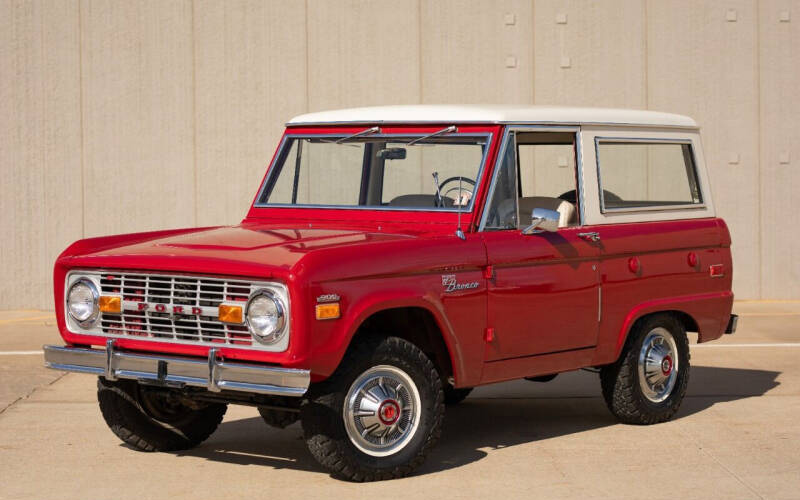
Resto-Me-Not
As it is in fashion and music, so it is in car collecting: trends, both mechanical and aesthetic, quickly and forever transform how we look at and think about a vehicle. Seemingly overnight, new trends inextricably link novel modifications to familiar cars to create new automotive associations. This is how we know ‘50s Mercs are for lead sledding and Impalas for lowriding, that Model As are for rat-rodding and B-Series Hondas for stancing.
A recent automotive trend has seen the emergence of the first-gen Ford Bronco as a blue-chip classic car with its distinctive boxy styling and first-gen status attracting legions of collectors. As with practically any classic from the 1950s through 1980s, restomodding, simultaneously restoring and modifying, has become standard practice when it comes to first-gen Broncos.
The tried-and-true formula for restomodding a gen-one Bronco invariably involves replacing the old 289 or 302 V8 with a Coyote 5.0L crate motor and raising the suspension by several inches, along with plenty of bodywork and interior refurbishments.
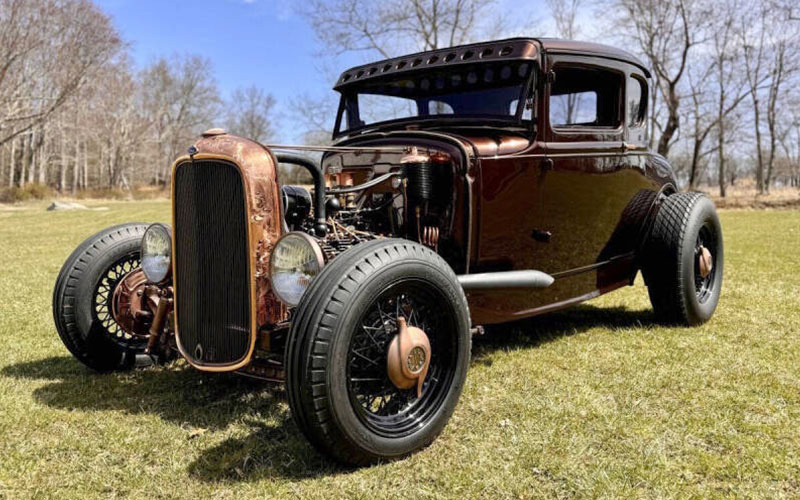
So popular has been the restomod trend that the market for first-gen Broncos now resembles that of Ford Model As, where only a minority of examples remain original and unmolested. Prices well into six-digit territory for restomodded gen-one Broncos will do that….
The above is why the 1971 Ford Bronco we found on Carsforsale.com caught our eye. This example is one of those few unmodified gen-one Broncos that are become increasingly rare. The question is, does it call for the restomod treatment or maybe just a return to factory form?
Gen-One Bronco Background
The Ford Bronco, debuting for the 1966 model year, was conceived by Lee Iacocca and his team at Ford (Don Fry, Paul Axelrod, et al.) as their answer to the Jeep, Land Cruiser, and International Scout, i.e., a small but rugged 4×4 that would appeal to adventure-minded young folks. Their differentiator for the Bronco would be its relative cushiness. The 1960s Jeep was about as stripped down as a vehicle could get before being categorized as farm equipment. The Bronco’s coil-sprung front-end suspension provided a level of on-road drivability that the leaf-sprung Jeep couldn’t match.
The Bronco was offered as either a roadster, a half-cab “Sport Utility” pickup, or “Wagon,” the latter coming with a fiberglass removeable top. Engines included a 170-cu.-in. straight-six, replaced for 1973 with a larger 200 cu.-in. version, and a 289-cu.-in. V8 that grew to 302 cu.-in. starting with the 1969 model. The Bronco’s 92-inch wheelbase allowed for great low-speed maneuverability on-road and off.
When it became GM’s turn to build their own version of the Jeep, they wisely decided to make use of their basic C/K Series pickup truck chassis as the basis for the Chevy Blazer. It was roughly 30 inches longer than the Bronco, around 1,000 lbs. heavier, and began quickly outselling the Bronco. Ford’s response was to up-size the Bronco to its full-size ½-ton truck platform for the 1978 model. While the bigger second- and third-generation Broncos have their own unique charms, it’s the modest dimensions of the first-generation that have helped make the original Bronco the hottest of commodities among classic 4x4s.
This ’71 Ford Bronco
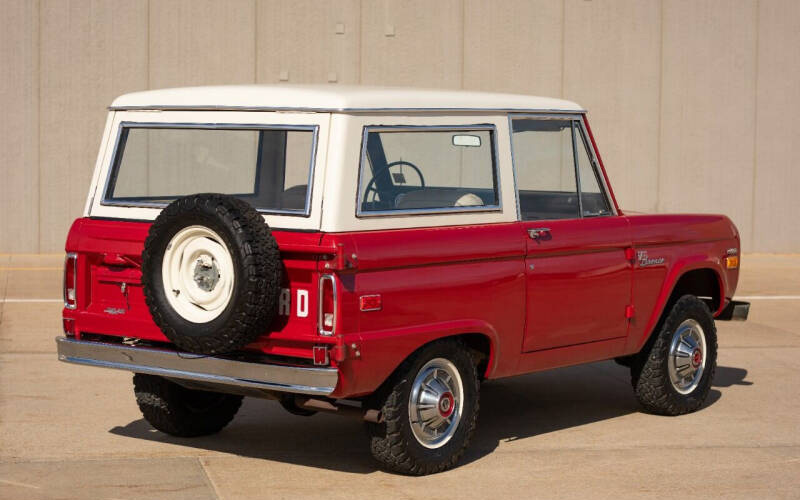
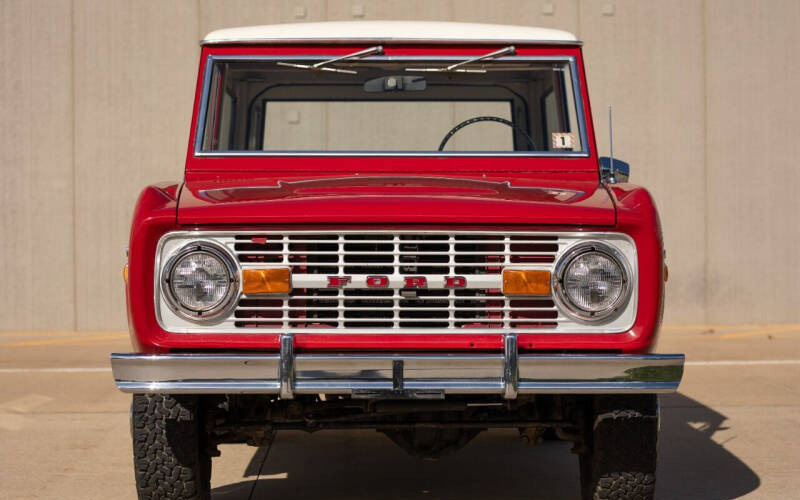
This 1971 Ford Bronco reminds us of just how simple and barebones the first-generation Bronco really was. Under the hood is a 302 V8 which is paired to the standard, column-shifted three-speed manual transmission. Unlike almost every Bronco of a similar vintage, this example’s suspension has not been lifted.
The factory white hardtop contrasts with the Candy Apple Red paint job, it too being original. The cream-white upholstery is likewise original to this Bronco, as are the hubcaps and fifth-wheel spare. The interior is in excellent condition despite its age. Most significant of all, this Bronco carries only 46,406 original miles on the odometer.