
Latest News
2026 Honda Ridgeline Review
Trading in your current vehicle can be a great way to ease your overhead costs and get you closer to a deal on a new one. Here’s what you’ll need to know.
The Basics

Doing a trade-in deal as part of a new vehicle purchase is usually pretty straightforward. You’d just let your salesperson know that you’re planning on trading in your current vehicle as part of the deal. The dealer will usually want to do an inspection of the vehicle’s condition before making an offer. Once they’ve completed their appraisal, they’ll make an offer on the vehicle and you’d used that equity against your new vehicle purchase.
That’s how things have typically gone. But these are not typical times in the automotive industry. Current inventory shortages have driven up demand for used vehicles. This means the value of your trade-in may be higher than normal. And, thanks to that lack of inventory, an offer that includes a trade-in will be more attractive than a competing offer without one.
Benefits of Trading In

The benefits of trading in your car on your next vehicle purchase are manifold.
- Equity: First, there’s capitalizing on the equity you’ve built up with your current vehicle. Tapping that equity can substantially reduce your out-of-pocket costs on your next purchase.
- It’s Easier: This is the big one. Often people preferring trading in their vehicle because it’s simpler than the hassles involved in selling it themselves. Dealers will handle the paperwork for you (though there may be a fee in some cases).
- Lower Sales Tax: In some states at least, sales tax is accessed after the difference of your trade in has been factored in. For example, if your new car is listed at $25,000 and you trade in your old vehicle at $5,000, the purchase price taxed will be $20,000.
- It’s a Seller’s Market: As alluded to above, dealers are desperate for inventory right now. Having a vehicle to trade in can be the difference between a dealer taking your offer versus someone else’s.
Trading In a Car You Owe Money On
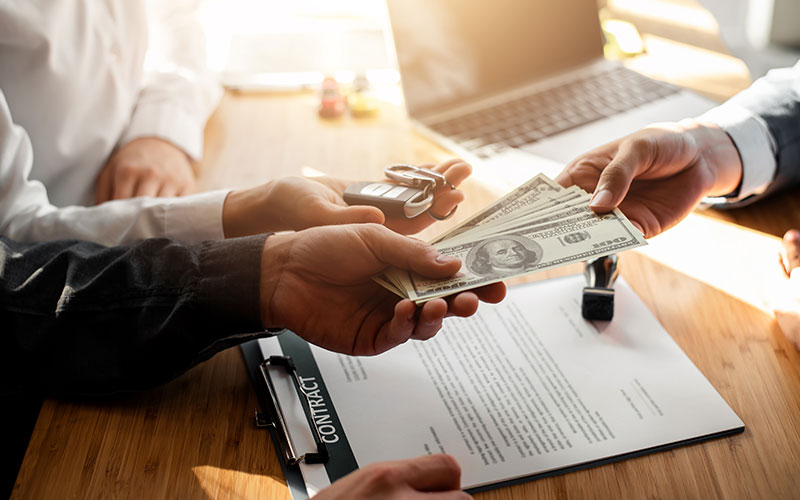
One common question is: can I trade in a car that I still owe money on. The answer is yes, and the process is simpler than you might think. If you have positive equity on your current loan, the difference between your loan balance and the value of the vehicle will be applied to your new loan. For obvious reasons, this works better the more equity you’ve already put into your old vehicle. It’s important to check with your lender as to what your loan’s pay-off amount is because that can differ from your current balance thanks to fees and other fine print.
While it’s perfectly advisable to trade in a financed vehicle with positive equity, the opposite is true for a loan that currently exceeds the value of the underlying vehicle. When the current market value is less than your loan balance this is known as being “underwater” on the loan. While dealers will gladly offer to roll that difference into the new loan, it’s usually best to decline such an offer. Rolling old debt into a new loan with an even higher balance means you’ll be paying interest on that same money for even longer. Plus, your new loan would also be “underwater,” thus perpetuating the same cycle.
Key Steps When Trading In Your Car
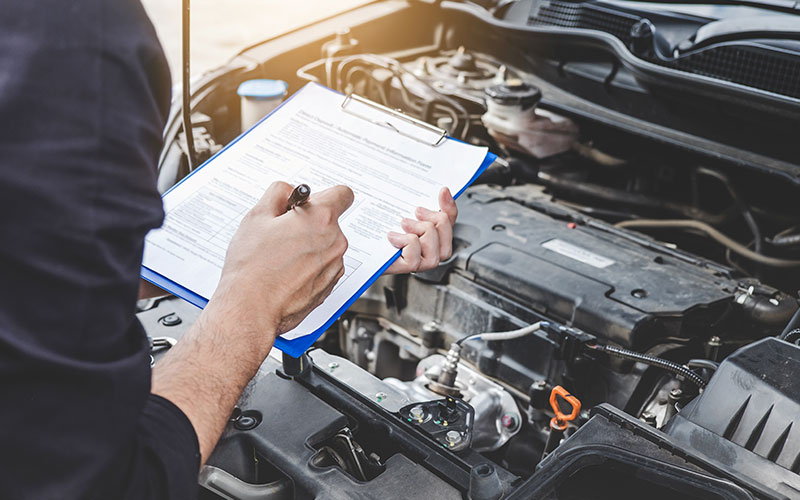
Once you’ve determined that trading in your vehicle is the right move, here are the steps you’ll want to take.
- Inspection: Take your trade in vehicle to an independent mechanic and have it evaluated. It’ll be important to know its current mechanical condition and any needed repairs.
- Valuation: It’s recommended that you shop around and get multiple offers on your trade in to determine its real value. Remember, since you’re not selling it to a third party, you won’t be getting current market retail. Adjust your expectations accordingly. Given current high demand, you may even be able to get dealers to make you at least a general offer over the phone rather than needing to take it in for a formal inspection. A final note, if you can, get any offers you can in writing. This will help during final negotiations.
- Paperwork: Make sure to gather any maintenance paperwork you can. Receipts of regular maintenance, new tires, and any repairs can bolster the value of your trade-in as a well-cared-for vehicle.
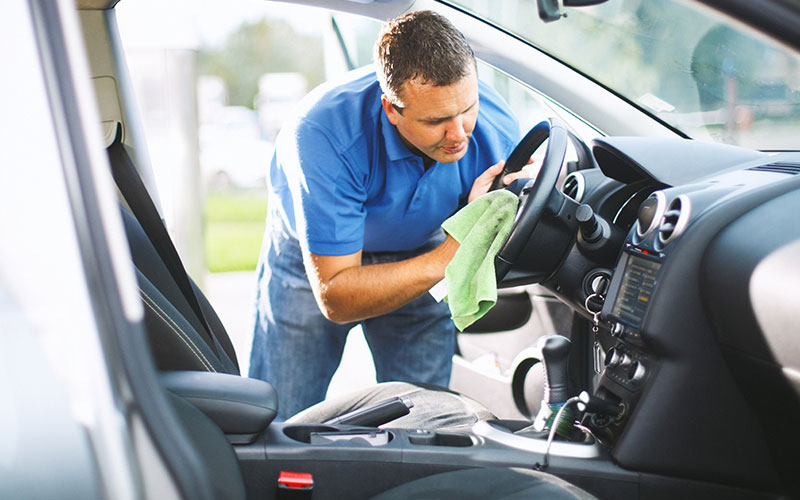
- Stage It: Before you get your vehicle appraised, clean it thoroughly inside and out and fix any superficial problems. Don’t worry about repairs though. Dealers will often take less off the value of your trade-in than the retail costs of a repair.
- Hit the Reset Button: By the same token, once you’ve inked the deal to trade in your vehicle make sure you’ve cleared it of all identifying information. This means clearing any GPS info, addresses, phone numbers, and the like. This also means doing things like canceling your satellite radio subscription and resetting the garage door opener. And finally, remove all personal affects from the vehicle: maps, kids/dog toys, old Creedence tapes, etc.
- Negotiate: Though many car buyers hate this part the most, it’s important to negotiate your trade-in deal. Make sure to keep each number, the purchase price and the trade-in offer, separate in your mind and in negotiations. Salespeople will often bundle the two and then tell you what a possible monthly payment would be. Concentrate on the purchase price and the trade-in value as separate numbers and focus on them to the exclusion of prospective monthly payments. It bears repeating here, you won’t be getting full retail value from your trade in, so temper your expectations accordingly during negotiations. Here’s our advice on how to negotiate your next car purchase.
As we mentioned at the outset, with inventories where they are, you may be able to get a better deal now than ever on your trade-in. To do so, you’ll need to know what the market trade-in value is on your vehicle, have competing offers, and be willing to negotiate in good faith. And remember, no matter the currently hot market, a trade in deal is only as good as the new car you’re trading for, so shop wisely.