First Foreign Import Cars
Many of the most successful and familiar foreign car brands in the US had humble, even disastrous beginnings.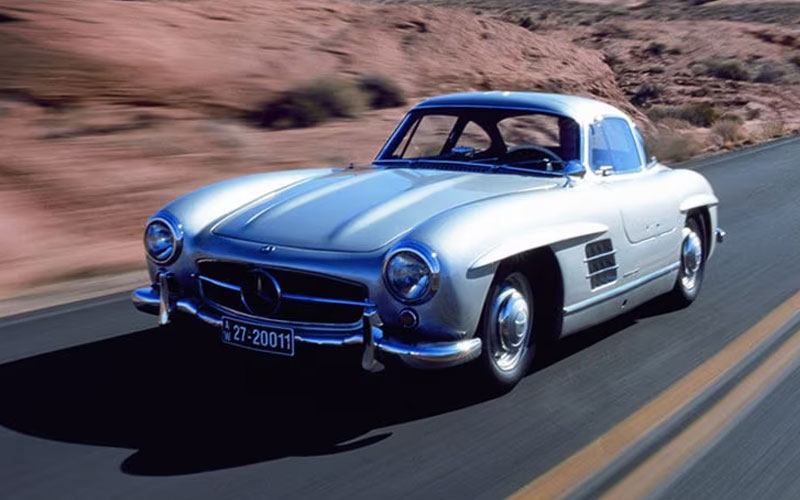
First Impressions
First impressions can be critically important in both life and business. Surveying the earliest introductions of foreign import cars to the US it’s clear some brands, like Porsche for instance, arrived ready to put their best foot (tire?) forward and were quick to gain popularity. Others, like BMW and Toyota, had shakier starts requiring years of market research and product development prior to finding success here in the States. Some of the first imports from these famous brands are well-known classics like the Mercedes-Benz 300 SL, yet more are unfamiliar early forays obscured by time and decades’ worth of more successful models.
Hyundai Excel (1986)
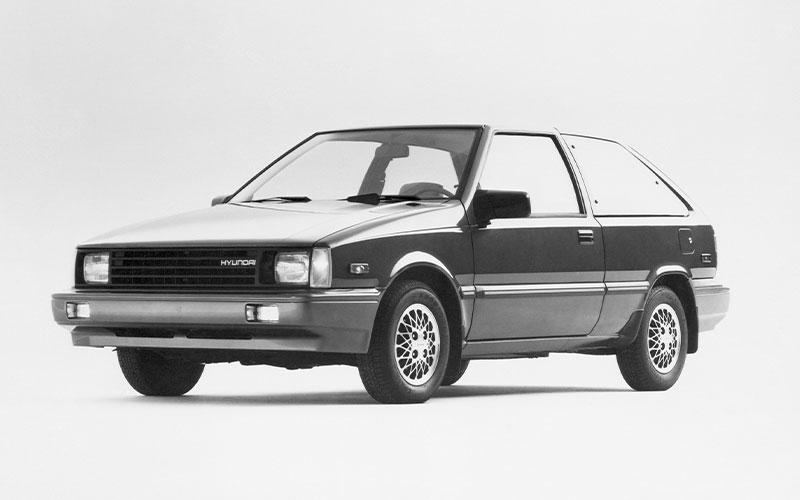
The South Korean carmaker Hyundai, along with its sister brand Kia, has quietly become one of the premier foreign car companies in the US with hits like the Hyundai Palisade and innovative, stylish vehicles like the Ioniq 5. Hyundai had humble beginnings here in the US, and among the carmakers on this list, the more recent. The Excel was Hyundai’s first introduction to America, arriving in 1986. Built as a three- or five-door hatchback or four-door sedan, the Excel was based off the Japanese domestic Mitsubishi Mirage, sold here at the time as the Mitsubishi Precis. It’s 1.5L four-cylinder made just 68 horsepower, but what the Excel lacked in power it made up for in style with a design penned by Giorgetto Giugiaro. The Excel’s styling and economical powerplant made a strong impression on US buyers with 168,822 sold in its first year on the market, setting a new sales record for a foreign import.
Mitsubishi Tredia, Cordia, & Starion (1982)
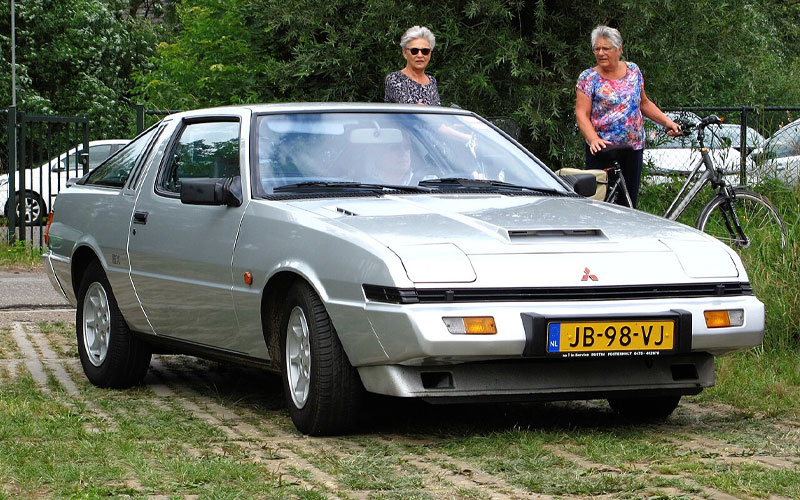
Mitsubishi chose to introduce a whole trio of vehicles when it made its way to the US in 1982. The trifecta began with the Mitsubishi Tredia, a compact four-door sedan with the choice of a 2.0L or turbo 1.8L four-cylinder engine. The Cordia was a three-door hatchback coupe with a slick digital dash and a distinctive grille design. The Starion was powered by a 2.6L turbo four-cylinder making 145 horsepower. Through a captive import deal with Chrysler, the Starion was also sold under the Dodge, Plymouth, and Chrysler badges.
Ferrari Tipo 166 Touring Barchetta (1949)
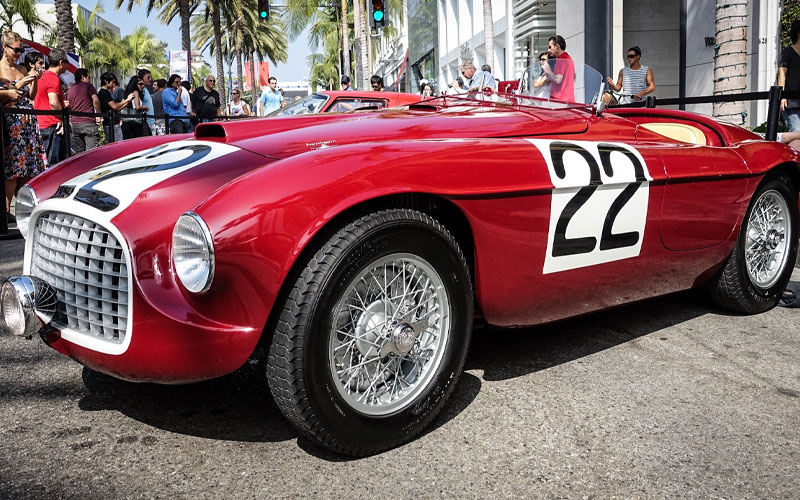
Coming out of WWII, Enzo Ferrari’s business was at a crossroads. Would he push forward with the less exciting but more predictable business of machining tools and components or dive back into his passion of building fast cars, primarily for racing. According to legend, Enzo’s friend, racecar driver Luigi Chinetti had been working in the US during the war and convinced Ferrari building fast cars was the only path forward. It was Chinetti who became Ferrari’s man in the States as the brand’s first official importer. The first Ferrari sold in the US was a Tipo 166 MM Touring Barchetta, which debuted at the Turin Motor Show in 1949 and sold to one Tommy Lee, a US radio executive. Chinetti actually drove a Ferrari 166 MM to his third victory at the 24 Hours of Le Mans that same year. How’s that for product placement?
Toyota Toyopet Crown (1958)
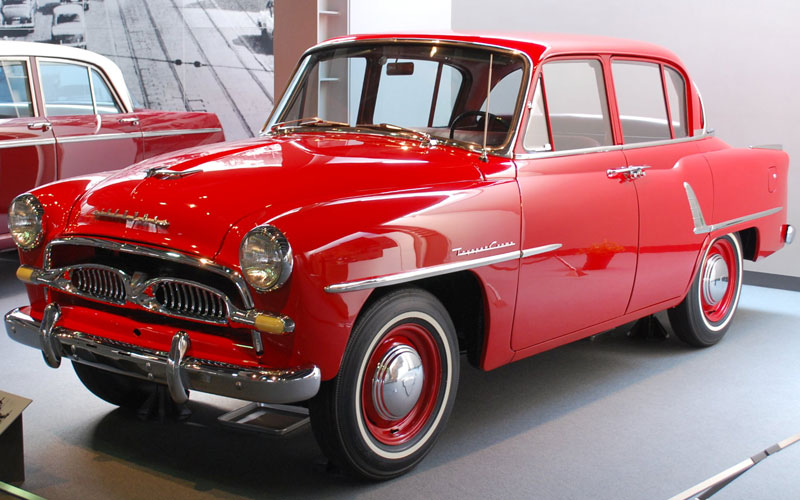
Today, Toyota is one of the biggest car companies in the world (trading top place with Volkswagen Group and Tesla, depending on the metric in question), but back in the 1950s, the company faced a highly competitive export market and labor unrest at home. Toyota’s first foray into the US market involved bringing over their Toyopet Crown, which had sold decently well in Japan. The Toyopet Crown was sold primarily as a sedan but also came in wagon, five-door SUV, and two-door coupe iterations. The Crown, while suited to the low-speed urban driving of Japan, was not well positioned for the US market of the late 1950s. The Crown’s underpowered 1.5L four-cylinder struggled to get the car up to highway speeds and once there the car would shake and shudder. The name too was a hindrance as neither “toy” nor “pet” were appealing in an age of Thunderbirds. To top that off, the steering wheel’s horn bezel placement made it impossible to take the car to many drive-ins since the trays often sat across the wheel, engaging the horn. The Toyopet Crown was pulled from the US market after 1960, but Toyota would make a successful return to the US in 1965 with the Toyota Corona.
Honda N600 (1969)
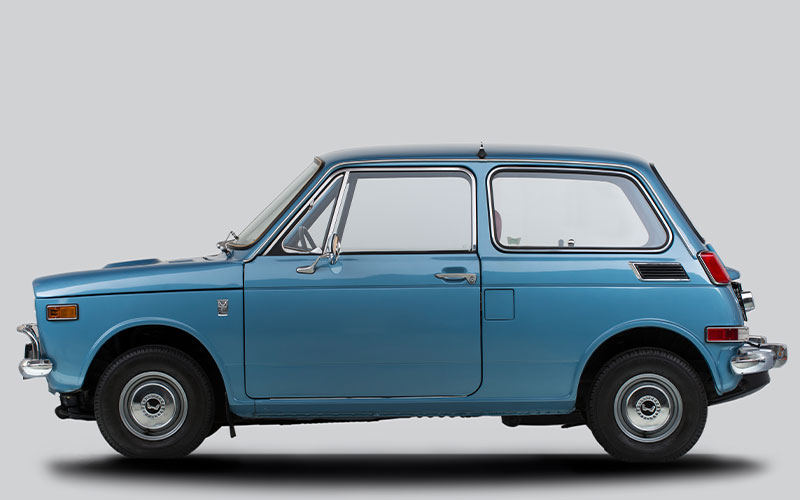
By the time Honda brought its first car to the US in 1969, it was already a familiar brand as they had been importing their motorcycles for a decade prior. Their first car in America was the N600 which was a larger, more powerful version of the N360 kei car (which was limited at the time to just 360cc). The N600 was powered by a 598cc four-stroke two-cylinder. This powerplant wasn’t immensely powerful for a car engine at just 45 horsepower, but it did rev to 9,000 rpm. The N600 was introduced in 1969 to Hawaii before making it across the Pacific to the US West Coast in 1970.
Porsche 356 (1950)
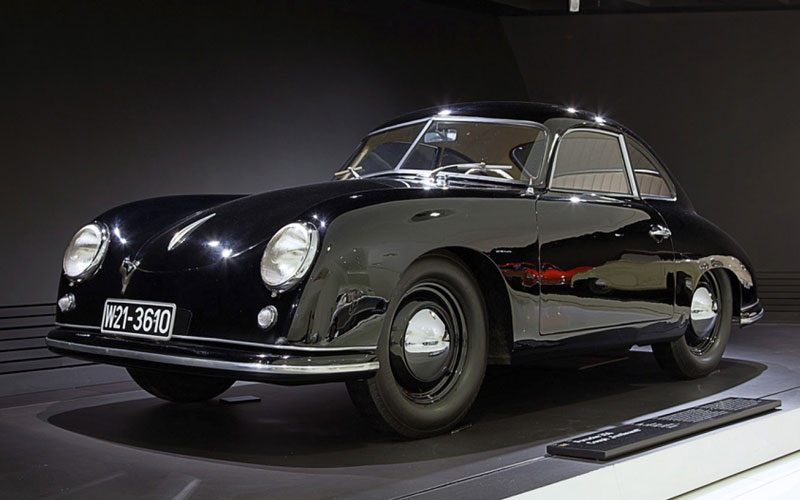
You can’t tell the story of Porsche (or German sports cars in the US) without Max Hoffman, the New York importer of fine European automobiles. Hoffman identified the sporty, aesthetic charms of the Porsche 356, importing the first two Porsche coupes to the US in 1950. The 356 was Porsche first car and a smashing success. What had been hoped as a few dozen bespoke cars a year grew rapidly to thousands through the 1950s. In a bid to further improve the 356’s marketability, Hoffman convinced Porsche to change the car’s name in the US to the Continental in 1955. Ford promptly and successfully sued to protect their Lincoln Continental naming rights.
Mercedes-Benz 300 SL & 190 SL (1954)
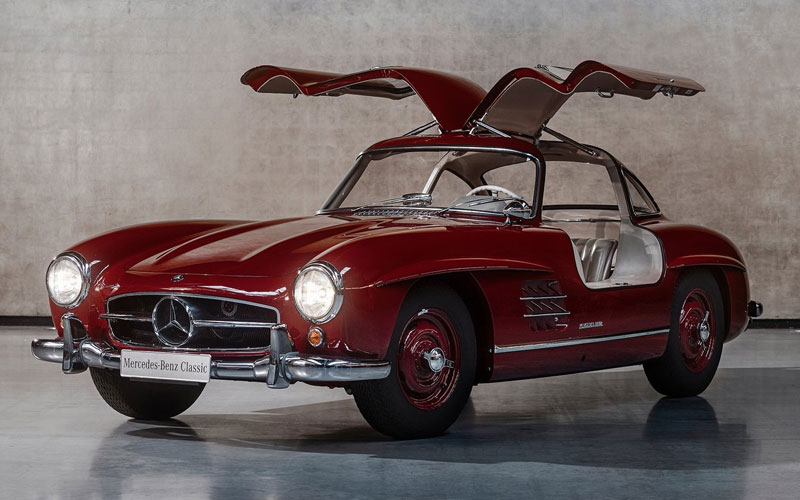
Max Hoffman was even more instrumental in Mercedes-Benz’s arrival in the US. While some cars like the luxurious Mercedes-Benz 300 S had been privately imported by the rich and well-to-do, Mercedes-Benz hadn’t made the jump to selling cars in the US until Hoffman approached them with an idea in 1952. Hoffman saw the potential for a fast and fashionable coupe in the bones of the successful Mercedes W194 racecar. Mercedes-Benz engineers then cooked up a new road-going version featuring a lightweight tubular chassis, a powerful 3.0L straight-six, and some very innovative gull-wing doors. Thus the 300 SL and 190 SL were born. At the time, the 300 SL was the fastest production car in the world at 140 mph and perhaps also the more desirable as celebrity buyers like Paul Newman greedily snatched up copies.
BMW Isetta (1954), New Class Sedan (1962)
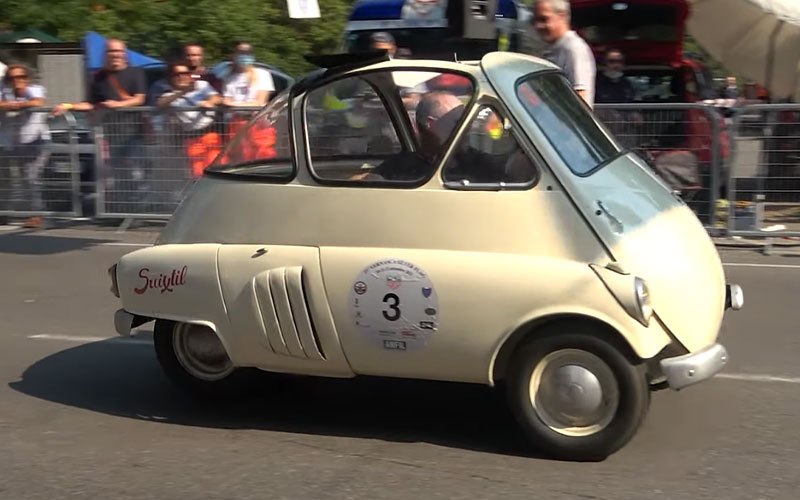
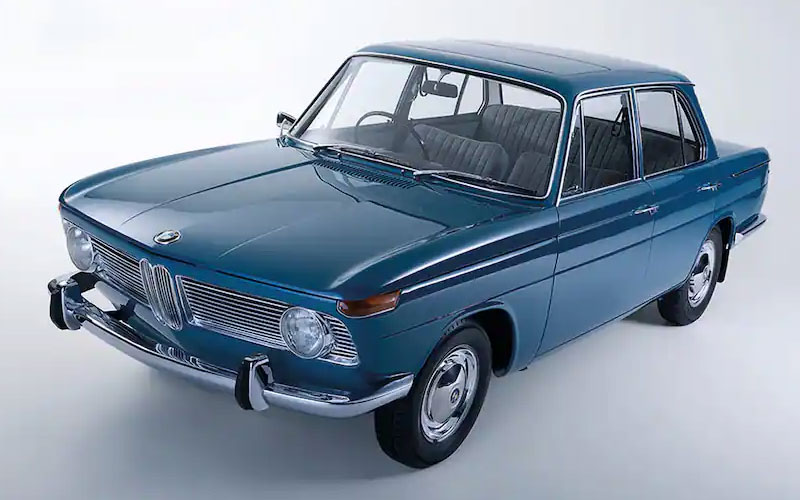
Another famous German car company had a very different beginning in the US. BMW found itself struggling in the 1950s, teetering on the brink of collapse. In a bid to prop up flagging sales, BWM contracted to sell an Italian micro car, the Iso Isetta with the Bavarian blue and white badge. Though not an enormous success in its native Italy, the Isetta was popular in Germany, in spite of its odd design. The Isetta features one single front-facing door and a two-stroke one-cylinder engine making 9.5 horsepower (no, that’s not a typo). As one of BMW’s first imports to the US, the Isetta was not a booming success. If the Toyopet felt unsafe and slow, the Isetta was a macabre joke on American roadways. A much better car, the gorgeous and powerful BMW 507 had been slated for importation by BMW. But that car proved tragically overpriced (BMW famously almost bankrupted itself on the project) and Max Hoffman canceled his order. BMW would eventually find its footing in the US (and Europe) with the introduction of the New Class sedans in 1962 which perfectly blended sportiness, practicality, and affordability.
Subaru 360 (1968)
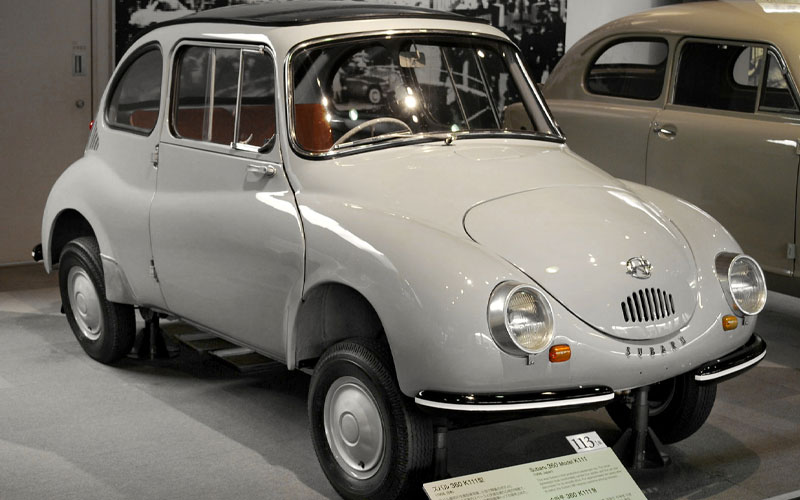
If the Toyopet and Isetta were tough beginnings, Subaru put perhaps the worst foot forward with the 360. Like the Honda N360, the Subaru 360 was a kei car, limited in its size, engine capacity, and power to meet favorable tax breaks in Japan. The trouble was exporting these same cars to other markets where larger, faster cars dominated. The Subaru 360 was brought to US shores by American businessman Malcom Bricklin, who would later bring us the Yugo. The 360 was marketed as modest and economical where brand advertisements labeled it “cheap and ugly.” The cheeky, kidding/not kidding ads weren’t the only issue with the 360. The kei car’s small stature and weak engine (cresting at 36 horsepower) made it unsuitable for American highways. Consumer Reports gave the Subaru 360 a “Not Acceptable” safety rating. The 360’s story shows how far Subaru has come, today legitimately touting its safety features and crash ratings as some of the best in the industry.