
Latest News
2026 Ford Maverick ReviewWhat is a Crumple Zone?

Vehicles are packed with tons of safety tech nowadays, but one of the most important advancement you’d never notice. So, what is a crumple zone?
Airbags, Collision Detection, and – Crumple Zones?
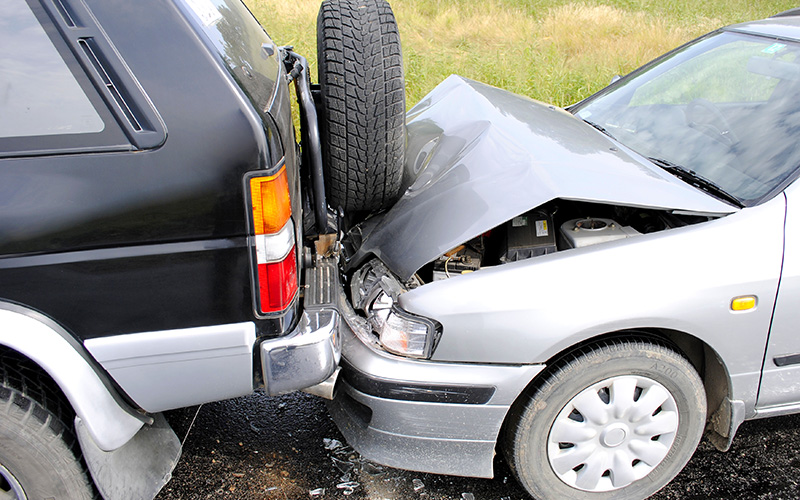
Today’s vehicles are full of features and software that have made driving safer than ever. Airbags and seatbelts continue to be standard equipment in all new cars, manufacturers are adding more driver assistance tech to prevent accidents, plus there are plenty of cameras and sensors that cover your blind spots. That’s all the important safety bits you can see, but one of the most important advancements in the world of automotive safety isn’t noticeable.
Today, we’re looking at crumple zones. These easily destroyed sections found on most modern cars aren’t just a creative way for manufacturers to sell more repair parts. These vital pieces to a vehicle’s construction keep you and your passengers safe in the event of a collision. Let’s find out more!
What are Crumple Zones in Cars?
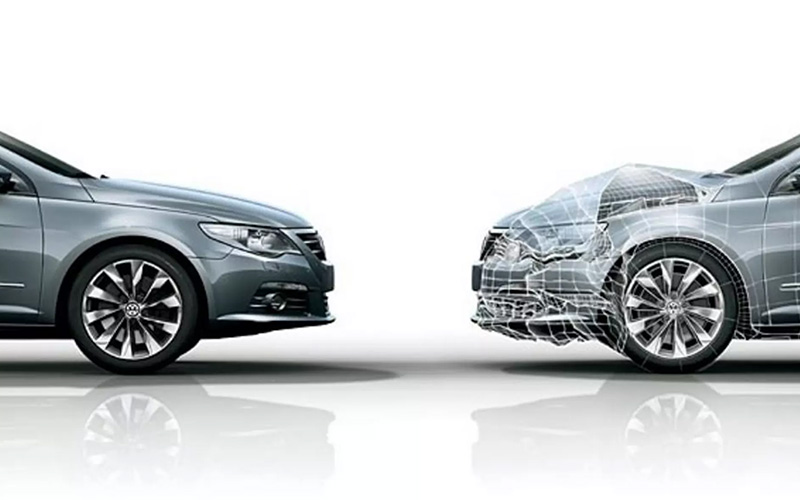
Crumple zones, sometimes called crash zones, are a safety feature in which the underlying structure of a vehicle collapses in a controlled manner to reduce the momentum of passengers in a vehicle during a sudden impact. These crumple zones are primarily integrated into the front and rear portions of a vehicle’s design, but side impact crumple zones have become more prevalent since their introduction on Volvo models in the 1990s too.
How do Crumple Zones Work?
In the event of a crash, a car goes from cruising speed to a sudden stop in seconds. That sudden change in momentum can be felt immediately by passengers, as they’re affected by inertia – an object in motion stays in motion unless acted upon by force. This can lead to passengers being injured or even being ejected from the vehicle if they aren’t wearing a seatbelt.
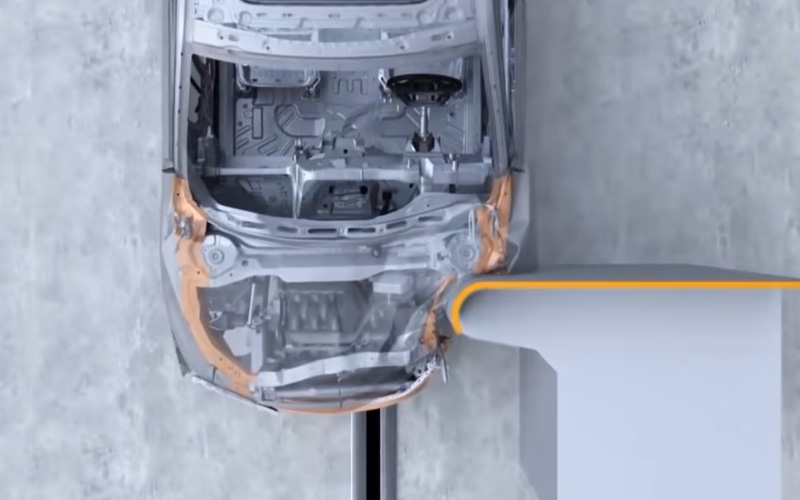
Crumple zones help dissipate the energy of a crash by having the vehicle give way to the force deliberately. This intentional deformation of the vehicle’s structure helps increase the time in which the change in velocity takes place for occupants. The added time reduces the passengers’ momentum as they decelerate from speed to a sudden stop, effectively absorbing the impact.
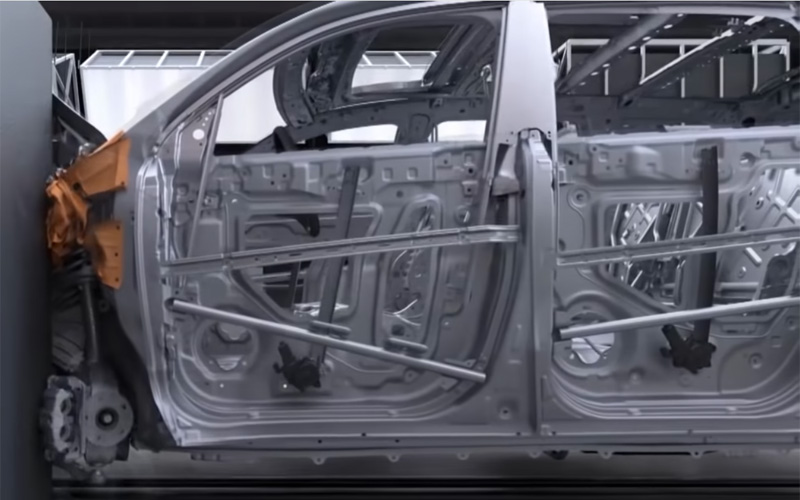
While the crumple zones are designed to deform, the cabin is not. The cabin space is intentionally built to be a rigid structure that prevents the deformed sections of the vehicle from injuring passengers. This area that is comprised of stronger steel and added reinforcements is often called the “safety cell”. Should an impact be so forceful that the crumple zones can’t completely prevent the force from reaching the cabin, safety cell’s structure is made in such a way as to reduce any deformation to itself.
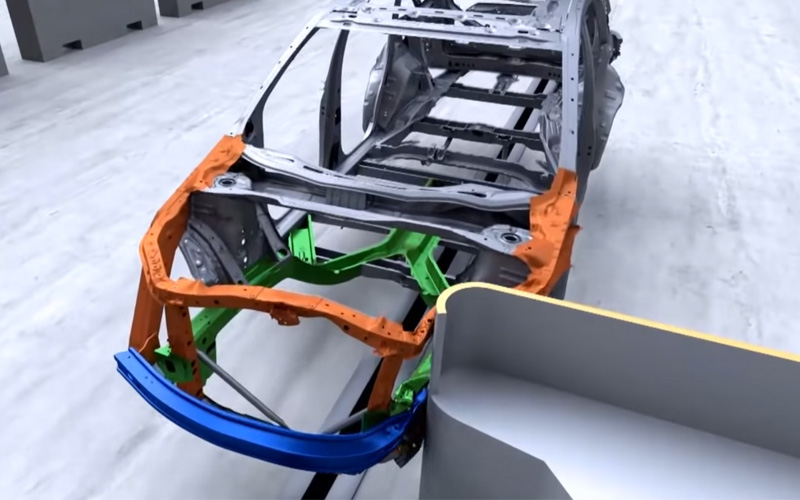
How do manufacturers engineer something to purposely break while not compromising the structure of the vehicle though? A lot of research and development. Engineers carefully test different materials and structures through a series of computer-generated simulations and production crash tests. After putting test structures through strenuous testing and identifying failure points in the design, they revise the design and run them again.
As for the actual construction of your average crumple zone, there are long beams that run along the sides of the car underneath the body panels. These structural beams are called “longitudinal members” and they’re designed to have a curve as a way to encourage deformation on impact. Modern examples also include a vertical ribbing in their design that creates a section called a “crash can”. These ribbed sections create a telescoping-like collapse during impact for a more controlled deformation to the crumple zone.
Do Classic Cars Have Crumple Zones?
There’s a reason that old cars are often referred to as “metal death traps”. Cars prior to the 1960s were completely rigid and lacked even the most basic safety measures found in today’s vehicles. When these early cars got in an accident, none of the impact was dispersed and occupants felt the full brunt of that force. This led to more blunt force trauma, more internal damage, and passengers were thrown around the vehicle if not out of it.
These rigid designs were also super deadly should the impact be forceful enough to reach the engine. With nothing to prevent or reduce the severity of the impact, the engine and other connected components could be forced through the firewall and further injure passengers inside the cabin. I love a good classic, but not this aspect of their outdated designs.
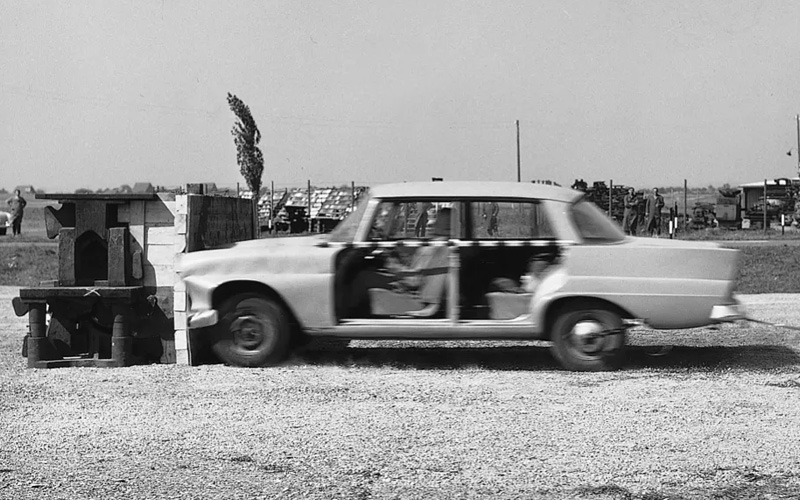
Thankfully, Béla Barényi patented the crumple zone in 1951. The Mercedes-Benz engineer introduced the first rudimentary example of this major safety advancement and saw it go into production on the 1959 Mercedes-Benz W111 “Tail Fin” Saloon. Soon, more models adopted the safety architecture before becoming commonplace in the automotive industry. That doesn’t necessarily mean anything after 1960 is perfectly safe, but more classic cars from that period onward featured crumple zones at least.
Does the Tesla Cybertruck Have Crumple Zones?
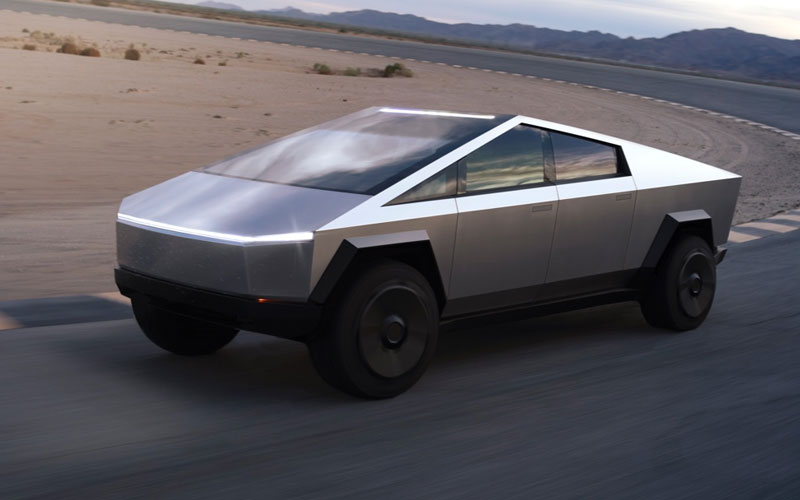
The Tesla Cybertruck features a completely stainless-steel exoskeleton, steel reinforced panels, a super rigid construction, and a shortened nose. Despite this, Tesla has showcased the Cybertruck’s front crumple zone in action on X (formerly Twitter). The @cybertruck account explained that the “Cybertruck’s front underbody casting is designed to break into small pieces. This helps reduce occupant impact by absorbing & dispensing energy.”
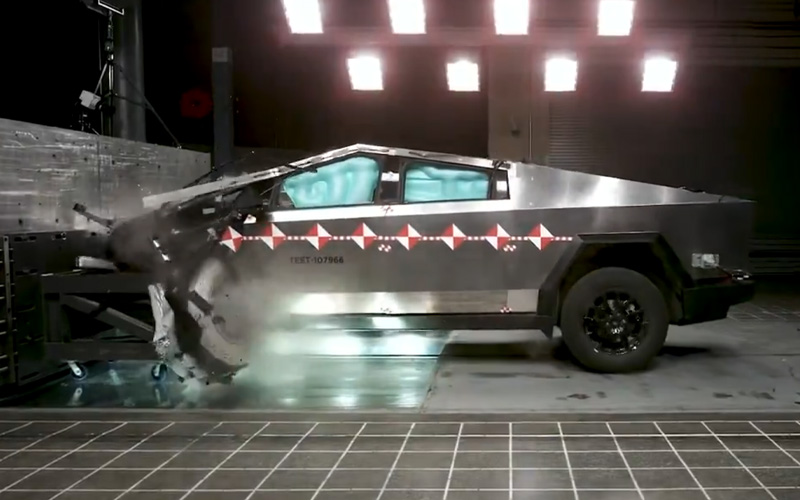
The company then attached a video that shows a pre-production Cybertruck slamming into a test barricade. The long dashboard section of the electric truck’s design looks to be involved in the crumple zone, but the cabin shape beyond that is otherwise relatively unscathed. IIHS and NHTSA have yet to provide their own crash test results concerning the Tesla Cybertruck, but there have been a handful of accidents concerning the vehicle in which occupants of the vehicle had minor injuries.