
Latest News
2026 Ford Maverick Review
The potential Tesla rival has gotten a lot of praise for their impressive Lucid Air EV, but the company has also drawn scrutiny from the SEC.
New Kid on the EV Block

Among the burgeoning list of electric vehicle start-ups, there are a scant few that have turned the corner from mere start-up to actual carmaker. Rivian is one. Another seemingly just on that cusp is Lucid, maker of the Lucid Air EV, a four-door electric sedan that is looking to beat the Tesla Model S on its own turf.
There are significant similarities between Lucid and Tesla. First, like the Model S, the Lucid Air is indeed an impressive EV. So much so that Motor Trend named the Lucid Air it’s 2021 Car of the Year. Second, like Tesla and its tweet-happy CEO Elon Musk, Lucid Group, Inc. is drawing heat from the SEC. Unlike Musk, Lucid’s issues don’t stem from possible stock manipulation via social media, but possibly deeper issues surrounding the funding of the company.
But first, the car. Because, despite whatever kerfuffle (or more significant problems) Lucid has with the SEC, they also have a very, very good car on their hands.
Lucid Air is a Remarkable EV
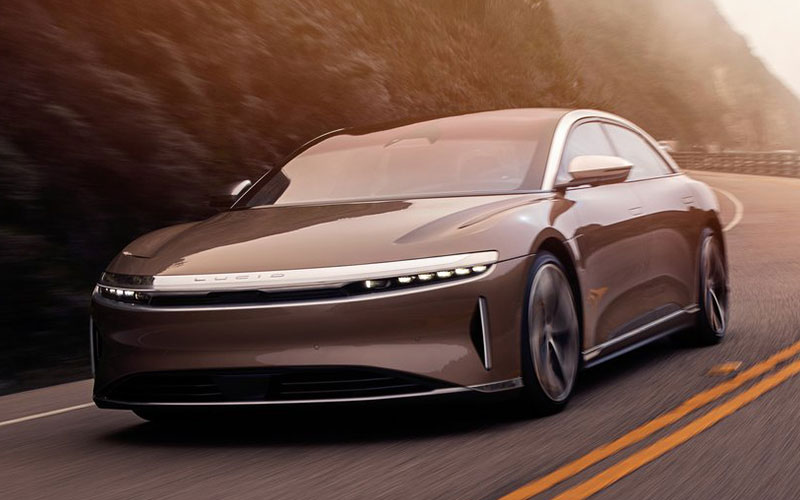
The Lucid Air is indeed a legitimate competitor to the Tesla Model S, and at turns the Porsche Taycan and Audi e-Tron GT, owing to its modern, luxurious interior and groundbreaking performance numbers. Starting at $78,900, the Lucid Air rises all the way to $170,500 for the top end model. Setting it firmly within the luxury EV class.
The car you get for all that dough is quite impressive. And nothing is more eye-popping than the performance stats of the Lucid Air. The base model features a single electric motor producing 480 horsepower and driving the rear wheels. From there models sport two motors and all-wheel drive.
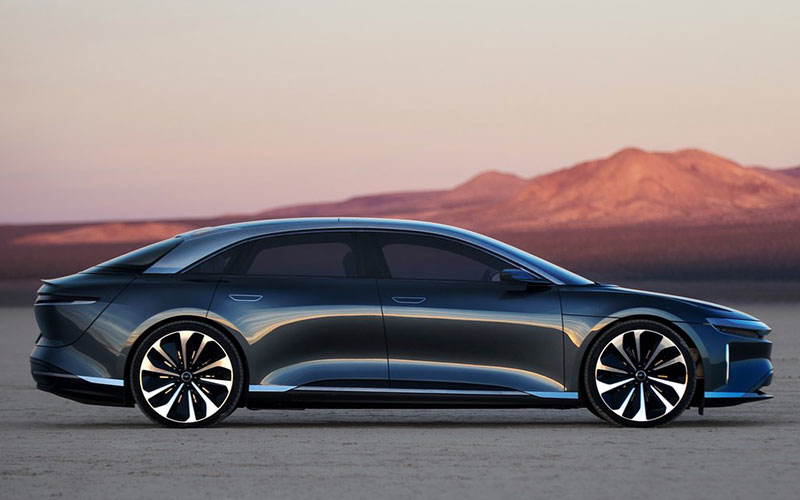
The Touring and Grand Touring models raise things to 650 and 800 horsepower respectively. The Dream Range and Dream Performance jump to 933 and 1,111 horsepower. And while those numbers are impressive, it’s the range of the Lucid Air that’s truly game changing.
Ranges vary based on the choice of wheels, the larger the wheel the lower the range (in the case of the Lucid Air its 19-inches versus 21-inches). Official EPA ratings tally the Grand Touring at 516 or 469 miles, depending on the wheels you chose. The Dream Performance comes in at 471 or 451 miles. And the Dream Range got up to 520 miles or 481 miles on 21s. For reference, the Tesla Model S Long Range is rated for up to 405 miles while the Plaid gets 348 miles on a single charge. The Lucid claims the Dream Performance can achieve a ¼ mile run of just 9.9 seconds at 144 mph. So yeah, it’s crazy fast, too.
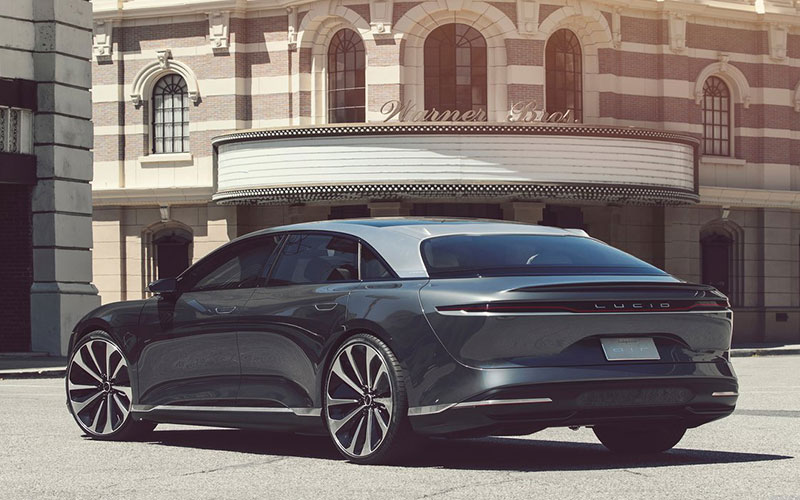
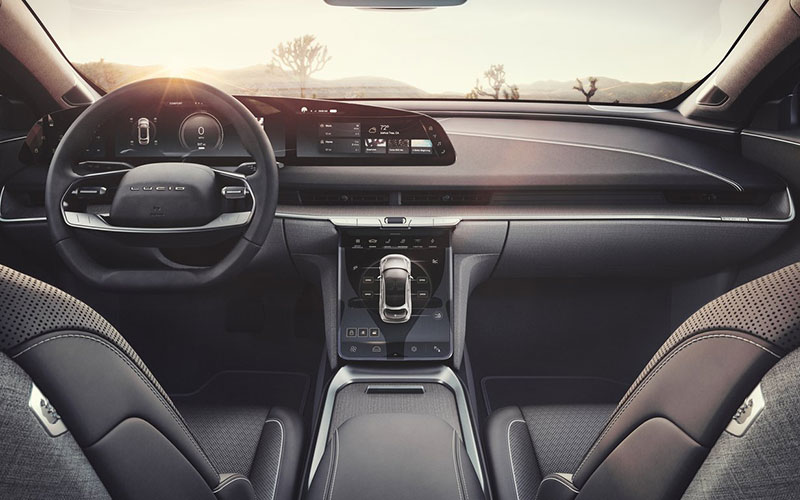
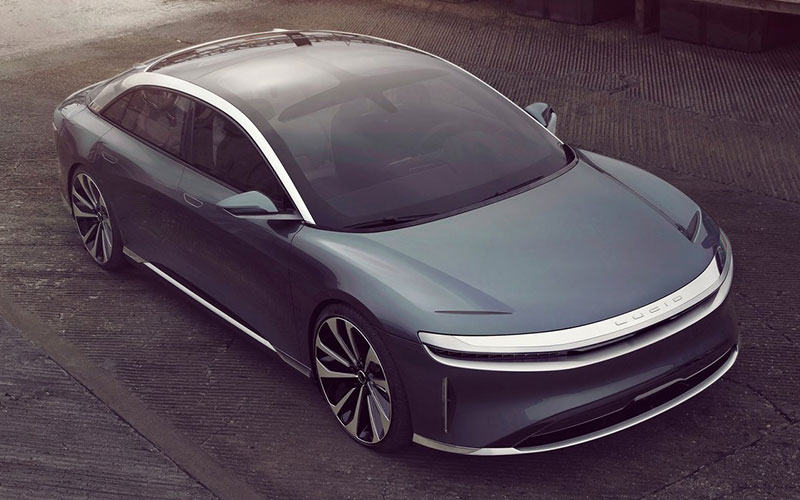
The Lucid Air also looks the part of an EV with a properly futuristic exterior design that is crisply executed and with a due restraint often lacking in modern automotive design, especially in the EV space. The car’s measured approach continues in the interior which surpasses that of the Tesla Model S and easy rivals the best from Mercedes, Volvo, or BMW. Of course, there’s the requisite 34-inches of screen divided into a digital gauge cluster and infotainment system, but there are also real buttons for the HVAC controls. A clear nod to practicality that hints at the thoroughness and attention to detail that pervades the car.
SEC Investigating Lucid Group, Inc.
It shouldn’t surprise us that the Lucid Air is a proper Tesla killer. The current CEO/CTO of Lucid Air, Peter Rawlinson was Tesla’s chief engineer in charge of designing the Model S. But as good as the car is, Rawlinson and company have met with a potentially significant stumbling block. An SEC (Securities and Exchange Commission) investigation into how the company has been funded.
Specifically, Lucid said in a regulatory filing that the SEC’s investigation relates to the SPAC (Special Purpose Acquisition Company) that merged Churchill Capital Corp. IV and Atieva, Inc. to form and fund Lucid Group, Inc. to the tune of $24 billion dollars.

A SPAC, often referred to as a “blank check company,” is a relatively new way of funding start-ups. They involve what is basically a shell company seeking money for a prospective investment, typically the acquisition of an existing company, to be named later. Once capital is accrued and the target is determined, the investors are then asked to vote on the investment in question. This new alternative to a traditional IPO (initial public offering) has been gaining popularity on Wall Street, while also raising the watchful eye of the SEC.
Details are scarce, but Churchill Capital Corp. has been the subject of multiple class-action lawsuits related to the Lucid deal, specifically relating to disclosures about the state of Lucid’s deliver timelines. Currently, Lucid says they are aiming to deliver 520 cars by the end of the year. That’s down significantly from the 6,000 that investors claim was toted to them. In fairness to Lucid, delivery delays relating to supply chain issues and the ongoing chip shortage (which you can read about here) have been the bane of nearly every automaker over the past year. The company says they still plan to deliver some 20,000 units in 2022.
Lucid also isn’t the first EV company to go the SPAC route. Fisker, Canoo, and Faraday Future all were funded through SPACs. And Lucid also isn’t the first to draw attention from the SEC. The electric truck maker Lordstown is currently under twin SEC and Department of Justice investigations for its SPAC funding and related delivery issues. Tesla too is under SEC investigation relating to a whistleblower complaint about fire risks associated with the company’s solar panels.
For it’s part, Lucid Group, Inc. says it is fully cooperating with the SEC’s investigation. Investigation or no, the Lucid Air is a very impressive vehicle that pushed the envelope on what we can expect from the next generation of electric vehicles.