Latest News
December 2025 New Car IncentivesFord ST, SVT, and RS Models Through the Years

The history of Ford Performance has led to some of the world’s most notable production sports cars, supercars, and super trucks.
Machines That Push The Boundaries Of Speed
Today, just about every mainstream automaker has its own personal performance division. For example, BMW has Alpina, Toyota has TRD, and Mercedes has AMG. Today, Ford simply calls its performance branch “Ford Performance” but the company is so old that when it began its racing aspirations it didn’t have any special name for its motorsport aspirations. In fact, it began those efforts before the 1900s. Today, over 120 years later, it’s taken that rich history of sporting automotive aspiration and turned it into one of the most potent brands on the market. Here’s a deep dive into what we now call Ford Performance.
The History of Ford Performance
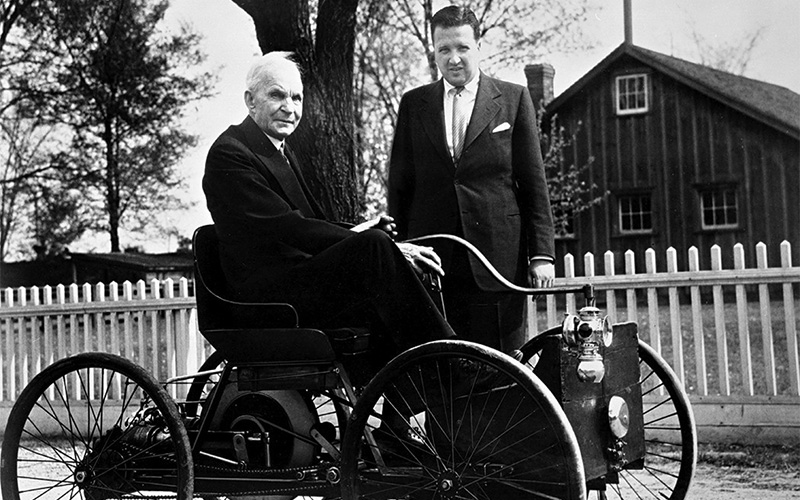
Henry Ford was actually racing before the Ford Motor Company began. Back in 1896, he set a new speed record (20 mph) on a car he built and called the Quadricycle. Just over a decade later Ford vehicles had set the record for the fastest car to cover a mile, won a transcontinental cross-country race, and continued to set speed records.
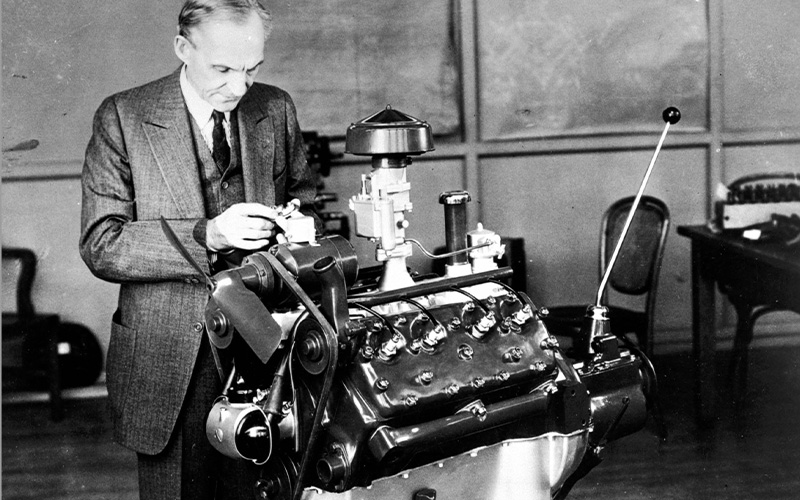
Over the next 50 years, Ford continued to go from strength to strength. In 1932 it introduced the Flathead V8, a production-car performance engine specifically marketed as having ties to racing. In 1932, a Ford won the Swedish Winter Grand Prix. Four years later a Ford with a Flathead V8 won the Monte Carlo Rally and in 1949, a Lincoln won the very first NASCAR race. Those victories were only the beginning of winning for Ford in the modern era.

Over the next 50 years, Ford vehicles would be at the top of the podium in NASCAR countless times, they’d win world championships, Indy Racing League championships, and that success would bleed into production cars too. The Ford Sierra RS (For Rallye Sport) Cosworth was a collaboration between Ford and Cosworth built specifically so that the two could participate in rally racing. It led to an even more extreme version, the Sierra RS500 Cosworth, and later to the world-famous Escort RS Cosworth.
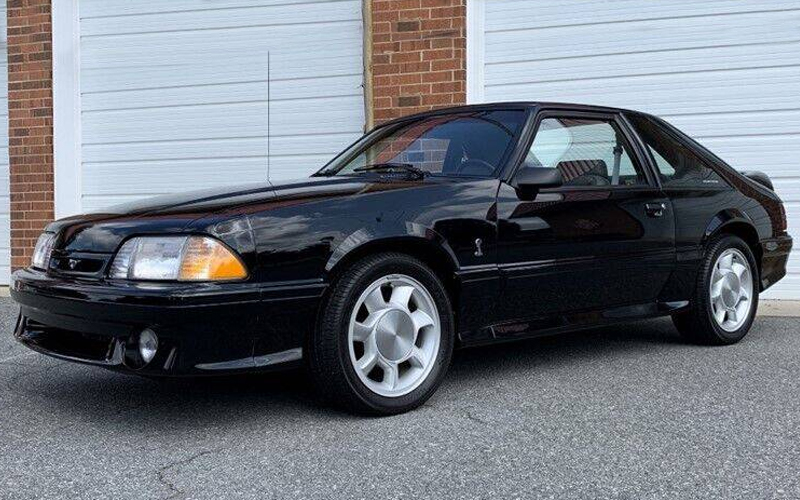
In the early 1990s, Ford introduced its SVT (Special Vehicle Team) division which focused primarily on bringing performance to the brand’s road cars. It kicked things off with the original Ford F-150 Lighting, the Mustang SVT Cobra, and even the SVT Contour and SVT Focus. All of these vehicles received real performance modifications that allowed them to provide a sharper and more engaging experience on the road.
SVT also had a hand in some of the most legendary performance cars to ever come out of Ford. That includes the Mustang SVT Cobra R. In 1999, that model was sold with a claimed 320 horsepower but owners felt like the car was no faster than its non-SVT sibling. Sure enough, dyno testing revealed that the car wasn’t making the power Ford said it would. In response, Ford stopped sales of the car and recalled all 1999 SVT Cobra Rs to upgrade the intake, ECU tuning, and exhaust to ensure these cars made the right power.
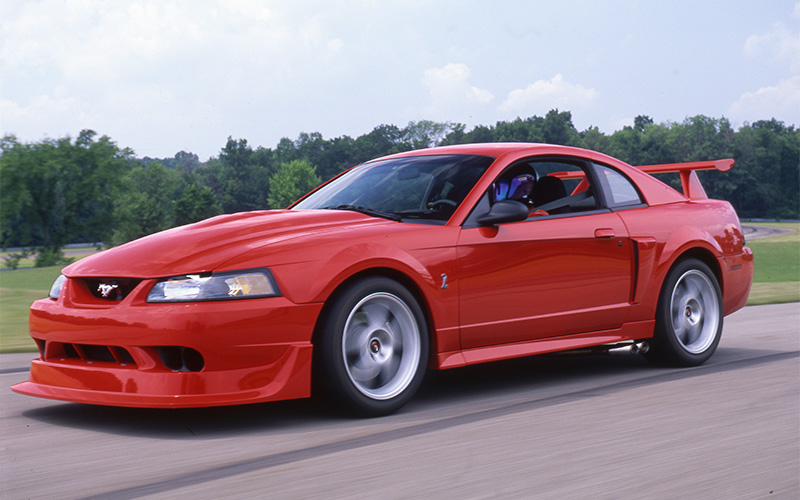
Then, in 2000, Ford launched the hallowed SVT Cobra R with a bigger engine, a supercharger, and a claimed output of 385 hp. Clearly, Ford got the memo from the year before because when owners dyno tested this version of the Cobra R it made more power than expected. SVT also had its hand in the Ford GT, the SVT/Shelby GT500, and the first Ford F-150 Raptor. Then, in 2015, Ford merged SVT and RS into its main Ford Performance brand.
Recent Ford Performance Models
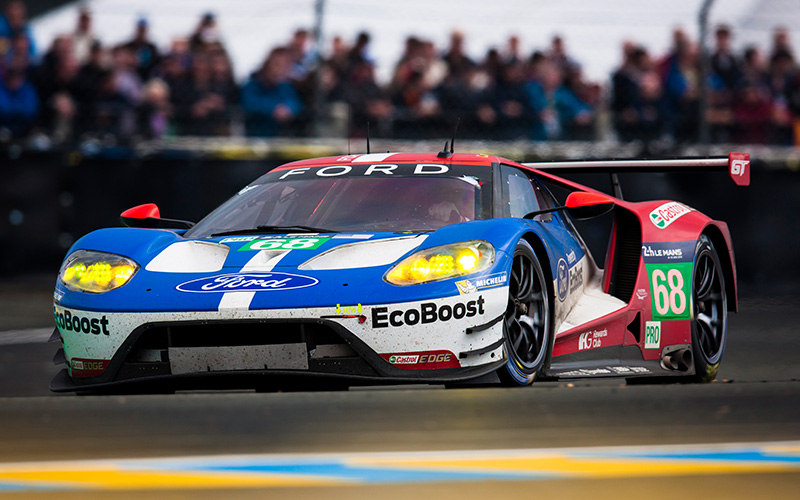
In recent years, Ford Performance has been a gigantic umbrella under which a number of different motorsport and speedy production vehicles thrive. For example, it launched the latest version of the Ford GT and then won at Le Mans in 2016. It also launched the performance off-shoot trims ST (Sports Technologies) and RS (Rallye Sport).
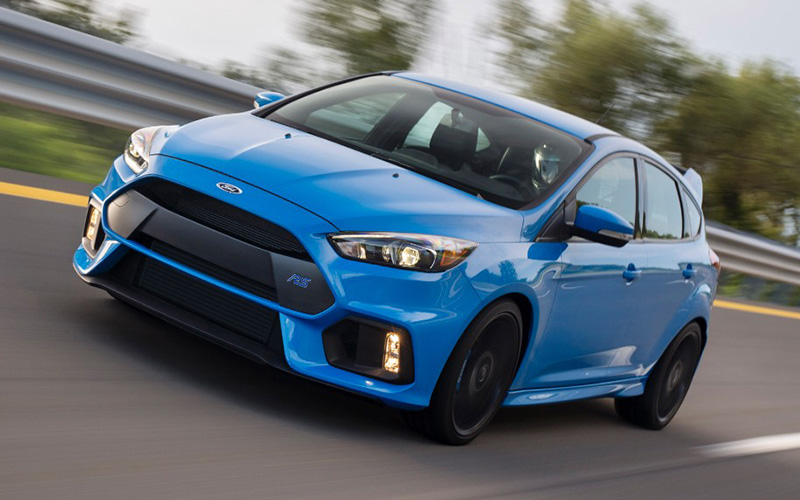
In short, consider these two off-shoots as steps in the performance ladder though Ford doesn’t currently sell any RS variants. The last of its kind, for now at least, was the Focus RS. It had a RWD-biased AWD system, a drift mode, and 300 hp.
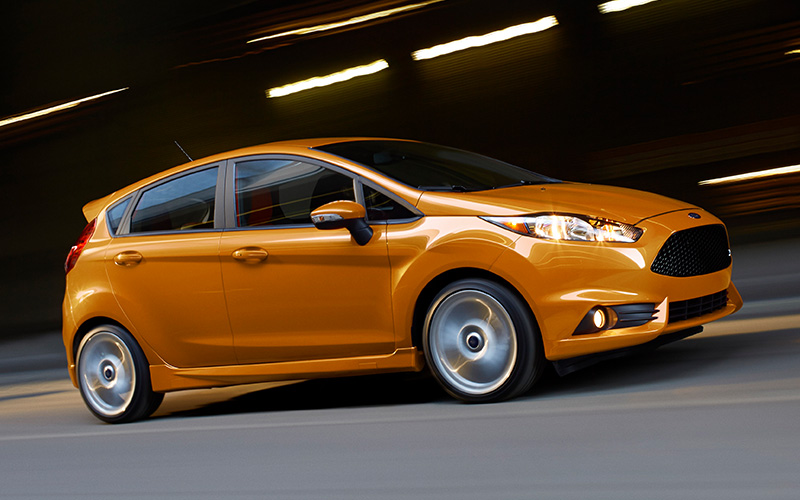
ST-branded vehicles are often slightly more capable than their non-ST counterparts but not as extreme as RS models. They usually incorporate stiffer suspension settings, potentially bigger brakes, additional aerodynamic parts, and sometimes a bit more horsepower. Ford has applied the ST badge to cars like the Fiesta, Focus, Explorer, and overseas the Mondeo.
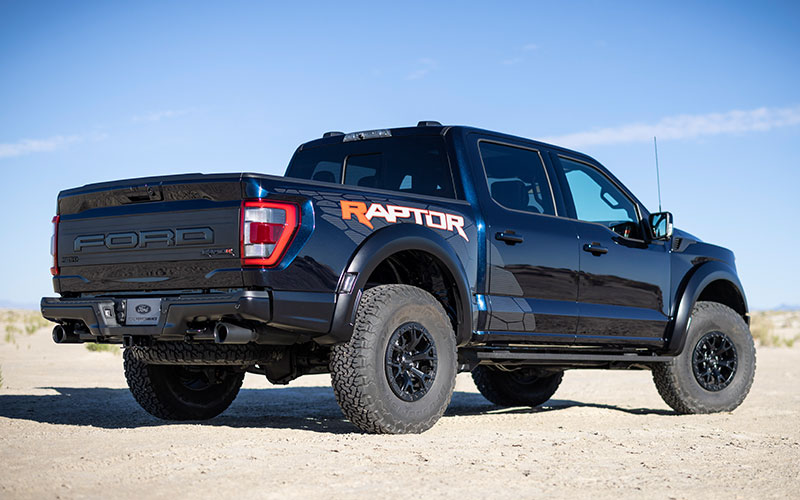
On top of RS and ST models, Ford Performance is also responsible for many special trims that offer extra power and capability like the Ford Raptor. Originally just an off-road-focused F-150 variant with appropriate performance modifications, the Raptor brand has now grown. Today, the F-150 Raptor R rules the model lineup with a supercharged 5.2-liter V8 and 700 horsepower. It’s also spawned the Ford Bronco Raptor, an SUV with serious capability and 400 horsepower.
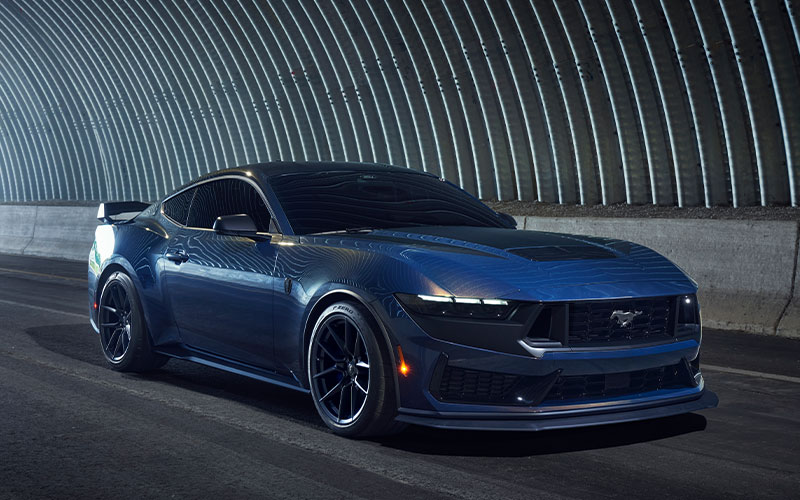
Just this year, Ford also introduced the Dark Horse, a new trim level of the Mustang with 500 horsepower, MagneRide dampers, Brembo brakes, a Torsen limited-slip differential, and Pirelli P Zero summer tires. It also announced the Mustang GTD, an 800 horsepower, $300,000ish super sports car that will arrive next year or early in 2025. Ford says that it’s currently aiming for a sub-7-minute lap time at the famous Nürburgring in the Mustang GTD. Should it actually pull that off we’ll be talking about a Mustang that can keep up with Porsches, Lamborghinis, and even the Mercedes-AMG One. It’s clear that Ford Performance is taking its job and reputation quite seriously.