
Latest News
2026 Chevrolet Suburban Review
America has more than its share of ghost stories. We offer the ultimate paranormal itinerary for a Halloween inspired haunted road trip.
Cross-country Ghost Hunting
America’s rich and varied history provides loads of roadside historical markers for Mom and Dad to pull to over to and read while the kids back in the van continue to stare at their phone screens. “Boy,” says Dad upon returning, “That sure was a grim and grisly story as explained on that informative historical marker.” “You’re sure right Dad,” says Mom, “I don’t know how we’ll ever get to sleep after that bone-chilling tale of terror.” The kids hear this and their blood runs cold. It slowly dawns on them…this isn’t just any road trip. It’s a ghost tour of the most haunted places in America! (Cue ominous thunderclap.)
If you’re a fan of paranormal peregrinations, spectral sojourns, and phantasmal field trips along hair-raising highways then we’ve got the list for you. Below we survey the regions of the US for their creepiest and most macabre destinations, so you can plan a spooky road trip of your own.
West Coast
Portland’s Shanghai Tunnels and Pittock Mansion
Built in the late 1800s, Portland’s Shanghai Tunnels originally served to ferry goods (often illicit) around the bustling port city. It was also where you’d first be taken if you were “Shanghai’d” the term at the time for being kidnapped onto a ship to serve as a sailor. You can still visit Portland’s cobwebbed underground tunnels today. Portland’s Pittock Mansion is another paranormal destination in the city. The mansion, built in the style of a French chateau, was commissioned by local publisher Henry Pittock and his wife Georgiana, and completed in 1914. Sadly, the elderly Pittocks both passed away within a few years of the mansion’s completion. Caretakers report eerie goings-on at the house, from the smell of rose blooms in rooms with no flowers and portraits moving from room to room of their own accord.
Alcatraz Island, San Francisco, CA
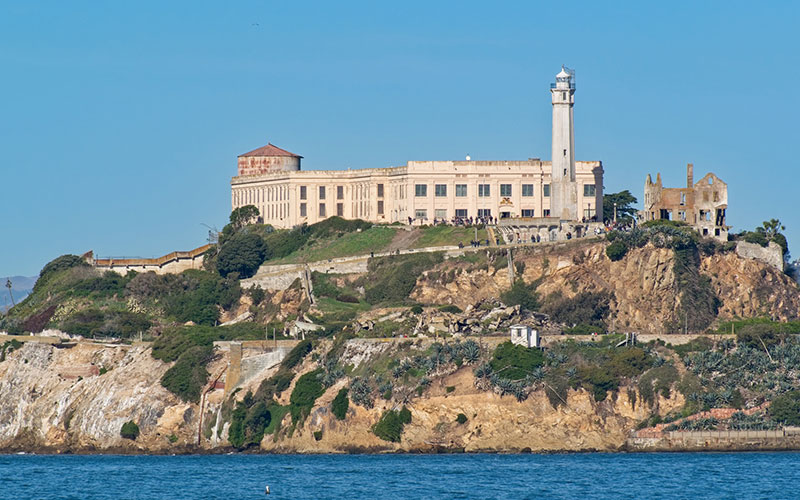
The infamous federal prison on Alcatraz Island once hosted such notorious criminals as Al Capone, Bumpy Johnson, and Clint Eastwood. Settlement on Alcatraz Island began as a lighthouse and then a US military fort in the late 1840s. It wasn’t until the 1930s that the disciplinary barracks on Alcatraz were converted into a federal prison, which operated until 1963. Today, the island is part of the National Parks service.
Winchester Mansion, San Jose, CA
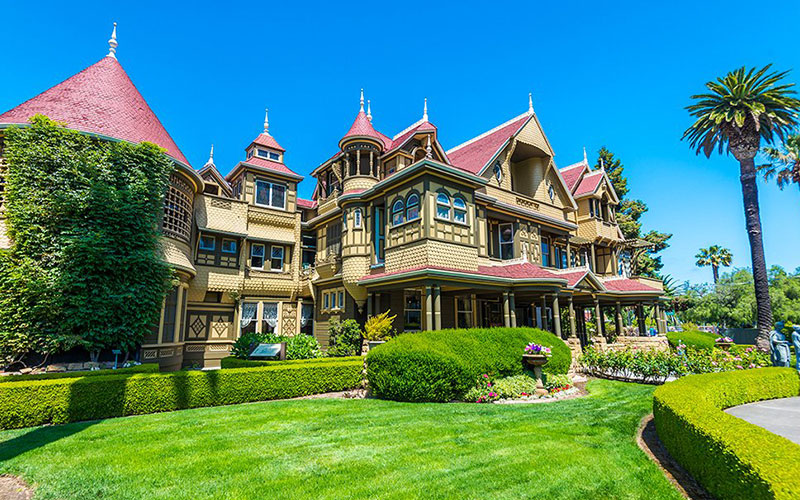
A short drive away from Alcatraz is the Winchester Mansion in San Jose. The sprawling mansion was built by Sarah Winchester, heiress to a substantial portion of the Winchester fortune. After losing a young daughter and husband to illness, Sarah moved from Connecticut to California where she bought an eight-room farmhouse in 1886. Whether out of madness or grief (if those can be separated in this case), Sarah had workers expand into the house continually for the next three and a half decades, only stopping upon her death in 1922. The haphazard design resulted in 24,000 total square feet, some 10,000 windows, 160 rooms, 52 skylights, 17 chimneys, and many architectural oddities, from hidden passages and stairways that lead to blank walls to a second story door that leads “nowhere.” The labyrinthine home inspires equal parts awe and unease.
Bodie, CA
Travel across the central valley to near the Nevada border and you’ll find California’s most famous ghost town, one of 346, the former mining boom town of Bodie. Once abuzz with commerce, Bodie went from boom to bust by 1881 when the nearby mines were spent. It took until the 1940s for Bodie to fully depopulate, unless you count the ghosts of a frontier past. Today, Bodie is a state park with many of its historic buildings sit as they were left, now gathering dust.
Northeast
Sleepy Hollow, NY
The village in New York state is famed at the location of Washington Irving’s “The Legend of Sleepy Hollow.” You may or may not see a headless horseman when you visit, but you are sure to find the author, as he is buried at Sleepy Hollow cemetery. We recommend caution when traversing any nearby covered bridges.
Salem and Danvers, MA
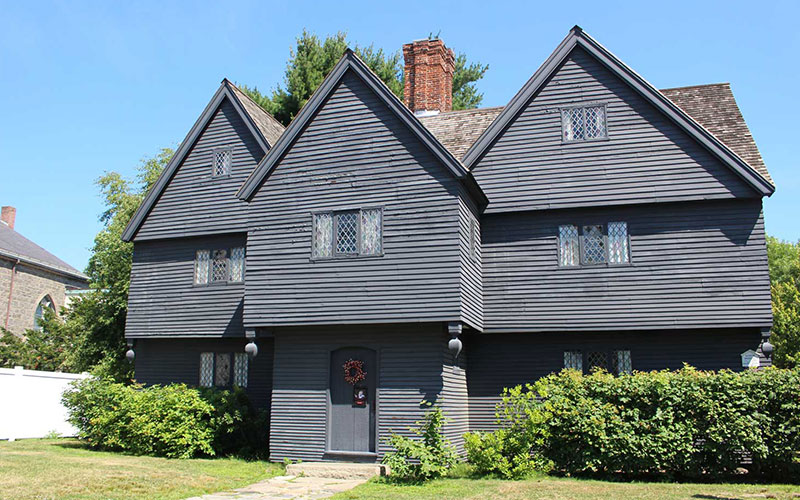
Salem Town (now Salem) and Salem Village (Danvers) were the center of the notorious Salem Witch trials. Witch trials had been common in continental Europe for hundreds of years but had largely died out by the early 1600s. This didn’t stop a case of mass hysteria from sweeping Salem when accusations of witchcraft began swirling in 1692. Some 300 community members were accused of consorting with the devil and 20 convicted and hanged. You can still visit the house of Judge Jonathan Corwin, who presided over many of the trials, in Salem today.

Eastern State Penitentiary, PA
The Eastern State Penitentiary in Philadelphia was once one of the nation’s toughest prisons. Erected in 1829, the Eastern State Penitentiary was, at the time, the largest and most expensive public building in the US. The prison earned a reputation for a brutal form of universal solitary confinement that broke even the most hardened of criminals, their cries still reportedly echo through its church-like corridors. Famous inmates included Al Capone (yep, he stayed here too) and bank-robber Willie Sutton. The Eastern State Pen was closed in 1971 and is now a national historic landmark that plays host to an annual Halloween festival dubbed “Terror Behind the Walls.”
Gettysburg, PA
Site of the Civil War’s bloodiest battle, the Battle of Gettysburg in July of 1863. The Union victory there is considered by many historians to be the pivotal turning point in the war. The battle resulted in a combined total of 51,112 casualties including those killed-in-action, wounded, and missing or captured. Many believe the dead still haunt the battlefield and surrounding environs.
The South
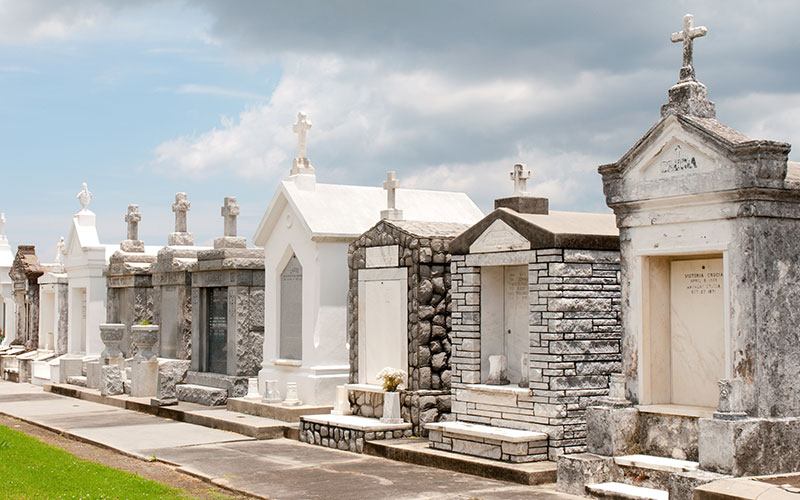
St. Augustine, FL
As the oldest European settlement, it shouldn’t surprise you that St. Augustine has more than its share of ghosts. The city’s spookiest spot is the old St. Augustine Lighthouse, the site of multiple tragic deaths including two children who fell into the ocean. Their ghosts can still be heard playing around the lighthouse today.
New Orleans, LA
The city of New Orleans is famous for a lot of things: jazz, great food, and a distinctive local culture that reflects the mixing of cultures across hundreds of years. The city’s many above ground cemeteries and second-line funeral marches are part of New Orleans’s unique way of honoring the passage loved ones. The darker side of course is a local tradition of voodoo and more than a century as the southern US’s main port for the slave trade.
Cahawba, AL
Cahawba a.k.a. Cahaba, Alabama was once the state’s capital. Sitting at the confluence of the Alabama and Cahaba rivers, repeated floods decimated the town until it was finally abandoned for good after the Civil War. For more than a century, Cahawba has been a ghost town with innumerable reports of supernatural sightings.
Southwest and Mountain West
All of Texas
No state epitomizes the “Old West” quite like Texas. And part of that frontier legacy is hundreds of ghost towns. Fly-by-night settlements and ranching and mining boomtowns sprouted and withered like so many mushrooms leaving desiccated husks of former prosperity. Texas holds the record for the most ghost towns in a single state with 511.
Hotel Monte Vista, Flagstaff, AZ
The historic Hotel Monte Vista in Flagstaff, Arizona is also the state’s most renowned haunted hotel. Reports of paranormal events include a baby’s eerie cry in the basement, the ghosts of two women thrown from a third story window haunting male guests, and weirdness in room 210, where a one-time resident guest had the habit of hanging raw steaks from the chandelier. Famous guests included John Wayne, who himself reported ghostly phenomena while staying there.
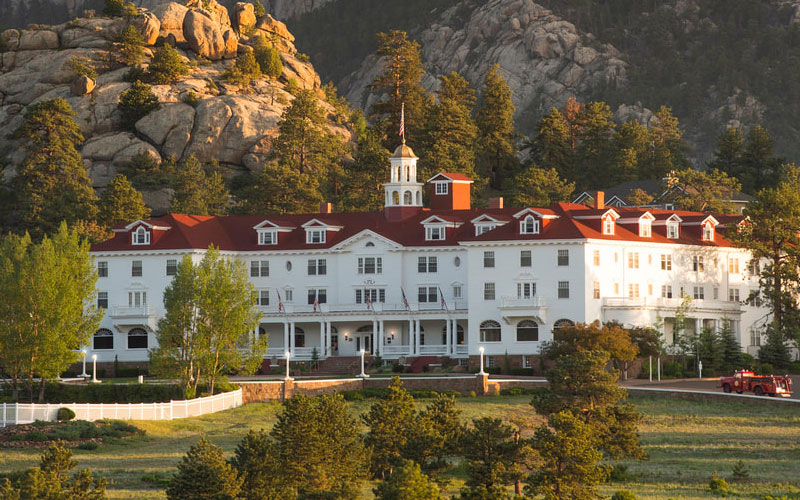
Stanley Hotel, Estes Park, CO
The Stanley Hotel was the basis for the Overlook Hotel in Stephen King’s horror classic The Shining. (Stanley Kubrick’s film adaptation used the Timberline Lodge in Oregon for exterior shots and the Ahwahnee Hotel in Yosemite as the basis for soundstage interior shooting for his version of the Overlook.) But it was the majesty and mysteriousness of the Stanley Hotel that inspired King to write his novel of the haunted hotel. The Stanley is located just outside Rocky Mountain National Park and today offers ghost tours and hosts a local film festival. If you choose to visit, we recommend avoiding the elevator.
Midwest
Athens Lunatic Asylum, Athens, OH
Known as The Ridges today, this a multi-use facility owned by Ohio University and hosts the Kennedy Museum of Art. But the complex has darker origins as the Athens Lunatic Asylum, a Victorian-era mental hospital in operation from 1874 through 1993. The Athens facility, like many such asylums, hosted many questionable practices as part of what constituted mental health treatment in the day, including hydrotherapy, electroconvulsive therapy, and lobotomy. An estimated 1,800 patients were buried at the hospital’s nearby cemetery.
Chicago, IL
The Windy City is home of Da Bears, Ferris Bueller, and deep-dish pizza. It’s also one of the nation’s most haunted cities. One of its more notorious inhabitants was one Dr. H.H. Holmes called by some the nation’s first serial killer. The good doctor was indeed homicidal but killed only a fraction of the 27 murders he confessed to (some victims were still alive). The Holmes legend centers on his “Murder Castle,” built during 1887 as a rental property and drug store. Following Holmes’ arrest for murder, newspapers embellished his story will lurid tales of a building constructed with secret passages and trap doors. Chicago is also famous for the St. Valentines’ Day Massacre, when, in 1929, four known associates of George “Bugs” Moran were gunned down by men dressed as police. Clearly a gangland killing connected to Prohibition-era bootlegging, many suspected the orders came from Moran’s rival Al Capone (there he is again), but the murders remain unsolved to this day.
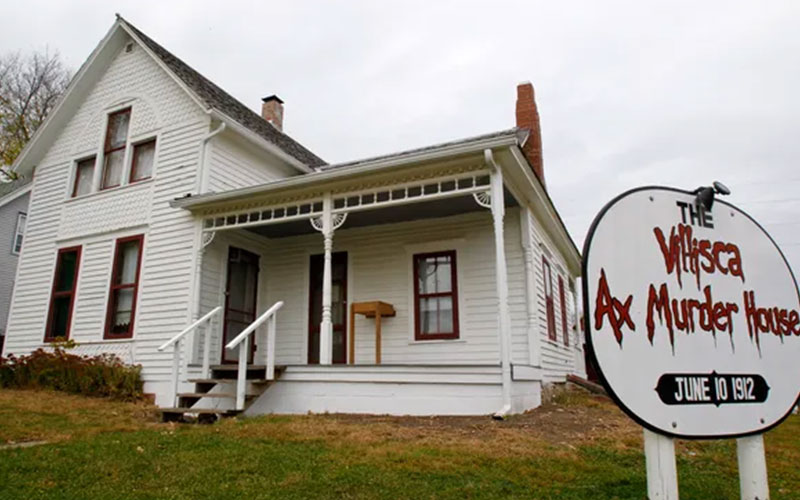
Villisca Axe Murder House, Villisca, IA
This one is just what it sounds like. In 1912 in the small town of Villisca, Iowa a family of eight was slain. A traveling minister, Reverend George Kelly was twice tried for the crime and ultimately acquitted. The case remains unsolved. Rather than bury this bit of grisly history, the Villisca Axe Murder House had been preserved and is open for tours and even overnight stays for the most steeled of ghost hunters.