Latest News
2026 Ford Maverick ReviewCool Car Find: 1956 Hudson Rambler Cross Country

This Hudson Rambler isn’t your average vintage ‘50s wagon. Rarity and a host of modernizing upgrades make for an extraordinary restomod.
Nash & Hudson Ramble On
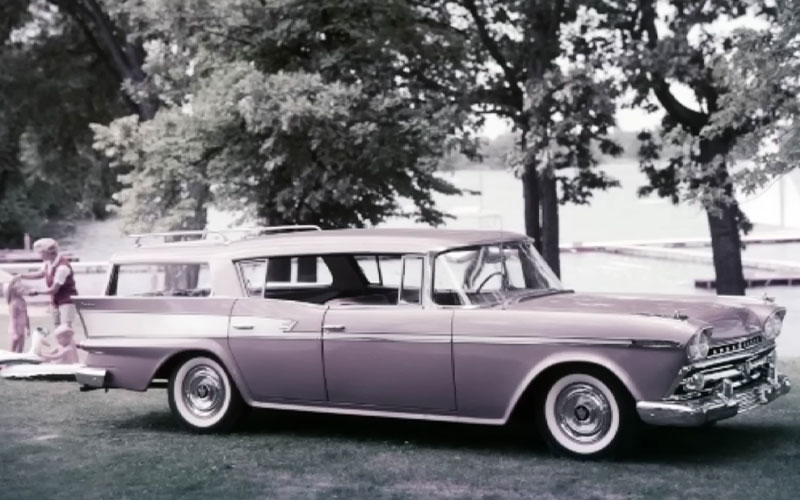
Hudson Rambler Cross Country hardtop – What it’s like on Youtube | Shop 1956 Hudson Super Cross on Carsforsale.com
In the middle 1950s, American Motor Corporation was a new company and in need of a new car. George Romney and the folks at AMC did the logical thing and took a popular existing nameplate and badge engineered a new car, retaining the emblems of the two companies that merged to form AMC in the first place, Nash-Kelvinator and Hudson. And thus, the 1956 Nash/Hudson Rambler was born, an ambitious car with less-than ambitious titling.
The mix of conservative branding, innovative styling, and clever engineering proved the Rambler a success. Even in combining both Nash and Hudson, AMC was still a small company compared to Detroit’s Big Three of Ford, GM, and Chrysler, all of whom were in a hyper-competitive battle for market share. AMC’s approach was to pitch the Rambler as a compact car, smaller and safer than Detroit’s hulking chrome monstrosities.
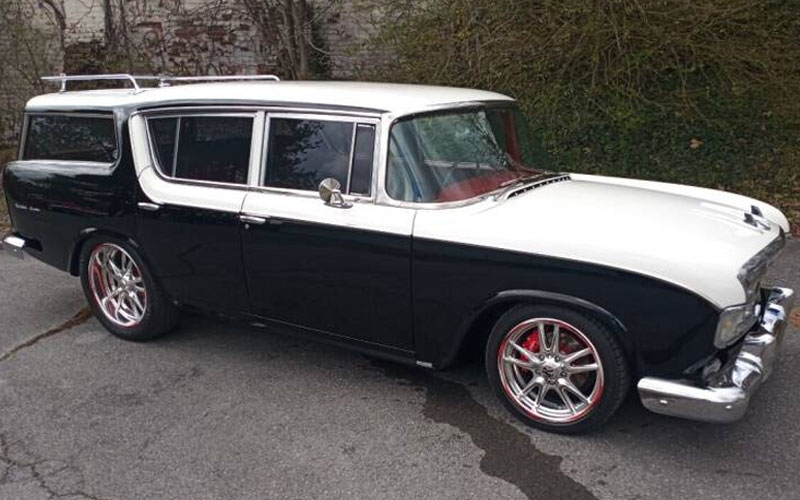
Today’s Cool Car Find isn’t just any old Rambler, either. This is a 1956 Hudson Rambler Cross Country wagon restomodded to hilt with all manner of modern creature comforts and performance parts.
Cross Country Wagon
The Rambler of 1956 had its predecessor in the Nash Rambler. When Nash and Hudson merged, the new Rambler carried either Nash or Hudson badges but were otherwise identical. The Rambler was offered as a four-door only in sedan, hardtop, and wagon body styles (the wagon featured the industry’s first roll-down tailgate window). A then novel unibody construction was promoted as the safer alternative to traditional body-on-frame. MotorTrend even called the Rambler’s unibody build as “Tomorrow’s car of safety.”
AMC’s well-earned reputation for quirky designs goes all the way back to cars like the Rambler. The car’s sharply angled C-pillar and wide-mouthed grille gave it plenty of presence, and two-tone and three-tone paint schemes added still more flair. The most head-turning was the Cross Country hardtop wagon with its B-pillar delete and extensive faux-wood body paneling. The Rambler came in three trim levels, the base Super, Deluxe, and top trim Custom, and offered an array of 15 different interior color schemes, six with leather upholstery. Options included items like power steering more exotic fair like a fully reclining front seat and insect window screens.
The Rambler’s introductory engine was AMC’s Typhoon 196-cu.-in. straight-six with120 horsepower paired with a GM HydraMatic transmission. A 250-cu.-in. V8 was added in 1957 as was a performance version, the hardtop Rambler Rebel, with a 327 V8 under the hood. In 1958, AMC dropped the Nash and Hudson badging and made Rambler its own division. The Rambler also got a new front-end design that same year. New options, including a limited-slip differential and a luxury-esque continental spare tire, were added in 1959, along with air suspension for V8-equipped cars. 1960 was the final model year for the Nash/Hudson Ramblers before it was replaced by the new Rambler Classic.
This Cool Car
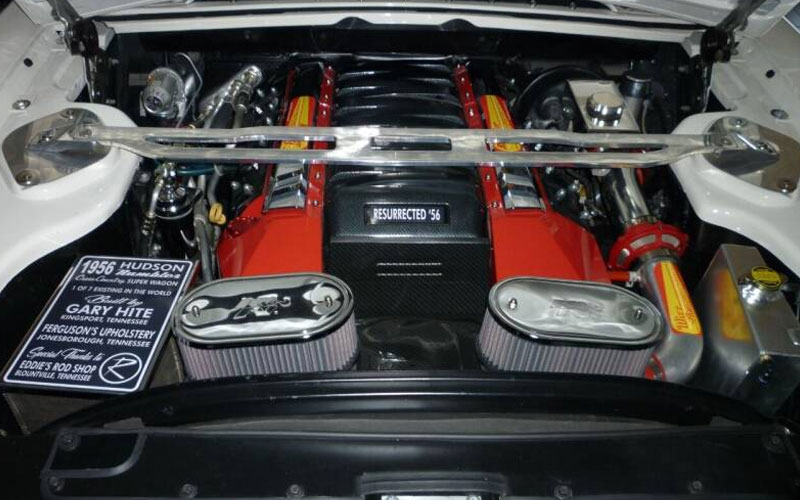
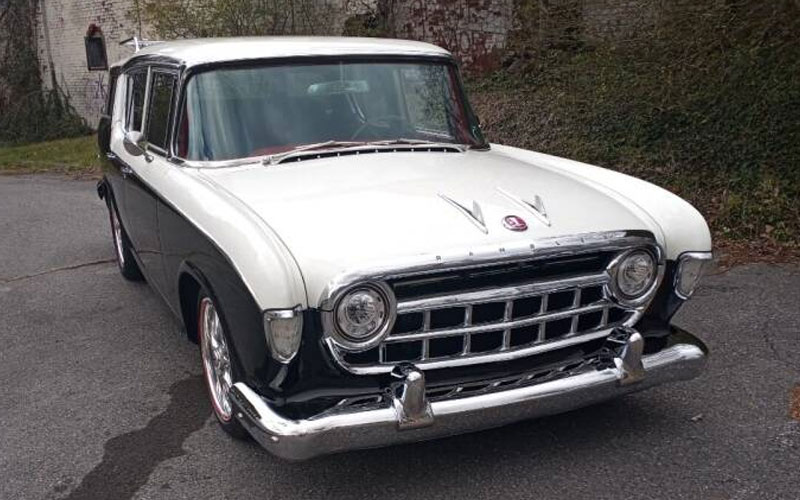
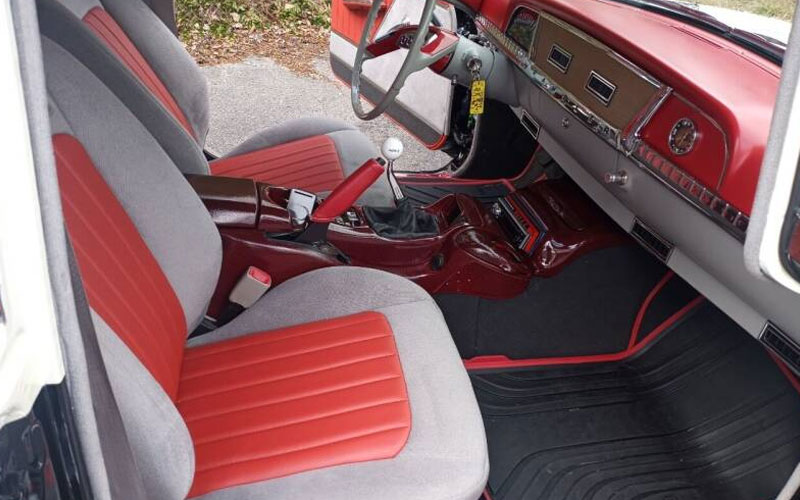
Today’s Cool Car Find would be remarkable enough were it only a 1956 Hudson Rambler Cross Country. As a first-year car and a wagon as well, this car’s combination of rarity and unique styling make it a notable example. But all that was just the starting point for this Cross Country wagon. This is one of seven Hudson Rambler Cross Country “Super Wagons” custom built by Gary Hite of Kingsport, TN. Why “super” you ask? For starters we’d guess the 5.7L LS1 lurking under the hood, paired tastefully with a six-speed manual transmission. The modernization goes much deeper than just the powertrain. This Rambler has a backup camera, Brembo performance brakes, power heated seats, a red carbon fiber center console, digital gauges, LED marker lights, and staggered 17- and 19-inch wheels.
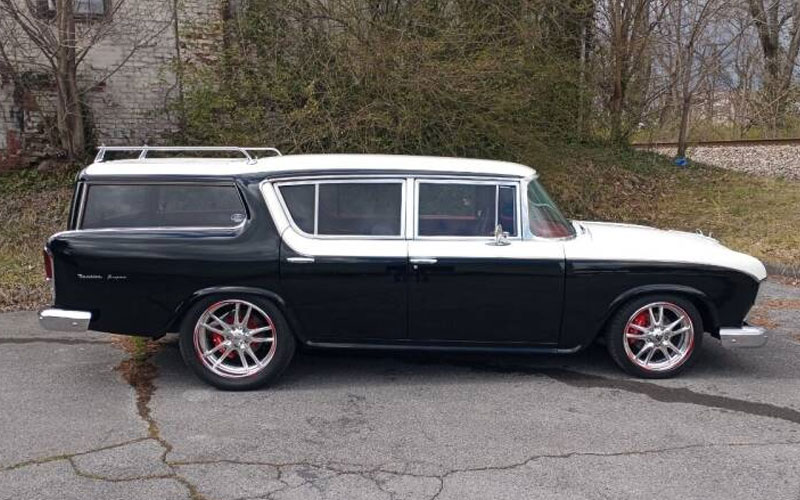
1956 Hudson Super Cross – carsforsale.com | Shop 1956 Hudson Super Cross on Carsforsale.com
Of course, there’s plenty of original details to ogle over as well. The Cross Country makes the most of the Rambler’s angled C-pillar as the jumping off point for the wagon rear end. The roof rails on top are indeed original to the Cross Country. Note too how the Cross Country retains the Rambler’s rear fins. The entire vehicle from top to bottom, inside and out is in stellar condition and maximized for modern comfort and performance, making it one of the most impressive restomods we’ve ever seen.