
Latest News
2026 Is a Pivotal Year for New Cars
The Skyline GT-R and WRX STI 22B are still JDM forbidden fruit, but one ‘90s Japanese classic we did get stateside was the innovative Mitsubishi 3000GT.
From GTO to 3000GT
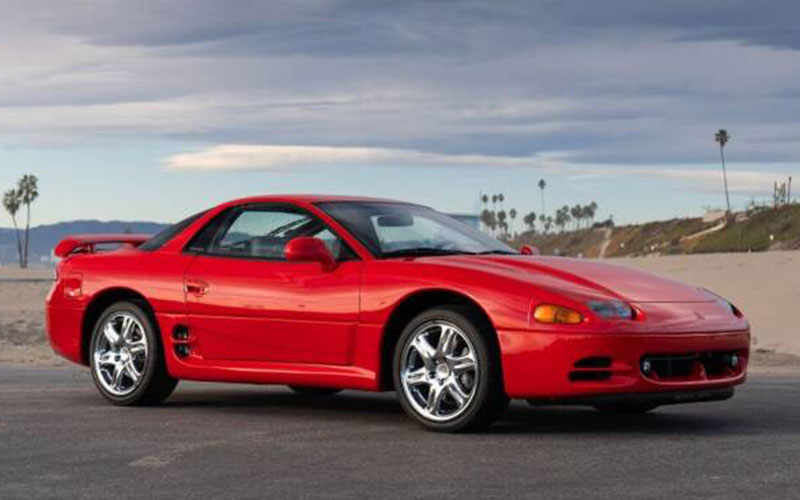
Many of Japan’s greatest cars of the 1990s weren’t released in the US. Time and again, Japanese manufacturers decided to keep their most enticing offerings to themselves and leaving US car nerds with JDM pin-ups on their walls and dreams of an AE86 GT to one day call their own. While those lucky guys over in Japan got turbocharged versions of cars we did not, Mitsubishi took a chance on the US market in 1990 and released the 3000GT.
The Mitsubishi 3000GT was (nearly) everything American fans of Japanese sports cars could dream of. From the twin-turbochargers and advanced aerodynamics to the Ferrari-esque design cues, the 3000GT was inarguably ahead of it’s time.
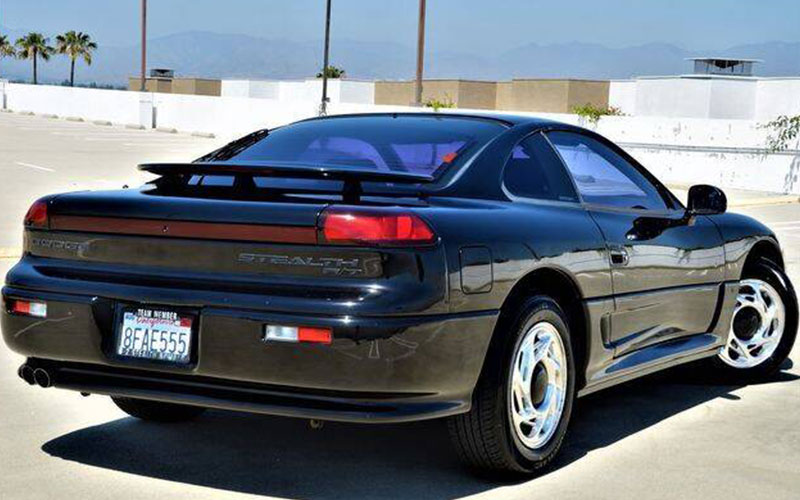
Known as the GTO in Japan, the 3000GT was also rebadged and visually modified under Mitsubishi’s partnership with Chrysler and sold as the Dodge Stealth. After initially robust sales, the Stealth suffered from falling demand for sports cars, getting the ax in 1996. The 3000GT would soldier on three years further, seeing minor updates until it too was canceled in 1999. Back in Japan, the GTO kept on another year, ending production in 2000.
Technical Innovations

The spec sheet of the Mitsubishi 3000GT sounds more like it was built in 2021 than back in the 1990s. Under the hood, the 3000GT came with two engine options. The base and SL trims featured a naturally aspirated 24-valve DOHC 3.0L V6 making 222 horsepower and 201 lb.-ft. of torque. The top trim VR-4 (and Stealth R/T Turbo) added twin-turbochargers to the same 3.0L engine, upping the output to 300 horsepower and 307 lb.-ft. of torque. The base model Stealth also had an optional 12-valve SOHC V6.
Twin-turbos, however, were just the beginning of the 3000GT’s surprises. The VR-4 also featured full-time all-wheel drive, the base and SL settling for front-wheel drive. The 3000GT also offered performance goodies like four-wheel steering, active front and rear aero, and electronically adjusted damping. The VR-4 featured a sport mode with a tunable exhaust for a louder, more engaging roar when you hit the throttle. While not the drift machine that some of its JDM contemporaries were, the 3000GT more than lived up to the GT in its name as a supreme and swift grand touring car.
Updates
Over its decade in production the Mitsubishi 3000GT saw three significant updates which reworked both mechanicals and aesthetics.
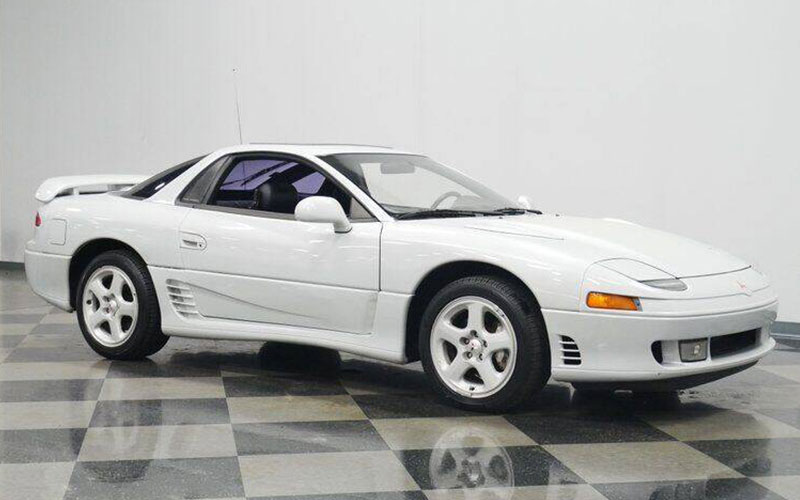
1993 – A new optional six-speed manual and 18-inch wheels were added to the VR-4. It’s engine also received an upgrade, now netting 320 horsepower and 315 lb.-ft. of torque. Active damping was dropped from the suspension. The exterior of the 3000GT also got an overhaul with the pop-up headlights discontinued as well as revisions to the front and rear facia.
1995 and 96 – Mitsubishi introduced a new Spyder variant of the 3000GT with a retractable hardtop roof. The Spyder was available in either the SL or VR-4 trim levels at an added expense of roughly $20,000. This raised the 3000GT Spyder’s price tag to around $70,000. The Spyder version of the 3000GT was only available in the US and dropped after two unsuccessful years.
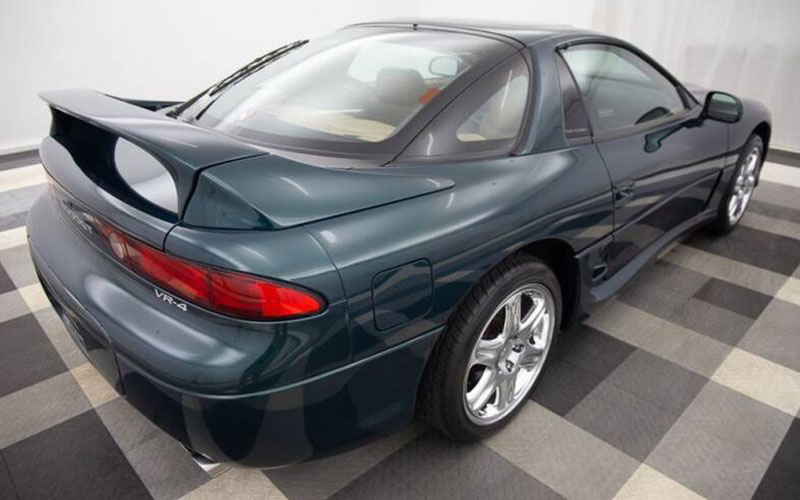
1996 – Active aero was discontinued, as was the badge swapped Dodge Stealth. The SL now came with only the four-speed automatic transmission while the VR-4 was down to just the six-speed manual for its transmission option.
1997 – The 3000GT received another round of visual updates, most notably a new rear spoiler. The SOHC engine from the base Stealth was also ported over as an option for the 3000GT.
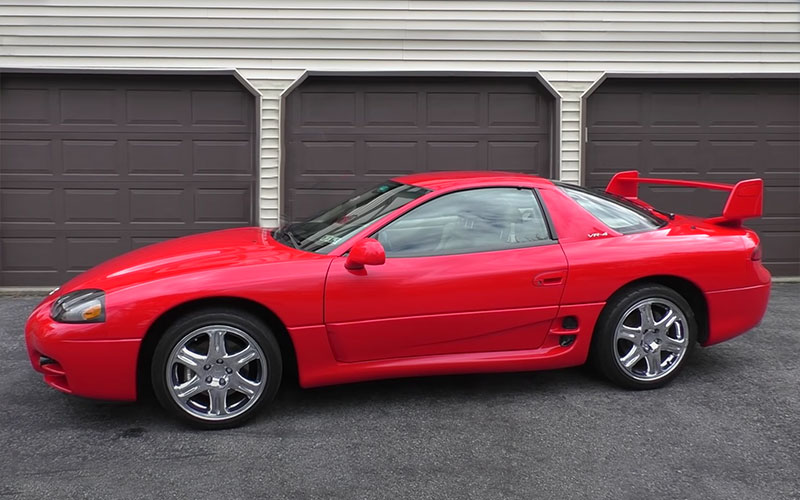
1999 – Oddly, in its final year, Mitsubishi gave the 3000GT another visual refresh. The VR-4 got its own specially designed inverted airfoil dubbed the “Combat Wing”.
A Twin-Turbo Swan Song
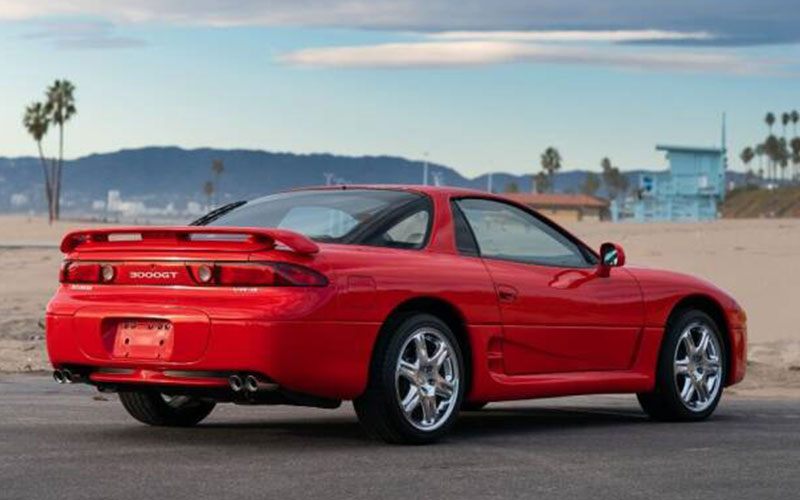
Sadly, cost-cutting, a weak Japanese yen, and the shift of US car buyers toward SUVs spelled the end for the Mitsubishi 3000GT. Despite how cool it looked, the 1999 3000GT VR-4 only sold 287 units in the US, making it a striking and sought-after collectors’ car.