Latest News
2026 Hyundai Santa Cruz
A classic of 1930s automotive design, the elegant BMW 327 survived WWII and Soviet occupation.
A Definitive ‘30s Bimmer
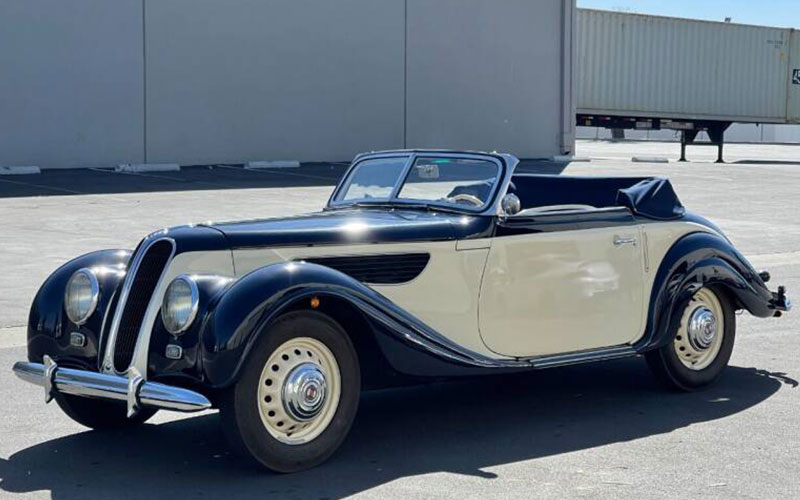
In 1937, BMW debuted the 327, a two-door touring car version of their 328 sports car released just a year prior. The 327 came in coupe and cabriolet body styles and carried over most the 328s body. Present is the split windshield, the BMW signature kidney grille, a spare tire on the trunk lid, and boldly swooping fender lines. The BMW 327 is an excellent example of 1930s automotive design with an interesting history.
Under the Hood of the BMW 327
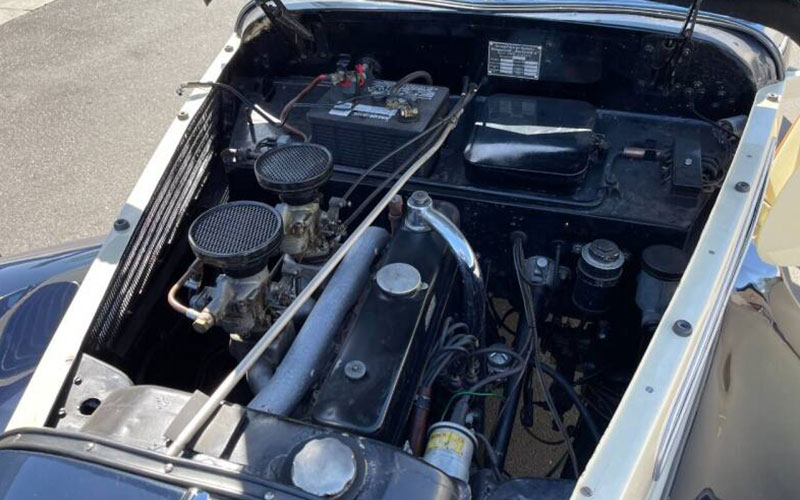
Most of the powertrain, drivetrain, and suspension was actually carried over from the BMW 326, including the M78 2.0L straight-six engine featuring a downdraught carburetor along with a revised compression ratio (6.3:1) and a new cylinder head. The 327’s aluminum-alloy engine which made 55 horsepower at 4,500 rpm and could produce a top speed of 77 mph. It was paired with a four-speed dry-clutch manual transmission. Additionally, the 327 sported hydraulic brakes, a live rear axle, and weighed in at a svelte 2,425 lbs.
In addition to the M78 engine, there was an option for the BMW 327 to have the M328 engine from the 328 race car. This version, known as the 327/28 produced up to 80 horsepower and attained a top speed of 87 mph. 569 examples of the 327/28 were produced prior to 1940.
Two Decades, One Look
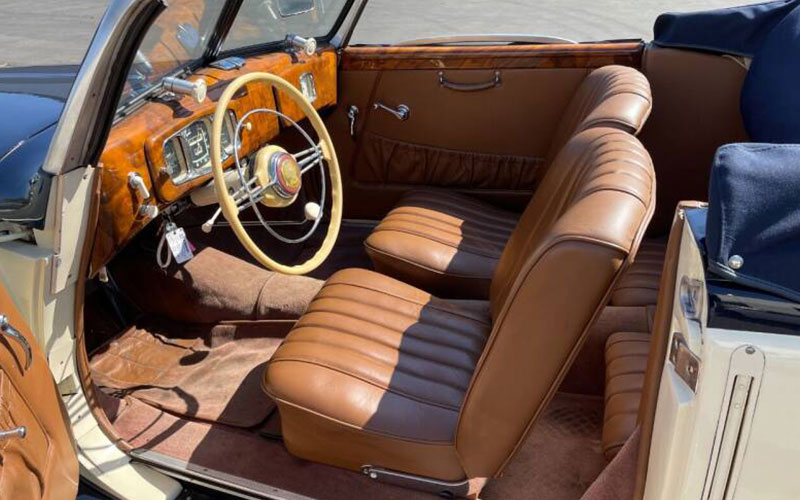
Production of the BMW 327 was halted in 1941 due to the war and production was shifted to military vehicles including motorcycles and airplanes. Production of cars wouldn’t resume until 1945. The 327 had been produced in BMW’s Eisenach factory became part of Soviet East Germany after the war. Though the Eisenach factory continued to produce cars, the Soviets did so without BMW’s sanction or control. Despite this, the 327s built between 1945 and 1952 still carried the BMW emblem until litigation finally forced a badge change. As on our 1953 example here, these cars carry the Eisenach Motor Works red and white emblem.
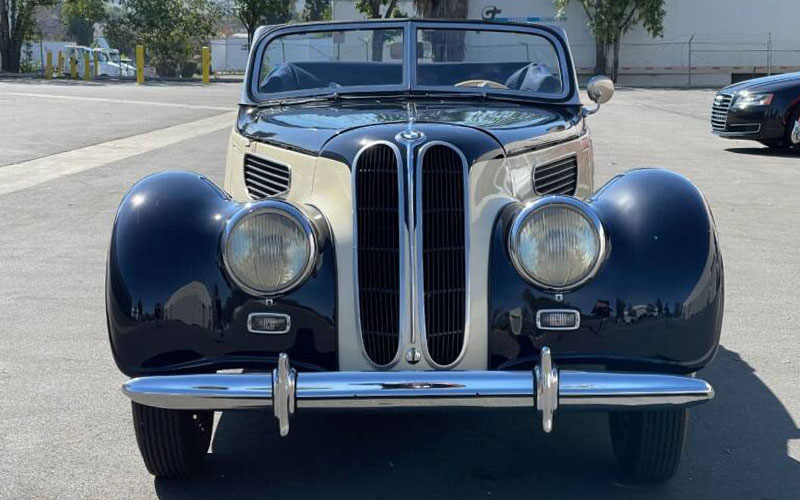
The badging isn’t the only way to distinguish pre and postwar 327s. For many years, prewar 327s featured rear hinged doors, while later versions featured a conventional forward hinge. The circular turn signals of prewar 327s occasionally sat atop the fenders, and then moved to a perch on the front bumper before finally being integrated into the front facia below the headlights.
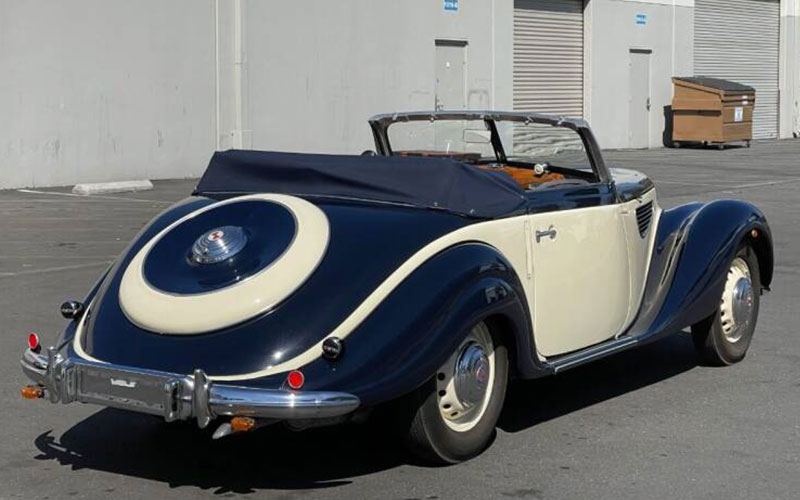
Production of the BMW/EMW 327 ceased in 1957. The exact numbers are lost to history, but just over 1,300 prewar BMW 327s were produced and approximately 500 produced during the postwar period.