Latest News
2026 Ford Maverick Review
The life and death of Saab is a, ahem, Saab story that fans of the quirky cars the world over are sure to continue lamenting to this day.
From Airplanes to Automobiles
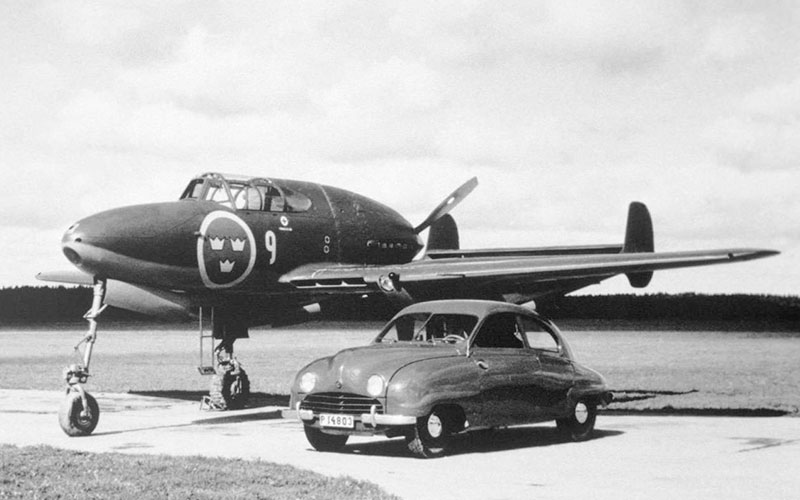
It’s not every automaker that is treated like a member of the family upon passing into the defunct zone. Looking at you Saturn. But a Swedish company that made fighter planes, that’s a different story. It is also today’s story, the life and death of Saab, a beloved maker of quirky cars for over 70 years.
As World War II came to an end, Svenska Aeroplan AB – Saab for short – was looking to diversify as their steady business of supplying aircraft to the Swedish Air Force was naturally slowing down. And so, in 1945, Saab Automobile was born.
The Birth of the Saab 92
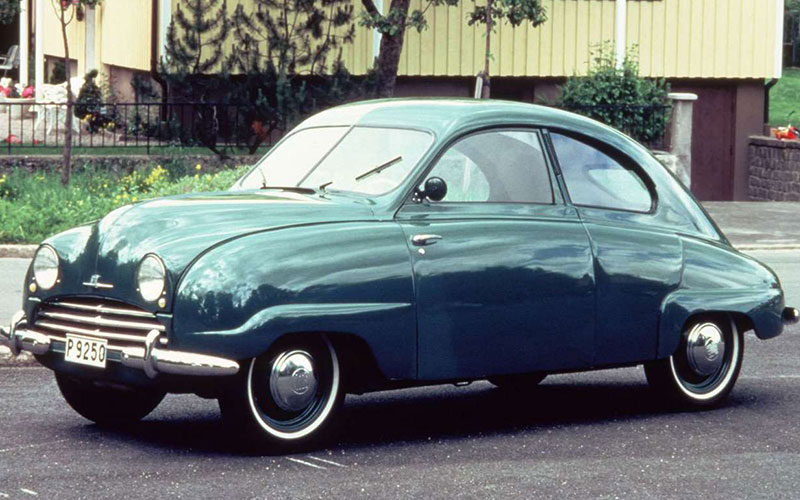
Their first car, the Saab 92 arrived. With that name, the 92 kicked off a long history of Saabs featuring the number 9 in their moniker. At the time, it was simply the next number following the company’s most recent project, the 91, a single-engine trainer aircraft.
With a face resembling stuffed chipmunk cheeks, the 92 was notably aerodynamic thanks to its shape and the fact that the entire body was stamped from a single piece of sheet metal, one of many innovations Saab would show off over the years. With a 764 cc two-stroke two-cylinder making 25 horsepower, the Dark Green-only 92 (thanks to a huge paint surplus from the Swedish military), would officially put Saab on the map with some 20,000 produced.
The Saab 92 would spawn a host of similarly styled offspring including the obviously named 93, 94, 95, 96, and 97 over the next 30 years. The Saab 96, introduced in 1960, was the first model seeing export far beyond Sweden’s borders and became an unusual – because of that two-stroke motor requiring oil be added to the gas tank – but popular car.
Merger with Scania and the “Combi Coupe” Saab 99
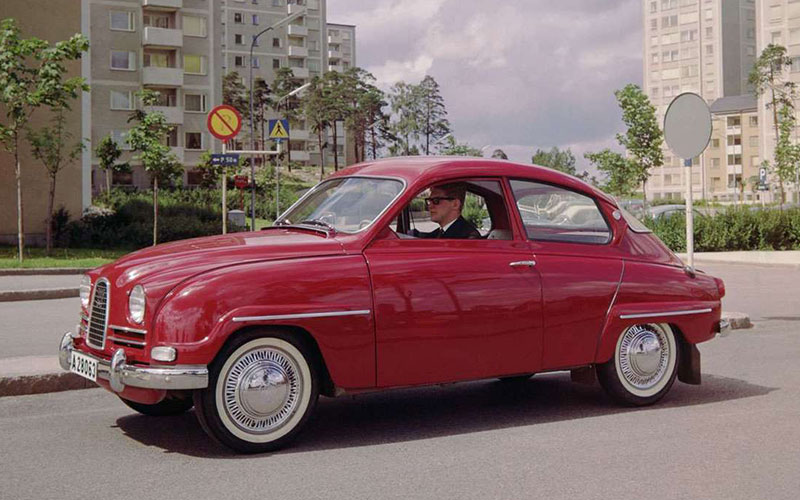
It was in 1969 that Saab first began one of its many forays into tie-ups with other organizations in the interest of increasing sales. Merging with Swedish manufacturer Scania, the newly formed Saab-Scania AB would adopt the famous Crowned Griffin logo, which comes from the coat of arms for the Scania province of Sweden. It would also mark the arrival of the Saab 99, the first all-new model in nearly 20 years and a clean departure from the long-running 92.
Designed by Sixten Sason, the Saab 99 ushered in the trademark “combi coupe” body style, a term the automaker coined to describe the hatchback-meets-fastback lines. There was also the hockey stick-shaped curve that ran around the C-pillar, which would define nearly all Saabs going forward. Along with such highlights as the Saab 99 Turbo, this new model would lead to the all-time cult favorite Saab 900.
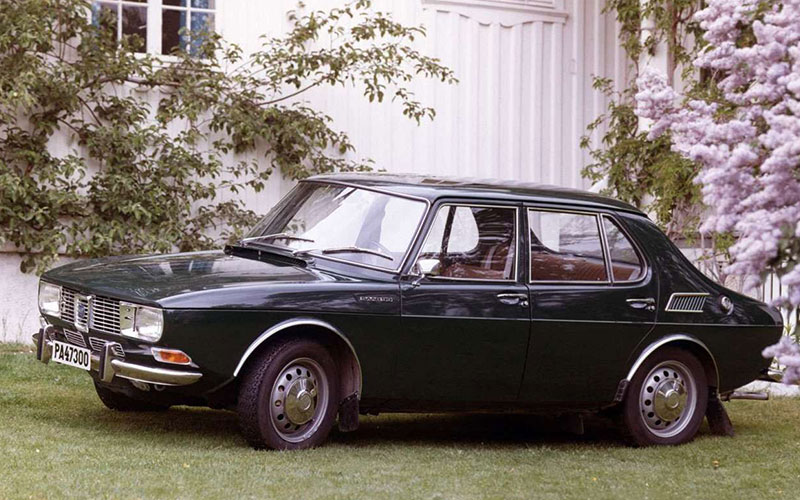
Known today as the “Classic 900”, Saab would produce nearly one million of the 900 between 1979 and 1994, making it their most successful and iconic vehicle ever. It was also one of the most durable as evidenced by an example that went a million miles. At about the same time, Saab entered into a new agreement, this time with Fiat, to expand their horizons. Selling a rebadged Lancia Delta as the Saab 600, the “new” car not only eschewed the traditional number 9 naming convention, its southern European construction resulted in cars practically disintegrating before their owner’s eyes in the salty winters of Scandinavia.
Undeterred, the relationship continued with the Type Four chassis, an epic badge engineering experiment that birthed the Alfa Romeo 164, Fiat Croma, Lancia Thema, and new-for-1985 Saab 9000 all on one platform. Designed as their first true luxury car, the 9000 ultimately did not sell as Saab hoped. And here is the crux of the life and death of Saab. Though they managed to build a reputation for excellent engineering and uniquely Swedish cars, Saab struggled to move beyond its role as a relatively small niche player and into the big leagues.
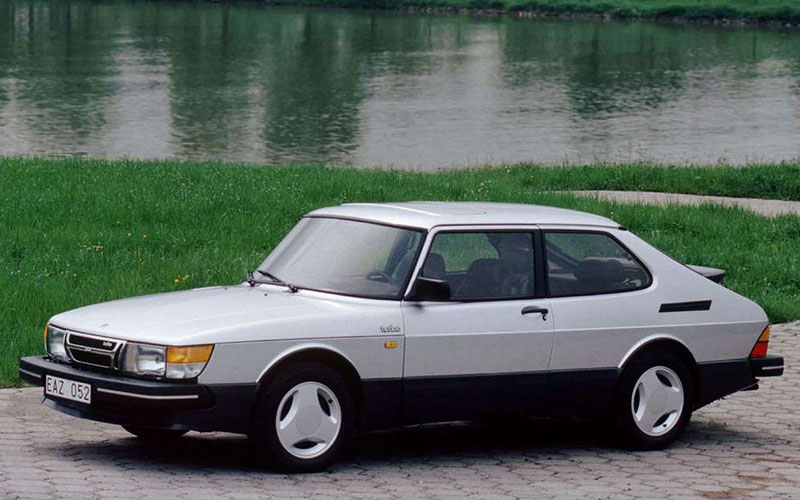
The inherent quirkiness of Saab’s cars appealed to a specific audience, not the masses. But it required the masses to stay in business. This paradox would lead Saab into the welcoming embrace of General Motors and eventually, its demise. Truly, it is the ultimate Saab story (I had to say it).
GM and Saab: A Joint Venture Marking the Beginning of the End

It was 1989 when GM took a 50% stake in Saab along with an investment of $600 million for the option to acquire the whole enchilada within 10 years. To be fair, this new arrangement was not all bad. Saab would end up turning a profit for the first time in seven years. Production volumes would swell, enthusiasts received the Saab 9-3 Viggen, and there were a handful of sweet station wagons over the years that would rival national competitor Volvo with their classic 240.
But in 2000, GM took 100% control of Saab and the end came relatively quickly. A new 9-3 arrived in 2003 – a car we look back on here – but the combi coupe style was gone, replaced by bland sedan lines. GM went on a badge-engineering binge with the 9-2X “Saabaru” and 9-7X, otherwise known as the Trailblazer. The General canned a hatchback 9-3, delayed the wagon version and moved the replacement Saab 9-5 from 2005 to 2010.

By 2008, the Saab brand was “under review” by GM due to weak performance, and in the Swedish equivalent of Chapter 11 bankruptcy that same year. Over the next three years, Saab would struggle to remain a going concern by courting saviors from the likes of Swedish supercar maker Koenigsegg, Dutch boutique manufacturer Spyker, Russian banker Vladimir Antonov, and a wide range of Chinese organizations.
With proposals falling through left and right, and GM refusing to cut their assets loose to China-based competitors, Saab officially went bankrupt in December 2011. Ultimately, National Electric Vehicles Sweden (NEVS) – which is actually a Chinese-run company – acquired the rights to the original Saab 9-3 with a plan to transform them into electrics at a factory in China, but without the Saab name. And that, as they say, is that – the end of the much-loved Saab brand.