Latest News
2027 Chevrolet Bolt ReviewHands on with the 2026 Hyundai Palisade Calligraphy
We take the Palisade’s highest trim level for a hands-on preview. Join us as we take a look at the interior, technology, and cargo space.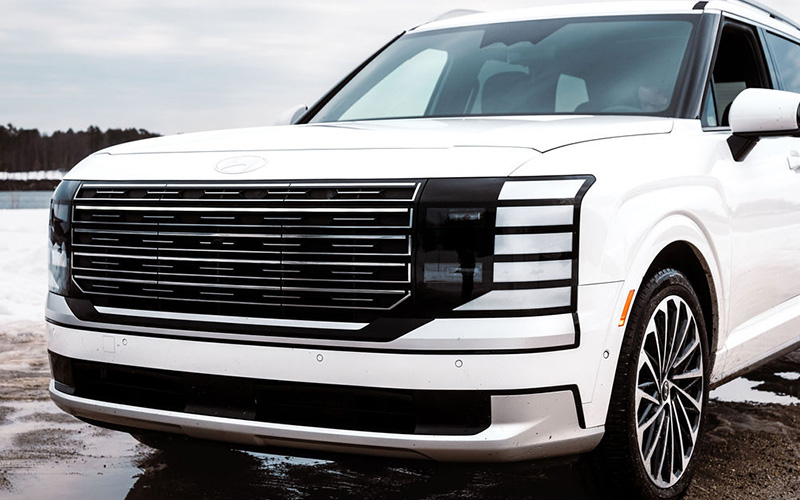
Meet Hyundai’s Newly Refined Flagship
Hyundai’s Palisade has a been a 3-row SUV favorite since arriving in 2020 as the elegant foil to its more ruggedly styled Kia Telluride corporate cousin. For 2026, the Korean automaker overhauled its flagship full-sizer to kick off generation two. A few inches longer and redesigned to align more closely with the Santa Fe and Ioniq 9 EV, this latest Palisade looks pretty nice on paper.
To see how that translates to the real world, I spent a week putting the 2026 Palisade through its paces. Specifically, the top-of-the-line Calligraphy model. In its lowest-spec setup, the Palisade SE has a $41,035 sticker including destination. The Calligraphy comes in at $56,160 with the only major options being premium paint, like the $500 Creamy White Pearl finish on this car, and a $2,000 HTRAC all-wheel drive system.
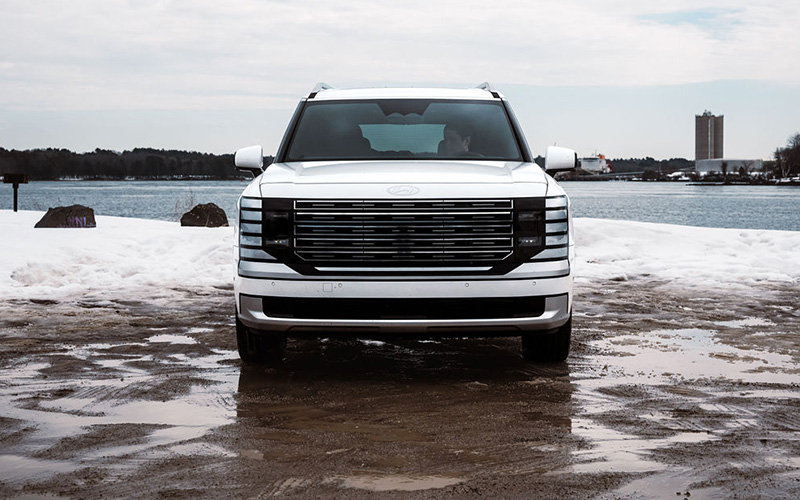
Without a doubt, the crisp lines, 21” rims, and monochromatic treatment give the Palisade Calligraphy distinct Range Rover vibes at nearly half the cost. But it’s still a $59,000 SUV, which is not exactly cheap. Fortunately, Hyundai’s reputation for creating value-packed vehicles remains intact, even at this price point.
Hyundai’s Push Toward Premium Territory
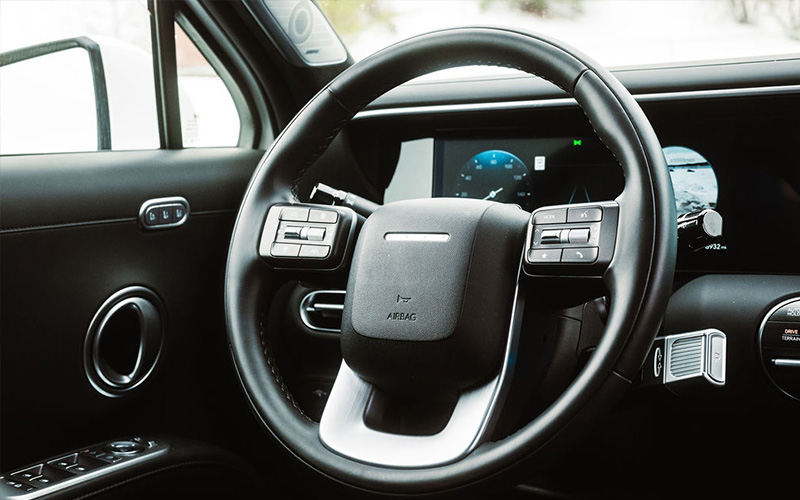
Big, upright lines on the new Palisade are complemented by a visual sleekness. The front and rear lighting designs appear to be vinyl decals from a distance. They’re not, of course, but this sense of ultra-smooth body lines is backed up by one of the lowest drag coefficients in the segment.
Calligraphy-only content includes 21” rims that fill out the wheel wells nicely and a blend of silver and body-color trim that dial up the luxury-adjacent vibe. On startup, the active grille shutters do a little dance and the entire front-end of the Palisade performs a lighting animation across the grille and around the stacked DRL setup. Take a closer look and you’ll see sensors and cameras all the way around.
Like a large camera tucked under the rear spoiler that lends a hand with the built-in dashcam and digital rearview mirror – two high-tech features that come standard on the Calligraphy. Technology is a resounding theme of the second-gen Palisade, as is a clear push into the premium space, evidenced by the shimmer of this example’s pearlescent finish.
Cabin Comfort Takes Center Stage
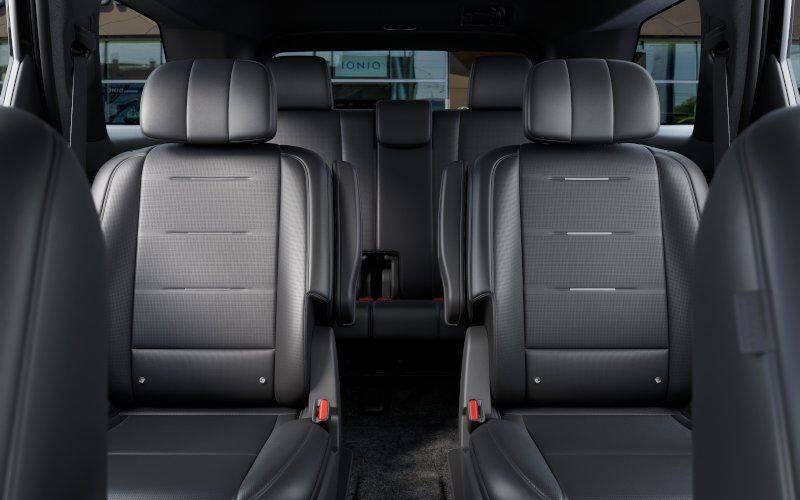
Every 2026 Palisade has 3-rows of seating. Entry models offer a middle-row bench and room for 8, but the Calligraphy comes strictly with captain’s chairs, which reduce space to 7, and are more akin to thrones. Heated, ventilated, and equipped with a Relaxation Mode that turns each seat into a Barcalounger, the second row is only outdone by what’s up front. Massaging seatbacks, adjustable bolster air bladders, and power-extendable leg rests are all on the menu.
It’s a nice place to be and even occupants in the way-way back get heated cushions. Full-size adults can fit back there too. I’m 6’ tall and got myself situated thanks to the power-sliding middle seats. But finding your way to the third row is a bit tedious as you can only move the captain’s chairs with a button…and it isn’t exactly quick. Other quibbles include difficulty accessing the storage area at the bottom of the center stack – the angle is awkward – and the Sea of Black sensation of the cabin. I’d recommend checking out the brown or gray and navy interior design options on your Calligraphy.
Otherwise, serenity abounds, what with the heated steering wheel (it’s still winter in New Hampshire), snazzy ambient light piping, and a panoramic moonroof. As for cargo space? The word cavernous comes to mind. You can fit 5 carry-on bags behind the 3rd row, and all that power-operated seat adjustability comes in handy when standing out back and figuring out how to stow your gear.
A Full Suite of Smart Tech
Hyundai doesn’t skimp on technology in the 2nd-gen Palisade, particularly on the top-line Calligraphy. Like the rest of the lineup, it has a panoramic infotainment interface, replete with wireless Apple CarPlay and Android Auto. Features exclusive to this model include a head-up display (HUD), Highway Driving Assist 2 (HDA 2), and digital rearview mirror. That mirror works like a traditional version, but when you flip the toggle expecting nighttime anti-glare functionality, you are instead greeted with a live view of what’s behind the car.
It’s a weird sensation on the highway having that live stream flowing in the rearview mirror, but it works wonders when the inside of you Palisade is packed with people and stuff. HUDs are the kind of automotive tech that should join backup cameras in becoming mandated. Having your current speed floating off the hood is a great way to limit the distraction of glancing down at the speedometer for a quick check, and in the Calligraphy, it can be configured to display ADAS alerts, navigation directions, and details on who’s calling.
But HDA 2 steals the Palisade technology show. Like HDA 1, it blends adaptive cruise control and lane-centering to bumper-bowl you down the highway with uncanny ease. That number 2, however, brings automatic lane change assist that sees the big SUV doing just that at the flick of the turn signal. It’s a little freaky at first, but after some practice, I started to find it rather helpful.
Composed Performance Behind the Wheel
Every 2026 Hyundai Palisade comes with a naturally aspirated 3.5L V6 rated for 287 horsepower and 260 lb-ft of torque. That is unless you go with the new hybrid variant, which may be worth a shot as I managed just 14 mpg in around-town driving with a few highway stints mixed in. In fairness, I only put a couple hundred miles on the Palisade, so perhaps a longer stretch would prove beneficial here.
Fortunately, the ICE version takes regular and makes up for its gas guzzling ways with a comfortable ride over potholed roads, even with those big 21 inch wheels. The 8-speed automatic felt seamless and when pressed, this 4,800-pound AWD crossover gets up and moves with confidence. Steering feel is a bit sleepy, but given the target demographic, it’s not like Hyundai is going to give this big family vehicle an Elantra N steering tune. As far as family haulers go, the Palisade gets an A in the ride comfort department.
A Premium People‑Mover
There are plenty of big crossovers to choose from these days and in this crowded space, the 2026 Hyundai Palisade stands out with its fresh styling, comfortable cabin, impressive tech, and strong powertrain. Fuel economy is not great, but that’s what the hybrid is for. As for Hyundai’s value equation, it stays intact, even at the near-$60K Calligraphy level. That’s a lot of outlay, but is right on par with a range-topping Mazda CX-90.
Really, this particular Palisade model is ideally suited to a family with older kids – think high school or college. Mainly because the back seats don’t want to be rushed, are wrapped in a fine Nappa leather that shouldn’t be subjected to the kind of pounding that only tiny humans can dish out, and you get to play chauffeured passenger back there. It’s nice alright, but you might want a slightly less nice (and cheaper) Palisade if you’re still in little kid mode.
Related Articles