
Latest News
2026 Chevrolet Tahoe Review
Are studded tires worth it? That depends on a host of factors, all of which we dive into here, along with other ways of driving safely in the snow.
The Pros and Cons of Studded Car Tires

If you live and drive in an area that experiences long months of winter weather, like here in New Hampshire, you may have asked the question, “Are studded tires worth it”? As with so many things, the answer to that question is a definite maybe, that could be a hard yes depending on your lifestyle. Before deciding to buy studded tires, it’s important to understand what exactly they are.
Do all Winter Tires Have Studs?
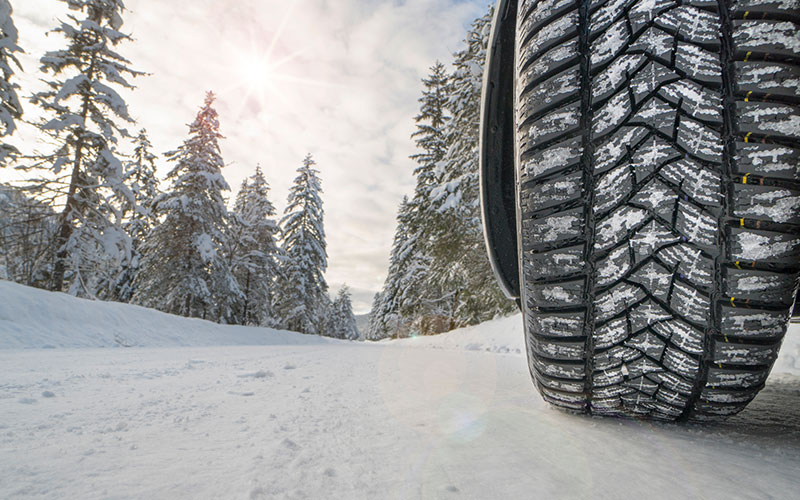
Not all snow tires are studded tires. You can think of studded tires as the most extreme version of car rubber when it comes to navigating wintry conditions.
A wide range of vehicles, particularly of the popular SUV category, come from the factory riding on all-season rubber. This is a misnomer; they should really be called all-season-except-winter or three-season tires. The compounds used to create these seasonal tires perform fine as long as the mercury doesn’t get below freezing for an extended period. At below freezing temperatures, all-season tires get stiffer and begin to offer less grip, especially in the snow.
Winter, or snow, tires on the other hand, are designed to perform in icy cold winter driving and actually become more pliable, with siping that holds onto the white stuff to offer snow-on-snow contact and therefore, a higher coefficient of traction. Also known as studless winter tires, these are an excellent option for those who live in the Snow Belt and traverse roads that are treated and maintained. We cover the pros and cons of studless snow tires here.
When To Use Studded Tire

If you find yourself driving on hard-packed snow and ice consistently, the answer to the question, “are studded tires worth it?”, is a resounding yes.
This is because the small metal, or rubber, studs protrude past the tire’s tread by 1/32-inch and dig into hard-packed snow and ice like tiny claws. From accelerating, to maneuvering, to stopping, studded tires provide the ultimate in traction for these specific conditions. However, if the road surface is covered in wet slush or is dry with icy air temperatures, studded tires lose their advantage.
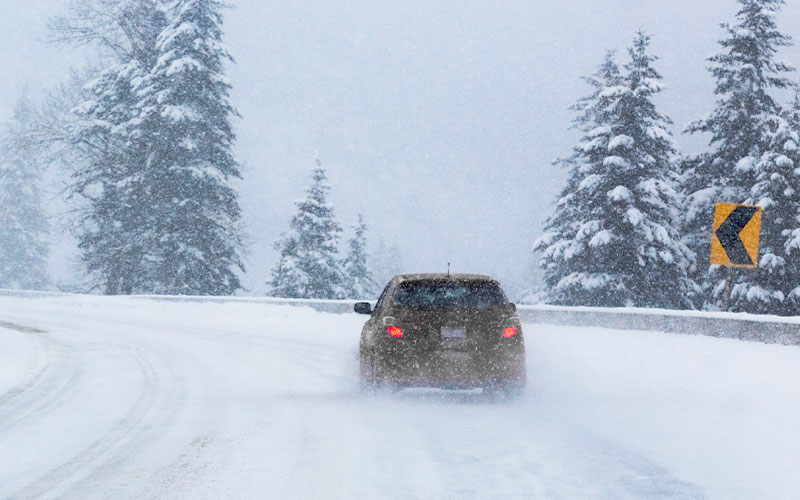
Due to how the studs protrude from the tire, they increase stopping distance, reduce maneuverability, and create a whole lot of noise if there is not a layer of ice or frozen mud for them to dig into. This is where the conversation becomes more nuanced. Unless you expect to be driving on frozen surfaces for weeks or months at a time, studded tires are not worth it.
Some examples for using studded tires include folks traversing dicey Rocky Mountain passes in the dead of winter, those who use unpaved roads that tend to stay frozen all winter, or anyone who works for the local Ski Patrol. For this group, the unmatched grip provided by studded tires makes them worth the extra expense. As always, it’s worth being prepared for the possibility of getting stuck in the snow, so read up on how to unstick yourself before heading out.
When to Avoid Using Studded Tires
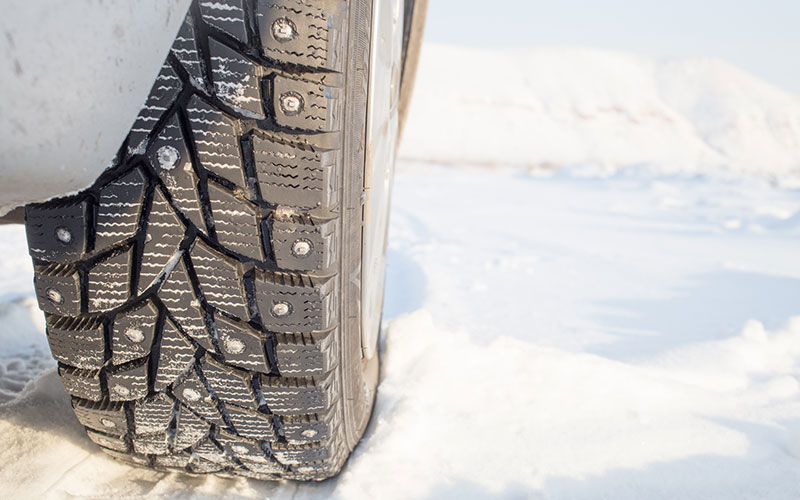
Along with the detriment to handling mentioned above when not used in specific conditions, metal studded tires are also prohibited in some states, including northern locales like Minnesota. In others, they are subject to date restrictions, like Maine where they can only be used between October and May. Part of the reason behind these restrictions is that metal studs can literally tear up paved roads when used improperly. So, it pays to investigate the rules and regulations for your state before committing to studded tires.
Which brings up another point – cost. A 17-inch Bridgestone Blizzak snow tire, without studs, will run you about $600 for a set of four. This tire also happens to be one of our favorites for winter conditions. That same size, which you might find on these snow-ready rides, in a studdable General Altimax or studded Nokian Hakkapeliitta will add an extra $100 or so to the cost.
What Are Studdable Tires?
Studdable tires are an in-between option that function as winter tires without the studs mounted, but can be fitted with studs should you require them. That process, of fitting the studs, should be done by a pro to ensure proper installation, which adds additional cost.
Are Studded Tires Worth It?
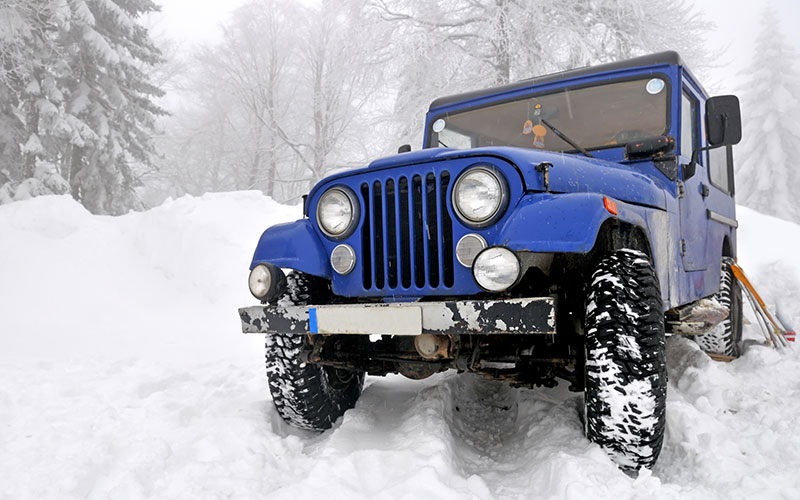
So, the answer to the question, “Are studded tires worth it?”, is yes, but only if you are encountering hard-packed snow, mud, and/or ice-covered roads on a regular basis. They are ideal for this very specific set of criteria but are more expensive than studless snow tires, face various restrictions around the country, and are naturally limited in their usability. However, you can work around this with a little creativity to match your needs.
For instance, you could fit your vehicle with studless snow tires and safely navigate typical winter conditions. If you plan to travel in areas where studded tires would come in handy once in a while, bring along a set of tire chains or cables to put on when needed. For those with rear-wheel drive, adding sandbags to the trunk or truck bed can help keep those rear wheels grip the road in the slippery stuff.

Buying studdable tires gives you the benefit of winter rubber compounds with the option to add studs should the need arise. Ultimately, adding studded tires to your cars is worth it, but only given the right set of conditions. If you do go with studded tires, make sure to learn about how to inspect them as they will wear faster than all-season tires.