
Latest News
2026 Ford Maverick Review
Low car inventories continue to challenge dealers and car buyers alike; here’s the latest, along with some advice.
Inventory Woes Continue

The challenge of finding your next new or used vehicle won’t be getting easier any time soon. Many of the current factors contributing to low car inventories at dealerships are projected to persist, in some form or another, well into the third quarter of 2021. And while low inventories are a challenge for dealers, they’re also a boon. As demand has rebounded from its nadir last spring, production delays have created scarcity in the market that has driven prices higher. For car buyers, this means having to be both more patient and more willing to compromise to find the right deal.
The largest contributing factor to low car inventories is a global shortage of microchips. As we wrote last month, this shortage has forced the majority of automotive manufacturers to slow down or halt production lines for want of the critical computing components.

In addition to the shortage in microchips, the winter storm in Texas disrupted plastic supplies and pandemic related shipping delays have swamped West Coast ports where Asian made cars parts pass through. All this combines with the reverberations of last spring’s production shutdowns to create a perfect storm of production delays.
Econ 101
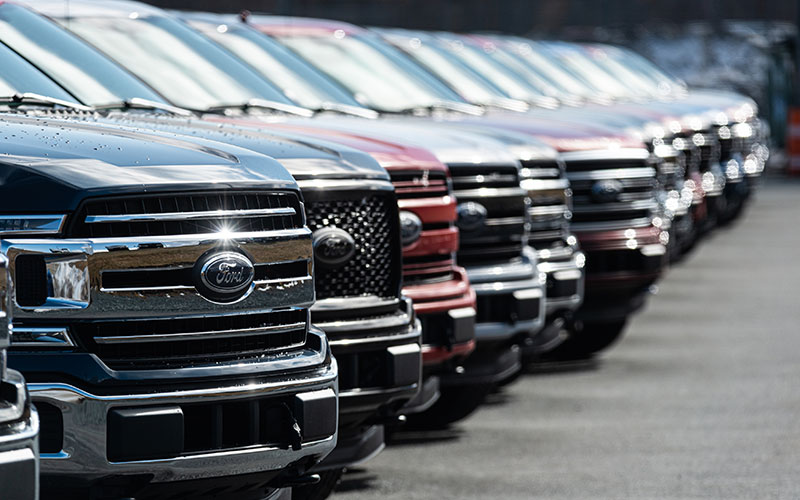
Steady demand and low supplies have driven prices (and profits) higher. Nation wide inventory levels for new cars where down 17% year-over-year in February and tumbled even further in March, down 36% from 2020 levels. As a result, prices have risen, with new vehicles up 5.45%. For used cars the numbers are equally pronounced with inventory down 12% and prices up roughly 10%.
Certain popular, high margin segments have been especially hard hit by production delays including crossovers, SUVs, and full-size trucks. Inventory is down nearly 60% for full-size trucks which in turn has driven sale prices up an average of $3,600 for new trucks and a whopping $5,000 for used trucks.
Advice For Car Shoppers

All this has made car shopping even more challenging than usual. Yes, prices are up. And yes, your choices are more limited, but there are a few things you can do to ensure you’re still finding the best deal you can in this tumultuous market.
First, widen your search area. Take advantage of internet listing sites like our own Carsforsale.com and look beyond your immediate 25-50-mile radius. To find the car you want at a reasonable price you may have to put in more leg work, literally.
Next, be willing to compromise. This means both in terms of negotiating your price and in terms of the vehicle you want. With inventories low, you might not be able to get the vehicle you want with the color you’re looking for or the trim level you desire. You may also have to be more flexible when negotiating. Normally, the worst thing for a salesperson is for you to walk out the door and they’re incentivized to consider reasonable counter offers, but with demand this robust, their “can’t budge” price might be just that. Haggle, sure, just don’t expect the same give and take you’re used to.

And finally, act fast when you do find a reasonable deal on your desired car. If you’re in the market for a car right now, know that this is an unusually competitive market and good deals are getting snatched up fast. Normally, we’d advise being as methodical as possible when buying a car, new or used. And while we still counsel doing your due diligence by researching the vehicle in question and comparing prices, you won’t have the luxury of deep inventories you usually would.
The kinks in supply chains and the availability of microchips won’t be fully untangled for many months to come. As a result, most experts project inventories to stay depressed through much of the year and prices to stay elevated as a result. For car shoppers that means being flexible and being ready to pounce when a good deal presents itself.