Latest News
2026 Ford Maverick Review
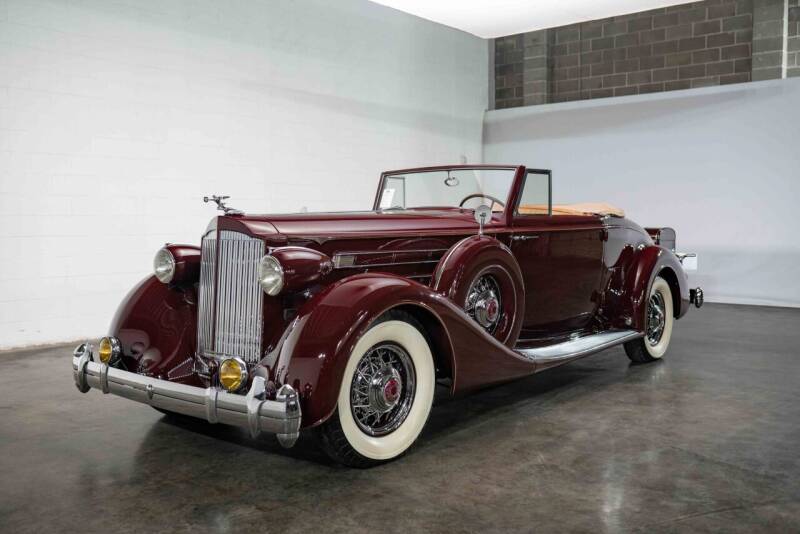
This stunning fully-restored 1935 Packard Victoria 12 convertible has the exclusivity, one of seven, to take any automotive collection to the next level.
1935 Packard Twelve Convertible Victoria
The 1930s was a time of upheaval across America due to the Great Depression. It was also a time of spectacular automobiles like the 1935 Packard Victoria 12 convertible currently for sale here, from a storied brand known to this day for creating supremely luxurious vehicles.
The Packard Car Company
1935 Packard Victoria V12 – carsforsale.com | Shop Packard Victoria 12 on Carsforsale.com
Started just before the turn of the 20th century by James Packard, his brother William, and George Weiss, Packard Motor quickly staked its future on the top of the market. At the time, new cars cost in the neighborhood of $400 to $1,000. Buying a Packard, however, required $2,600 which put it in the conversation with Rolls-Royce and Mercedes-Benz.
That big ticket price was backed up by excellent reliability and exacting build quality. Combined with a host of innovations like the first use of a 12-cylinder engine in a production automobile, owning a Packard was a prestigious affair. To this day, surviving examples are commonly found in museums and private collections.
Between 1916 and 1923, Packard produced the Twin Six series of vehicles. As the name implies, these cars were powered by a pair of six-cylinder engines mated in a 60° vee configuration that offered 88 horsepower from the 424 cubic inch V12. Fast forward to the early ‘30s and Packard – along with the rest of the country – was in the throes of the Great Depression.
Packard Increases Production amid the Depression
The automaker was cautiously optimistic about an economic recovery. As a result, Packard took the bold step of increasing production to include a wider variety of cars than ever before. This included a new low-priced One Twenty model in 1935 that, like the sweet 1937 Olds F-Series we highlight here, bore a striking Art Deco style.
It also marked the return of the Twin Six nameplate in 1932. Intended to compete with Cadillac and their monster V16 powerplant – a motor that makes our list of unusual engines – this second-gen V12-powered Packard was renamed the following year to simply “Twelve”.
The Packard Twelve
The new Packard Twelve was far more powerful than its predecessor thanks to a new L-head engine design with a 67° vee angle, a new Bendix-Stromberg carburetor, aluminum alloy pistons, and four main bearings. Now displacing 445 cubic inches, the new mill was rated for 160 horsepower, a more than 80% increase over the original Twin Six.
Power was routed to the rear wheels via a 3-speed manual transmission and a new one-piece driveshaft. As the top-line model, these Packards featured comfort-minded innovations like rubber engine mounts, bumpers with fluid dampers, and roller bearings within the steering box in the name of smoothness.
In 1935, Packard introduced the 12th series of the Twelve lineup, with the first series dating back to the original 1916 Twin Six. Like its predecessors, this latest Twelve was offered in three wheelbases and nearly a dozen different body styles. One of which was the Convertible Victoria, a stunning example of which is currently for sale here.
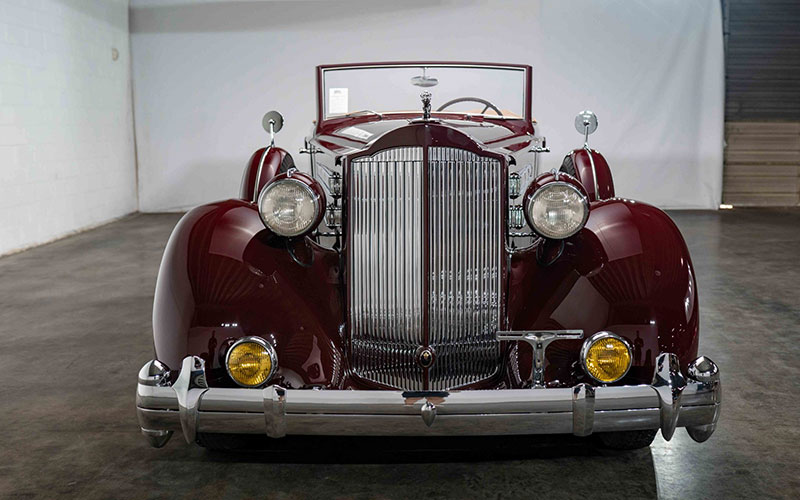
Bodywork was updated with painted bullet-style headlamp pods, a more integrated radiator shell, and fully skirted fenders. Unlike in the past, when the Individual Custom bodies built by Dietrich were offered lineup-wide, these unique bodies were now exclusive to the Twelve.
The Ultimate Packard with an Engine to Match
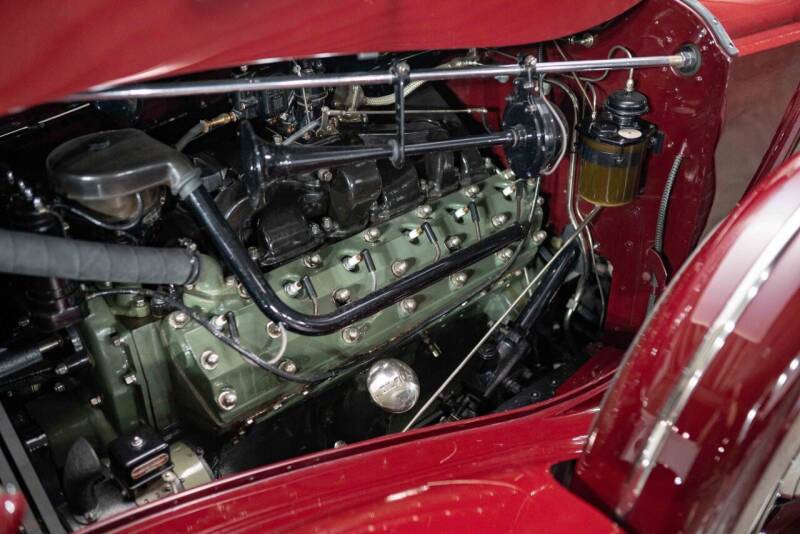
Sitting atop a Packard hierarchy that included the Eight and Super Eight lines, the 1935 Twelve boasted an even more powerful V12. Stroked to just over 473 cubic inches – or 7.8 liters – the revised motor added aluminum heads and was rated for 175 horsepower. Of course, it was the deep well of torque – 366 lb-ft – that endowed these near 3-ton luxury liners with effortless performance.
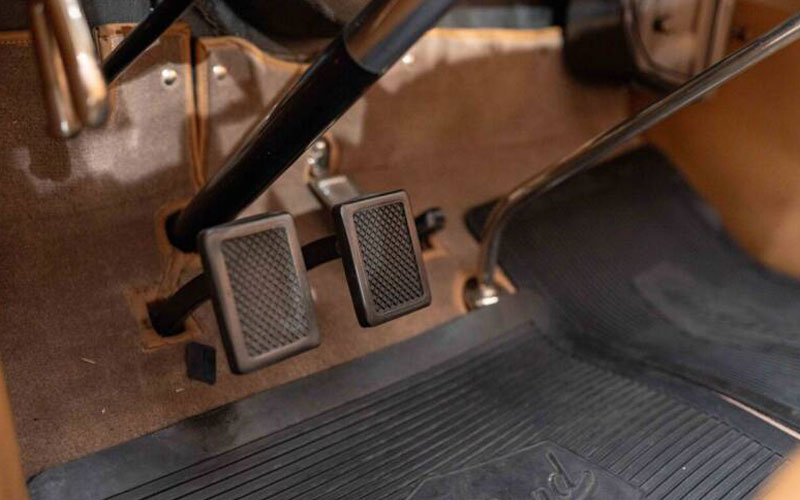
New for 1935 was the addition of synchromesh to all three transmission gears and vacuum assist for both the brakes and clutch. It was also the final year of a rigorous quality check protocol that involved a 250-mile drive on Packard’s proving grounds in Utica, Michigan after the car came off the line.
Post War Woes and the End of Packard
Ultimately, Packard would struggle to compete with Detroit’s Big Three automakers after World War II. After a failed effort to stay afloat with Studebaker, Packard went belly up in the late ‘50s as we discuss in this rundown of defunct car companies.
Fortunately, Packard has survived to the present day thanks to an active collector market. As with most vintage vehicles, the spectrum of what’s out there is wide. It includes relatively low-cost project Packards that require all manner of replacement parts – a hobby we dive into here.
This Cool Car Find
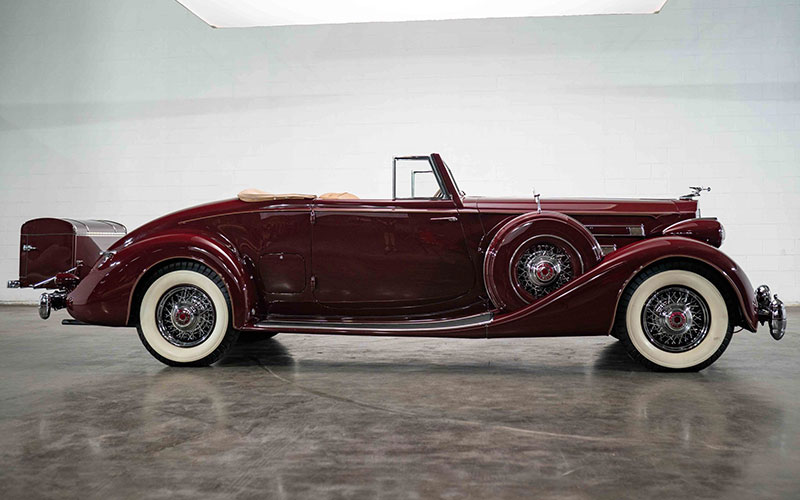
The sky is the limit from nicely restored driver-quality Packards to the slightly more expensive concours-ready examples. For instance, this 1935 Packard Victoria 12 is currently listed for sale at *ahem* $875,000. Naturally, that sticker denotes the kind of vehicle reserved for the collection of an automotive connoisseur.
Which is fitting as this particular Twelve was sold to the automaker’s most exclusive clientele when new. Fewer than 450 12th series Twelves were said to be produced in 1935 making it a rare car even then. However, the car for sale here is an exceptionally uncommon Dietrich-bodied convertible Victoria model. Per the listing, it is one of just seven ever made.
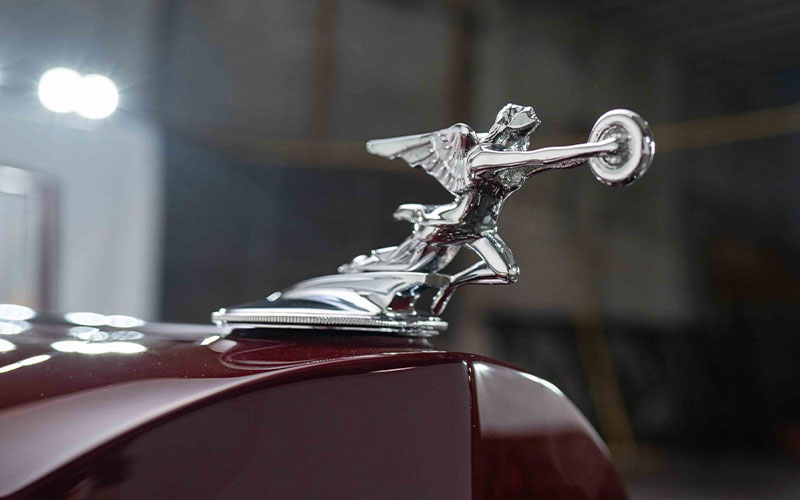
1935 Packard Victoria V12 – carsforsale.com | Shop Packard Victoria 12 on Carsforsale.com
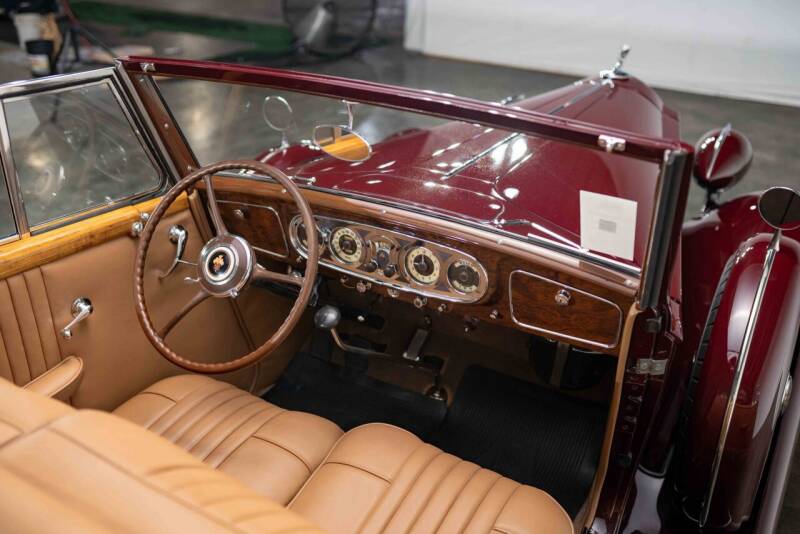
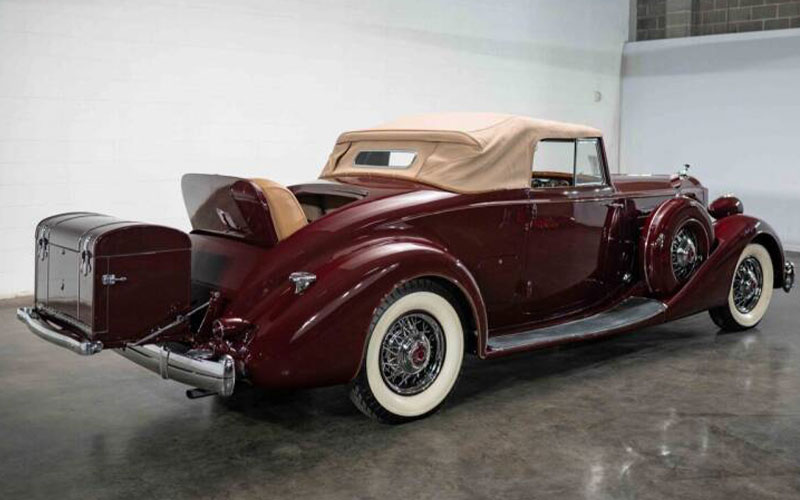
As seen in the photo gallery, it is truly an exquisite automobile that has benefitted from a top-shelf restoration. Highlights include the Goddess of Speed mascot, chrome wire wheels wearing wide whitewalls, dual side-mount spares, sparkling brightwork, a rumble seat, and a color-matched luggage trunk.
The car is said to have its original L-head V12 motor that, like the inside and outside, looks to be in pristine condition. If the provenance and imagery aren’t enough to convince would-be buyers that this 1935 Packard Victoria 12 is ready to shine in any collection, the listing also notes this car is a former Classic Car Club of America national first-place winner.