Latest News
2026 Chevrolet Tahoe ReviewThe Iconic Legacy of John DeLorean
From Firebirds to time machines, maverick executive John DeLorean left a singular and indelible mark on the automotive industry.
DeLorean’s Wild Ride
It takes a combination of success and self-promotion for an automotive executive to break through into the public consciousness, especially if they’re not founders like Henry Ford or the Dodge brothers. John DeLorean fashioned himself a jet-setting playboy in a boardroom full of stuffed shirts. He was a hard-charging idea man with the vision and engineering credentials necessary to upend convention and birth not one but three iconic cars across three different decades.
The tapestry of John DeLorean’s career is one populated by supermodel wives and celebrity friends, C-suite offices and mansions, TV appearances, a trio of era-defining cars, one high-profile drug bust, and a bit of belated pop culture redemption. You might know the Pontiac GTO and the DeLorean DMC-12, but do you know the story of the singular figure behind them, John Z. DeLorean?
From Packard to Pontiac

Born in Detroit, Michigan in 1925, John DeLorean demonstrated an interest in and aptitude for engineering early in life, earning a spot at Cass Technical High School and later a scholarship to the Lawrence Institute of Technology before being drafted in the army during WWII. Following an honorable discharge in 1946, DeLorean attended the Chrysler Institute, earning a post-graduate degree in mechanical engineering, leading to a brief stint in Chrysler’s engineering department before snagging a job with Packard in 1953.
Those post-war years were not especially kind to Packard as the company struggled to remain profitable in a climate hostile to high-end luxury cars. While Packard looked to pivot, DeLorean was busy helping develop the company’s new Ultramatic automatic transmission as an answer to GM’s successful Hydramatic transmission. DeLorean’s work helped land him a promotion to head of Packard’s R&D department. Meanwhile, CEO Jim Nance was orchestrating a merger with Studebaker in a bid to save the two foundering carmakers.
DeLorean’s reputation at Packard prompted a call from GM’s Oliver Kelly who offered the young engineer not only a job but his choice among GM’s divisions. DeLorean chose Pontiac where he was made Head of Advanced Engineering in 1956.
Pontiac GTO, Firebird, & More
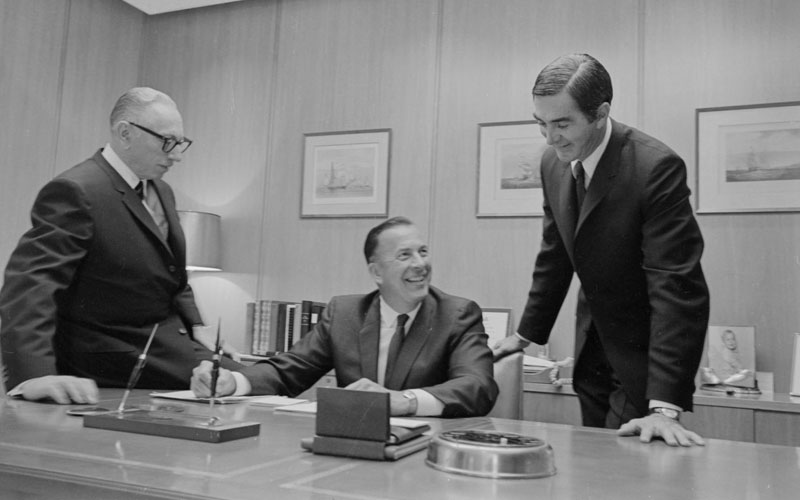
Under the auspices of his mentors Pete Estes and Semon “Bunkie” Knudsen, DeLorean excelled at Pontiac and by 1961 was made chief engineer for Pontiac working on successful projects like the Bonneville and Tempest. Easily his most significant project during these years was the GTO. DeLorean’s team wanted to build a serious performance car, despite GM’s ostensible ban on high displacement engines and a tacit adherence to the AMA racing ban. DeLorean’s solution was to build the GTO as a trim package of the Le Mans, sidestepping the displacement rule.
The GTO was a sales and marketing coup for Pontiac, tripling sales and cementing the brand’s identity for performance cars. The success saw DeLorean climb yet another rung on the corporate ladder when he was made the head of Pontiac in 1965, the youngest in GM history at just 40 years old, beating out his mentor “Bunkie” Knudsen by two years.
DeLorean was not one to rest on his laurels as he spearheaded new projects. The planned Pontiac Banshee would have been the brand’s answer to the Mustang. A concept of the car version looked to all the world like the next big thing in sports cars (in hindsight the Banshee was years ahead in styling). What GM’s Ed Cole saw was an in-house competitor to the Chevy Corvette. The combination of DeLorean’s cavalier, non-conformist attitude and internal push back on the project doomed one of the all-time, what-might-have-been cars.
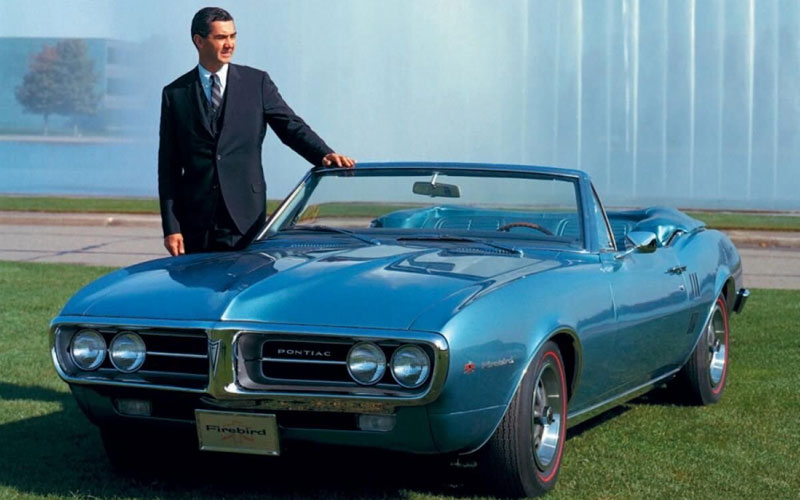
Undeterred, DeLorean’s next big sports car, the Pontiac Firebird, more than made up for the loss of the Banshee. The Firebird, arriving in 1967, proved a smashing success, moving over 82,000 units in its first year in production. DeLorean continued his hot streak with a reimagining of the Pontiac Grand Prix for its second generation, with that car selling 112,000 units in its first year.
DeLorean’s meteoric rise at Pontiac did not go unnoticed by the top brass at GM who saw fit for him to head the marquee Chevrolet brand in 1969. By this time, DeLorean’s profile had elevated to the level of minor celebrity. He hobnobbed with the rich and famous, cultivating friendships with the likes of Sammy Davis Jr. and Johnny Carson, he invested in the New York Yankees and San Deigo Chargers, he divorced his second wife and married a third (model Cristina Ferrare). He even asked Ford’s Lee Iacocca to be the best man at his wedding.
The Rise of DeLorean Motor Company
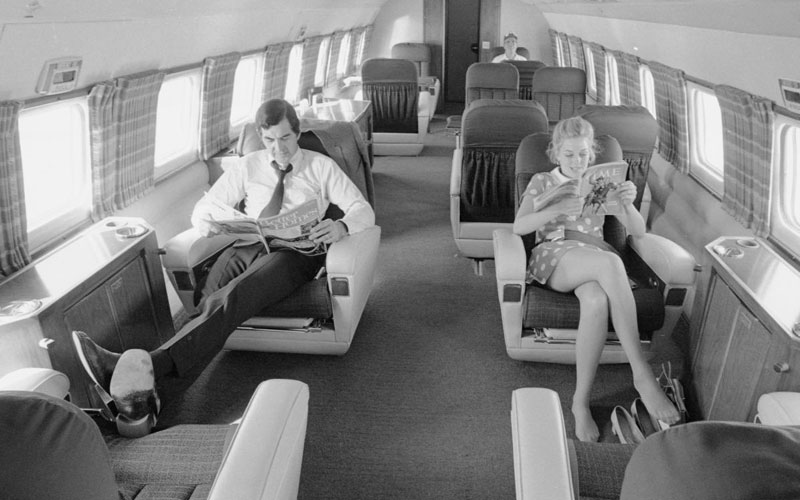
DeLorean was riding high. He shepherded Chevrolet through a few challenging years, including getting the Corvette and Camaro productions back on schedule and managing a particularly rocky run for the now infamous Chevy Vega. Eventually, DeLorean found himself promoted yet again, this time to VP of GM’s car and truck production in 1972.
From the seeming mountain top, DeLorean saw yet another peak to scale, one infinitely more challenging: starting his own car company. In truth, DeLorean’s playboy lifestyle and maverick attitude were a poor cultural fit for the buttoned-down corporate culture at GM. DeLorean’s saving grace had always been his competency and ability to deliver when it mattered most. Now he was determined to forge his own path with the formation of the DeLorean Motor Company.
DeLorean knew a thing or two about building cars and set out hiring industry heavy hitters to help engineer and design his first car. Development was headed up by William Collins, DeLorean’s colleague and former chief engineer at Pontiac. For design DeLorean called on Giorgetto Giugiaro, the famed designer of the Maserati Ghibli, DeTomaso Mangusta, and Volkswagen Golf. A 1976 prototype, the DeLorean Safety Car, sported a stainless-steel body, gullwing doors, and a mid-mounted Ford V6 (replacing the originally planned Wankel rotary engine). The Ford V6 was eventually replaced by a V6 jointly developed by Peugeot, Renault, and Volvo. Re-engineering done between prototype and production was done with help from Lotus’ Colin Champman.
Troubles in Ireland for DeLorean
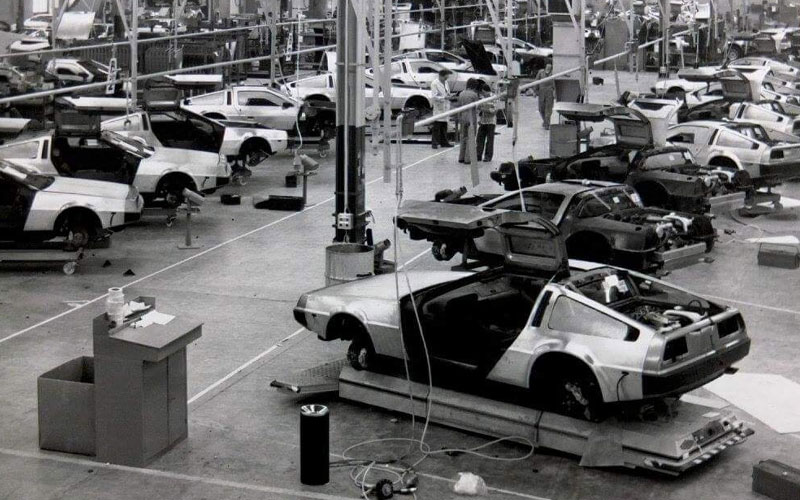
The DMC-12, thus named for the target price of $12,000, saw one of the more notoriously snarled developments of any car. DeLorean’s lofty notions of building a safe, fast, affordable, and highly innovative car constantly came up against the real-world difficulties of starting a successful car company from scratch. Funding was a challenge, despite high-profile investors like Johnny Carson. So, when choosing a location to stage production DeLorean found an unlikely local: the Belfast suburb of Dunmurry in Northern Ireland.
In the late 1970s Northern Ireland was roiling with sectarian divisions in what historians now refer to as “The Troubles.” The British government hoped an influx of new manufacturing jobs would ease tensions and funded DeLorean’s new production facilities to the tune of £100 million in financial incentives from the Northern Ireland Development Agency. One major challenge for the new facility, most of the workforce was unfamiliar with automotive production, a few hadn’t even held jobs prior to their work at DeLorean Motor Company. That inexperience resulted in major quality control issues for the DMC-12.
Even as things were getting up and running in Dunmurry, DeLorean was struggling to keep the money coming in. Budget overruns in development and in getting the factory built had led to major delays in starting production, which didn’t kick into gear until 1981. The targeted $12,000 price tag for the DMC-12 had to be not only abandoned but more than doubled to $25,000, hampering sales. By February of 1982, with more than $175 million in outstanding debts, the company was placed in receivership. So dire was the financial situation that when DeLorean’s former neighbor approached him with a scheme to make a quick buck, or a few million, he was all too eager to listen.
DeLorean Busted and Redeemed
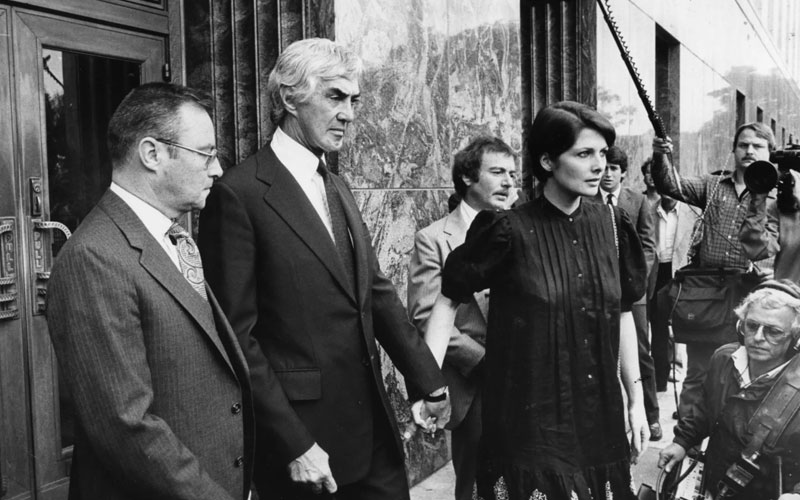
In 1982, as DeLorean was casting about for solutions to his company’s money troubles, he was approached by his former neighbor with a proposition, bankroll a cocaine smuggling operation on the front end with the prospect of a major windfall on the back end to the tune of $24 million dollars. Desperate for cash, DeLorean agreed to the deal, going so far as to receive 59 lbs. of the illicit drug. Unfortunately for DeLorean, on the other end of that transaction was the FBI and DEA and DeLorean was arrested for trafficking that October. Despite continued production, DeLorean’s arrest was the final straw for the British government who proceeded with liquidating the Dunmurry factory. (Here’s what happened to all those factory-built DMC-12 parts.)
DeLorean successfully defended himself against the charges. His lawyers argued in court that the FBI’s informant had effectively entrapped DeLorean, approaching the struggling automotive executive with the scheme because he was aware of DeLorean’s money troubles. By the time he was finally acquitted in 1984, DeLorean’s company was long gone.
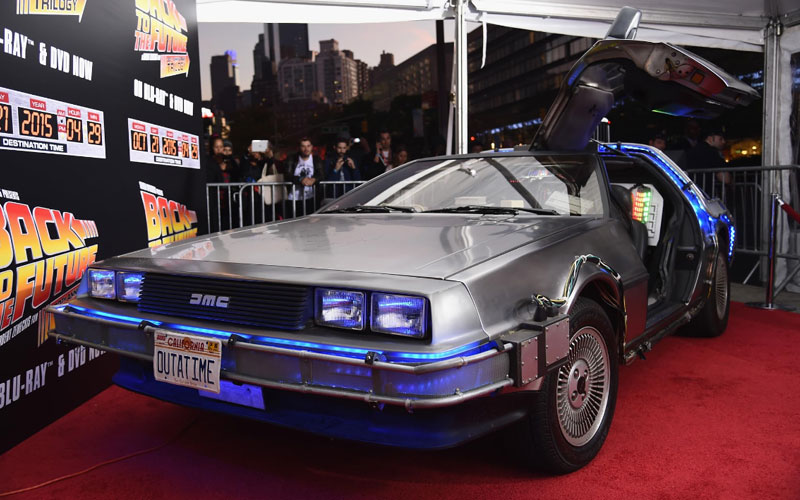
Around the same time, screenwriter Bob Gale and director Rober Zemeckis were writing a script about a time-traveling teenager. Initially, the idea had been for the time machine in the movie to be built from a refrigerator, but Zemeckis lit on a more mobile and dynamic basis for a time machine, the distinctively futuristic DeLorean DMC-12. Starring in Back to the Future, one of the 1980s biggest and most successful franchises, transformed the DMC-12 from mere automotive footnote into an indelible piece of pop culture history.
Between the cocaine charges and the debacle that was the DeLorean Motor Company, John DeLorean never regained the professional heights he’d reached during his ascent through the ranks at GM. His was an Icarus-like rise and fall, the one-time golden boy was felled by a combination of hubris and bad luck. And yet, amidst his successes and failures, it’s clear DeLorean was always intent on delivering something unconventional, something compelling, something original. Personal grandiosity often goes hand in hand with the vision and grit necessary to achieve remarkable things; and so it was with John DeLorean.